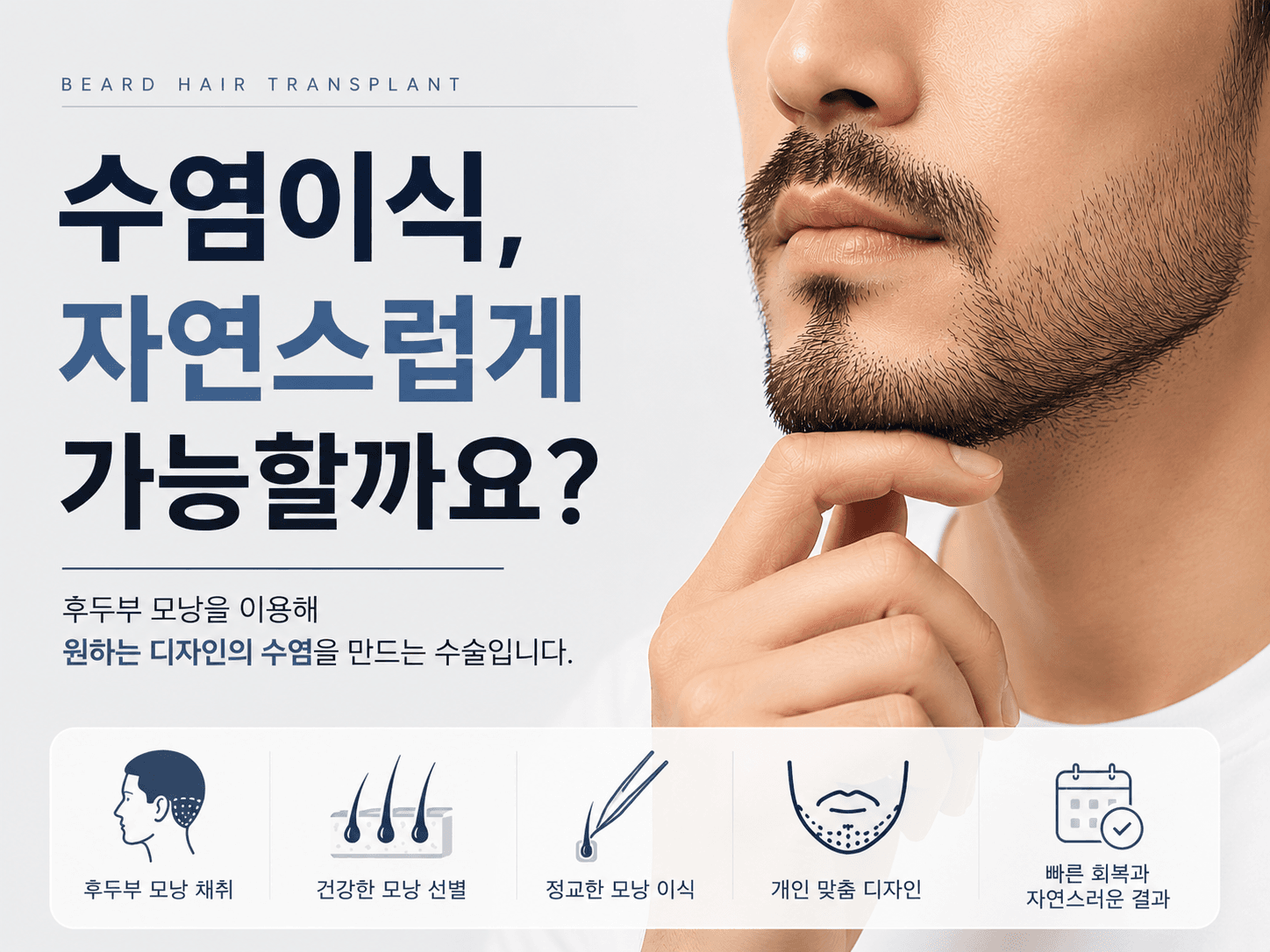
A beard transplant is a hair transplant procedure that uses hair follicles from the back of the head to design a beard in the desired area.
For a natural result, it is not simply a matter of implanting follicles; satisfaction is higher when the direction, angle, and density of the beard, as well as its harmony with the face shape, are considered together.
Recently, with growing interest not only in hair loss treatment but also in appearance, the number of people inquiring about beard transplants has been steadily increasing.
In the past, people with sparse beards often shaved less or used makeup to compensate, but recently many choose a beard transplant to create the beard design they want.
In particular,
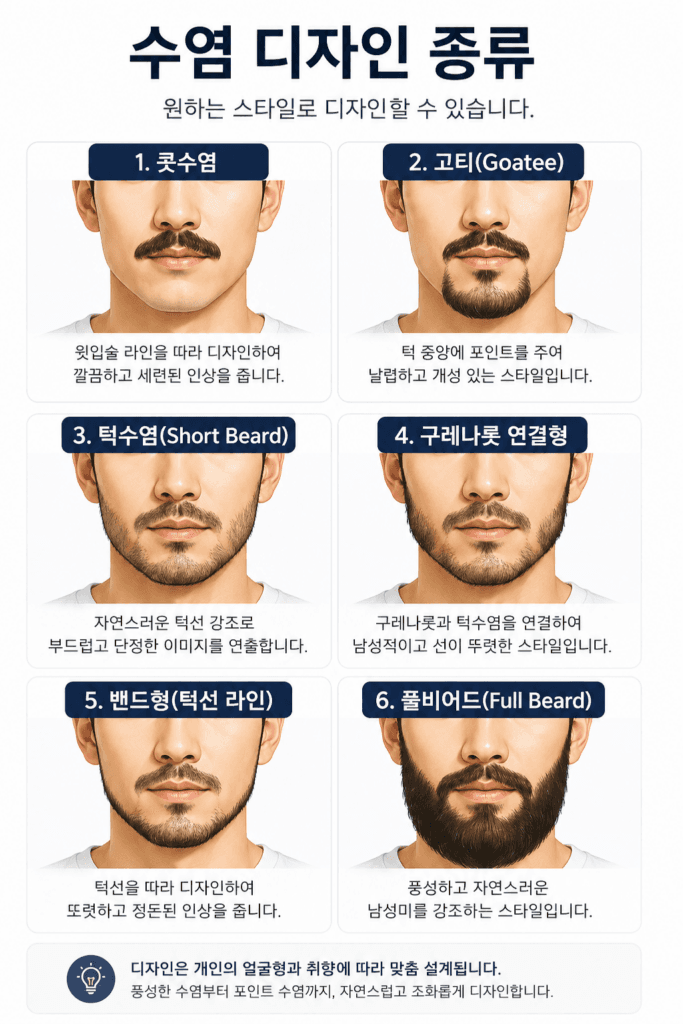
- A chin beard connected to the sideburns
- Mustache
- Chin beard (Goatee)
- Full Beard
More people now want a variety of styles such as these.
In this article, we will explain in detail how a beard transplant is performed, who it is suitable for, the recovery process, and frequently asked questions.
Key Summary
✔ Non-incision beard transplant using hair follicles from the back of the head
✔ Direction and angle design determine how natural it looks
✔ A customized design tailored to the face shape is important
✔ Final results can be seen at approximately 10–12 months
What Is a Beard Transplant?
A beard transplant is a procedure in which healthy hair follicles are harvested from the back of the head and transplanted one by one into the area where a beard is needed.
Because the follicles used are your own, once they have taken root they grow naturally and can be maintained on an ongoing basis.
Because a beard greatly influences facial impression, what matters is not simply implanting a large number but a design that suits the face shape.
How Is a Beard Transplant Performed?
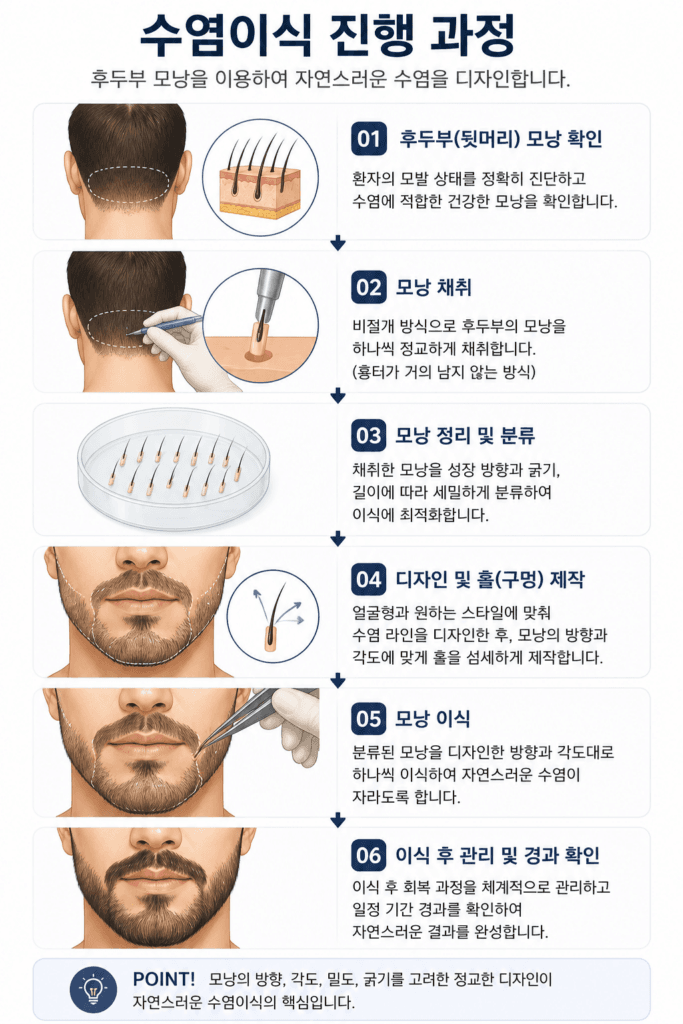
A beard transplant is basically performed in the same way as a hair transplant.
Healthy hair follicles are harvested from the back of the head using the non-incision method and then transplanted one by one according to the desired design.
However, a beard transplant requires more delicate design than a general hair transplant.
This is because, unlike the scalp, where hair is thick and grows in a consistent direction, beard hair grows in different directions and at different angles in each area.
A Natural Beard Starts with Follicle Selection.
A beard transplant is not simply a procedure of implanting many hair follicles.
It is important to select appropriate follicles, taking into account the thickness and density of the beard and the face shape.
Modi Hair Plant selects the necessary follicles based on the beard location and desired design, and plans a density that blends naturally.
Non-Incision Follicle Harvesting
Healthy follicles from the back of the head are harvested using the non-incision method, reducing concerns about scarring and supporting faster recovery.
Use of Micro Punches
Small punches are used to minimize damage to the follicles and help the donor area recover naturally.
Transplantation Considering Direction and Angle
- Mustache
- Center of the chin
- Jawline
- Cheek beard
- Sideburns
Because each area has a different growth direction and angle, each hair must be transplanted one strand at a time with these in mind to achieve a natural result.
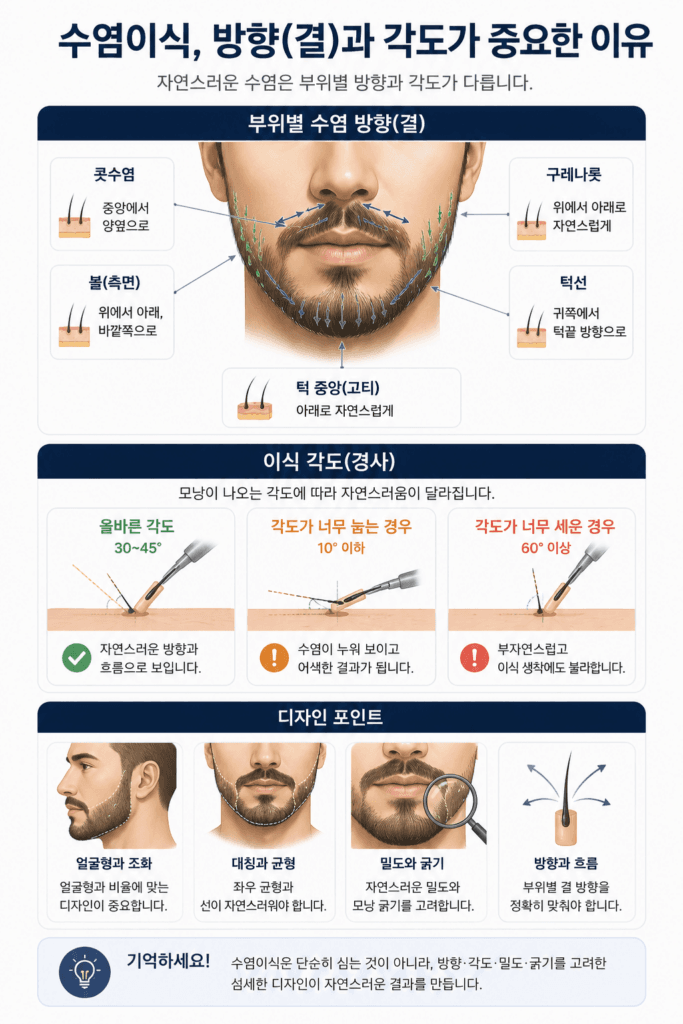
Why Design Matters in a Beard Transplant
Because the beard is located at the center of the face, even small differences can have a large effect on your appearance.
In particular,
✔ Face shape
✔ Direction
✔ Angle
✔ Density
✔ Left-right symmetry
must be considered together
to achieve a natural and satisfying result.
Who Is a Beard Transplant Suitable For?
- Those with naturally sparse beards
- Those with patchy areas
- Those who want to reinforce only the mustache
- Those who want to make only the chin beard thicker
- Those who want a full beard
- Those who want to conceal scars from accidents or injuries
- Those who want to cover cleft lip and palate surgery scars
- Those who want to improve folliculitis scars
Recently, beard transplants for design purposes, aimed at creating a more masculine image, have also been increasing.
How Long Does Recovery Take After a Beard Transplant?
Because the procedure uses the non-incision method, scars in the donor area are barely noticeable.
Small scabs and redness may appear immediately after surgery, and in most cases these resolve naturally after about 1 week.
Afterward, some of the transplanted hairs go through a shedding phase, and new beard hair begins to grow again.
Beard Transplant Recovery Process
| Timeline | Recovery Process |
|---|---|
| Day of surgery | Small scabs and redness |
| 1 week | Most scabs fall off |
| 2 weeks | Transplanted hairs stabilize |
| 2–3 months | New beard growth |
| 6 months | Contour and density take shape |
| 10–12 months | Final result complete |
Actual Beard Transplant Case
The case below is a patient who underwent a 600-hair beard transplant to naturally conceal scars remaining from cleft lip and palate surgery 10 years ago.
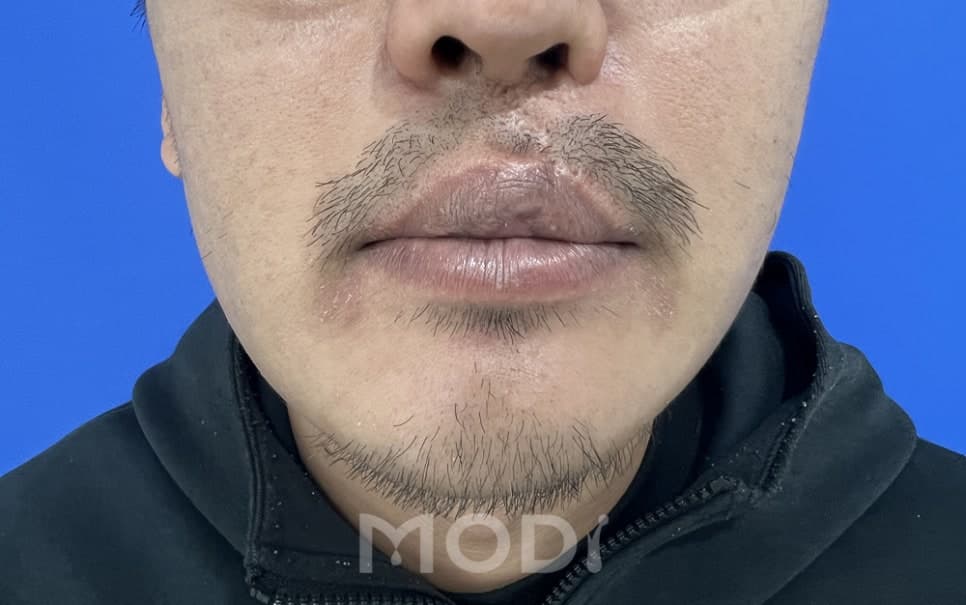
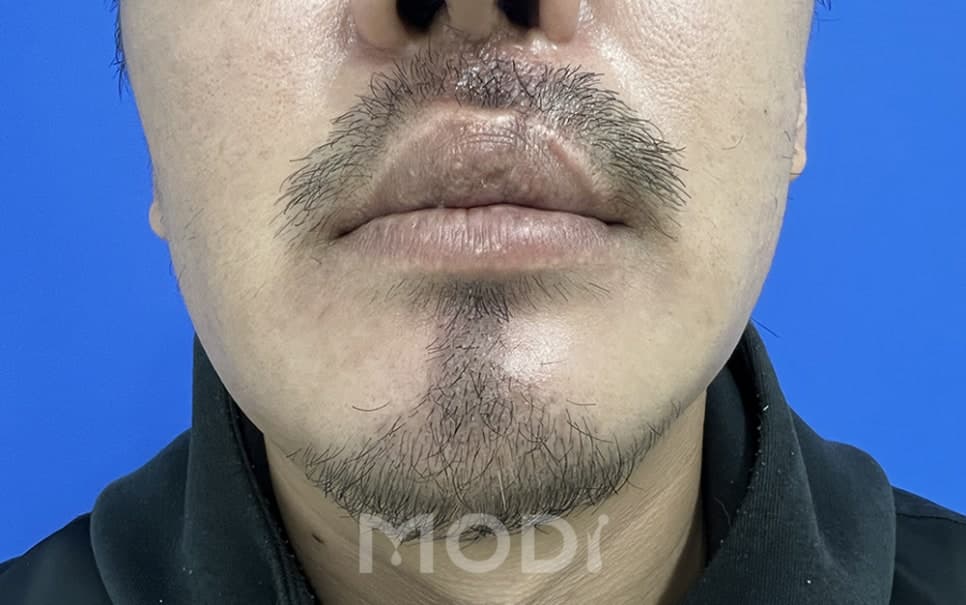
2 weeks after beard transplant
It is still too early to evaluate the final result.
However, the transplanted follicles are settling in stably, and the contour of the beard line can be seen to have become more defined than before.
Going forward, some transplanted hairs will go through a shedding phase before growing again; density increases from about 6 months, and the final result can be seen at 10–12 months.
Can I Take Hair Loss Medication After a Beard Transplant?
Beard hair is tissue that grows under the influence of DHT, and its characteristics differ from those of scalp hair.
If you are taking hair loss medication such as finasteride or dutasteride, it is advisable to decide whether to continue after consulting with your medical team.
Rather than the medication itself, it is important to consider your individual hair loss condition and treatment plan together.
Does the Transplanted Beard Continue to Grow?
Yes.
Once engraftment is complete, it continues to grow like a regular beard.
However, in the early stage after transplantation, some characteristics of the hair from the back of the head may remain, but over time it blends naturally with the existing beard.
If needed, you can shave or trim it just like your existing beard.
Frequently Asked Questions (FAQ)
Q. Is a beard transplant very painful?
Because it is performed under local anesthesia, pain during surgery is not severe. After surgery, most people experience only a level of discomfort that still allows daily activities.
Q. When can I shave after a beard transplant?
Shaving is possible once the scabs have sufficiently fallen off and the skin has stabilized. For the exact timing, it is advisable to follow your medical team's guidance based on your post-operative progress.
Q. Does a beard transplant leave scars?
When performed using the non-incision method, scars in the donor area are barely noticeable.
Q. Is a beard transplant permanent?
Because engrafted follicles continue to grow, the results are generally maintained over the long term.
Q. Can a beard transplant be performed on scars?
Yes, it is possible. However, feasibility may vary depending on the condition of the scar and is determined after consultation.
Conclusion
The key to a natural beard transplant is design.
Because the beard is located at the center of the face, even small changes can significantly alter your appearance.
A customized design that fully considers follicle direction and angle, density, and harmony with the face shape is key to achieving a natural result.
If you are considering a beard transplant, it is important to plan the design that suits you best through a thorough consultation with an experienced medical team.
- 📞 Phone consultation: 02-544-8659
- 🌐 Website
- 💬 KakaoTalk consultation
This content has been reviewed by our medical team before publication.