Modi Hair Plant
Non-Shaven Non-Incision Hair Transplant
We harvest with the non-shaven non-incision method, and build results through sorting and storage.
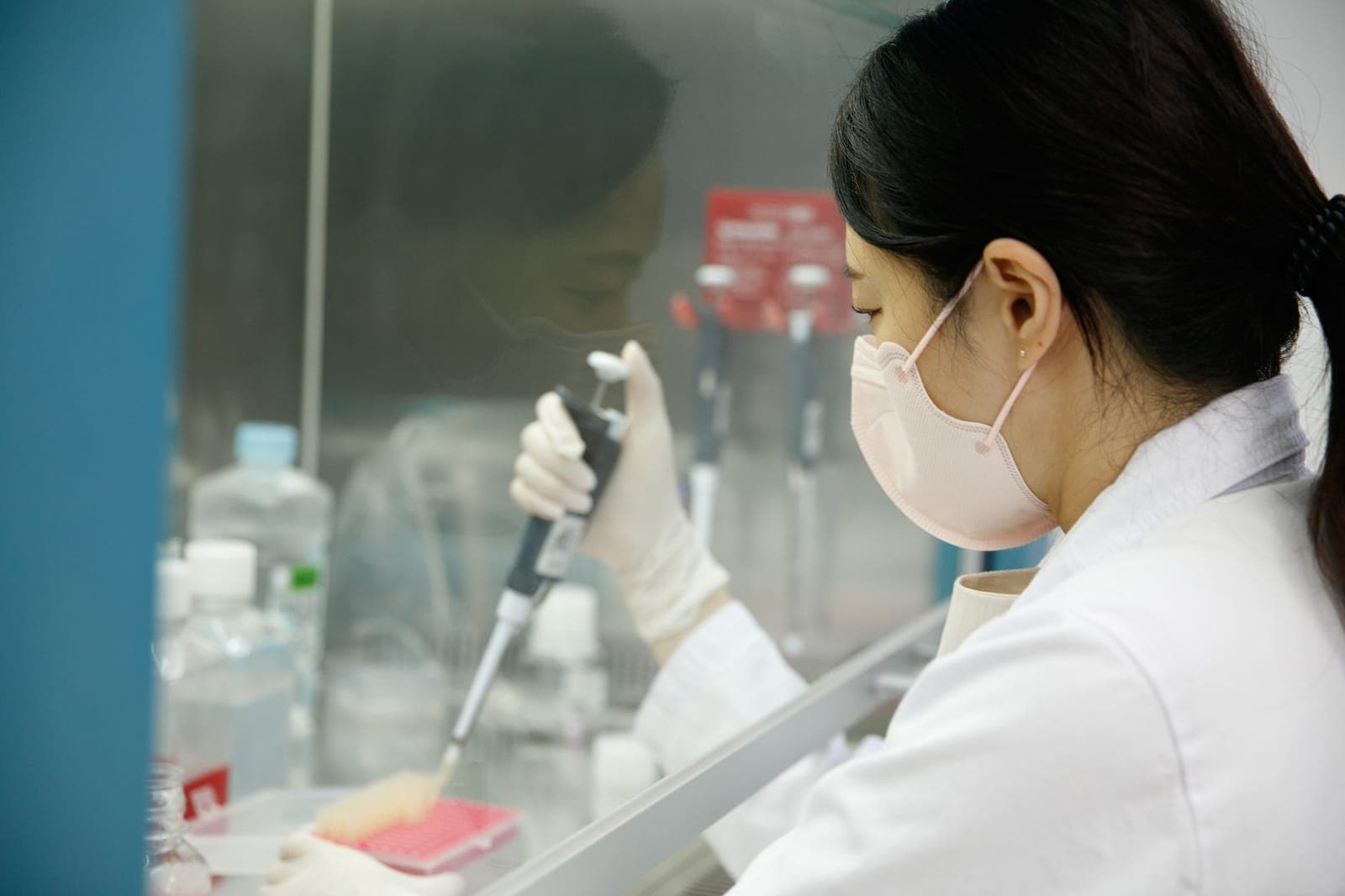
MODI HAIR TRANSPLANT
We add stem cells to non-shaven non-incision hair transplantation
This procedure harvests healthy occipital follicles using the non-shaven non-incision method and transplants them where needed, while separating hair follicle stem cells from follicles unsuitable for transplantation and injecting them together. Because the hair is not cut beforehand, the surgical area is not exposed and you can return to daily life right away.
NO-SHAVE FUE
Not every “no-shave” is the same no-shave
Whether incision or non-incision, if a cut line reaches dermal depth, a scar remains. Non-incision simply extracts follicles one by one with a small punch, so it is less noticeable. The method that shaves several fine lines with taping and calls itself no-shave leaves staff-line-shaped marks of reduced density when cut short. Modi Hair Plant does not use this method.
| Method | Donor-area handling | Characteristics |
|---|---|---|
| No-shave | Nothing cut except the harvested follicles | Volume barely decreases, so it is the least noticeable |
| Partial shave | Every other hair cut short with a patented dedicated clipper | Volume decreases slightly, but the cost is lower |
| Line shave | Several line-shaped sections thinly shaved | Hard to see with long hair · used in combination |
| Full shave | The whole donor area shaved short | Fast to harvest, but the marks show the most |
Full shave
The entire donor area is shaved short before harvesting; the marks show the most.
Line shave
Only several line-shaped sections are thinly shaved; well hidden under long hair.
Partial shave
Every other hair is cut short with a dedicated clipper; volume decreases slightly.
No-shave
Nothing is cut except the harvested follicles, so it is the least noticeable.
DONOR DESIGN
We decide the harvest area to match the head shape
A normal scalp has 80,000–100,000 hairs, so even transplanting 4,000 hairs is only about 4–5% of the total. 93% of Koreans have a flat-backed brachycephalic head, making them sensitive to changes in occipital volume, so we set the harvest area around the external occipital protuberance felt on the skull to minimize the visual volume change after surgery. Within that same occipital region, however, we shift the emphasis depending on sex, usual hairstyle, and the hair quality needed.
Women
More sensitive to occipital volume change, and hairline correction mainly uses thin, soft follicles, so we place more emphasis on harvesting below the occipital protuberance.
Men
Often wear a two-block cut that keeps the nape short and frequently need thicker hair for volume, so we harvest evenly around the occipital protuberance, a little higher than the nape.
8-STEP SORTING
We sort follicles into 8 steps to create a gradation
The harvested follicles are all different. Some have several strands per follicle, some a single strand, and thick and thin hairs are mixed together. A natural hairline comes from a gradation in which thin hairs go in front and thicker, multi-strand hairs go further back. That is why Modi Hair Plant sorts the harvested follicles under a microscope by thickness and strand count into 8 steps before transplanting.
- The very front of the hairline — single thin strands
- Crown and center — areas needing density, with thicker hairs and more strands
- Microscope micrometer (50/80/100µm) to clarify the thickness criteria
- In-house sorting containers and a dedicated cooling plate for compartment-by-compartment sorting and storage
Transplanting immediately while extracting makes it hard to perfectly sort the front-to-back order. So our principle is to sort and transplant after all harvesting is complete. International consensus also recommends cooling follicles and storing them in an organ-transplant solution once ex vivo storage exceeds 6–8 hours; Modi Hair Plant brings the temperature to the right level with a dedicated cooler regardless of time and stores them in Custodiol (HTK). Storing well matters more to graft survival than transplanting quickly, which our institute confirmed through its own experiments.
The evidence behind stem cell science—such as the storage solution and immunofluorescence experiments—is covered in detail on the “Hair Follicle Stem Cell Research Institute” page.
LONG-TERM SURVIVAL
We look at long-term retention, not short-term survival
When harvested non-incisionally, a small piece of skin stays attached to the follicle, which can look like “frog eggs” after transplantation. Trimming this skin off with a blade because it looks unsightly can damage the bulge area where hair follicle stem cells are concentrated. In a 6-year follow-up comparison from 2019 (presented at the Korean Society of Hair Restoration Surgery in 2025), the side that kept the skin had better hair thickness and long-term graft survival. The frog eggs disappear within 1–2 weeks.
TRANSPLANT + STEM CELL
We revive stem cells from discarded follicles and inject them together
During non-incision harvesting, a small number of follicles unsuitable for transplantation come out. These too contain living hair follicle stem cells that form follicles and skin. Instead of grinding them up to apply topically, Modi Hair Plant separates the stem cells at its in-house research center and injects them directly into the transplant area. Because the cells are derived from the patient's own follicles, they survive long on the scalp and stimulate follicle growth.
- Promotes wound recovery and reduces post-surgical pain and itching
- Creates a better environment for graft survival
- Improves the condition of transplanted hair and eases stress on existing hair
SURGERY STEPS
Surgery process
- 01
Scalp and hair-loss diagnosis
We confirm the harvestable hair volume and whether to combine stem cells.
- 02
Design and harvest strategy
We design the hairline and the harvest area tailored to the head shape.
- 03
Non-shaven non-incision harvesting
We harvest follicles with a punch without cutting the hair.
- 04
8-step sorting and storage
After sorting by thickness and strand count under a microscope, we store them cooled in Custodiol.
- 05
Hair transplant + stem cell injection
We transplant according to the gradation and inject the separated stem cells.
- 06
Recovery care and progress check
We check progress with stage-by-stage care and a care program.
CASES
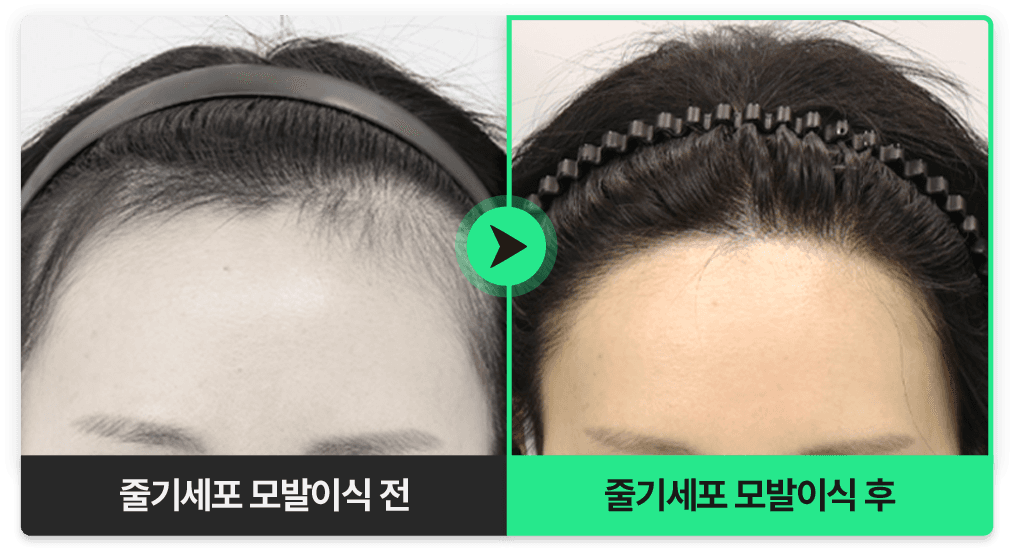
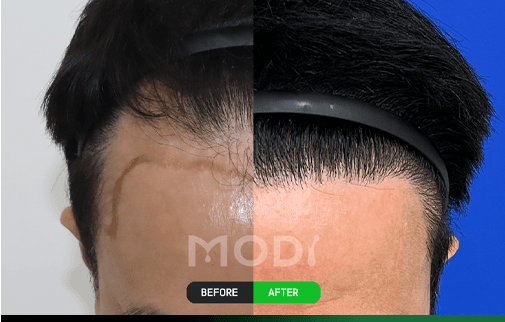
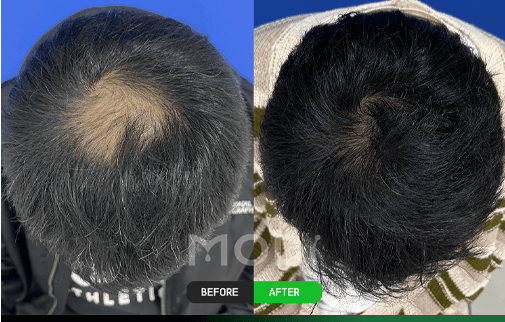
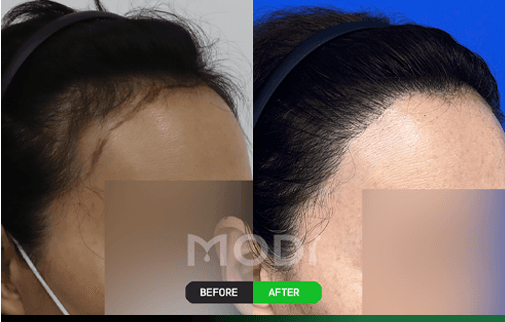
Before-and-after cases
CONSULT
The right method for you starts with a diagnosis
The shaving method, the amount transplanted, and whether to combine stem cells depend on the condition of your scalp and hair loss. Start with an accurate diagnosis.