Modi Hair Plant
Male Design Transplant
We design natural, high-density hair transplants.
WHY DESIGN
The result of a men's hair transplant comes down to the design
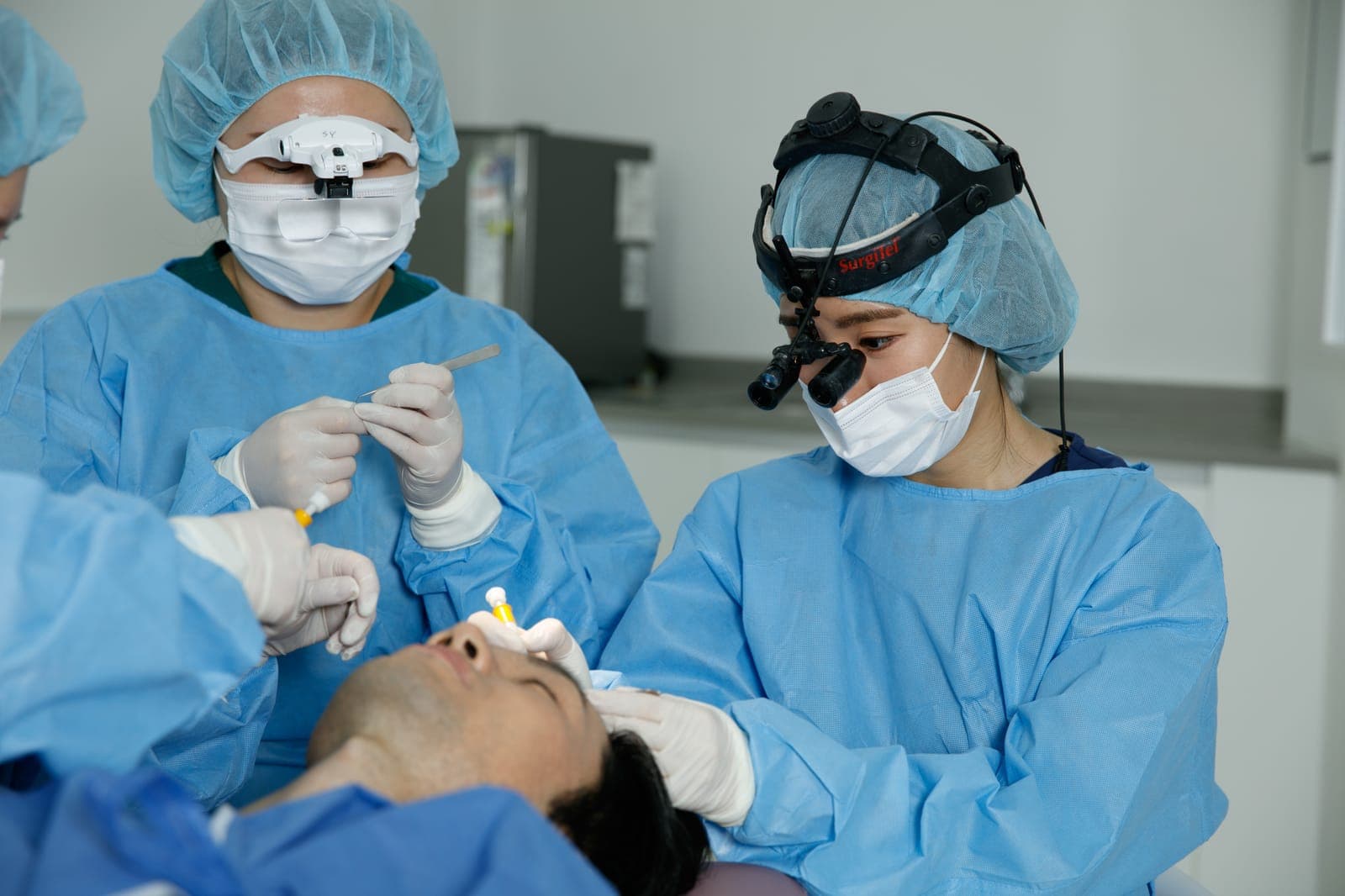
The hairline shapes the overall impression of the face. Because hairline correction is a cosmetic procedure, design matters as much as the graft survival rate, and even when the same hair is transplanted, the result varies depending on how it is designed. Modi Hair Plant analyzes hair condition, the hairline, and the front, side, and 45° angles to predict the post-transplant appearance before performing the procedure.
Hair Condition Analysis
Analysis of thickness, curl, and condition
Hairline Analysis
Analysis of hair direction and line shape
Angle Analysis
Facial analysis from the front, side, and 45°
Post-Transplant Appearance Prediction
Predicting the synergy between hair transplant and hairline
ASIAN HAIRLINE
For Asians, the front and side must be designed together
Most reference material on men's hairline correction is written with Caucasian men as the standard. In Caucasians, the frontotemporal angle where the frontal and temporal regions meet is small with many angular lines, so transplants are often performed to cover only the frontal region without side correction.
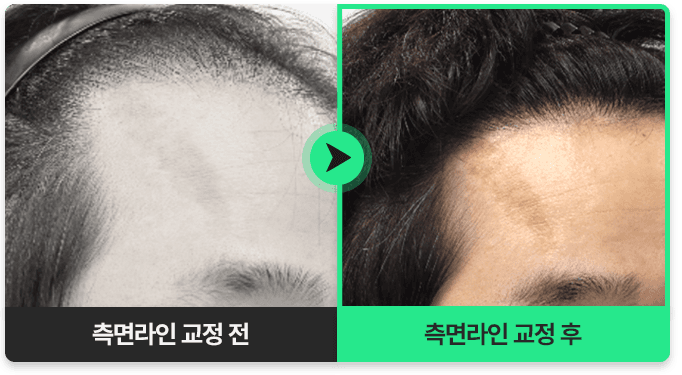
Asians, by contrast, have a larger frontotemporal angle with rounded corners, and a wider skull width when viewed from the front. As a result, even a slight rise on both sides is easily perceived as M-shape hair loss, and a design is needed that narrows the apparent width as well as the forehead length. A combined design of the front and side lines is essential for a natural look.
Men's hairlines are more varied than you might think. They are not only the angular shape with both sides raised; the key is to choose the type that suits your own face.
3D ANALYSIS
The face is three-dimensional, so we don't set the line by length alone
The hairline is designed using landmarks — the frontal point of the forehead, the recessed point above the brow bone, and the most prominent glabellar highlight of the forehead — considering both the front and side effects together. Setting it based on forehead length alone results in an unnatural look.
When a forehead filler, fat graft, or implant moves the forehead highlight downward, the hairline can appear to have receded even at the same forehead length. In such cases the hairline must also be lowered to align the landmarks, so you should tell your physician exactly what procedures you have had in the past.
FOREHEAD & SIDE LINE
Even when lowered substantially, it doesn't look unnatural
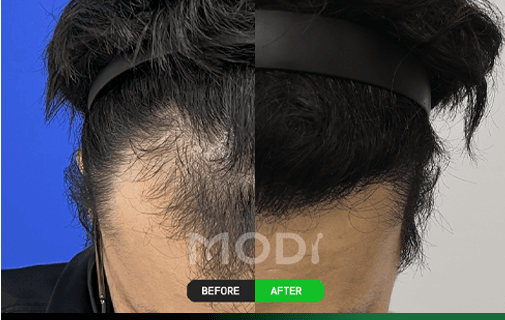
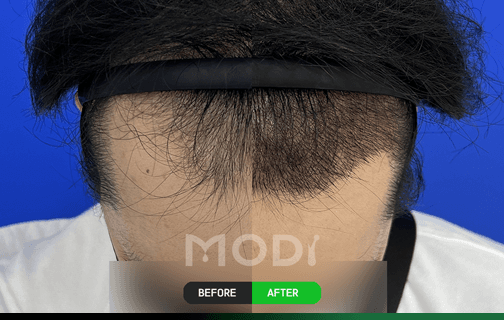
The idea that lowering the center of the hairline substantially looks unnatural is a misconception. As long as the cosmetic density and hair direction the hairline requires are maintained, a natural, full line can be created even when the correction area is wide.
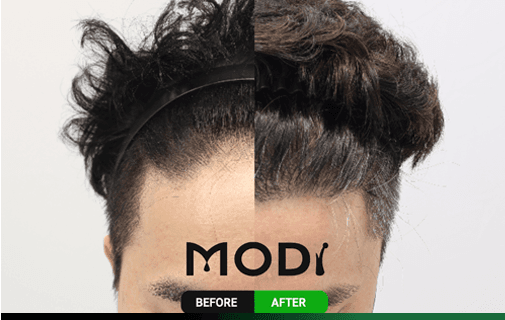
Even in a case where the forehead was lowered to 2.5–3 cm and the side lines were narrowed, transplanting more than 4,000 hairs by the non-incision method, we created a full hairline with no unnatural look — even with a short sporty hairstyle that reveals the density. An M-shaped forehead is balanced by correcting the side lines together to bring the face into proportion.
DENSITY & DIRECTION
We design density and hair direction together
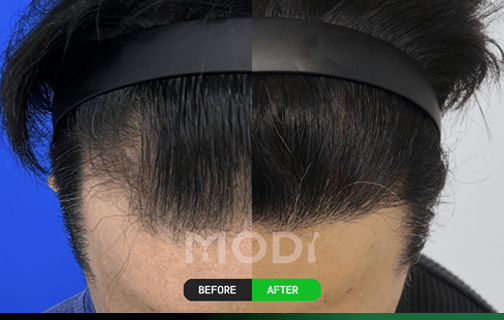
To create a full look with a limited amount of hair, density placement and direction design are important. Density is kept high at the branching points where the hair divides and along the parting, and even in areas where direction changes sharply — such as the crown, the parting, and hairline branching points — the grafts are placed so they follow the natural hair direction exactly.
Experienced Medical Team
Hairline Design Suited to Asian Head Shapes
High Graft Survival Rate
Starting with single hairs at the skin border and increasing the diameter and number of hairs further inward, the four-stage gradation transplant lets the scalp border blend in naturally.
3~4 Hair
High-density multi-follicle groups
2 Hair
Medium-density double hairs
Thick 1
One thick hair strand
Thin 1
One thin hair strand
M-SHAPE & CROWN
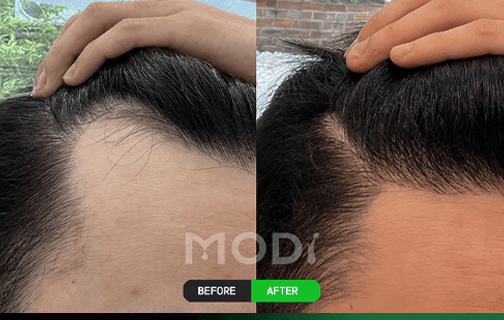
For the M-shape and crown, we conserve hair and take a staged approach
A hair transplant is a procedure that redistributes your own follicles, so it cannot increase your total number of hairs, and the amount that can be transplanted over a lifetime is also limited. Moderate or more advanced male pattern hair loss at Norwood stage 5 or above requires conserving hair and placing it as efficiently as possible.
- 01
Improve the frontal hair area first
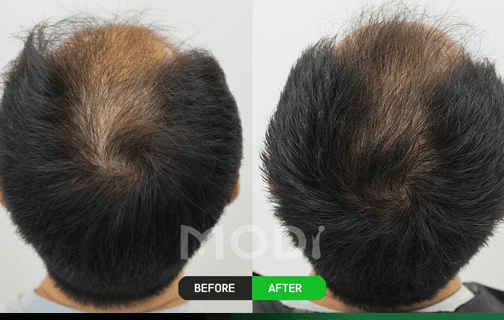
By first restoring density in the central forelock area and distributing the rest naturally across the other areas, a significant cosmetic effect can be expected with as few as 3,000–4,000 hairs.
- 02
Treat the crown with medication first
At the crown, many patients improve with oral male pattern hair loss medication alone, so the way to conserve hair is to observe the response to medication thoroughly and plan an additional transplant only if needed.
- 03
Establish a long-term treatment plan
Because male pattern hair loss is a progressive condition, it does not end with a single surgery. Even after surgery, regular examinations and treatment continue in parallel to preserve the total number of hairs.
AGING vs LOSS
First we distinguish male pattern hair loss from hairline maturation
After age 25, the hairline recedes and the forehead widens even without a hair-loss gene. Over a lifetime it recedes by about 2 cm on average, with both sides rising slightly more to form a gentle V shape — this is not male pattern hair loss but the process of hairline maturation.
Hairline maturation usually stops without exceeding a 2 cm range from the original line, so hair-loss treatment is not necessary. Male pattern hair loss, by contrast, recedes steadily beyond this range and progresses into a shape that is concave on both sides and convex in the middle. The two call for different treatment approaches, so they must first be distinguished through a consultation.
REVISION
Non-incision allows for easy revision — we avoid over-correction
Non-incision hair transplantation harvests follicles one by one from the back of the head with a micro-punch, so it is not difficult to correct conservatively first and add more correction later. That is why, when the degree of correction is uncertain, we recommend correcting conservatively first.
Conversely, over-correcting all at once requires the over-corrected area to be removed by hair removal, wasting time, cost, and follicles. It is best to discuss the design and expected outcome thoroughly with your physician before surgery and decide carefully.
WITH SIDEBURNS
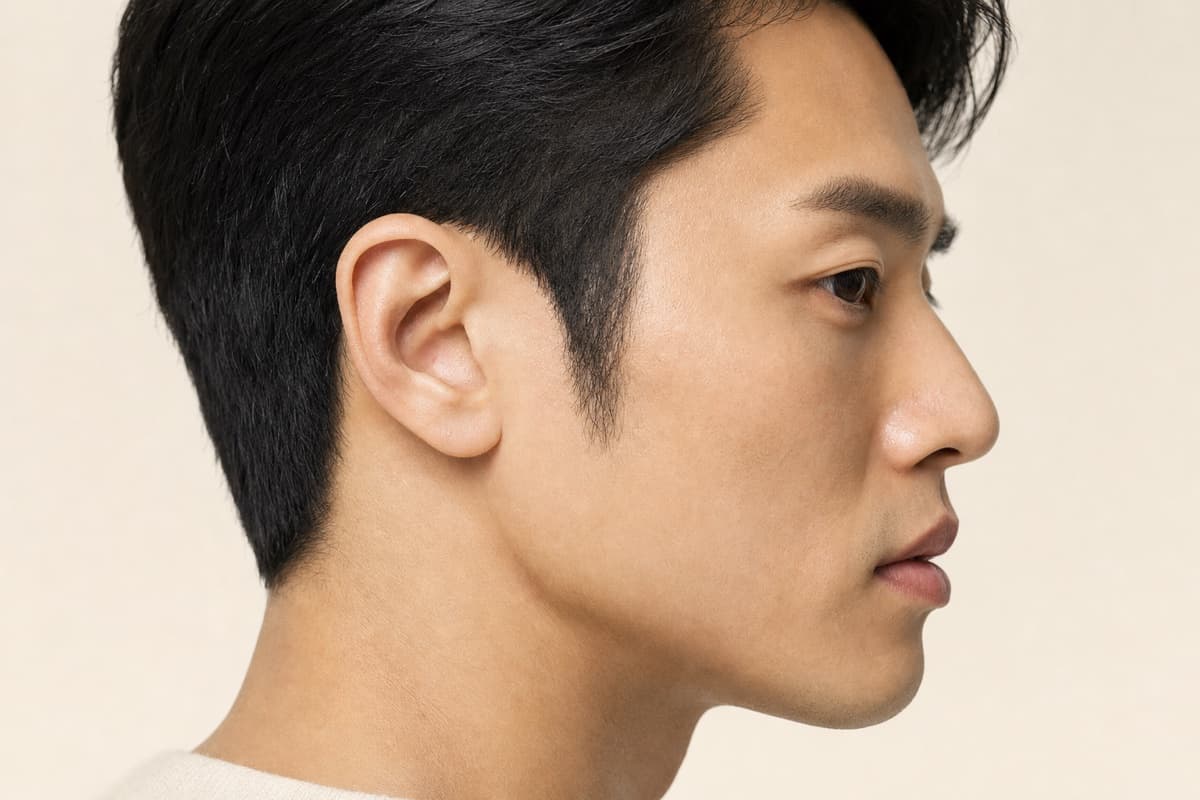
Complete the profile with a sideburn transplant
Sideburns bring out masculinity and are a factor that shapes the overall impression. Depending on their shape, the face can look smaller and more defined, so we design the density, thickness, direction, and angle to suit the individual's face shape, creating a well-structured facial line. Because this is a transplant performed on the face, we proceed with care so that almost no scarring remains.
CONSULT
The right design for you starts with a diagnosis
How far to lower the hairline and how to approach the M-shape and crown depend on the condition of your scalp and hair loss and the three-dimensional structure of your face. Start with an accurate diagnosis.