What Are the Effects of Combining a Hair Transplant with Hair Follicle Stem Cell Treatment?
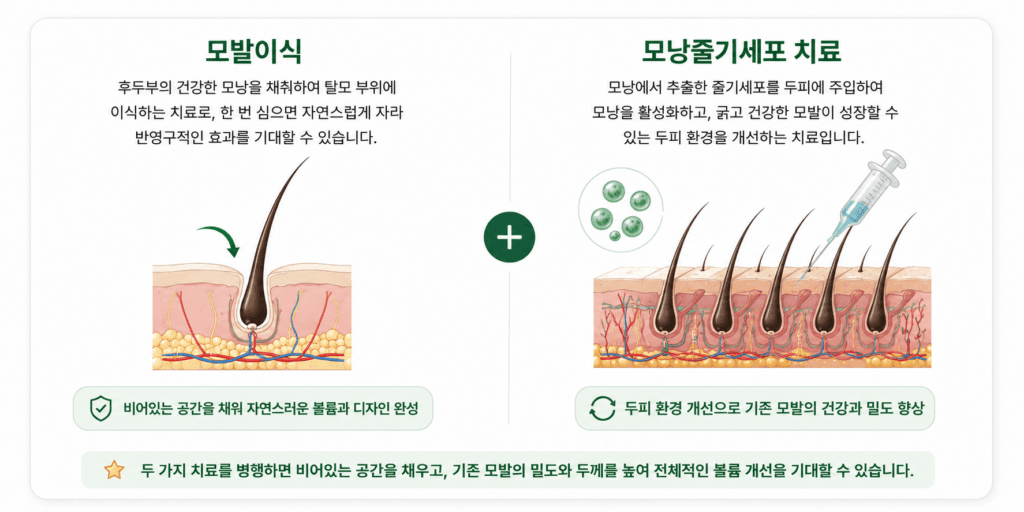
A hair transplant is a treatment that fills in empty areas, while hair follicle stem cell treatment is a treatment that improves the health and density of existing hair.
Therefore, in some cases, an approach that completes the design of M-shaped hair loss with a hair transplant while treating crown hair loss with hair follicle stem cell treatment in parallel may be suitable.
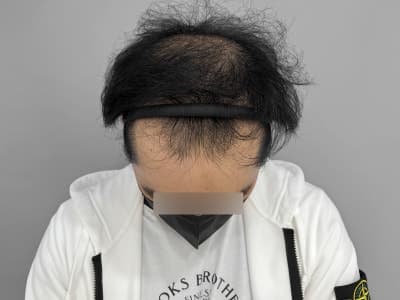
This case presents the 6-month progress of an actual patient who underwent a 4,000-hair transplant together with hair follicle stem cell treatment.
Why Might a Hair Transplant Alone Fall Short for Crown Hair Loss?
A hair transplant is a treatment that relocates new hair follicles to the areas where they are needed.
However, the crown has the following characteristics.
- In many cases, a considerable amount of existing hair remains
- In many cases, hair loss continues to progress
- In some cases, preserving existing hair is more important than transplanting
In particular, at the crown, temporary stimulation of existing hair follicles during surgery can cause shock loss.
This is mostly a temporary phenomenon, but it requires extra attention when the existing hair is weak.
For this reason, for crown hair loss,
✔ not only a hair transplant but also
✔ medication
✔ hair follicle stem cell treatment
are often considered together.
This Treatment Case
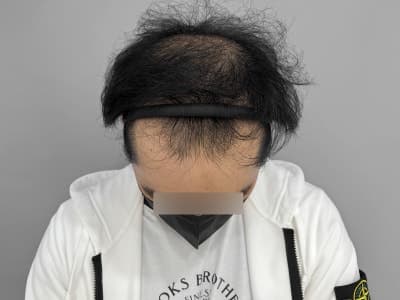
- Male in his 30s
- M-shaped hair loss + crown hair loss
- Taking finasteride for approximately 1 year or more
- Insufficient improvement at the crown
Treatment Plan
- M-shaped area: 4,000-hair transplant
- Crown: hair follicle stem cell treatment
- Follow-up: 2 weeks → 3 months → 6 months
How Did the M-Shaped Area Change?
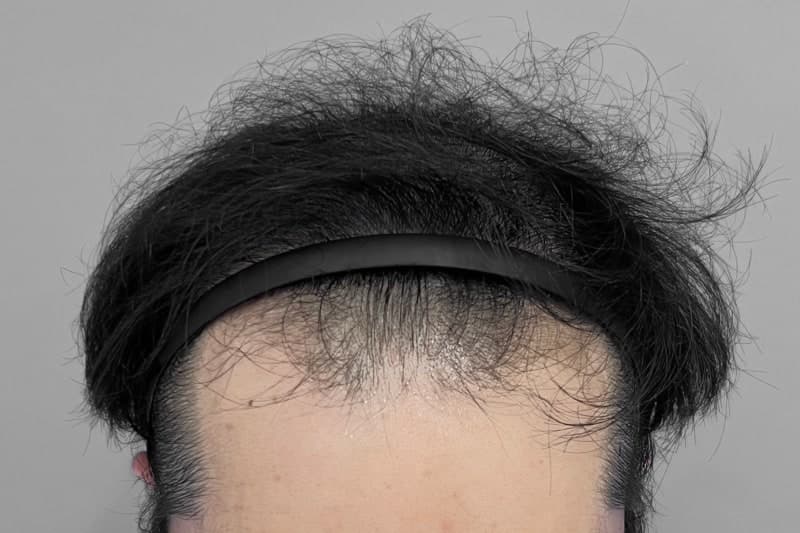
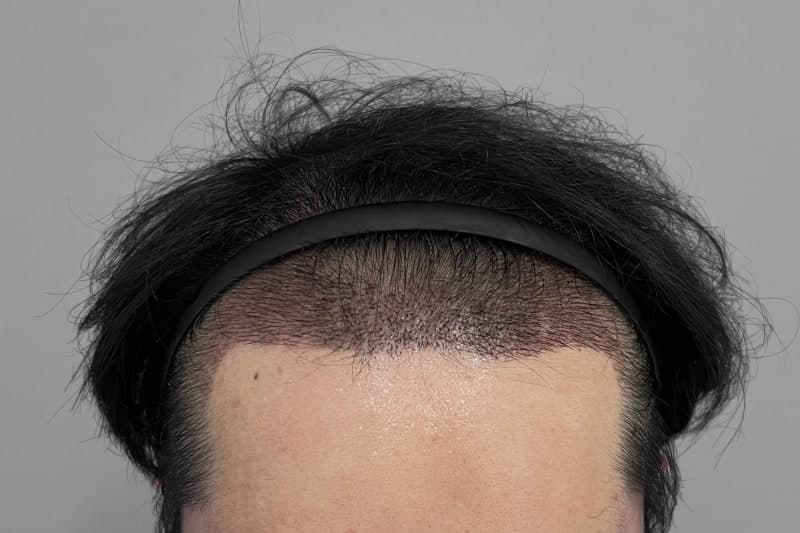
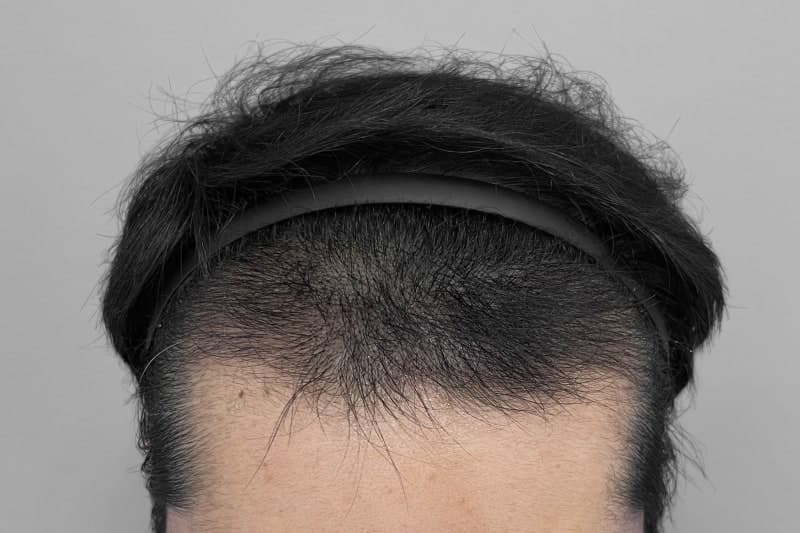
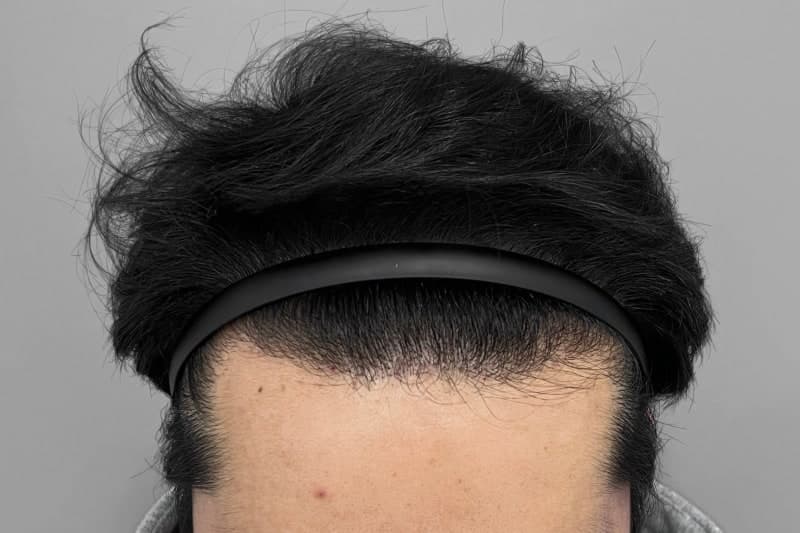
At 2 weeks after the hair transplant, the transplanted hairs are settling in, and temporary shedding begins.
New hair begins to grow from approximately 3 months,
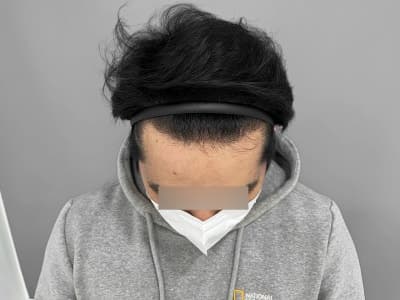
and by 6 months, the hairline can be seen taking on a natural, completed form, with density gradually increasing.
Although results vary by individual, in many cases density continues to improve for up to 10 months to 1 year.
Why Was Hair Follicle Stem Cell Treatment Performed on the Crown?
In many cases, hair still remains at the crown.
In this area, rather than simply implanting hair,
keeping the existing hair healthy
and restoring its thickness is often important.
In this case as well, hair follicle stem cell treatment was performed together, with the expectation of
- increased thickness of existing hair
- improved hair density
- improved scalp environment
as the goals of treatment.
Changes at the Crown After 6 Months
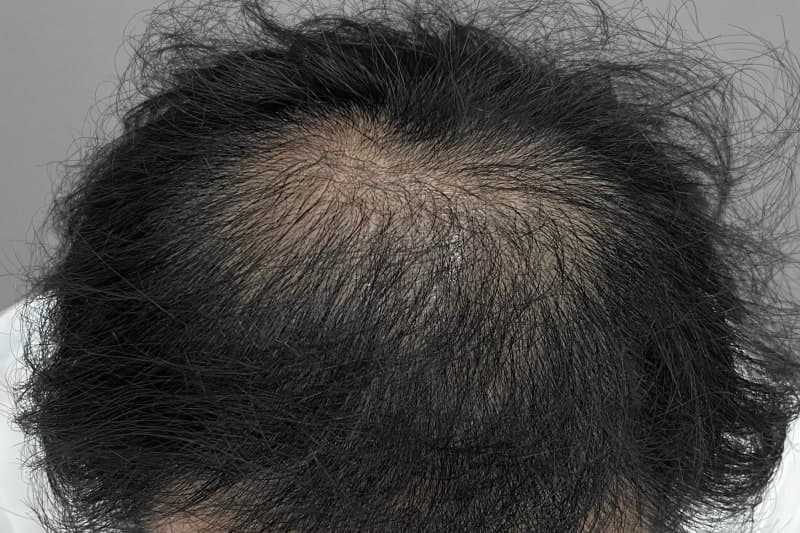
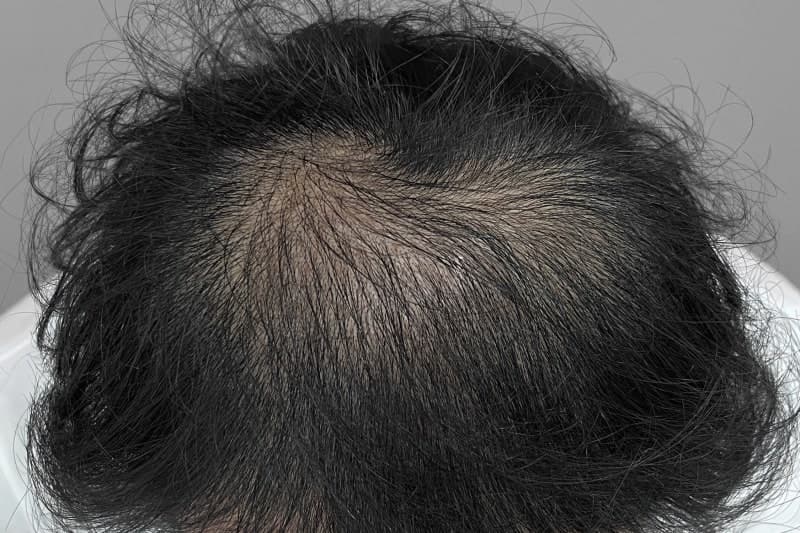
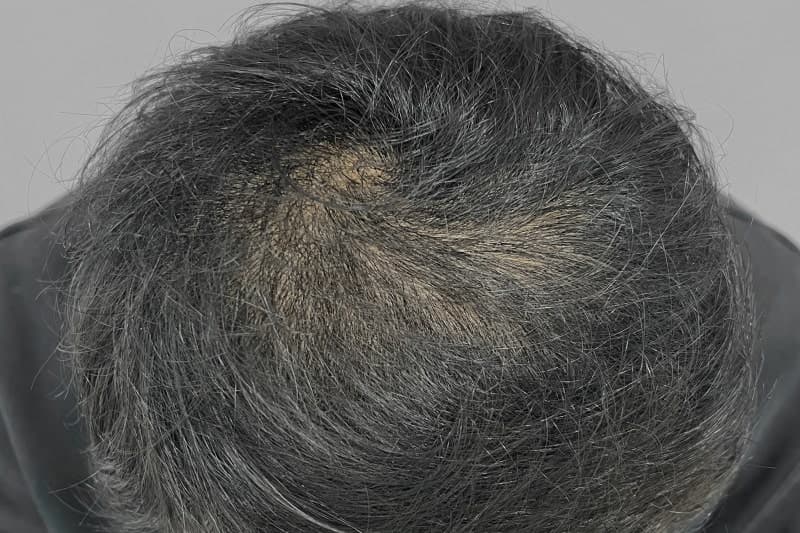
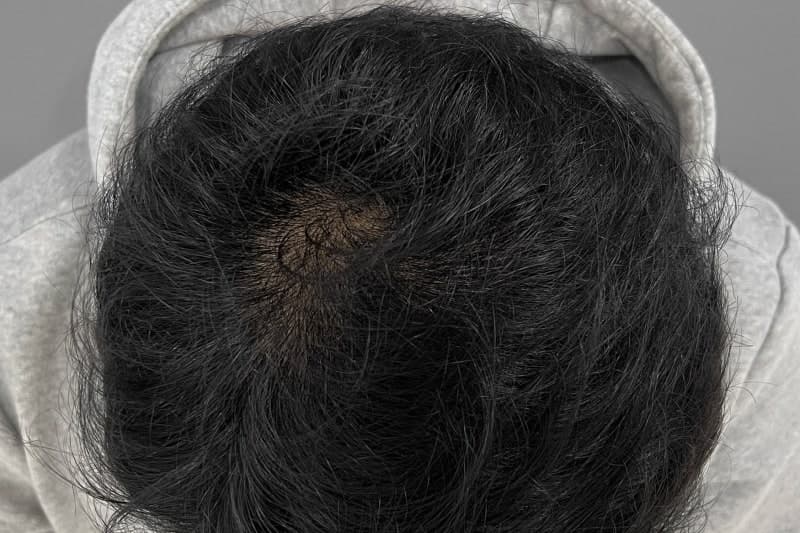
In the 6-month progress photos,
the areas of the crown that initially appeared sparse have decreased,
and the existing hair can be seen to have become thicker and healthier.
Because hair follicle stem cell treatment is a treatment that creates an environment in which existing hair can grow healthily,
it is sometimes considered alongside other options for crown hair loss that is difficult to fill with a hair transplant.
When Combining a Hair Transplant with Hair Follicle Stem Cell Treatment May Be Beneficial

Combined treatment may be considered in the following cases.
- When M-shaped and crown hair loss have progressed together
- When a considerable amount of existing hair remains
- When you wish to maintain crown density as much as possible
- When satisfactory improvement is difficult with medication alone
- When you want more natural overall volume
Treatment methods may vary depending on the progression of hair loss and the condition of the scalp, so it is important to decide through consultation with the medical team.
Frequently Asked Questions
Do a hair transplant and hair follicle stem cell treatment have to be done together?
They do not necessarily have to be done together. Depending on the type and degree of hair loss, a hair transplant alone may be sufficient in some cases, while hair follicle stem cell treatment may also be considered when preserving existing hair is important.
For crown hair loss, is hair follicle stem cell treatment better than a hair transplant?
It may depend on the condition of the crown hair loss. When sufficient existing hair remains, hair follicle stem cell treatment may be helpful, while a hair transplant may also be needed when the area of hair loss is extensive.
When do the effects of hair follicle stem cell treatment become visible?
Although this varies by individual, changes are generally observed over several months, and it is important to continuously monitor progress after treatment.
Conclusion
A hair transplant is a treatment that naturally fills in empty areas,
and hair follicle stem cell treatment is a treatment that can help keep existing hair healthy.
As in this case, appropriately combining the two treatments according to the pattern of hair loss may be expected to produce more balanced results.
Because the treatment plan for hair loss varies depending on its progression and the scalp environment, it is important to choose the treatment suited to you after a thorough diagnosis.

References
- Gan Y, Du L, Wang H, et al. A Clinical Trial of Treating Androgenic Alopecia with Mesenchymal Stem Cell Suspension Derived from Autologous Hair Follicle. Plast Reconstr Surg. 2024;154(3):444–450. doi:10.1097/PRS.0000000000010841 (Free full text)
- Garg AK, Garg S. Enzymatic Dissociation and Identification of Hair Follicle Stem Cells for Reversing Miniaturization in Androgenetic Alopecia. Hair Transplant Forum Int. 2025;35(3):88–92. doi:10.33589/35.3.88 (Original article)
The above papers are clinical and experimental studies on hair loss treatment using stem cells derived from autologous hair follicles. The cases and research findings presented do not guarantee any specific effect, and treatment results may vary by individual.
This article was written after review by the medical team at Modi Hair Plant Clinic.
This article is based on an actual treatment case, and treatment plans and results may vary depending on each individual's hair loss condition and degree of progression.