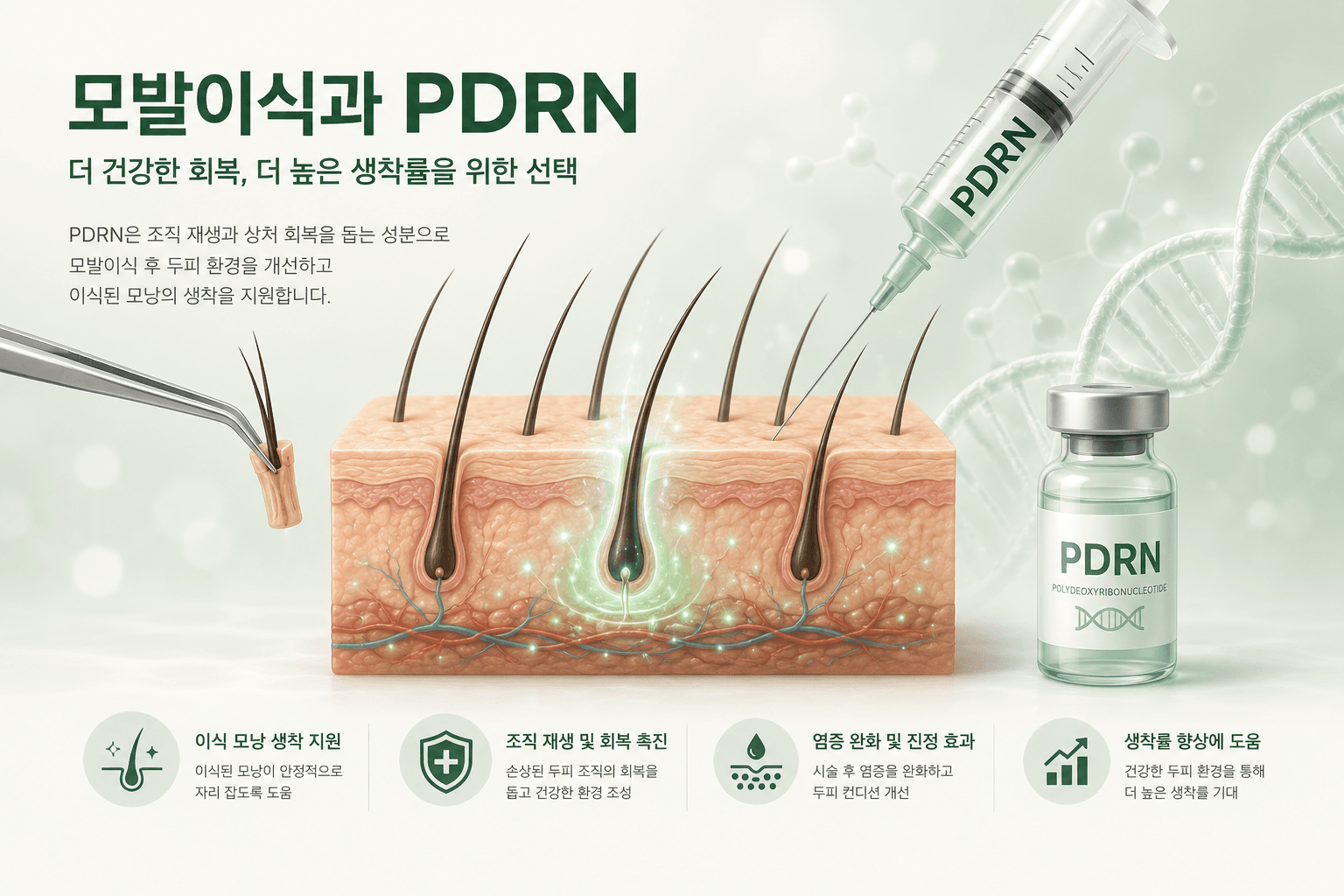
PDRN Injections in Hair Transplant: Why Are They Used?
At Modi Hair Plant, PDRN is applied to the recipient area during hair transplant surgery, and PDRN injections are also administered the day after surgery, taking the patient's recovery status into account. PDRN is a substance that has been studied in the fields of tissue regeneration and wound healing, and we use it as part of our surgical protocol that considers the recovery environment not only of the transplanted hair follicles but also of the surrounding skin tissue.
Have you wondered why PDRN injections are used in hair transplants? In this article, we explain in detail how PDRN works, related research findings, and why Modi Hair Plant uses it as part of its surgical protocol.
Key Points
- PDRN is a substance studied in the fields of tissue regeneration and wound healing
- Modi Hair Plant has included it in its surgical protocol since 2020
- Used with consideration for the recovery environment after hair transplant
- Applied together with various graft survival programs depending on the patient's condition
What Is PDRN?
PDRN (Polydeoxyribonucleotide) is a substance composed of DNA fragments extracted from the DNA of salmon or trout.
It was initially studied for skin regeneration and wound healing, and its range of use later expanded to various fields of tissue regeneration.
Recently, it has been widely used in dermatology, plastic surgery, and regenerative medicine, and extensive research is being conducted on it as a substance that supports tissue recovery.
How Does PDRN Work?
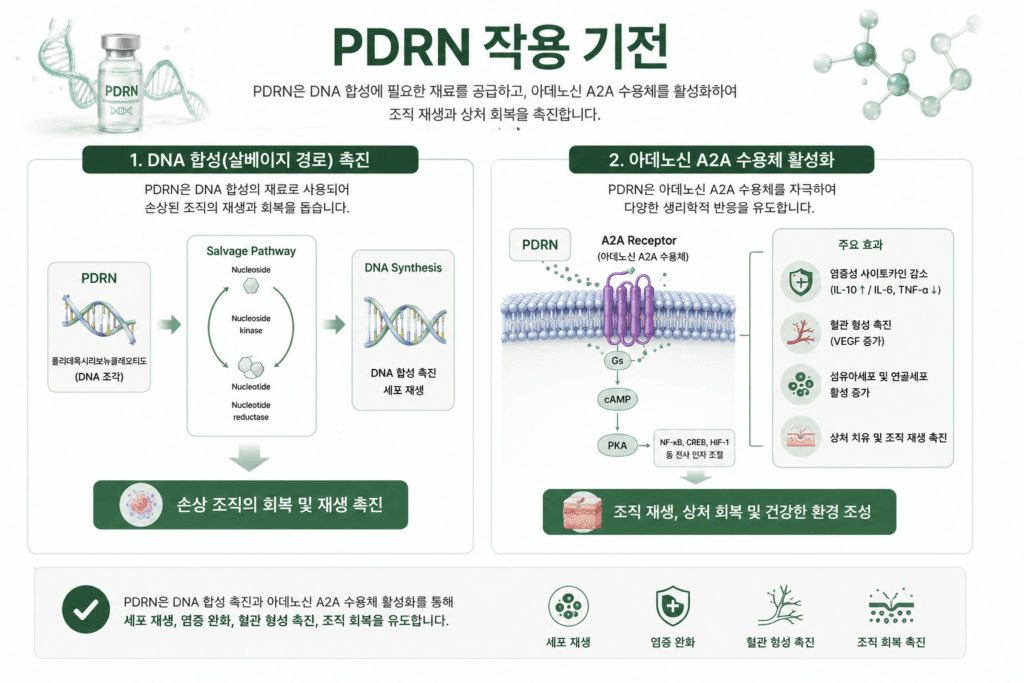
To date, there are two main known mechanisms of action of PDRN.
1. Supplying Materials Needed for DNA Synthesis
PDRN is used as material in the process by which cells make new DNA (the salvage pathway).
Through this, it is known to support the cellular activity needed in the recovery process of damaged tissue.
2. Activation of the Adenosine A2A Receptor
Recent studies have reported that PDRN may stimulate the adenosine A2A receptor and influence various physiological responses.
Studies have proposed mechanisms related to
- Reduction of inflammatory cytokines
- Promotion of angiogenesis
- Fibroblast activation
- Promotion of tissue recovery
and other effects.
Why Is the Recovery Environment Important in Hair Transplant?
The success of a hair transplant is not determined simply by transplanting hair follicles.
For transplanted hair follicles to settle in stably,
- Blood supply
- Tissue recovery
- Inflammation management
- Skin regeneration environment
and other factors must be considered together.
That is why Modi Hair Plant places importance on this recovery environment and applies PDRN as part of its surgical protocol.
Why We Use PDRN for Graft Survival and Recovery in Hair Transplant
In a hair transplant, thousands of hair follicles are transplanted very densely.
From the patient's perspective, this can mean expecting a fuller result,
but on the other hand, it can place a considerable burden on the skin tissue.
With this in mind, Modi Hair Plant considers it important to care for
not only the transplanted hair follicles
but also the surrounding skin environment where the follicles settle.
PDRN is one part of that process.
For this reason, Modi Hair Plant applies PDRN to the recipient area during surgery and, the day after surgery, checks the recovery status and administers PDRN injections. This is part of our surgical protocol for managing the recovery environment of not only the transplanted hair follicles but also the surrounding tissue.
What Have Actual Studies Found?
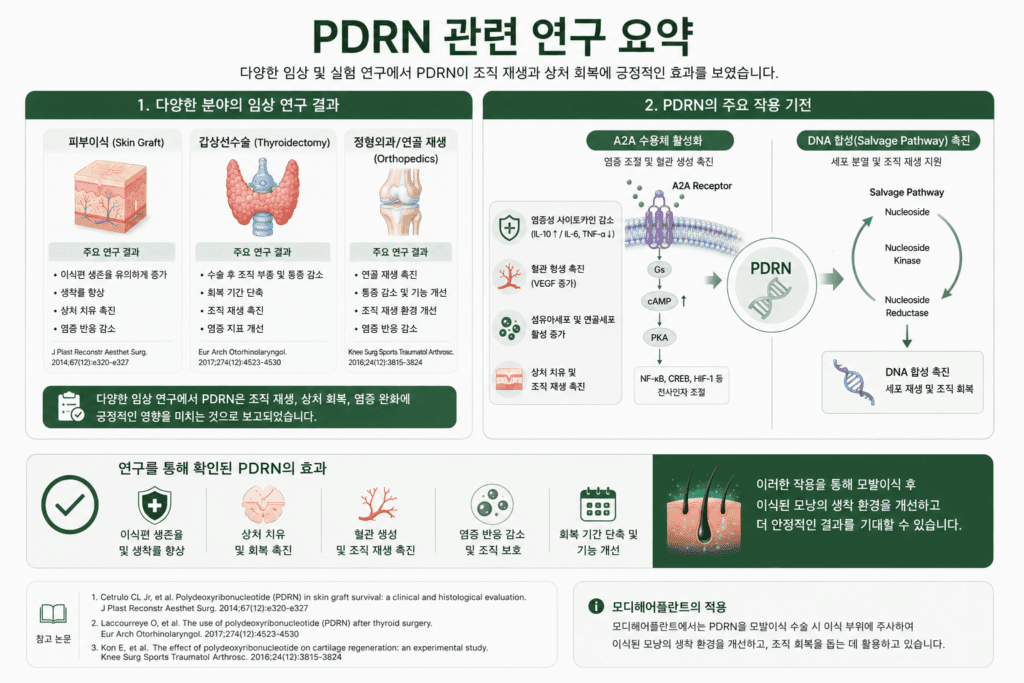
At present, there are still not many large-scale clinical studies focused solely on PDRN in the field of hair transplantation.
However, in other tissue recovery fields such as skin grafts and composite grafts, recovery-related effects of PDRN have been reported in studies.
In the reported studies,
- Improved survival rate of grafts (transplanted tissue)
- Promoted re-epithelialization (wound healing) of graft and surgical sites
- Support for angiogenesis and tissue regeneration
- Reduced inflammatory response
and other related results were observed.
Although these studies were not conducted under conditions identical to hair transplantation, they can be regarded as reference material supporting the possibility that PDRN may help the tissue recovery environment.
References
Squadrito F, Bitto A, Irrera N, et al. Pharmacological Activity and Clinical Use of PDRN. Front Pharmacol. 2017;8:224. doi:10.3389/fphar.2017.00224 (Free access)
Valdatta L, Thione A, Mortarino C, et al. Evaluation of the efficacy of polydeoxyribonucleotides in the healing process of autologous skin graft donor sites: a pilot study. Curr Med Res Opin. 2004;20(3):403–408. doi:10.1185/030079904125003116 (PubMed)
Heo J, et al. Effect of Polydeoxyribonucleotide on Chondrocutaneous Composite Grafts Survival. Aesthetic Plast Surg. 2019;43(4):1071–1077. doi:10.1007/s00266-019-01400-x (Full text)
The references above are studies evaluating the action and tissue recovery effects of PDRN in various tissue regeneration fields, including recovery of skin graft donor sites, survival of composite grafts, and the pharmacological mechanisms of PDRN. In the field of hair transplantation, its potential use is being discussed based on these findings.
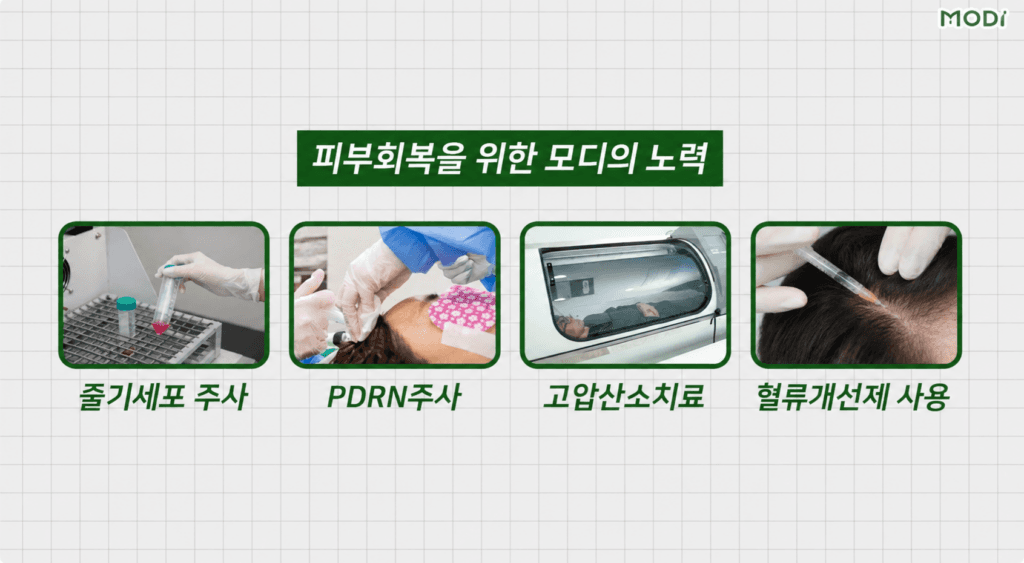
Modi Hair Plant Manages the Graft Survival Environment Comprehensively.
Modi Hair Plant does not rely on a single method for graft survival.
To create a better recovery environment,
we consider various methods together depending on the patient's condition.
For example,
- Hair follicle stem cell therapy
- PDRN
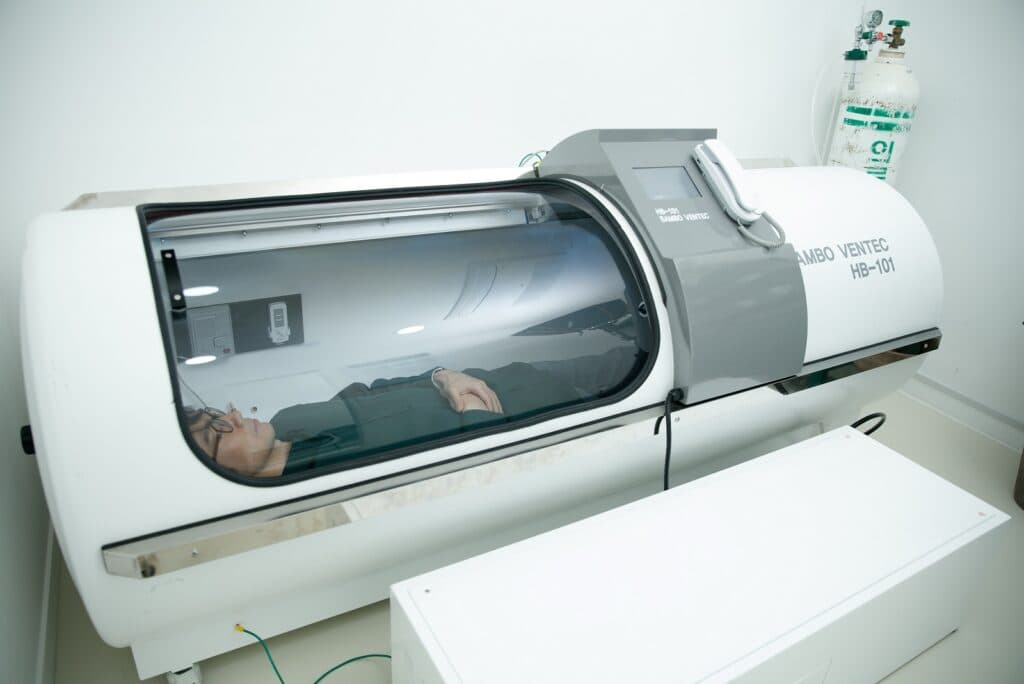
- Hyperbaric oxygen therapy
- Additional treatments based on scalp condition
are applied together
to manage the recovery environment from multiple angles.
In other words,
rather than focusing only on the hair follicle itself,
our goal is to create an environment in which the hair follicles and surrounding tissue can recover together.
Consistently Applied Since 2020.
Modi Hair Plant has included PDRN in its hair transplant surgical protocol since 2020. In addition to applying PDRN to the recipient area during surgery, we also administer PDRN injections the day after surgery to manage the recovery process. The method of application may vary depending on the patient's condition, but we have continued this to date as one of our efforts to create a more stable recovery environment.
What Modi Hair Plant Values Is the ‘Recovery Environment’.
A hair transplant is not simply a procedure of implanting many hair follicles.
The process of creating an environment in which the transplanted follicles can settle in stably
and the surrounding tissue can recover healthily is also important.
That is why Modi Hair Plant
considers various elements together, such as our hair follicle sorting system,
customized follicle sorting containers,
PDRN,
hair follicle stem cells,
and hyperbaric oxygen therapy,
and
continues its research toward better surgical outcomes.
Frequently Asked Questions (FAQ)
Q. Is PDRN used in every hair transplant surgery?
At Modi Hair Plant, it is applied as part of our surgical protocol, and various recovery programs are applied together, taking into account the patient's degree of hair loss progression and scalp condition.
Q. Is PDRN a stem cell?
No. PDRN is not a stem cell; it is a tissue regeneration-related substance composed of DNA fragments.
Q. Does PDRN alone make hair grow?
PDRN is not a drug that directly treats hair loss; it is a substance used to support the tissue recovery environment.
Q. When is PDRN injected?
At Modi Hair Plant, PDRN is applied to the recipient area during hair transplant surgery, and PDRN injections are also administered the day after surgery.
This is part of our surgical protocol for managing the recovery environment of not only the transplanted hair follicles but also the surrounding skin tissue. The method of application is determined by the medical team based on the patient's condition and surgical plan.
Q. Do I need additional PDRN injections after the hair transplant?
At Modi Hair Plant, PDRN is routinely applied during surgery, and PDRN injections are also administered the day after surgery.
Whether additional PDRN treatment is needed afterward is determined individually by the medical team after checking the patient's recovery and scalp condition. If needed, we will guide you through a customized care plan together with other recovery programs.
Closing
At Modi Hair Plant, we believe that surgery does not end with ‘implanting hair follicles well’—creating an environment in which the follicles can settle in stably is also part of the surgery.
The PDRN we apply during the hair transplant process is also used based on this philosophy, and we continue to review various studies on tissue recovery and regeneration as we develop treatment protocols that can be of help to our patients.
🔻Director Yoo Hwa-jeong explains the PDRN surgical protocol
This content was reviewed by the medical team of Modi Hair Plant Clinic before publication.