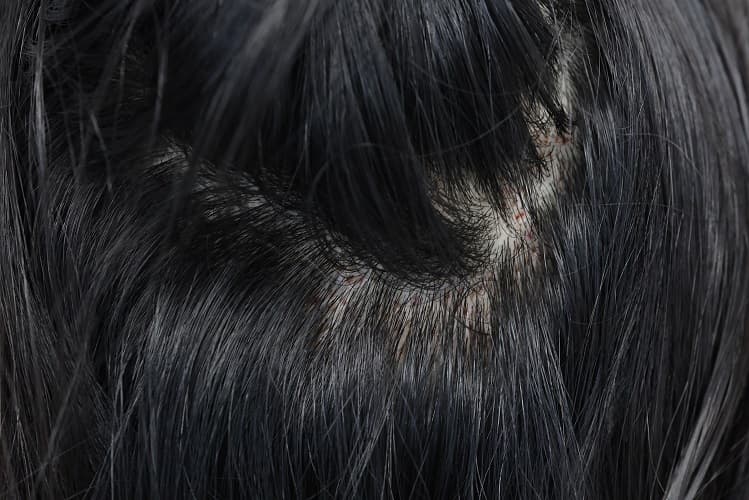
Because surgical methods for no-shave non-incision hair transplants differ from clinic to clinic, a procedure may not actually be no-shave. It is therefore important to confirm the donor harvesting method at the back of the head and the extent of shaving before surgery.
Hello, this is Modi Hair Plant Clinic.
Many people considering a hair transplant want to return to their daily lives quickly after surgery. Office workers and female patients in particular often look for a "no-shave non-incision hair transplant" because they are concerned about others noticing that they have had surgery.
However, as mentioned above, not all no-shave hair transplants are performed in the same way.
Today, we will introduce the various shaving methods used in hair transplants and the genuine no-shave non-incision hair transplant that Modi Hair Plant pursues.
Shaving Methods Used in Hair Transplants
A hair transplant is a procedure in which healthy hair follicles are harvested from the back of the head and transplanted into areas of hair loss.
Depending on the follicle harvesting method, the following various approaches are used.
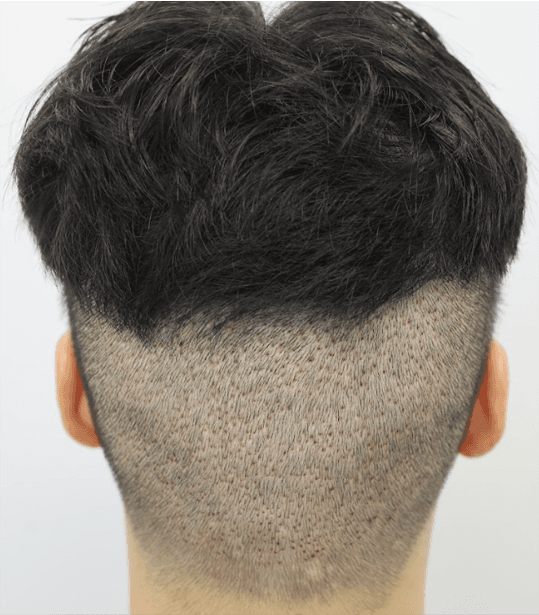
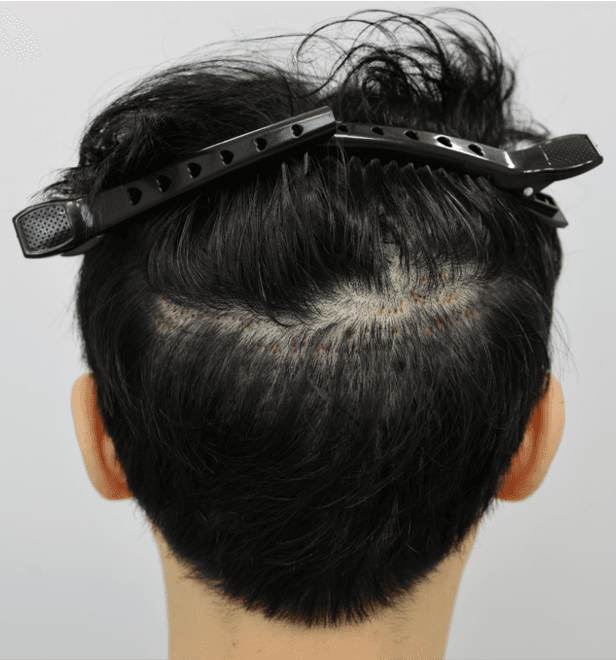
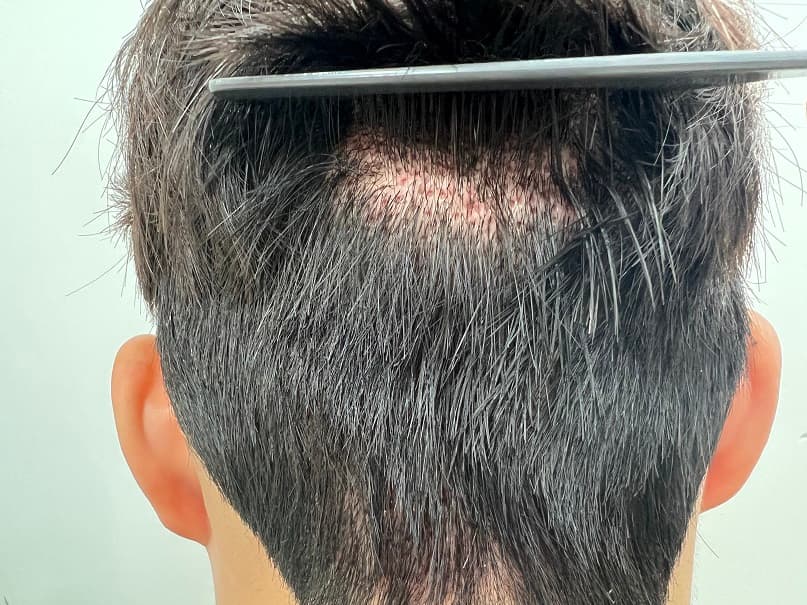
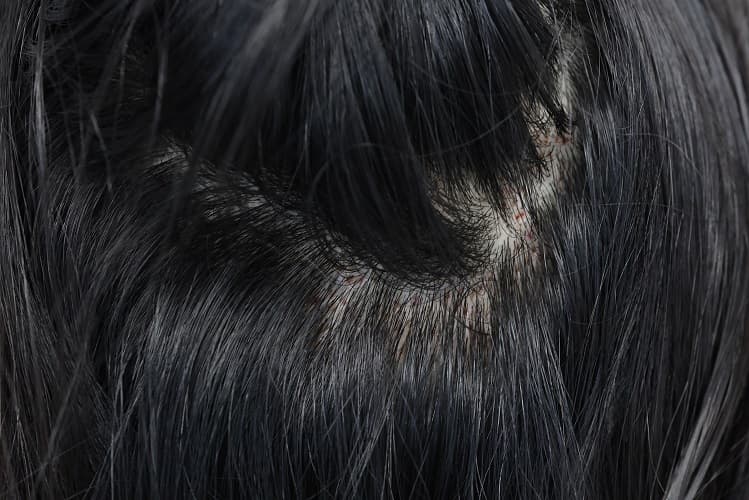
No Shave
A method in which hair follicles are harvested while the existing hair is kept as it is.
Minimal Shave
A method in which harvesting is performed after trimming only some of the hair to a minimum.
Strip Shave
A method in which hair follicles are harvested after shaving narrow sections at specific areas of the back of the head.
Full Shave
A method in which harvesting is performed after shaving a wide area at the back of the head, allowing more hair follicles to be obtained.
Why No-Shave Non-Incision Hair Transplants Are Drawing Attention
The biggest advantage is that patients can keep their existing hairstyle even immediately after surgery, allowing a quick return to daily life.
In particular, it is a preferred method for
- those who need to continue working
- those who do not want others to know they have had surgery
- female patients who keep long hair
.
Not All No-Shave Hair Transplants Are the Same.
Some medical institutions describe their procedure as a no-shave hair transplant, but in practice they may shave several narrow sections at the back of the head and apply taping before harvesting hair follicles.
Immediately after surgery, these areas may be covered by surrounding hair and look similar to a no-shave result, but strictly speaking, this is closer to the strip-shave method.
Traces That Narrow Strip Shaving May Leave
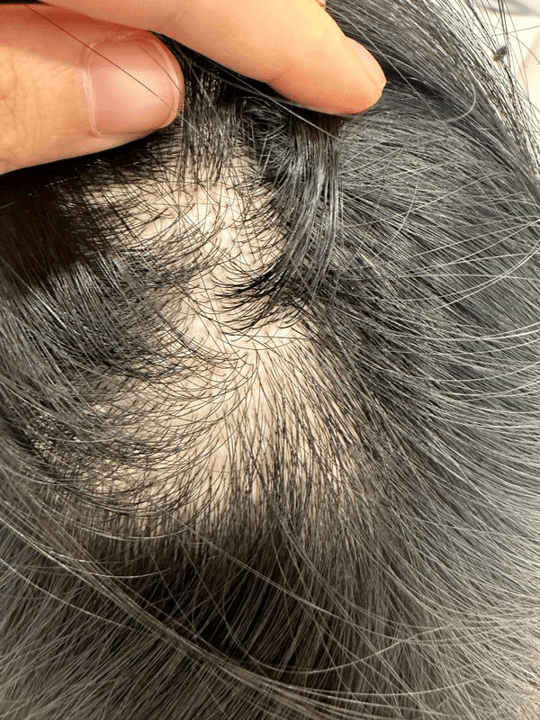
The more strip-shaved sections are created, the less noticeable they may appear immediately after surgery.
However, if harvesting is performed too densely, a striped pattern of reduced density may appear at the back of the head, and this difference may be even more noticeable in those who keep a short hairstyle.
Therefore, it is important to check not only whether it simply "looks like no-shave," but also how the back of the head recovers after harvesting.
Actual Case
This is the case of a female patient who visited for additional correction after a hairline correction surgery.
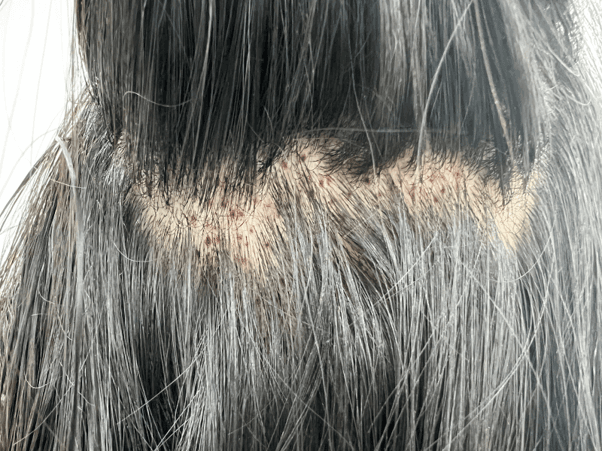
The surgery was performed using the no-shave non-incision method, and the condition of the back of the head photographed the day after surgery can be seen.
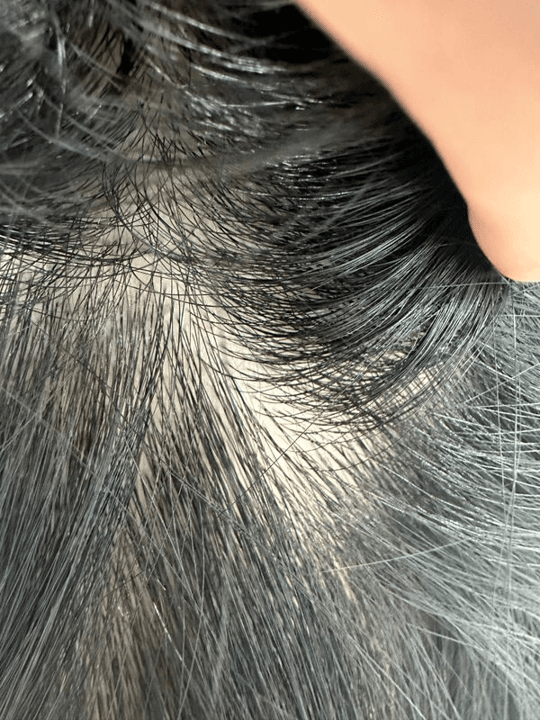
In the photo taken 2 weeks after surgery, no scars were visible at the harvesting site, and natural recovery could be observed.
“Not everything called no-shave is truly no-shave.
Be sure to confirm a genuine, properly performed no-shave procedure!“
No-Shave Hair Transplant: Key Points to Check
If you are considering a no-shave hair transplant, we recommend checking the following.
- Whether the procedure is actually performed without shaving
- How the donor harvesting at the back of the head is planned
- Whether there are sufficient cases of donor-area recovery after harvesting
- Whether progress can be checked not only immediately after surgery but also several months later
Modi Hair Plant's Perspective
A no-shave non-incision hair transplant cannot be evaluated simply by whether it is unnoticeable on the day of surgery.
In addition to a natural appearance immediately after surgery, preservation of density at the back of the head and long-term recovery must also be considered.
Modi Hair Plant develops a suitable harvesting plan that takes into account each patient's hair condition and lifestyle, and strives for more natural results and faster recovery.
Frequently Asked Questions (FAQ)
Q. Does a no-shave hair transplant really involve no shaving at all?
A. Methods differ from clinic to clinic. Some methods harvest hair follicles while keeping the existing hair as it is, but in some cases, a strip-shave method that shaves several narrow sections at the back of the head is described as no-shave. It is important to confirm the harvesting method and the extent of shaving before surgery.
Q. How do no-shave, minimal-shave, strip-shave, and full-shave methods differ?
A. In the no-shave method, hair follicles are harvested while the existing hair is kept as it is, and in the minimal-shave method, only some of the hair is trimmed to a minimum. In the strip-shave method, harvesting is performed after shaving narrow sections at specific areas of the back of the head, and in the full-shave method, a wide area at the back of the head is shaved to obtain more hair follicles.
Q. In what cases is a no-shave non-incision hair transplant considered?
A. It is considered when a quick return to daily life is needed, as patients can keep their existing hairstyle even immediately after surgery. It is preferred by those who need to continue working, those who do not want others to know they have had surgery, and female patients who keep long hair.
Q. What should I check during a consultation for a no-shave hair transplant?
A. We recommend checking whether the procedure is actually performed without shaving, how the donor harvesting at the back of the head is planned, whether there are sufficient cases of donor-area recovery after harvesting, and whether progress can be checked not only immediately after surgery but also several months later.
References
- Park JH, You SH, Kim NR. Nonshaven Follicular Unit Extraction: Personal Experience. Ann Plast Surg. 2019;82(3):262-268. doi:10.1097/SAP.0000000000001679 (Free full text)
- Park JH, You SH. Pretrimmed versus Direct Nonshaven Follicular Unit Extraction. Plast Reconstr Surg Glob Open. 2017;5(3):e1261. doi:10.1097/GOX.0000000000001261 (Free full text)
This content was published after review by the Modi Hair Plant medical team to provide accurate medical information.