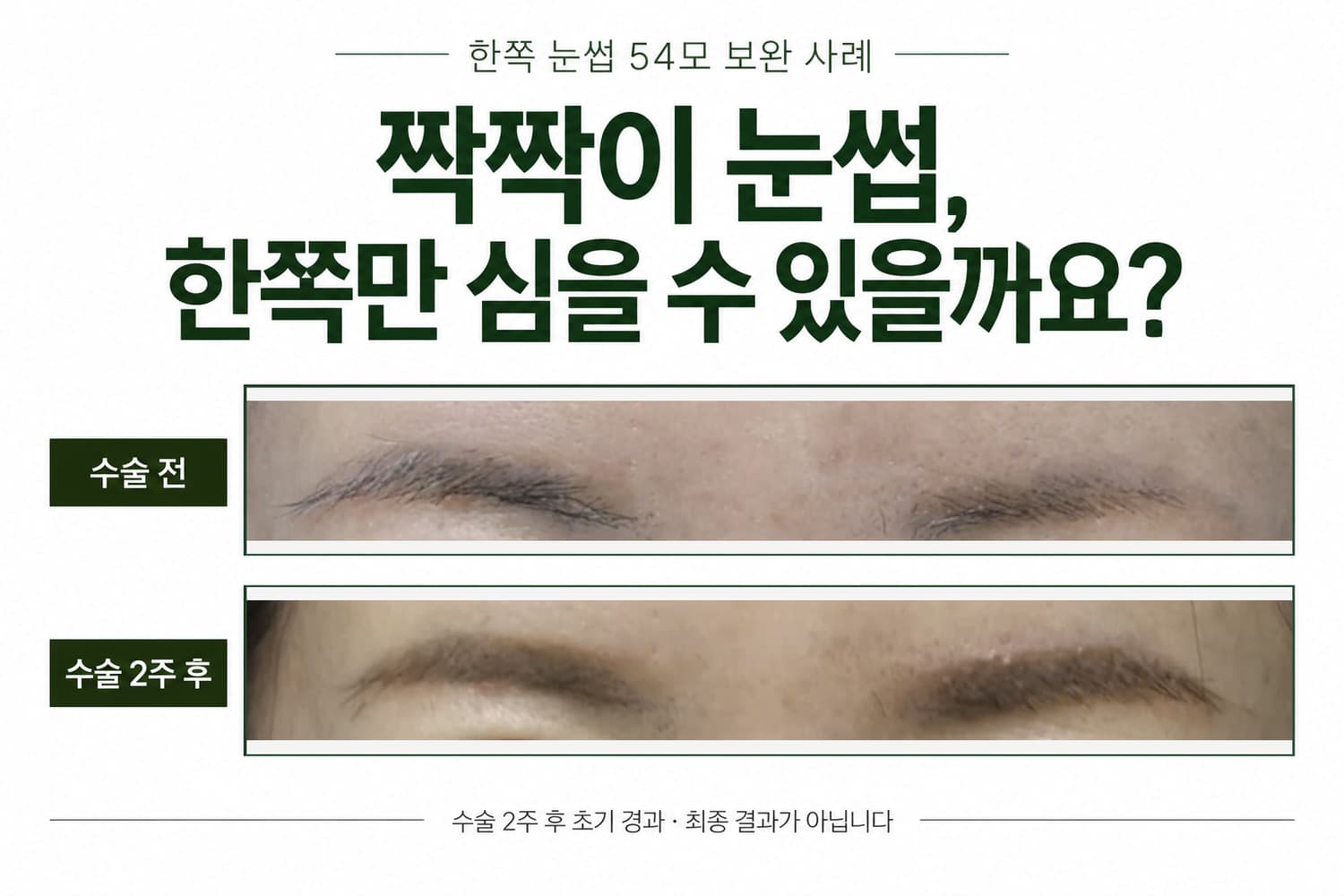
Eyebrow Asymmetry · Video Case by Director Yoo Hwa-jung
If Only One Eyebrow Is Lacking, Can Just the Needed Area Be Filled In?
If one eyebrow lacks density or is thin at the tail, a plan can be made that focuses the transplant on that side. However, even with the same “uneven eyebrows,” it must first be determined whether hair is lacking or whether the shape or position differs. In this article, we look at a 54-hair one-sided eyebrow correction case introduced by Director Yoo Hwa-jung of Modi Hair Plant.
3-Line Summary
- A plan to transplant only one side is possible. The scope is determined by examining both the deficient area and the condition of the opposite eyebrow.
- 54 hairs is the number transplanted in one case shown in the video. Not everyone needs the same number of hairs.
- We consider not only the number of hairs but also thickness and placement. The appearance at 2 weeks after surgery should be distinguished from long-term growth results.
1. A Case Seeking an Eyebrow Similar to the Other Side, Rather Than a Darker One
The patient in the video reportedly had a congenitally sparse rear portion of one eyebrow. Although she had compensated with tattooing and makeup, she was concerned that the areas with actual hair and those without looked different.
The change she wanted was not to make the entire eyebrow darker. Filling in the deficient side within a minimal range so that it matches the other side was the starting point of the consultation.
Director Yoo Hwa-jung explains how she used the density and shape of the opposite eyebrow as the reference, and selected and harvested hair from the nape that suits the eyebrow.
2. 54 Hairs in One Eyebrow: What Can Be Seen in the Photo 2 Weeks After Surgery
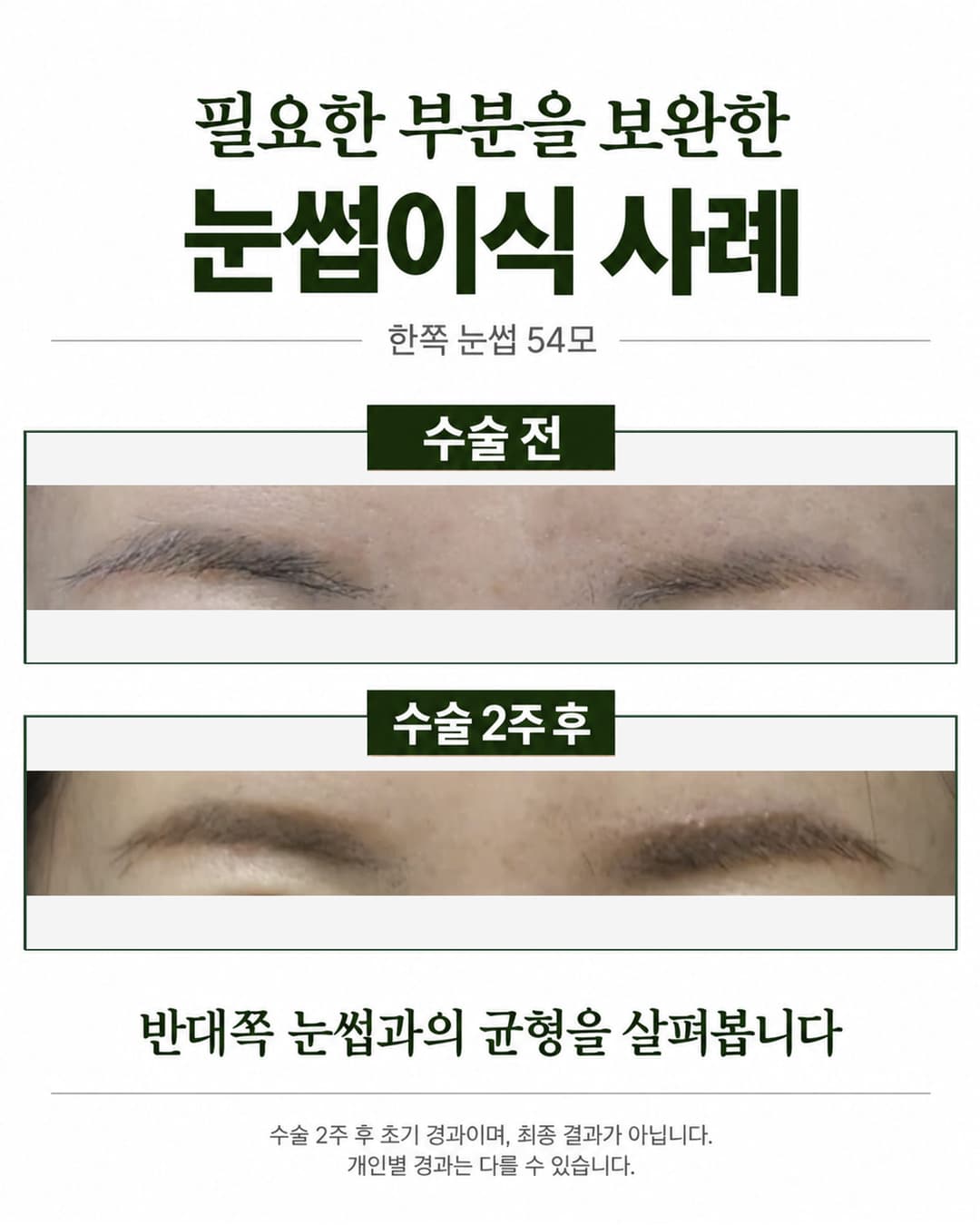
Number Transplanted: 54 Hairs
In the video, the Director explains that a total of 54 hairs were transplanted, counted one strand at a time. This is the number used in this case, not a common standard for one-sided eyebrow transplants.
Time Point: 2 Weeks After Surgery
This photo shows the early appearance after transplantation and how the two eyebrows connect. The final survival rate or long-term density cannot be judged from photos at this point alone.
When viewing the photos, rather than focusing only on how much darker the eyebrow has become, look at the extent to which the originally sparse rear portion has been filled in. Subsequent hair growth, skin condition, and the need for length trimming should continue to be checked at follow-up visits.
3. Why Wasn't the Entire Eyebrow Filled In More Densely?
The Director explains that in this case, the opposite eyebrow was not very dense either. When filling in the deficient side, balance with that eyebrow was also taken into account.
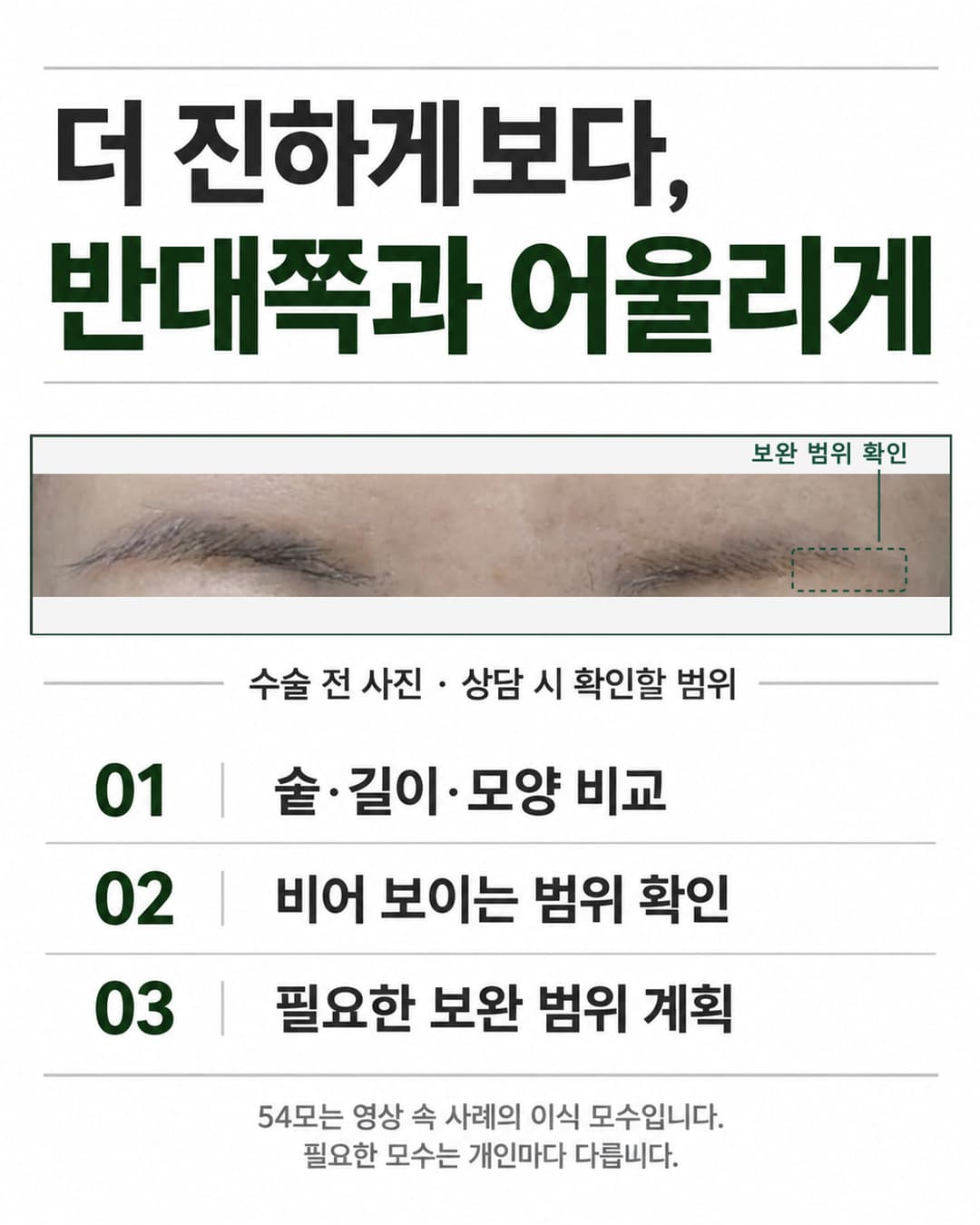
In a one-sided eyebrow transplant consultation, we examine the following together:
- Density: Which section looks sparse and how much existing eyebrow hair remains
- Length and shape: How the starting point, arch, and tail differ from the other side
- Hair characteristics: Whether a thickness and direction that match the existing eyebrow can be planned
- Desired change: Whether to fill in only the sparse area or also review the overall design
Transplanting fewer hairs is not always better, nor is transplanting more always better. The number of hairs needed is determined after assessing the area to be filled, the remaining eyebrow, the desired density, and other factors.
4. Modi Selects Single-Hair Follicles from the Nape and Also Sorts Them by Thickness
The video shows follicles harvested from the nape along with microscope sorting photos. When selecting hair for eyebrows, Modi Hair Plant looks for single-hair follicles among the fine hairs of the nape, where one strand naturally grows from one follicle.

Not all single-hair follicles have the same thickness. Director Yoo Hwa-jung explains a method of sorting by thickness based on the gradations of a microscope ruler, aimed at reducing variation in judgment between the people doing the sorting.
This content introduces Modi's hair selection and sorting process. The use of specific equipment alone does not guarantee survival rates or results superior to other clinics.
For a detailed explanation of donor hair selection, you can also see Why Fine Nape Hair Is Used for Eyebrow Transplants.
Academic Literature and This Case Should Be Viewed Separately
A 2017 paper summarizing the technical principles of eyebrow transplantation also describes selecting fine donor hair and the direction and angle for each area of the eyebrow. However, as it is a technical review, it is not evidence that the 54 hairs in this case would be appropriate for others or that a particular method is superior. [1]
5. Before Transplanting One Side, Distinguish Between Differences in Density and Differences in Position
Filling in the sparse areas of an eyebrow and changing the position or movement of the eyebrow itself are different issues. If the two sides appear to be at different heights or the difference increases with facial expressions, we do not determine the transplant area by looking only at where hair is lacking.
If there is an existing tattoo, the tattooed outline and the distribution of actual eyebrow hair must be checked separately. The consultation may vary depending on how much it differs from the desired design and the condition of the skin.

During consultation, sharing how you usually draw your eyebrows, photos without makeup, and any tattoo or previous procedure history can help explain your concerns. Noticing a small difference does not necessarily mean surgery is needed. In the video, the Director also states her view that she does not recommend surgical correction for very minor asymmetry.
Frequently Asked Questions
The video shows 54 hairs. If the number in my consultation is higher, is the plan excessive?
It is difficult to judge by the number alone. This case involved filling in the deficient area of one side to match the opposite eyebrow. For your own plan, check which area will be filled and at what density, and also ask whether the number you were given refers to individual hairs or follicles.
The height differs only when I raise my eyebrows. Can transplanting on the lower side even them out?
That cannot be stated definitively. Your appearance at rest and with facial expressions must be examined to see whether it is a difference in density or in position or movement. During consultation, we distinguish areas that can be addressed with transplantation from those requiring separate evaluation.
If my tattoo line and natural eyebrow hair are in different positions, which one is the transplant matched to?
We do not decide based on the tattoo line alone. We compare the distribution of actual eyebrow hair, the opposite eyebrow, and the desired shape, and also consider what to do with the existing tattoo. The need for and order of tattoo removal and transplantation are decided after checking the skin and pigment condition, among other factors.
If only one side is transplanted, will growth length and grooming differ between the two sides?
Because transplanted hair and existing eyebrow hair may not have the same growth characteristics, the transplanted side may require periodic length trimming. Using fine hair does not mean no grooming is needed at all. Immediately after surgery, do not pluck or irritate the area on your own, and follow the instructions of the clinic that performed your surgery regarding when to begin washing and grooming.
Rather Than “Darker,” First Find Out What Correction You Need
Having one sparse eyebrow does not mean both must be made darker. At Modi Hair Plant, have your existing eyebrows and donor hair assessed, and consult on which areas to fill in and how.
Let us know your desired shape along with any concerns you usually have. We will review everything from whether surgery is needed to the design and subsequent care.
Phone consultation: 02-544-8659
See the Case and Follicle Sorting Process in the Video
Director Yoo Hwa-jung personally explains the 54-hair one-sided eyebrow transplant case, the photos at 2 weeks after surgery, and the process of nape donor hair selection and microscope sorting.
The 54 hairs and the 2-weeks-after-surgery photos in the video are records of one individual patient. Your surgical plan and expected progress may differ from the video case.
References and Video Materials
Academic literature was used to explain the technical background of eyebrow transplantation, while the video and clinic information were used to explain the actual case and Modi's treatment approach.
- [1] Gupta J, Kumar A, Chouhan K, Ariganesh C, Nandal V. The Science and Art of Eyebrow Transplantation by Follicular Unit Extraction. Journal of Cutaneous and Aesthetic Surgery. 2017;10(2):66–71. DOI: 10.4103/JCAS.JCAS_27_17. PMID: 28852290.
- [2] Modi Hair Plant YouTube. Correcting Uneven Eyebrows: For Those Missing Just One Eyebrow!! Eyebrow Transplant Is the Answer. Published May 7, 2026. Referenced for the case, number of hairs transplanted, 2-week progress, and follicle sorting explanation.
- [3] Modi Hair Plant Clinic. Eyebrow Transplant Information. Clinic materials on donor hair selection, design, and consultation.
This article provides general medical information and an individual case introduction, and does not replace individual diagnosis or prescription. Infection, scarring, mismatched hair direction, differences in graft survival, and other issues may occur after surgery, and results and care needs vary from person to person. Whether and how to treat is decided after consultation with the medical team.