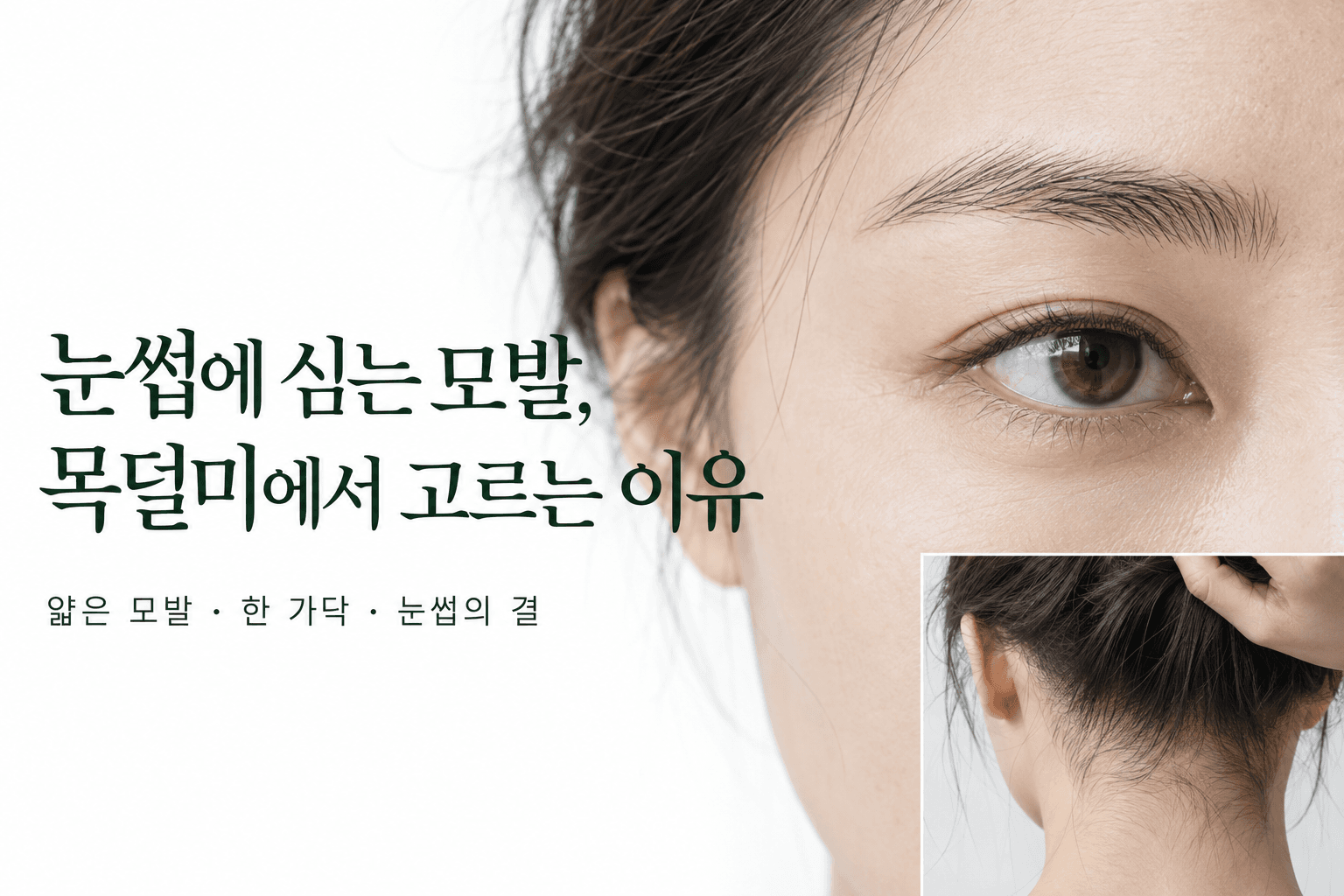
Eyebrow Transplant · Hair Selection and Design
Modi Selects the Hair for Your Eyebrows from the Nape
In an eyebrow transplant, which hair is transplanted matters as much as filling in sparse areas. Modi Hair Plant Clinic selects single-hair follicles, which naturally grow one hair each, from among the very fine hairs on the nape. This is to find a thickness that matches the existing eyebrows and to plan the direction and angle for each area as well.
Key Points
- In an eyebrow transplant, not only the number of hairs but also the thickness, color, and curvature of the hair and the direction of placement should be considered together.
- Modi selects and uses single-hair follicles, which naturally grow one hair each, from among the very fine hairs on the nape.
- Length trimming may still be needed after the transplant, and the harvesting area and surgical suitability are determined after consultation and examination.
An Eyebrow Transplant Is Not a Procedure of Cutting and Attaching Scalp Hair
An eyebrow transplant is a surgery in which hair follicles—the structures from which hair grows—are harvested and moved to the eyebrow area. As the transplanted follicles settle and hair grows, the sparse areas of the eyebrows are filled in.
Therefore, planning does not end with simply deciding the required number of hairs. It is necessary to choose hair that suits the existing eyebrows and to place it in line with the flow of the eyebrows.
Modi Takes a Different Look Starting with the Hair Used for the Eyebrows
Not every clinic harvests the same hair from the same area for eyebrow transplants. The harvesting area and the method of selecting hair vary depending on the clinic and the patient's condition.
When choosing hair for the eyebrows, Modi Hair Plant Clinic selects single-hair follicles that naturally grow one hair each, from among the very fine hairs on the nape.
Transplanting a single hair and transplanting a fine hair are not the same. Even a single-hair follicle may produce a thick hair, so we check not only whether it is a single hair but also whether its thickness, color, and curvature suit the existing eyebrows.

The criterion Modi considers important is “Does this hair suit the eyebrows?” This does not mean that nape hair is the most suitable for everyone. An individual plan is determined after checking the actual characteristics of the hair and the available harvesting range.
Is Being a Single-Hair Follicle Enough?
How many hairs grow from the follicle
A single-hair follicle is a follicle from which one hair grows. This is a condition we look at when planning the delicate placement of the eyebrows.
How fine is that single hair
Even a single hair can differ in thickness and how it curves. We also check the characteristics of the hair itself, considering how it will connect with the existing eyebrows.
In particular, areas that require a soft transition, such as the head of the eyebrow, call for careful consideration of both hair thickness and placement. Depending on the desired design, the eyebrow may not be filled at the same density from head to tail.

Direction, Angle, and Curvature That Shape the Eyebrows
The head, body, and tail have different directions
At the head of the eyebrow, hairs tend to point upward, while in the body and tail, an outward flow is important. Since the hair direction of existing eyebrows differs from person to person, an area-by-area plan is needed rather than placing all hairs in the same direction.
We consider angles that lie close to the skin
Many eyebrow hairs lie close to the skin. If the transplant angle differs, the hair may appear to stand up or look different from the existing eyebrows, so we consider the angle as well as the position and direction.
We also check the direction in which the hair curves
Curvature refers to the way hair bends. Even when transplanted in the same position, the appearance from the front and the side can differ depending on the direction in which the hair curves.
With the long-hair non-incision method, Modi checks the hair's texture while preserving its length and uses this in eyebrow design. However, this method itself does not guarantee the survival rate or the final result.

What Does the Research Describe?
A 2017 paper reviewing eyebrow transplant techniques describes the importance of donor hair thickness, direction by eyebrow area, and a low implantation angle. It also notes that fine hair can be found in areas such as the nape, but it is not a comparative trial showing that a particular harvesting area is superior for all patients. [1]
In 2021, clinical experience with 36 patients who underwent eyebrow transplants using a long-hair follicular harvesting method was reported. It introduced the technical use of placing hairs while observing their curvature, but it is a small study without a control group. It is not a study evaluating Modi's surgical outcomes, nor does it prove superiority over other methods. [2]
Before Surgery, We Check the Harvesting Area and Aftercare
Having fine hair on the nape does not mean everyone can harvest a sufficient amount from the same range. The amount and thickness of hair, whether the area is thinning, skin condition, and other factors must be checked in person.
If you often tie your hair up, please let us know your usual hairstyle. We can discuss the possibility of the harvesting area being visible and scarring.
If your eyebrows have recently thinned suddenly or a specific area repeatedly loses hair, it is important to identify the cause first. Not only the desired design but also the cause of eyebrow loss and surgical eligibility should be evaluated.
Even fine hair may require length trimming
You should not assume that transplanted hair will change to have exactly the same growth characteristics as existing eyebrows. Hair that grows long may need to be trimmed periodically.
Immediately after surgery, do not pluck or irritate the area on your own, and follow the instructions of the clinic that performed your surgery regarding when to begin washing and grooming. Afterward, care methods are adjusted while checking the actual length and texture of the growing hair.

Frequently Asked Questions
If fine hair from the nape is transplanted, will I not need to trim it?
Being fine and growing short are different characteristics. If transplanted hair grows long, grooming may be necessary, so you should discuss not only hair thickness but also aftercare methods.
I only want to softly fill the head of my eyebrows. Can I just reduce the number of hairs?
The decision is not based on the number of hairs alone. The thickness and direction of the hair used for the head, and the change in density leading into the body, must be planned together. The area to be filled and the placement may vary depending on the desired style.
If I have remaining eyebrow tattoo pigment, do I need to remove it first?
Removal is not necessary in every case. The plan is determined after checking how much the remaining color and shape differ from the desired design and the condition of the skin and existing hair.
If I have little fine hair on the nape, is an eyebrow transplant impossible?
This is difficult to determine from photos alone. The required area and the condition of the donor hair must be checked in person. If it is difficult to safely secure enough hair, the surgical scope or method may be reconsidered.
I tend to tie my hair up. Will the harvesting area on my nape be visible?
This may vary depending on the harvesting range, hairstyle, and skin condition. If you tell us how high and in what way you usually tie your hair, we can discuss the possibility of visibility with you. We cannot guarantee that no scarring will remain.
Review Your Desired Eyebrows and the Hair to Be Used Together
You are welcome to bring the eyebrow shape you usually draw or a style you would like. At Modi Hair Plant Clinic, we check the condition of your existing eyebrows and nape hair and consult with you on design and post-operative care.
References and Clinic Information
[1] Gupta J, Kumar A, Chouhan K, Ariganesh C, Nandal V. The Science and Art of Eyebrow Transplantation by Follicular Unit Extraction. Journal of Cutaneous and Aesthetic Surgery. 2017;10(2):66–71. DOI: 10.4103/JCAS.JCAS_27_17. PMID: 28852290.
[2] Park JH, Kim NR, Manonukul K. Eyebrow Transplantation Using Long Hair Follicular Unit Excision Technique. Plastic and Reconstructive Surgery – Global Open. 2021;9(5):e3598. DOI: 10.1097/GOX.0000000000003598. PMID: 34881151.
The clinic's hair selection method: Modi Hair Plant Clinic Eyebrow Transplant Information. This material describes the clinic's practice and is separate from academic research.
This article provides general medical information and an overview of the clinic's practice. It does not replace individual diagnosis or prescription. Infection, scarring, mismatched hair direction, differences in graft survival, and other issues may occur after surgery, and results and care needs vary from person to person. Whether to undergo treatment and the method are determined after examination by the medical team.