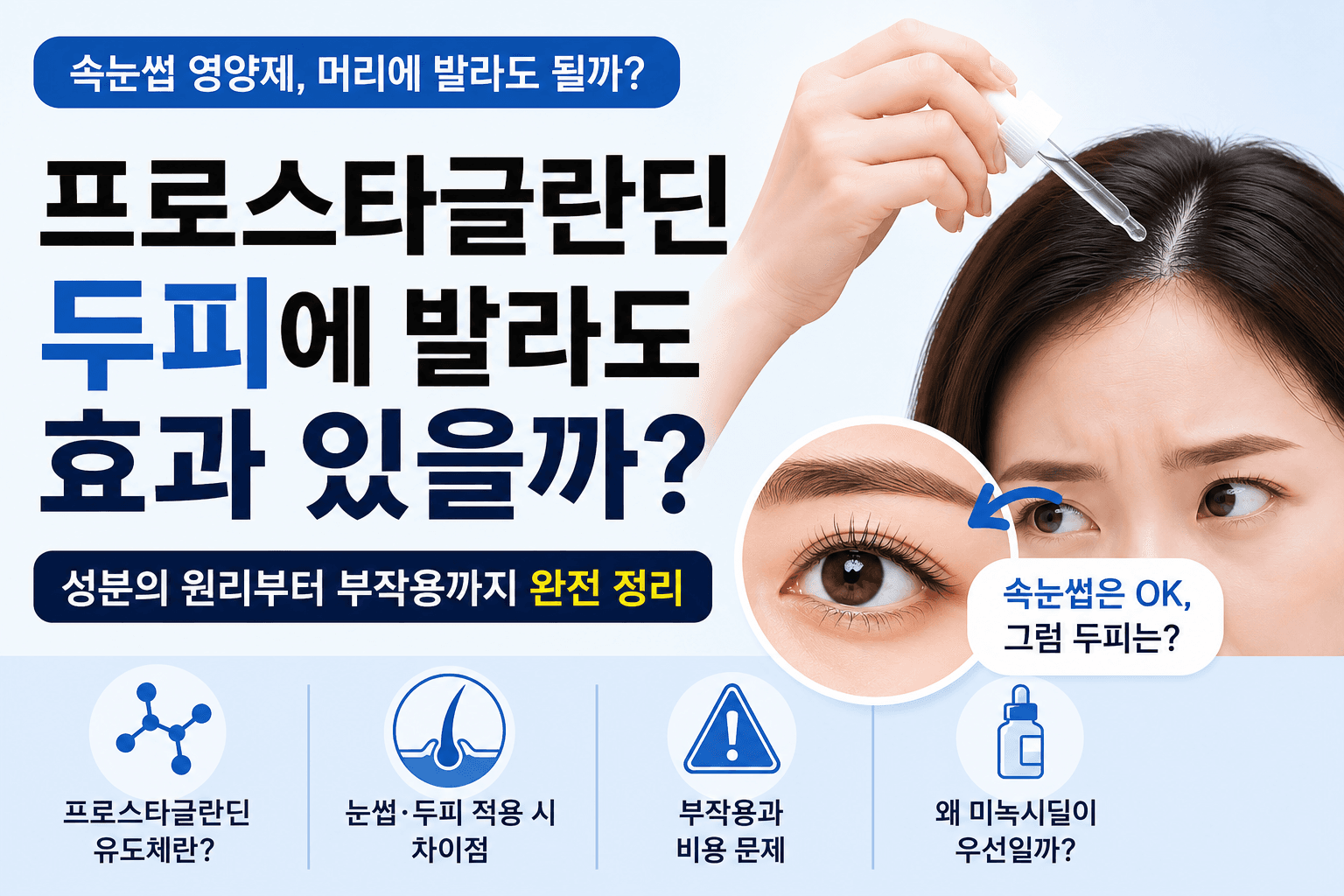
Prostaglandin analogs found in eyelash serums are known to have some effect in making eyelashes and eyebrows darker and fuller. However, for treating scalp hair loss, they have not been shown to offer clear advantages over minoxidil in terms of cost, skin irritation, and efficiency, so they are generally not recommended.
Key Summary
✔ Prostaglandin analogs in eyelash serums have been reported to make eyelashes darker and fuller.
✔ For treating scalp hair loss, they are generally not recommended when cost, skin irritation, and efficiency are considered.
✔ For the scalp, proven treatments such as minoxidil are the preferred first choice.
✔ Long-term use based solely on social media reviews should be approached with caution.
“If it really makes eyelashes grow, couldn't I apply it to my head too? What about on areas where I have no eyebrows?”
After I explained the prostaglandin analog ingredients in high-priced eyelash serums in a previous post, this question naturally followed. I am Yoo Hwa-jung, Director of Modi Hair Plant Clinic. Today, from the perspective of ingredients and efficiency, I will explain whether this ingredient can be applied to the scalp or eyebrows, and why it is not used as an actual treatment.
Can Eyelash Serum Be Applied to the Eyebrows?
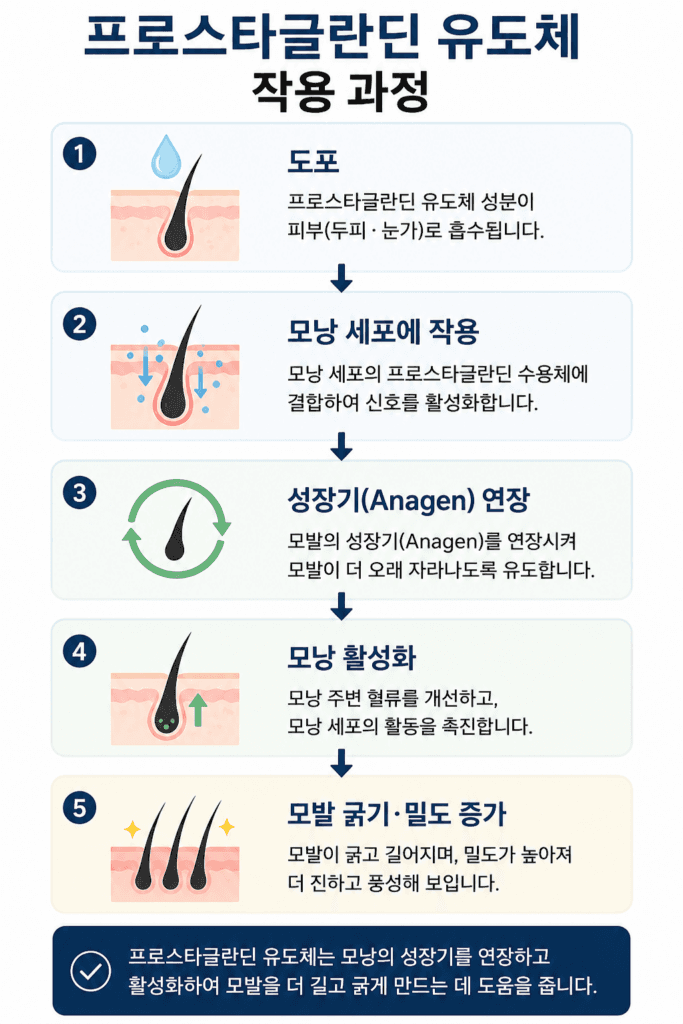
It is true that prostaglandin analogs make eyebrows darker. In fact, when this ingredient was applied around the eyes for several days, eyebrows were observed to become thicker and darker. Even so, there are reasons it has not been officially released as an eyebrow treatment.
- Prostaglandin analogs themselves are a relatively expensive ingredient.
- Skin irritation may occur in some users.
- Most importantly, when cost and irritation are taken into account, the reasonable advantages over the already available minoxidil were not significant.
That is why, even for those concerned about sparse eyebrows, if they have existing eyebrows, we usually advise them to “just use minoxidil.” Minoxidil is relatively inexpensive, causes less skin irritation, and has ample clinical experience regarding its efficacy and safety.
On the Scalp, the Problems Grow Larger
| Eye Area | Scalp |
|---|---|
| Small application area | Large application area |
| Low cost | High cost |
| Less irritation | Increased irritation |
| Low absorption | Increased absorption |
The same principle works even less favorably on the scalp.
- Areas of hair loss on the scalp are much larger in area than the eye area.
- Because the scalp's stratum corneum is thicker, more product must be applied.
- Accordingly, costs go up, and the potential for side effects such as local skin irritation also increases.
- As more is applied over a wider area, more of the ingredient is absorbed overall.
Moreover, for scalp hair loss, there is no clear evidence that it is more effective than minoxidil, which is already marketed and approved, and in particular it has not shown the expected benefits for male pattern hair loss. For these combined reasons, prostaglandin analogs have not become a standard treatment for the scalp or eyebrows.
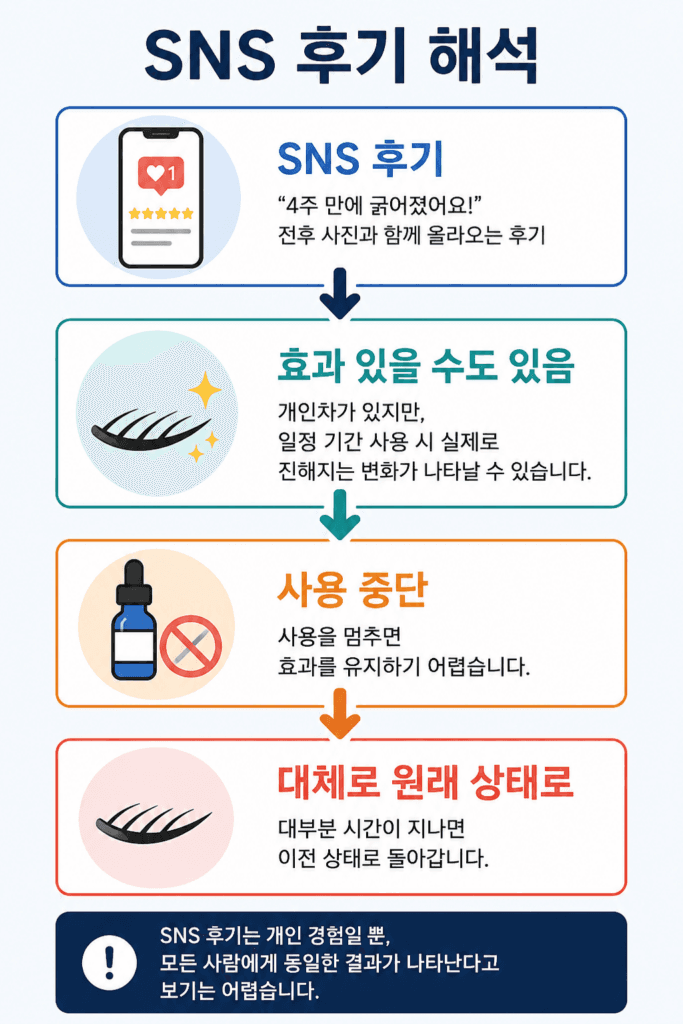
How Should We View “Miracle Reviews” on Social Media?
On social media, there are quite a few reviews with before-and-after photos claiming, “After applying it for 4 or 6 weeks, it got noticeably thicker.” This does not mean such effects are entirely false. Given the characteristics of the prostaglandin analog ingredient mentioned earlier, using it for a certain period can actually produce a change that looks darker.
The problem is what comes next. Because this change is cosmetic in nature, it generally reverts once use is stopped. That means you ultimately have to keep applying it long-term, and continue to carry the potential for side effects. When weighing whether the benefit of darker hair is worth accepting the side effects of long-term use, I find it difficult to readily recommend it.
Prostaglandin vs. Minoxidil Comparison Table
| Item | Prostaglandin | Minoxidil |
|---|---|---|
| Cost | High | Low |
| Irritation | May occur | Relatively low |
| Evidence for hair loss treatment | Limited | Extensive |
| Standard treatment | No | Recommended |
Frequently Asked Questions
So is it illegal to apply eyelash serum to the scalp?
Under Korean law, using it is not in itself illegal. However, taking into account cost, skin irritation, and the amount absorbed over a large area, it is inefficient for scalp hair growth, so I personally do not recommend it.
When there are already proven hair loss treatments, is there any reason to use this?
There are already approved hair loss treatment products on the market in terms of efficacy and cost-effectiveness. I see little reason to choose a product whose benefits are unclear and whose potential for side effects is greater. Since the right treatment varies depending on your condition, I recommend consulting a specialist.
My eyebrows are really sparse—is there nothing I can do?
If you have some existing eyebrows, minoxidil and similar options can be considered first; if you have almost no eyebrows, you can compare other options such as an eyebrow transplant through consultation. Since the suitable method differs for each person, a medical consultation is recommended.
Can eyelash serum make hair grow?
Temporary changes may occur, but to date there is insufficient evidence to recommend it as a treatment for scalp hair loss.
In Summary
- It is true that prostaglandin analogs make eyebrows and eyelashes darker, but due to issues of cost, irritation, and efficiency, they are not used as a standard treatment for the eyebrows or scalp.
- Because the scalp has a large area and a thick stratum corneum, using the same ingredient carries a greater burden of cost and side effects.
- For scalp hair loss, already proven options such as minoxidil are the more reasonable choice.
- Changes seen in social media reviews may occur, but you should also consider that they are cosmetic effects that generally revert once use is stopped.
The conclusion is simple. Taking together actual user experience and the evidence to date, no clear advantage over existing hair loss treatments has been confirmed. Considering cost and side effects, it is reasonable to choose proven treatments first.
References
- Blume-Peytavi U, et al. A randomized double-blind placebo-controlled pilot study to assess the efficacy of a 24-week topical treatment by latanoprost 0.1% on hair growth and pigmentation in healthy volunteers with androgenetic alopecia. J Am Acad Dermatol. 2012. View original
- Efficacy and safety of bimatoprost 0.01% for the treatment of eyebrow hypotrichosis: a randomized, double-blind, vehicle-controlled study. PubMed. View original
- Comparative study of the efficacy and safety of topical minoxidil 2% versus topical bimatoprost 0.01% versus 0.03% in treatment of eyebrow hypotrichosis: a randomized controlled trial. PMC. View original
- 💬 KakaoTalk consultation: https://pf.kakao.com/_ExmRuT
- 📞 Phone consultation: 02-544-8659
- 🌐 Website: http://www.modihairplant.com
This article has been adapted from a YouTube video by Director Yoo Hwa-jung of Modi Hair Plant Clinic. It is intended to provide general medical information and does not replace individual diagnosis or prescription.