
Female hairline design explained by Director Yoo Hwa-jung
Why Actresses' Hairlines Look Attractive: Facial Spacing Matters More Than Forehead Height
Have you ever looked at a photo of an actress's hairline and wondered, “If I lowered my forehead a little, would I get a similar look?” The impression created by a hairline is influenced not only by forehead height but also by the shape of the temples, the space between the ends of the eyebrows and the hair, and how the side hair connects. Based on Director Yoo Hwa-jung of Modi Hair Plant's video explanation, we have summarized the side balance to consider in hairline design.
Key Summary
- Hairline design should consider forehead height together with how the temples, eyebrow ends, and side hair connect.
- A line that supplements the sides and a line that emphasizes a rounded contour can create different impressions.
- Celebrity photos are best used as reference material to explain your preferences, while the actual design should be checked against your own face and hair condition.
The celebrity photos introduced in this article are materials for explaining the hairline features presented in the video. Photos alone cannot confirm whether a hair transplant or any other procedure was actually performed, and they do not represent Modi Hair Plant surgical cases.
When Looking at Actresses' Hairlines, Did You Only Look at Forehead Height?
When considering hairline correction, the first change most people think of is forehead height. However, even if the central hairline is in a similar position, the way the hair frames the face can differ depending on the shape of both sides and the direction in which the hair continues.
The part Director Yoo Hwa-jung emphasizes in the video is also the sides. We look together at where the hair boundary around the temples lies, at what distance it connects with the ends of the eyebrows, and how the side hair frames the sides of the face.
Therefore, in a female hairline consultation, it helps to ask not only “How many cm can it be lowered?” but also to distinguish “Is my concern the forehead height, or the empty space on both sides?”
Three Points for Understanding Facial Spacing
Facial spacing here refers to the space revealed between the hair boundary and the facial features. The video focuses in particular on the space between the outer eyebrow and the side hairline. Wide or narrow spacing alone does not mean correction is necessary; the overall facial balance and the desired impression should be considered together.
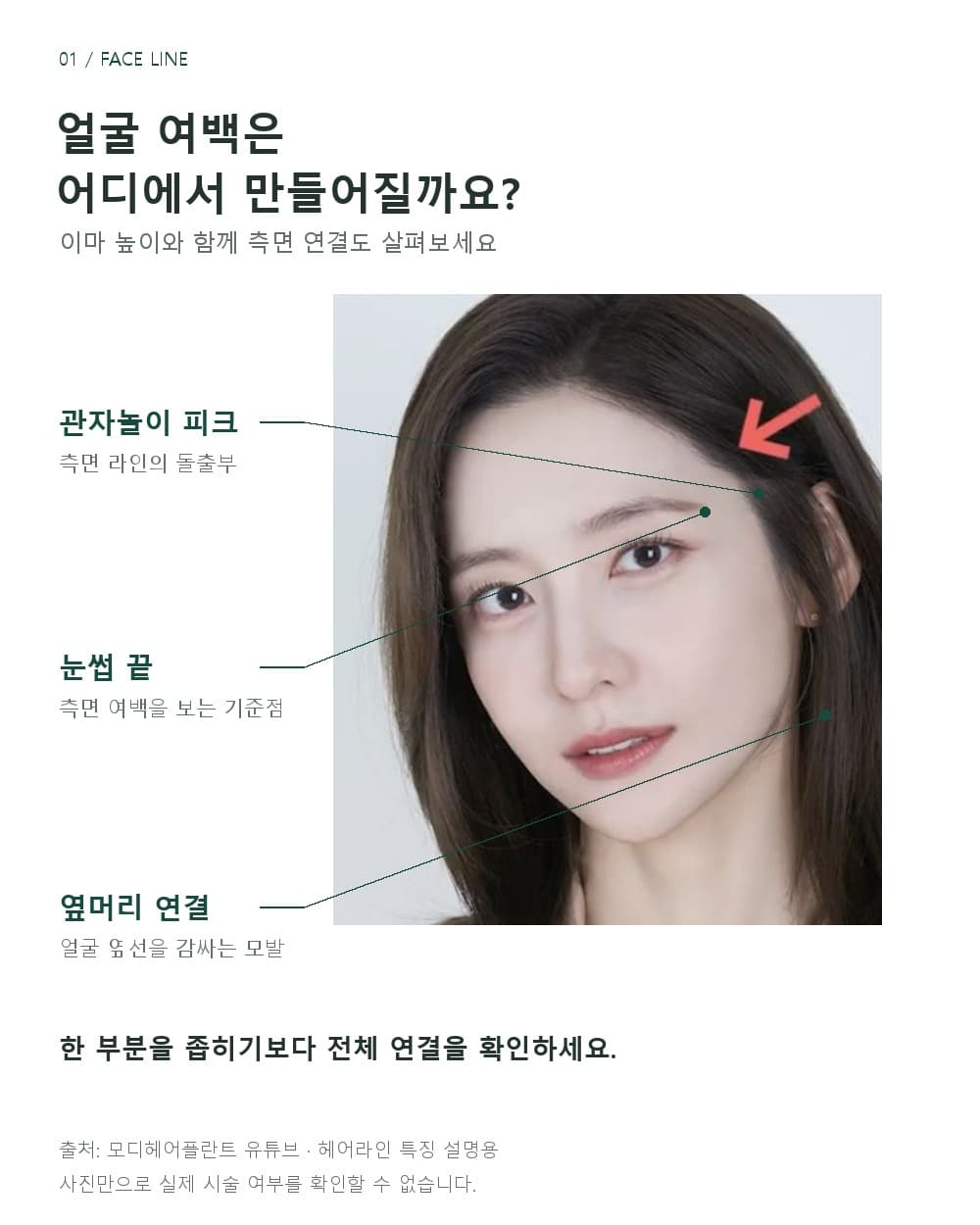
1. Temple Peak: The Projection of the Side Line
The temple peak refers to the part of the hair boundary near the temple that projects toward the face. Depending on its position and shape, the contour on both sides of the forehead may look different.
A design that emphasizes this area and a design that connects it in a rounded way create different impressions. Rather than treating either form as the correct answer, it is necessary to check how it connects with your face and existing hair.
2. Eyebrow End: A Reference Point for Examining Side Spacing
Looking at the space between the eyebrow end and the side hair boundary makes facial spacing easier to understand. However, simply extending the eyebrow end with makeup or changing the direction in which the hair is swept can make the spacing look different in photos.
When referring to celebrity photos, look at the length and shape of the eyebrows as well as the hairline.
3. Side Hair Connection: The Part Linking the Front and Sides
The connection of the hair below the temples and around the sideburns also shapes the overall impression. Rather than a plan that lowers only the central hairline or fills only a specific area, it is important to examine the connection with the surrounding hair as well.
What Should We Look at in the Photos of Park Ji-hyun in the Video?
The video presents different photos of actress Park Ji-hyun to explain the relationship between the side hairline and the eyebrows. In one photo, the space around the temples is visible, while in another, the hair boundary and eyebrow end appear relatively close.
Through these photos, Director Yoo Hwa-jung explains that not only the contour of the side hair but also the way the eyebrows are styled to look longer can affect facial spacing.
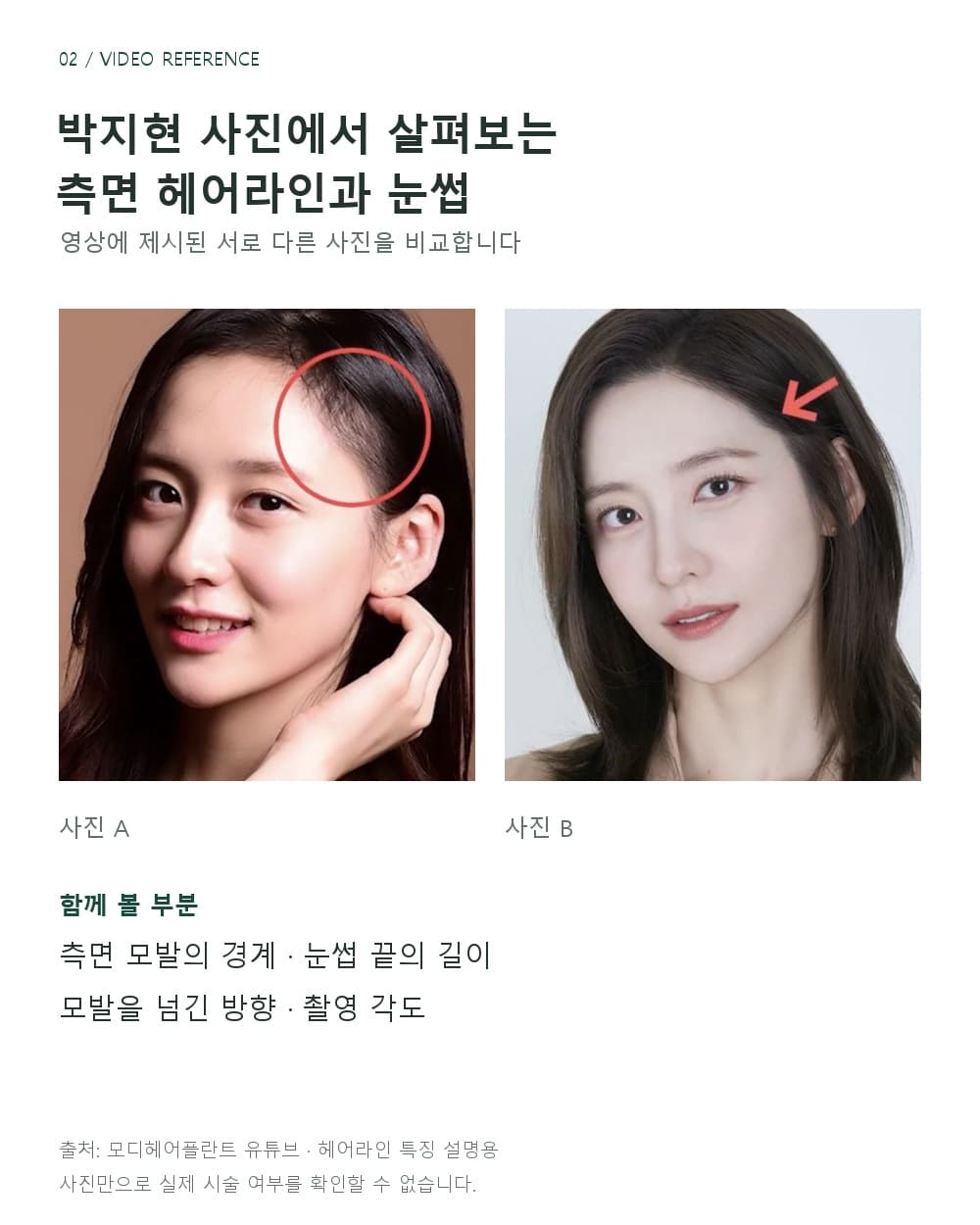
Differences in appearance in photos must be distinguished from whether a procedure was actually performed. Camera angle, lighting, makeup, and the direction in which the hair is swept all affect appearance. Please use this comparison to understand design elements rather than to judge any actress's treatment history.
A Rounded Hairline Is Also a Design Direction
Reducing side spacing is not the only option. Using a photo of Karina as an example, the video also explains the impression of a hairline that emphasizes a rounded contour without strongly revealing the temple peaks.
In this way, even with the same slicked-back style, the impression can differ depending on whether the temples are emphasized or connected in a soft curve.
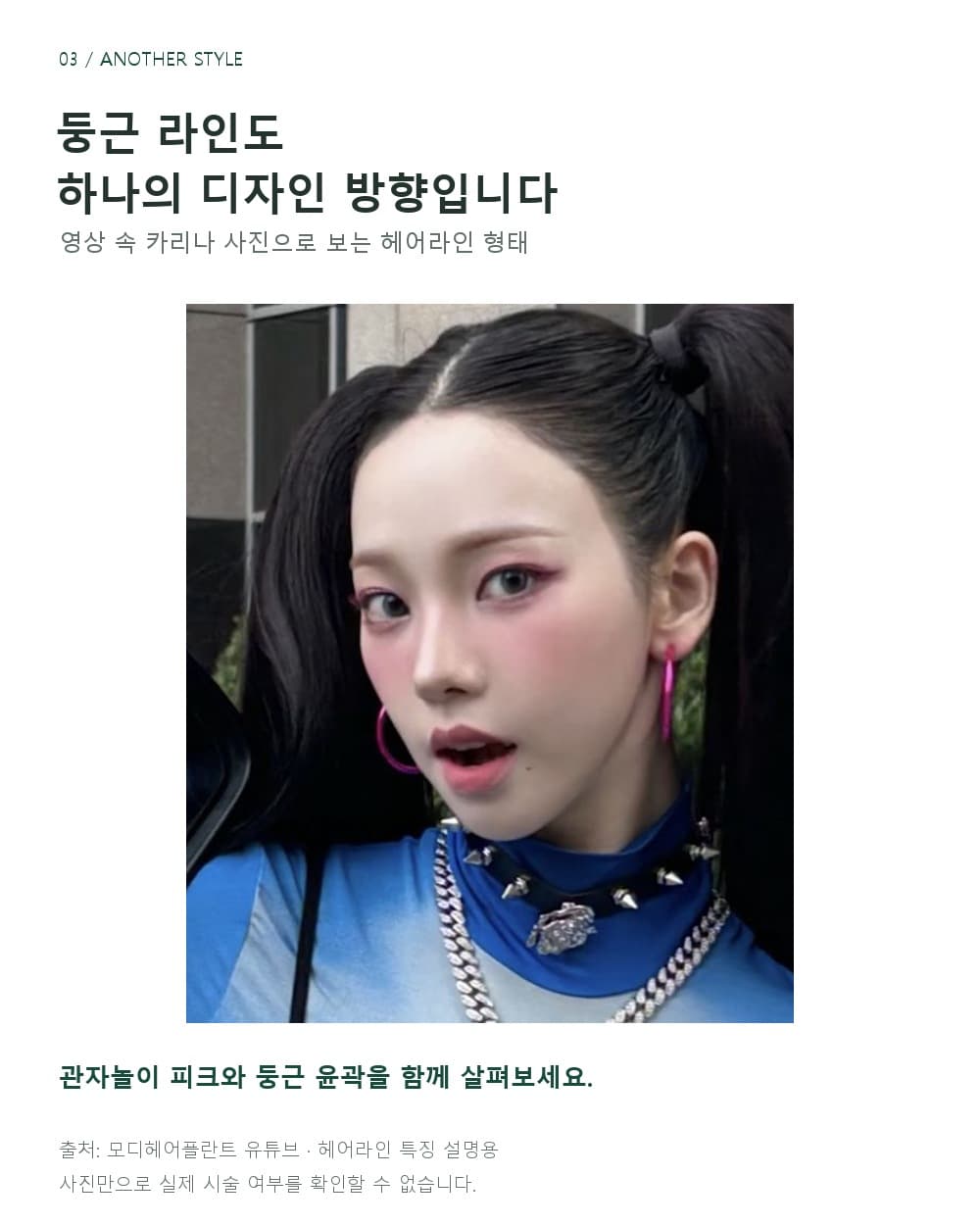
A Direction Emphasizing Side Connection
We examine the hair boundary around the temples and the space between it and the eyebrows. If supplementation is being considered, overall facial balance and the connection with surrounding hair are checked together.
A Direction Emphasizing a Rounded Contour
We examine the curve extending from the center to both sides and the shape of the temples. Consultation is needed to determine how much of the existing line to keep and whether the desired shape is possible.
If you have found a shape you like in a photo, in addition to saying “Please make it like this actress,” try to explain specifically whether you prefer a rounded curve or want to supplement the space on both sides.
Will Reducing Facial Spacing a Lot Make You Look Better?
In the latter part of the video, Director Yoo Hwa-jung explains that excessively narrowing the sides may look unnatural in person. A line that looks good under bright lighting and at certain camera angles does not necessarily give the same impression in daily life.
When planning a hairline, it is advisable to check not just a single frontal photo but also the side view, how it looks with your hair tied up, and how it looks with your hair down as usual.
The “minimum of 2.5cm” between the eyebrow end and the temple peak mentioned in the video is a consultation guideline explained by Director Yoo Hwa-jung. It should not be taken to mean that the same figure applies to everyone, or that matching this distance guarantees a natural result.
Three Things to Check When Bringing Celebrity Photos to a Consultation
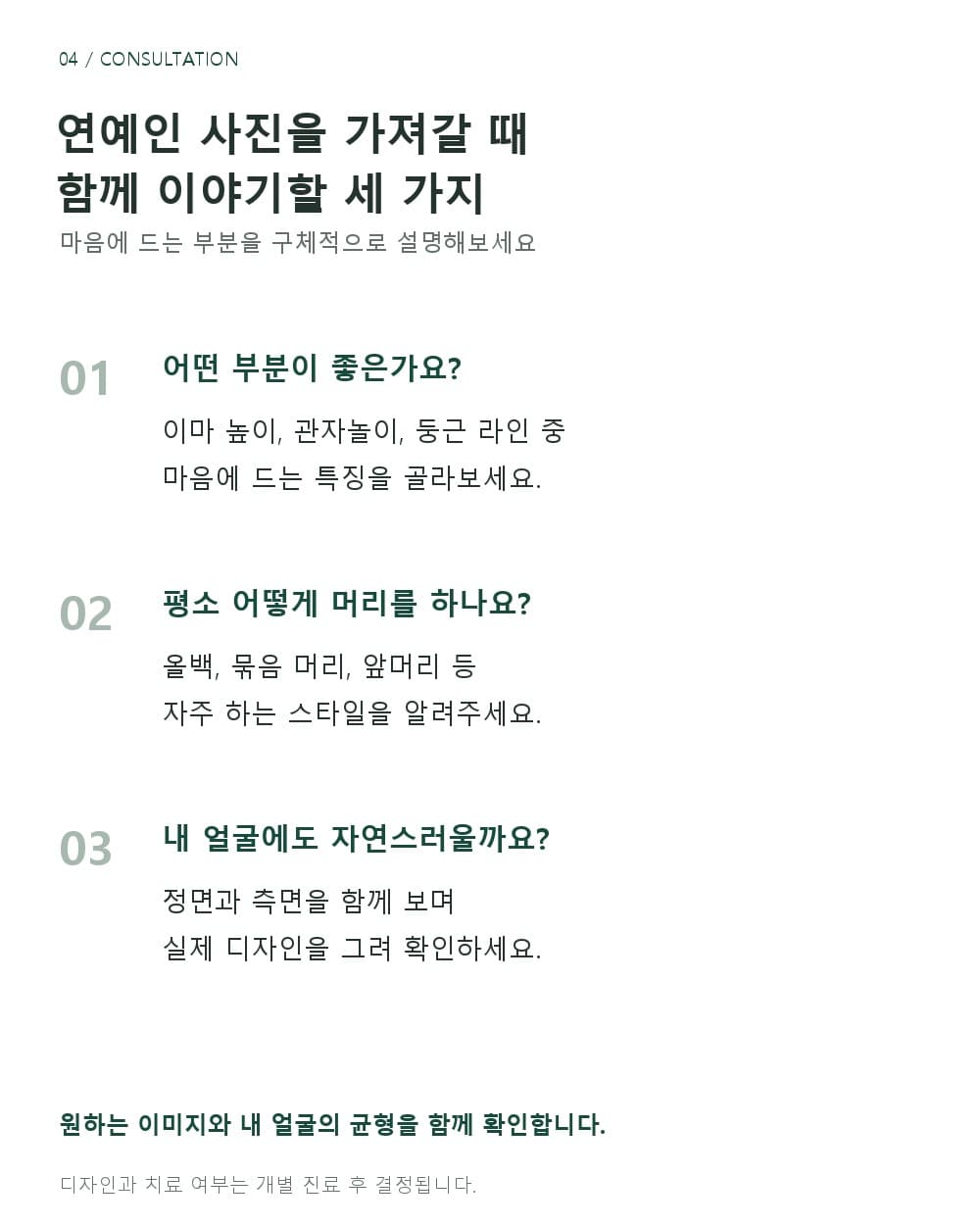
Choose Specifically What You Like
Organize which aspects you like: forehead height, temple shape, side connection, or a rounded curve. When the desired features are clear, it is easier to discuss the design direction during consultation.
Let Us Know Your Usual Hairstyle
The areas that concern you may differ depending on whether you often wear your hair slicked back or tied up, or whether you wear bangs. Preparing photos showing how you usually look helps communicate your concerns.
Draw the Line and Check It in Person
Reference photos and your own face differ in forehead shape, left-right balance, and the thickness and direction of existing hair. It is necessary to draw the actual line with the medical team, check it from the front and sides, and decide together which parts to keep and which to supplement.
Frequently Asked Questions
My forehead height is fine, but only the sides look wide. Can the central line be kept?
You can consult about supplementing the sides while keeping the central line. However, it must first be determined whether the wide appearance in photos is due to hair distribution, or to styling or camera angle. The actual correction range is decided after examining the existing line and hair condition.
The photos I like are all from different angles. Which ones should I bring?
Prepare the photos you like along with frontal and both side photos of yourself. Showing which areas concern you when your hair is tied or swept back is helpful for consultation. Please also explain specifically what you like in the reference photos.
I have almost no temple peaks. Can they be newly created with a hair transplant?
Whether a hair transplant can supplement that area requires an examination. The thickness and direction of the surrounding hair, skin condition, and donor area condition must be checked together, and whether a design that creates a projection suits you should also be examined by drawing the actual line.
If I want a rounded hairline, do I need to remove my current temple hair?
That cannot be stated definitively. The approach varies depending on the position of existing hair and the desired shape. Since a hair transplant is a method of adding hair, it should be consulted on separately from any plan to remove existing hair. Rather than deciding on hair removal yourself based on photos alone, check the possible methods and their limitations.
If my sides look wide only in selfies, do I need hairline correction?
Facial proportions and hair boundaries can look different depending on the shooting distance and angle of a selfie and how the hair is swept. It is advisable to consider whether you have the same concern in daily life and to compare photos with how you actually look. The need for surgery is not determined from a single photo.
See the Hairline Explanation in the Video
Director Yoo Hwa-jung uses celebrity photos to explain the side hairline, the spacing from the eyebrows, and the differences of a rounded line. In addition to the appearance in photos, also check her explanation of designs that narrow the sides excessively.
The celebrity photos in the video are reference materials for understanding design features. The design and treatment method applicable to you should be confirmed in an individual consultation.
Curious About a Hairline That Suits Your Face?
Please prepare photos you like along with photos of your usual hairstyle. At Modi Hair Plant Clinic, we can examine your current hairline and hair condition and consult with you on which parts to keep and which to supplement to suit the look you want.
Sources
Modi Hair Plant YouTube. “How Much Can Hairline Correction Change Your Face Line? #ParkJihyun #NamgoongMin.” Video explanation by Director Yoo Hwa-jung. View the original video
The design explanations in this article are based on the opinions of the medical professional in the video. The celebrity photos are reference materials captured from the video and are neither clinical data confirming whether a procedure was performed nor research data proving effectiveness.
This article is intended to provide general information and does not replace individual diagnosis or treatment. Suitability for hairline correction, as well as the design and surgical method, is determined after examination by the medical team. Pain, swelling, inflammation, scarring, and other effects may occur after a hair transplant, and recovery and results vary by individual.