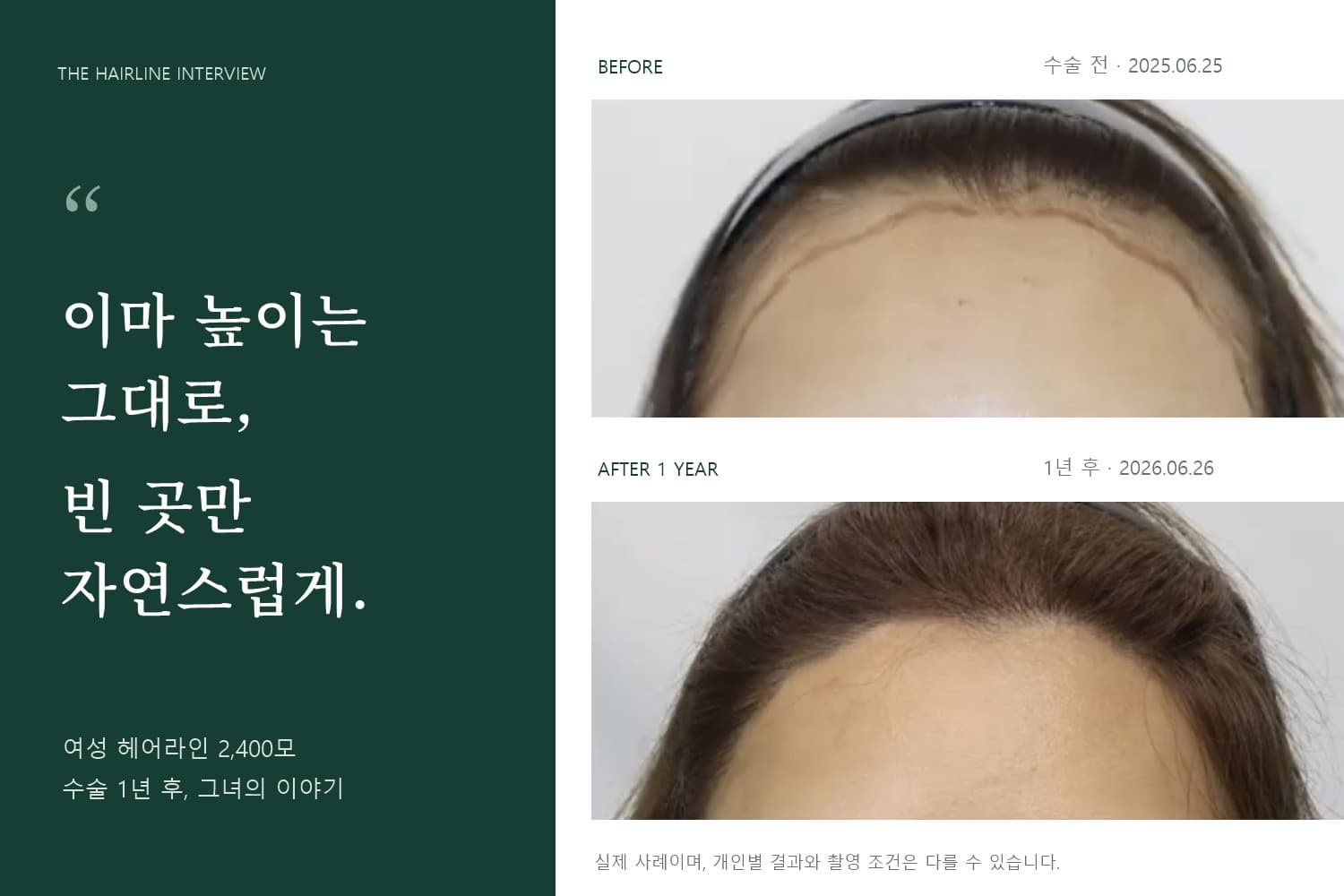
Female Hairline · Interview 1 Year After Surgery
I wanted to keep my forehead height and fill in the areas that looked sparse
A female hairline hair transplant is not necessarily a procedure to lower the forehead. You can also discuss an approach that preserves the existing line as much as possible while supplementing the areas that look sparse. In this article, we look at an interview with a woman in her 20s, one year after surgery, whose concern was the hairline that showed when she tied her hair up.
Key Summary
- Rather than lowering her forehead further, the patient in the video wanted to keep her existing hairline while filling in the sparse areas.
- This is a case of a female hairline transplant of approximately 2,400 hairs, with photos and an interview from 1 year after surgery.
- It is important to review not only the design but also the harvesting method, recovery schedule, and post-operative follow-up care.
The Q&A below is a summarized and reorganized version, for easier reading, of a patient interview published on the Modi Hair Plant YouTube channel. It presents the patient's personal experience and does not guarantee the same recovery process or results.
What concerns did the patient in this interview have?
The video presents a hairline correction case of a female student in her 20s. What the patient wanted was not a design that significantly changed her forehead height, but to supplement the areas that looked sparse when she tied her hair up.
| Patient information | Female in her 20s, student |
|---|---|
| Main concern | Sparse areas of the hairline visible when hair is tied up |
| Design direction | Supplementing insufficient areas while maintaining the existing hairline as much as possible |
| Transplant amount | Approximately 2,400 hairs |
| Harvesting method | Presented as a non-incision method involving partial shaving in strips |
| Comparison photos | Before surgery: June 25, 2025 / 1 year after surgery: June 26, 2026 |
The above information pertains to this one patient's case. Even with the same concern, the required transplant amount and surgical method vary depending on the individual's hair and scalp condition and the design.
Interview ① A hairline that bothered me every time I tied my hair up
What was your biggest concern before surgery?
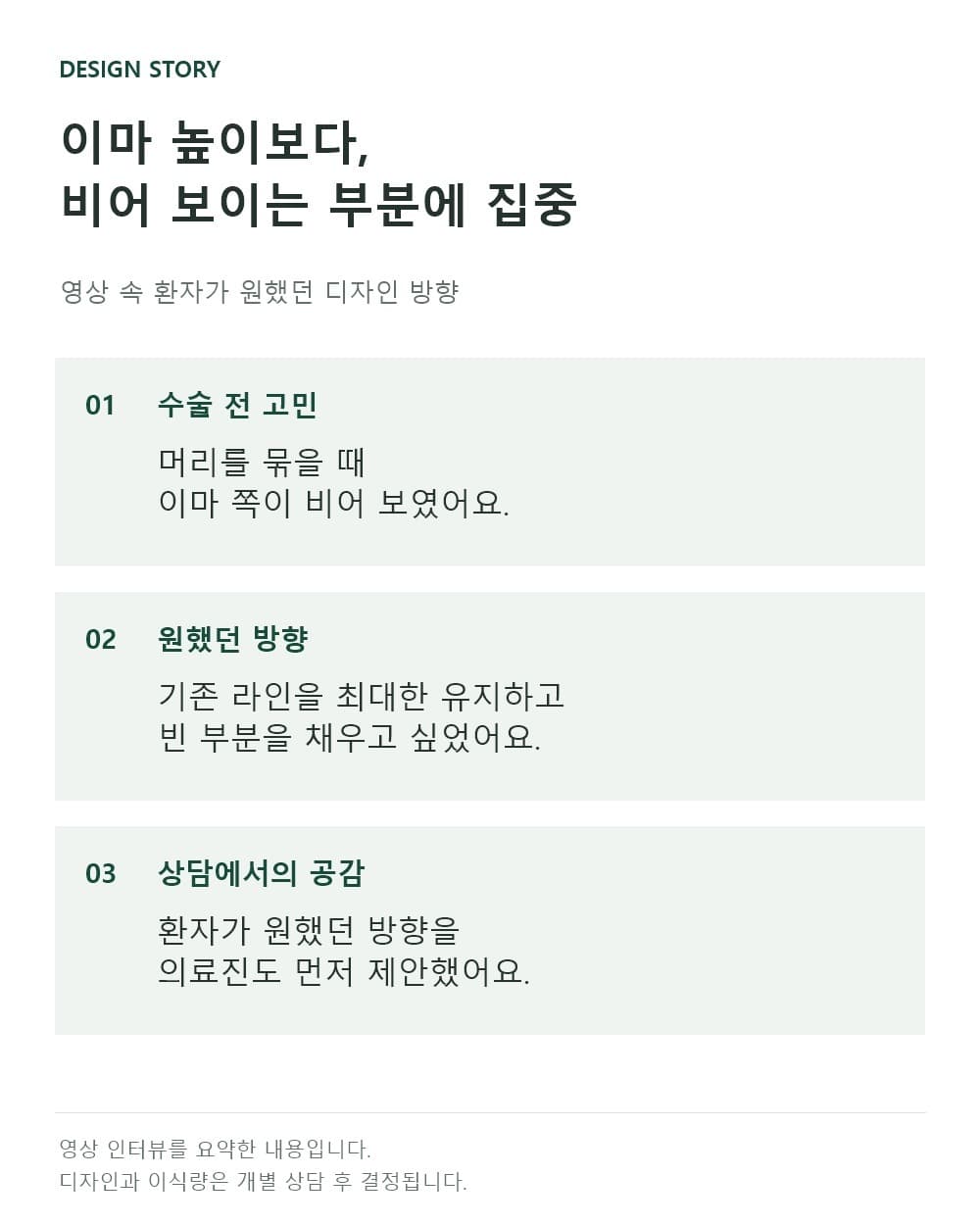
The patient said she usually liked wearing her hair tied up, but was bothered that the forehead area looked sparse. Her concern was the hairline that showed when her hair was tied up, rather than when it was down.
So the important question in the consultation was not simply, “How much can you lower my forehead?” The key was how to supplement the bothersome areas without significantly changing her existing appearance.
What kind of design did you want?
She said she wanted to fill in the sparse areas within a range that changed the existing line as little as possible. According to the patient, the medical team first suggested a similar direction, which left a strong impression on her during the consultation.
Interview ② Before deciding on surgery, I was worried about cost and recovery
What made you hesitate before deciding on surgery?
The patient, who was a student, answered that she was concerned about the cost. When considering a hair transplant, you should review not only the change you want but also the cost and schedule. Rather than deciding based only on other people's satisfaction, the first step is a thorough consultation on whether the surgery is necessary for you and whether your expected changes are realistic.
What was the discomfort like after surgery?
Looking back on her experience a year earlier, the patient explained that the area where hair was harvested was uncomfortable for about a week, more so than the transplanted area. As for returning to daily life, she answered that in her case it was possible after about 2–3 days.
This period should not be regarded as a recovery standard for all patients. Pain, swelling, discomfort at the harvest site, and visible recovery vary from person to person. For school or work plans, inform the medical team of your surgical method and work environment and receive individual guidance.
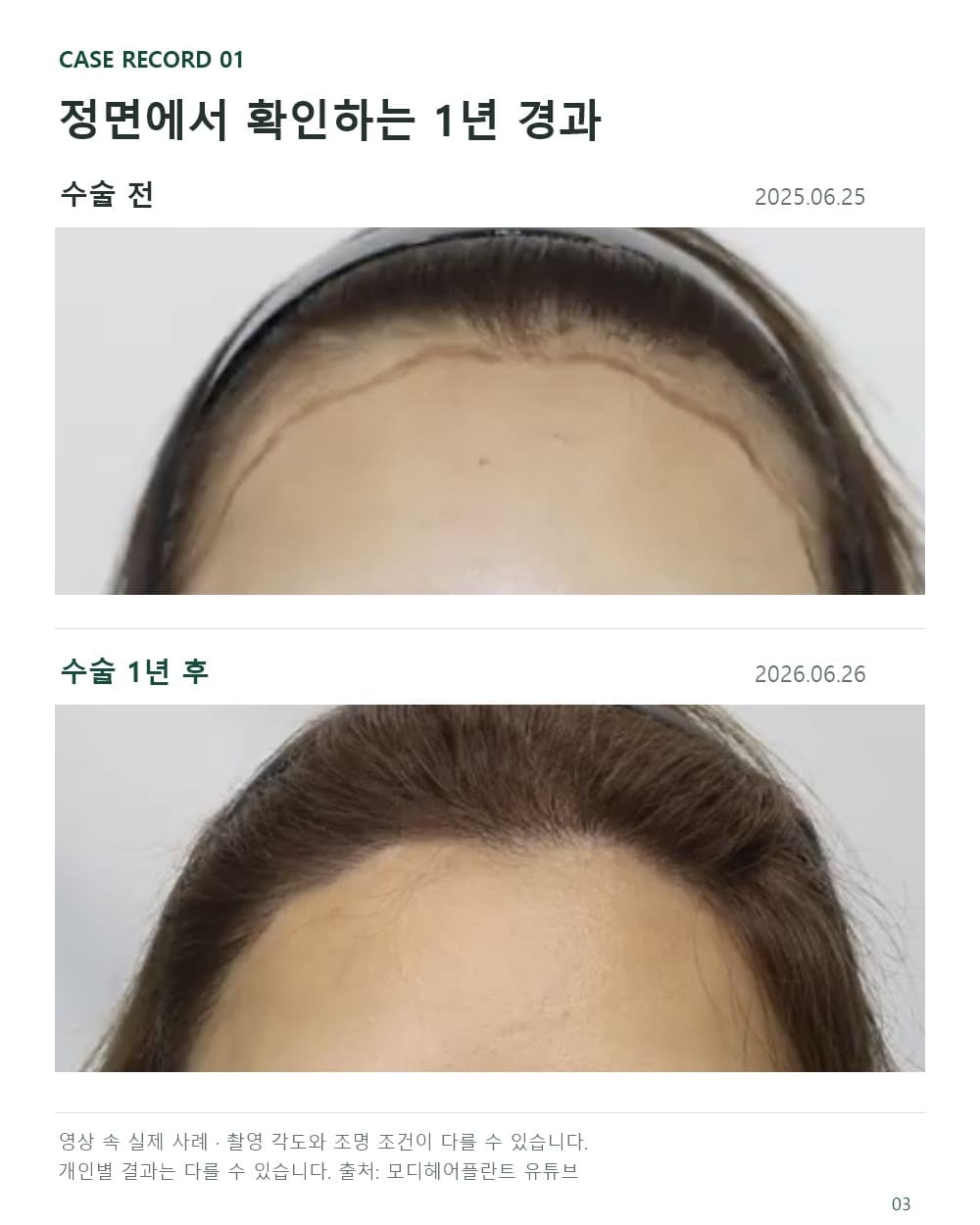
What can we see in the before and 1-year-after photos?
These photos compare the pre-surgery state with approximately 1 year after surgery, not immediately after surgery. From the front and other angles, you can look at the outline of the hairline, the connection on the left and right sides, and the appearance of the areas that had looked sparse.
Front comparison: Overall hairline connection
From the front, look at the line extending from the center to both sides and the appearance around the forehead. This comparison helps in understanding this case's goal of “supplementing while maintaining the existing line.”
Other-angle comparison: Appearance of the areas extending to the sides
Front-view photos alone may not be enough to see the connection on both sides. Look at photos from other angles as well, but keep in mind that how sparse an area looks can vary depending on head position and how the hair is swept.
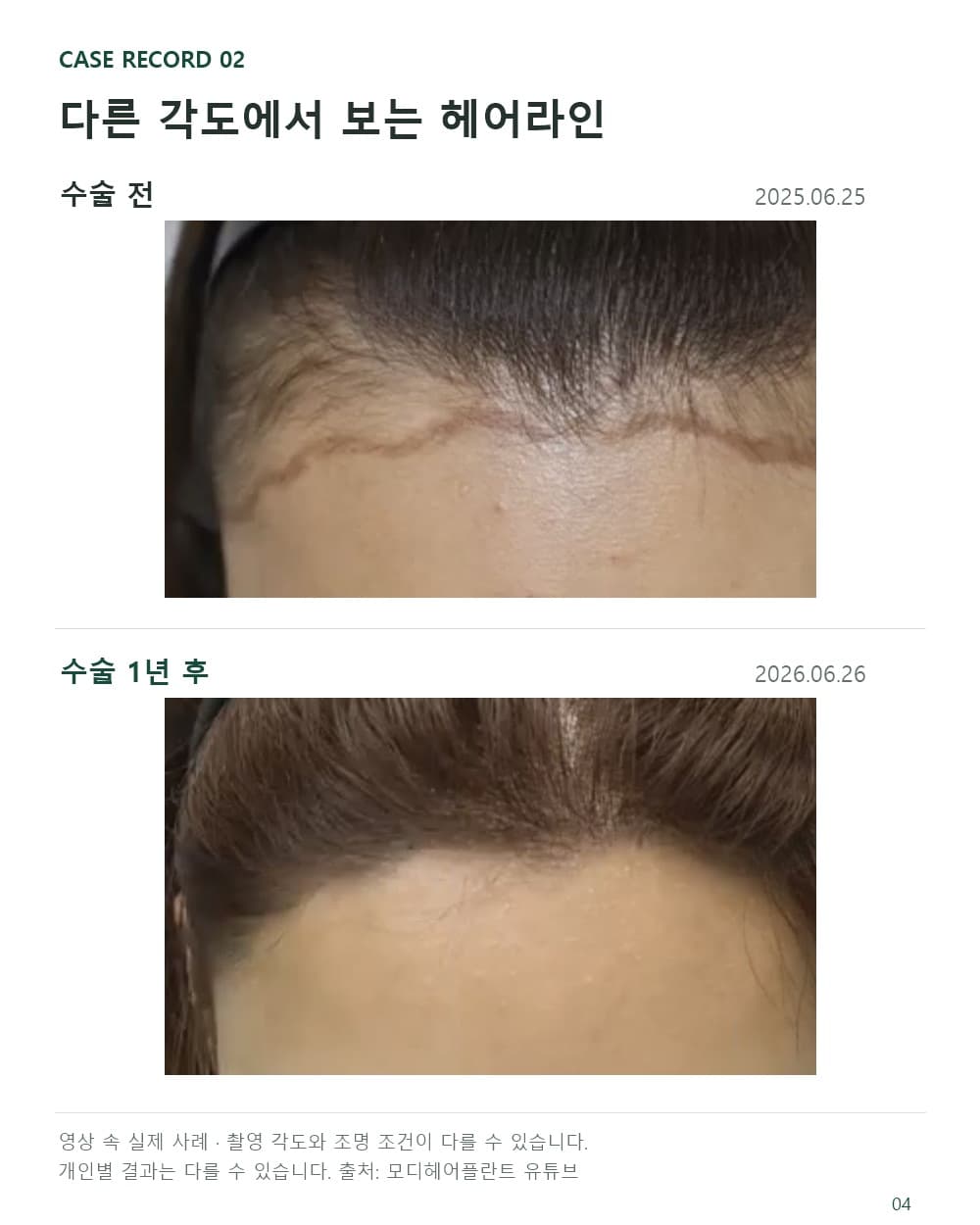
The before-and-after photos show the progress of one patient in the video and do not represent the results of all patients. Accurate evaluation of design and density requires in-person examination and follow-up.
Interview ③ One year later, my daily routine of tying my hair up has changed
What has changed in your life after surgery?
The patient expressed satisfaction with wearing her hair tied up and with changing her hairstyles. What is notable in the interview is not simply that her forehead became smaller, but the relationship between the areas that bothered her before surgery and the hairstyles she had wanted to wear.
During consultation, in addition to saying “Please give me a nice line,” describing how you usually tie your hair and from which angles the sparse areas bother you can help convey the direction you want more specifically.
How do you remember the post-operative care?
The patient also spoke positively about the post-operative care process. However, personal satisfaction and the care items actually provided should be confirmed separately. During consultation, ask specifically about the follow-up schedule, washing instructions, and how to get in touch if uncomfortable symptoms arise.
If you have similar concerns, check these three things during consultation
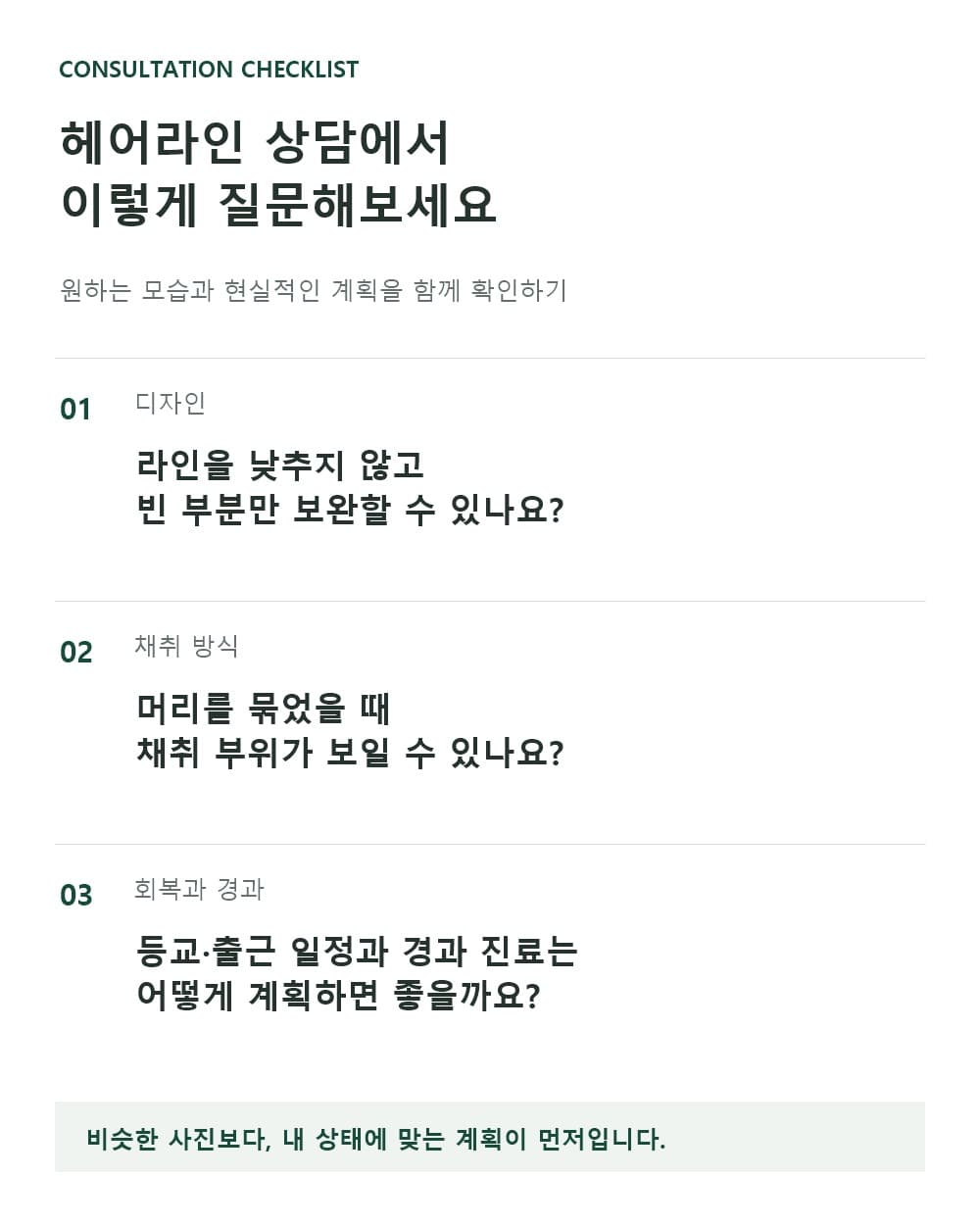
1. Distinguish between lowering the forehead and filling in sparse areas
First, clarify whether the change you want concerns forehead height, the shape of the sides, or specific areas that look sparse. It is helpful to actually draw the line and confirm together which parts to keep and which to supplement.
2. Check the harvesting method with your usual hairstyle in mind
If you often tie your hair up, ask which area and how much will be shaved for harvesting, and whether that area may be visible. The method used for the patient in the video is not suitable for everyone.
3. Plan not only the surgery day but also the schedule afterward
Let the medical team know about school or work, important appointments, and situations where you need to tie your hair up. Confirming the follow-up schedule and how to make inquiries, along with recovery guidance, helps you prepare for life after surgery.
Frequently Asked Questions
My hair looks fine when it's down, but sparse areas show only when I tie it up. What photos should I prepare?
Preparing photos of the front and both sides taken with your hair tied up as usual, especially ones that clearly show what bothers you, can help explain your concern. Photos are a consultation aid, and whether surgery is needed is determined after examining your actual scalp and hair condition.
Are 2,400 hairs needed even for surgery that maintains the existing line?
2,400 hairs is the transplant amount applied to this patient, not a common standard for line-maintaining surgery. The plan varies depending on the area to be supplemented, existing hair condition, hair thickness, and donor area condition. During consultation, confirm what area the proposed number of hairs is meant to cover.
I often tie my hair up. Would the strip-shaving method shown in the video be okay for me?
How visible the harvest site is may vary depending on hair length and where you tie your hair. It is advisable to show how you usually tie your hair and confirm the shaving area and expected exposure. You should not assume, based on the method's name alone, that it will not be visible in daily life.
In the video, she returned to daily life after 2–3 days. Can I go back to work then too?
The answer in the video reflects the personal experience as remembered by that patient. The time you can return to work and the time visible concerns diminish may differ. Let us know whether your work involves face-to-face contact, your activity level, and whether you need to wear a hat, and receive a return schedule suited to you.
Can I request the same design based on the 1-year photos?
Bringing photos as a reference for the look you want is fine. However, since forehead shape, existing hairline, and hair characteristics differ, it is difficult to apply the same shape or transplant amount as is. Describe specifically what you like in the photos, and confirm together which direction can be applied to you.
Watch the full interview in the video
You can hear the patient's own account, from why she considered surgery to the design consultation, recovery experience, and changes after 1 year. Check the full context along with the summary in this article.
The recovery period and satisfaction shown in the video are the patient's personal experience. Decide on surgery after thoroughly reviewing your own condition, expected changes, cost, and recovery plan, rather than based on others' recommendations.
If you want to supplement sparse areas rather than lower your forehead
At Modi Hair Plant Clinic, have your current hairline and usual hairstyle reviewed together. You can distinguish the parts you want to keep from those you want to change, and consult on applicable designs and surgical methods.
Sources
Modi Hair Plant YouTube, female hairline correction before-and-after comparison and patient interview 1 year after surgery. The case information and comparison photos in this article are based on that video. View the original video
This article is intended to provide patient case and general consultation information and does not replace individual diagnosis or treatment. Pain, swelling, inflammation, scarring, and other effects may occur after a hair transplant, and the recovery process and surgical results vary from person to person. Whether to undergo surgery, as well as the design, transplant amount, and method, are determined after examination by the medical team.