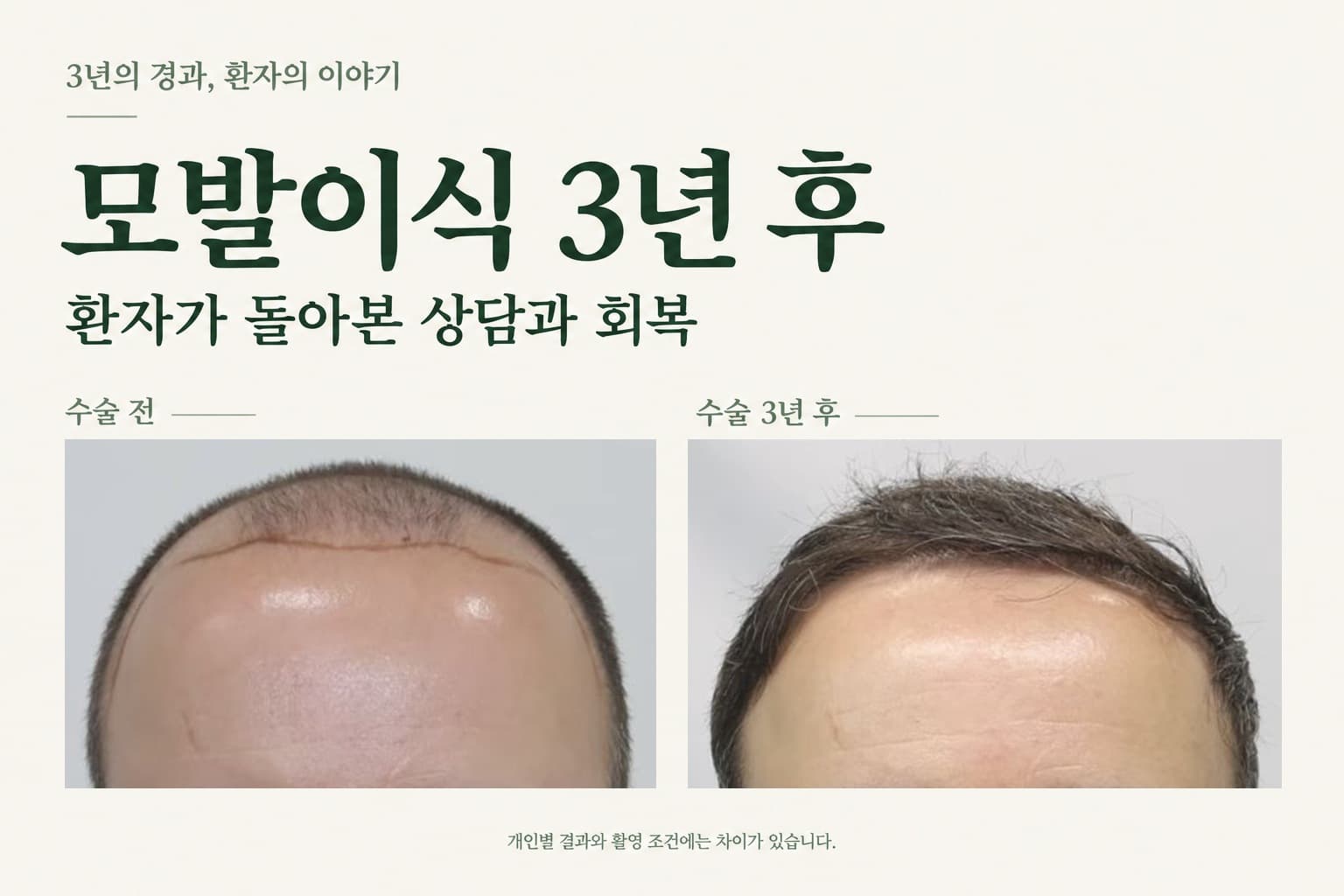
3 Years After Hair Transplant · Patient Interview
Three years later, what stands out most?
Before-and-after photos alone cannot tell the whole story of a hair transplant. The deliberation before deciding on surgery, the explanations heard during the consultation, and the recovery process right after surgery also remain as important memories for patients.
In this article, we look at one patient's reflections on the consultation and post-surgery care through a 3-year follow-up interview featured on the Modi Hair Plant YouTube channel. The before-and-after photos and interview in the video represent this patient's individual case and do not imply the same results or experience for everyone.
Key Summary
- The patient explained that although he had been concerned about hair loss for a long time, he hesitated to decide on surgery due to worries about pain and results.
- From the consultation, he particularly remembered receiving a specific explanation of what was possible for his condition.
- After surgery, he said the shampoo and cleansing assistance he received at the clinic and the guidance on home care stayed with him.
He had been concerned for a long time, but deciding on surgery was not easy
In the interview, the patient says he noticed his hair falling out from his teens. At first he did not think it was a big problem, but over time he explained that the changes appeared to accumulate.
Before surgery, he tried shampoos and supplements, but says he did not sufficiently experience the change he had hoped for. Even so, he did not choose a hair transplant right away.
He says he postponed his decision while researching various information, worried about whether the surgery would be painful and whether the result might differ from what he expected.
During the consultation, please share not only the look you want but also your concerns. Discussing pain, recovery time, return to daily life, and expectations for results in specific terms can be the starting point of a consultation.
What stood out from the consultation was “what is possible for my condition”
Looking back on his consultation at Modi Hair Plant, the patient mentioned that the medical team explained honestly what changes were possible given his condition and circumstances.
When considering a hair transplant, it is easy to first picture the hairline or shape you want. However, during the consultation it is also necessary to check whether that wish can be turned into an actual plan, and which aspects may require adjusted expectations.
The notable part of this interview is also not simply the statement that “he expected a good result.” It is the experience of hearing an explanation of his condition and understanding the surgical process.

Questions to ask during your consultation
- How does the look I want differ from what can realistically be planned?
- Which area will this surgery prioritize improving?
- What discomfort can I expect during the surgical process and recovery?
- After surgery, how is care divided between what the clinic provides and what I need to do at home?
The experience during surgery and recovery after surgery should be considered separately
In the interview, the patient described the surgical process as more comfortable than he had expected. He also talked about being able to understand how the procedure progressed and his experience with his position during surgery.
On the other hand, regarding the period right after surgery, he explained that he felt swelling for the first two days and had a small amount of bleeding at the donor area at the back. He also mentioned adjusting his sleeping position during recovery.
Therefore, it is not appropriate to take this case to mean that “there was no discomfort at all after surgery.” How the surgery felt and the subsequent recovery process should be assessed separately.
Post-surgery symptoms such as pain, swelling, and bleeding, as well as the recovery process, may vary from person to person. Do not use the experience of the patient in the video as a benchmark for your own recovery, or apply the guidance he received as-is. Guidance from your medical team based on your surgical method and condition should take priority.
The shampoo and cleansing assistance received on a return visit after surgery also stood out
When describing his recovery, what the patient specifically mentioned was returning to the clinic and receiving help with shampooing, cleansing, and scab care.
In the interview, he talks not only about the care he received at the clinic but also about being told how to wash his hair at home.
The fact that the surgery is over and fully understanding how to care for yourself at home are separate matters. From a patient's perspective, even everyday activities such as washing your hair or going to bed can feel unfamiliar and require caution.
For this reason, it is advisable to confirm from the pre-surgery consultation what guidance you will receive during recovery and where you can direct questions if they arise.
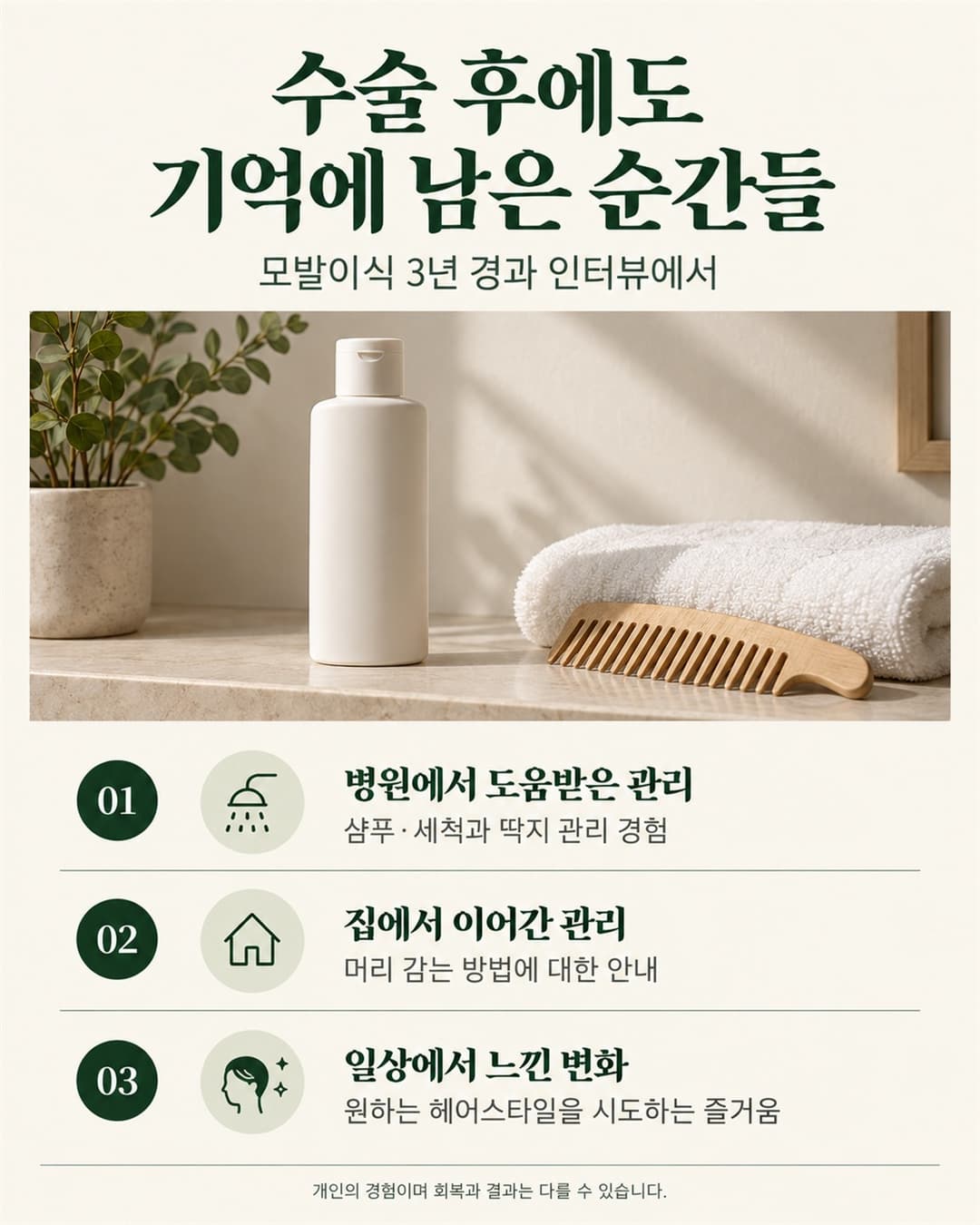
Please follow the clinic's guidance on when and how to care for scabs. The patient's account of receiving help from the clinic in the video does not mean it is acceptable to remove scabs on your own at home.
Modi Hair Plant's post-surgery care guidance is available on the post-surgery care page.
The changes the patient described after 3 years were found in his daily life
The patient said that since the surgery, cutting and styling his hair the way he wants has become more enjoyable. He also expressed satisfaction with the appearance of his hairline and hair, as well as a change in his confidence.
While before-and-after photos show differences in appearance, the interview conveys how the patient himself felt those changes in daily life.
However, this satisfaction is the patient's personal assessment. Photos alone cannot be used to calculate an exact graft survival rate or to conclude that the same density and appearance will be achieved for everyone.
What to check when viewing long-term follow-up photos
- Timing: Check how long after surgery the photo was taken.
- Photography conditions: Consider differences in lighting, angle, hair length, and styling.
- Treatment history: Do not infer whether additional surgery or medication was involved from photos alone.
- Scope of interpretation: Do not generalize one person's progress as the result for all patients.
Hear the patient's story in the video
In the video below, you can hear the patient's own account, from the reasons he considered surgery to the consultation, early recovery, and the changes he later felt in daily life.
| Video Section | Main Content |
|---|---|
| From 00:18 | Long-standing hair loss concerns and reasons for hesitating about surgery |
| From 02:03 | What stood out from the clinic visit and consultation |
| From 04:54 | Discomfort right after surgery and recovery experience |
| From 05:19 | Shampoo and cleansing assistance received on a return visit |
| From 06:16 | Changes felt in hairstyle and daily life |
This article summarizes and reorganizes the experience of the patient in the video by topic. The patient's subjective assessments have been distinguished from matters that require medical confirmation, and the patient's remarks about certain procedures have not been used as evidence of general treatment effects.
When choosing a hair transplant, ask about the recovery process as well
What the patient remembers in this interview is not only the difference between before-and-after photos. It also includes having what was possible explained during the consultation, understanding the surgical process, and receiving help from the clinic in the early stage of recovery.
When researching clinics, check not only the surgical method and plan but also the post-surgery guidance and inquiry process. It is important that you can ask about and fully understand anything you are curious about.
Modi Hair Plant aims for a care relationship in which questions can be shared not only about the process on the day of surgery but also about the recovery that follows.
Frequently Asked Questions
If the photo after 3 years looks good, does that mean the same appearance will be maintained going forward?
This photo is a record showing this patient's appearance 3 years after surgery. It is not material that guarantees changes beyond that point. Your current condition and future care plan should be discussed through examination and follow-up assessments, not a single photo.
Are all the changes seen in the before-and-after photos the effect of the transplanted hair?
It is difficult to precisely separate the contribution of transplanted hair and existing hair from photos alone. Hair length, styling, and photography conditions can also affect how things look. This article has not made assumptions about unconfirmed medication use or additional treatment.
The patient in the video says it was comfortable. Will my surgery be performed the same way?
The video describes the surgery this patient experienced. Surgical position, procedure, duration, and other factors may vary depending on your individual surgical plan, so please confirm during the consultation which approach will apply to you.
Is the shampoo and scab care the patient received included on the same schedule for every surgery?
This interview alone cannot determine the care schedule or included items for all patients. Before booking, please confirm with the clinic the schedule for the first shampoo, in-clinic care items, whether there are separate costs, and how to care for yourself at home.
Does this mean the patient continued visiting the clinic for 3 years?
What can be specifically confirmed in the video is his experience of returning shortly after surgery to receive help with shampooing and cleansing. The number of regular visits or any ongoing treatment history over the 3 years cannot be confirmed from this interview alone.
Tell us about both the change you want and your concerns
If you are considering a hair transplant, prepare questions not only about the hairline you want but also about pain, the recovery schedule, and post-surgery care. You can discuss a plan suited to your condition and points to check through a consultation.
Sources
Modi Hair Plant YouTube. I did hair transplantation in Korea. What I look like after three years. ㅣ모발이식 3년차 후기. Patient interview and before-surgery and 3-year post-surgery photos in the video.
This article is interview content presenting an individual patient's experience and is not a clinical study verifying treatment effects.
This article is intended to provide general information and does not replace individual diagnosis or treatment. Hair transplant results, satisfaction, and recovery time may vary from person to person. Problems such as pain, swelling, bleeding, infection, and scarring may occur after surgery, and whether to undergo treatment and which method to use should be decided after consulting with your medical team.