
Hair Transplant Growth Process
How Long Does the Awkward Stage Last After a Hair Transplant? The "Bayaba" Phase and Hair Care
New hair has started growing after your hair transplant, but are you worried because the lengths are uneven and it looks frizzy? The so-called "awkward stage" (known in Korea as the "geojizone") or "Bayaba phase" is a temporary change in appearance that can occur as transplanted hair grows. Based on the video explanation by Director Yoo Hwa-jeong of Modi Hair Plant, we summarize the changes by period and how to care for your hair.
3-Line Summary
- Transplanted hair falls out after surgery and usually begins to grow again after several months, and not all hair grows at the same time or at the same rate.
- The video describes the period around 6–8 months after surgery, when hair length, thickness, and texture are still uneven, as the "Bayaba phase."
- During this period, rather than judging the result too early, it is advisable to lightly trim the length and to proceed with high-heat styling or chemical treatments only after checking the condition of the scalp.
The Awkward Stage and the Shedding Phase After a Hair Transplant Are Different
The two expressions are used similarly, but they refer to different points in time. The shedding phase refers to the early period after surgery when the hair shafts of the transplanted hair fall out and the hair follicles enter the resting phase, so the area may look thinner than before surgery. The literature explains that after the hair shafts shed following transplantation, new hair generally begins to grow from about 3 months. [3]
In contrast, the awkward stage is an everyday expression for the period when newly grown short hair and existing long hair are mixed, making the style look awkward. The Bayaba phase mentioned in the video mainly refers to the period around 6–8 months after surgery, when hair length, thickness, and texture are not yet evenly settled, making the hair look frizzy.
It is easy to understand the shedding phase as the period when transplanted hair has fallen out and new hair has not yet sufficiently emerged, and the Bayaba phase as the period when hair is growing but is difficult to style because its length and shape are uneven.
Watch the Video First
Director Yoo Hwa-jeong explains why the Bayaba phase occurs after a hair transplant and how to care for your hair through this period. The 6–8 months mentioned in the video is a representative example, and actual growth rate and hair condition may vary depending on the surgical area and individual hair characteristics.
Why Does Hair Look Frizzier Around 6–8 Months?
Because hair does not all grow at the same time
Not all transplanted hair follicles begin the growth phase on the same day. When hair that grew earlier is mixed with hair that emerged later, the lengths become uneven, and the overall density may also feel inconsistent.
Early hair may be uneven in thickness and texture
Newly emerging hair may initially be thin or short, and some may feel wavy or coarse. The length and appearance of the hair may change over time, but not all changes resolve on their own, so it is advisable to consult your medical team about any persistent discomfort.
There is a length difference from existing hair
Existing hair continues to grow longer, while transplanted hair begins to grow later. Especially in highly visible areas such as the hairline, short hair may stick up, making it feel difficult to style.
It is too early to judge overall density and volume
Around 6 months after surgery, some hair may not have grown yet, and the hair that has emerged may not have reached sufficient length. It is difficult to determine the final result based only on the appearance at this point.

Changes by Period After a Hair Transplant
| Period | Observable Changes | Care Points |
|---|---|---|
| Immediately after surgery to 2 weeks | Redness, scabs, and short transplanted hairs may be visible. | Prioritize the washing method and contact precautions provided by the clinic. |
| 2–8 weeks | As the transplanted hair shafts fall out, the area may look thinner than before surgery. | Do not equate hair falling out with hair follicles falling out. |
| 3–4 months | New hair may begin to emerge little by little. | Rather than comparing your growth rate with others, record it with photos taken under the same conditions. |
| 6–8 months | Hair may look frizzy and awkward due to differences in length and thickness. | Use a light cut that considers the overall balance, along with gentle styling. |
| Around 9–12 months and beyond | The length and density of grown hair and how it settles are checked at follow-up visits. | The condition of existing hair is also checked, and the need for further follow-up is determined. |
The hairline and crown may show different growth patterns, and the time at which changes are noticed also varies depending on individual hair thickness, curliness, and whether existing hair loss is progressing. It is advisable to base specific evaluations on follow-up assessments by the medical team that performed the surgery.
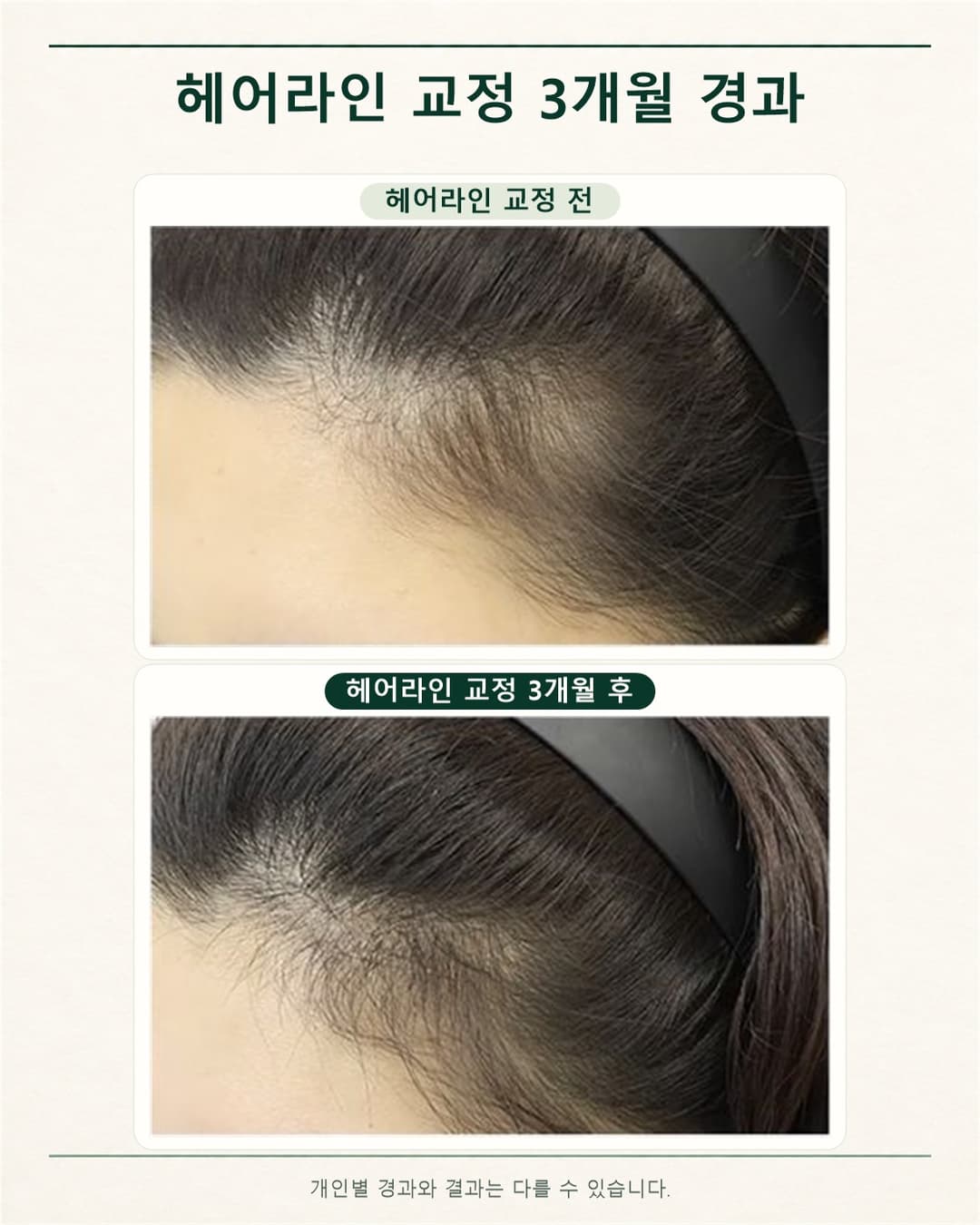
Hairline Progress Seen in an Actual Case from the Video
The video compares the appearance of the side hairline near the temples before hairline correction and 3 and 6 months after correction. The progress periods of the photos below follow what is shown in the video.
Before hairline correction and 3 months after
Before hairline correction and 6 months after
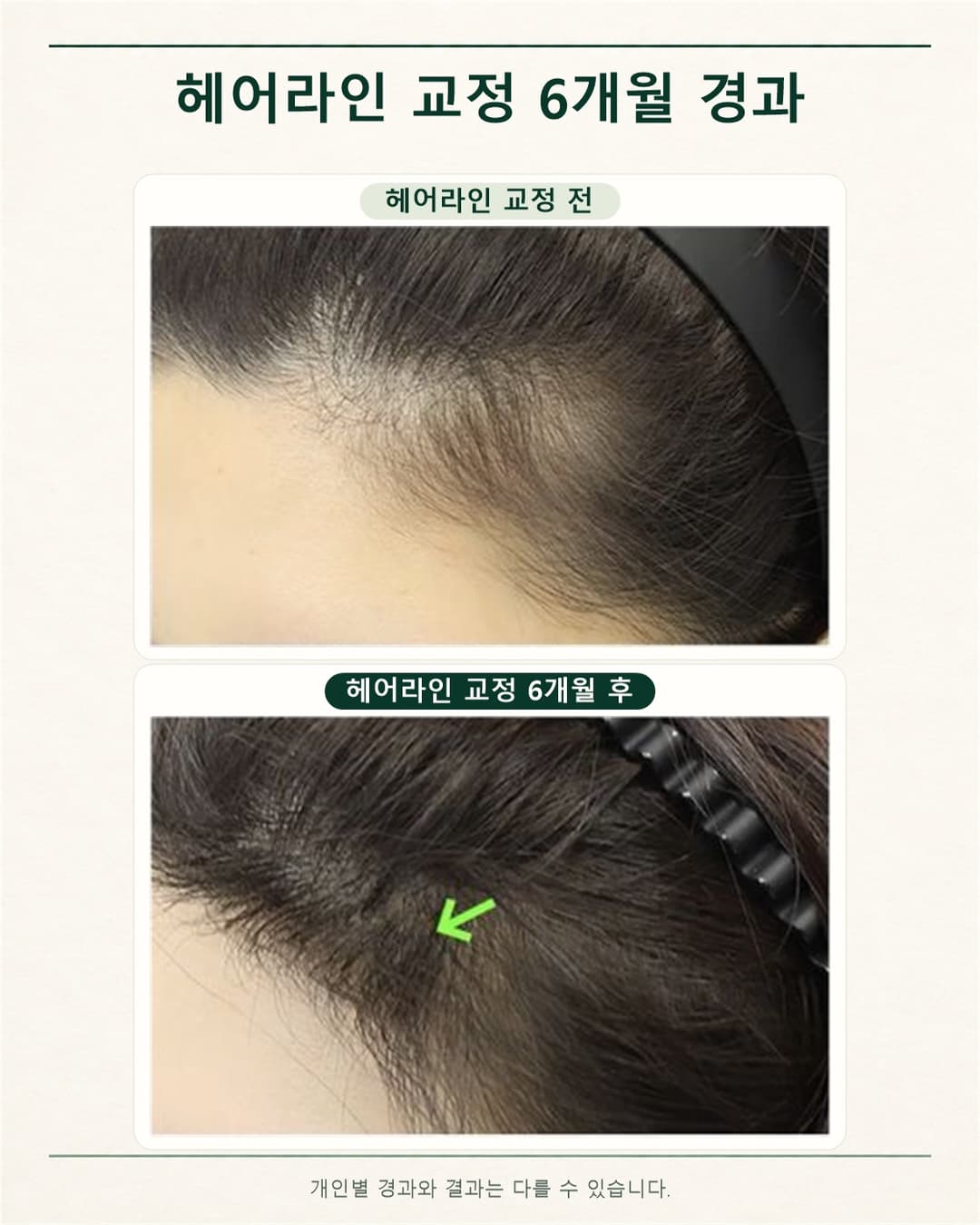
This is an individual case introduced in the video. The appearance may vary depending on the camera angle, lighting, and the length and styling of the hair. Graft survival rate or the final result cannot be judged from photos alone, and actual growth patterns and surgical results vary from person to person.
Care Tips to Get Through the Bayaba Phase More Comfortably
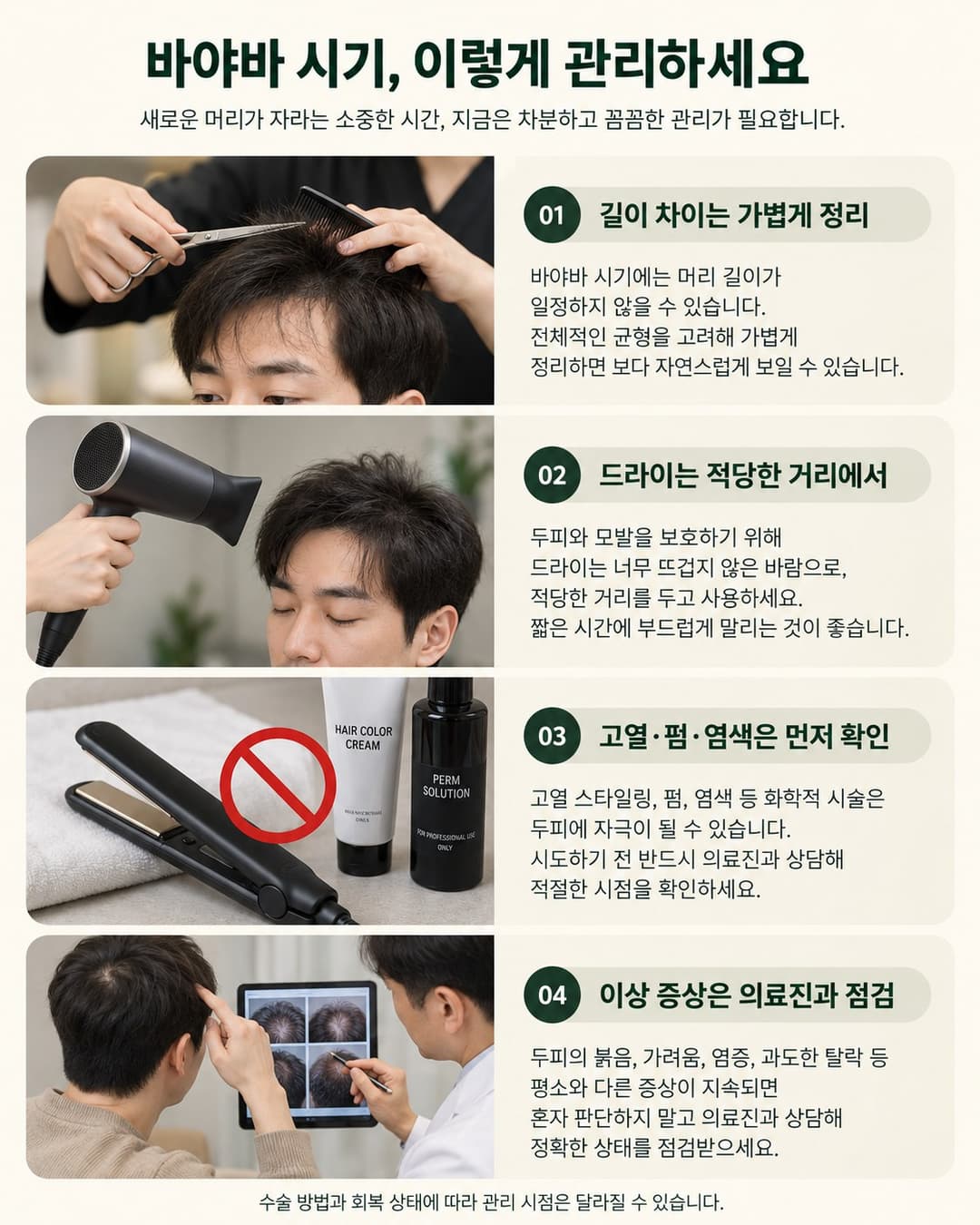
Lightly even out length differences
If there is a large difference between the short transplanted hair and the long existing hair, a cut that considers the overall shape may help. Cutting the ends of the hair does not remove the hair follicles themselves, but in the early period after surgery it can cause physical stimulation to the transplanted area, so the timing of a haircut should follow the clinic's guidance.
Blow-dry with air that is not hot, keeping some distance
Rather than exposing the scalp to hot air up close for a long time, it is better to dry gently from an appropriate distance. It is also important not to pull the hair forcefully with a comb or your fingers while drying.
Check your scalp condition before using flat irons, perms, or hair dye
Repeated application of high heat can make the hair shafts dry and rough. Perms and hair dye involve chemicals that contact the scalp and can cause irritation, so if redness or itching persists, postpone them and check with your medical team about the appropriate timing before the treatment.
Take photos under the same conditions every month
Density can look very different depending on lighting, angle, and how wet the hair is. Taking photos at monthly intervals in the same place and lighting makes it easier to check growth changes objectively than looking in the mirror day by day.
When It Should Not Be Dismissed as Simply the Awkward Stage
Uneven hair length or a frizzy appearance alone does not indicate a problem with the surgery. However, if the following changes accompany it, inform your medical team of your condition rather than waiting until your scheduled follow-up date.
- Redness, warmth, or pain that does not subside and worsens
- Discharge, pus, a strong odor, or recurring inflammation
- Sudden hair loss in a circular or patchy pattern in a specific area
- Little to no growth change even well after the follow-up timeframe you were given
Frequently Asked Questions
My transplanted hair is curlier than the hair on the back of my head. Is it growing incorrectly?
Newly emerged hair may feel wavier or coarser because its initial thickness and length are uneven. This may change over time, but if bending in a specific area persists or is accompanied by skin irritation, it is advisable to have the hair direction and scalp condition checked together.
Does cutting transplanted hair during the Bayaba phase affect graft survival?
Cutting the hair shaft that has grown out of the scalp does not in itself cut the hair follicle beneath the skin. However, contact and friction can be a concern immediately after surgery, so in the early period you should follow the clinic's post-operative care schedule.
If density looks insufficient at 6 months, does that mean the result is poor?
Around 6 months may be a period when hair that has already grown is mixed with hair that is still growing. An expert consensus statement recommends close follow-up during the first year after surgery. However, growth patterns differ between individuals, so actual evaluation should compare photos taken under the same conditions as the pre-operative state. [1]
Will getting a straightening treatment or perm during this period make my hair neater?
It may help tidy your style temporarily, but high heat and chemical treatments can irritate the hair shafts or scalp. The appropriate timing varies depending on your post-operative progress and scalp condition, so check with the clinic that performed your surgery first before proceeding.
Wondering whether your current growth process is within the normal range?
By checking the timing and area of your surgery together with your current scalp condition, you can receive more specific guidance on whether it is simply part of the growth process or whether separate care is needed.
References
- Vañó-Galván S, Bisanga CN, Bouhanna P, et al.; Hair Transplant Surgery Expert Group. An international expert consensus statement focusing on pre and post hair transplantation care. J Dermatolog Treat. 2023;34(1):2232065. PMID: 37477225. DOI: 10.1080/09546634.2023.2232065.
- Mysore V, Kumaresan M, Garg A, et al. Hair Transplant Practice Guidelines. J Cutan Aesthet Surg. 2021;14(3):265-284. PMID: 34908769. PMCID: PMC8611706. DOI: 10.4103/JCAS.JCAS_104_20.
- Khanna M. Hair transplantation surgery. Indian J Plast Surg. 2008;41(Suppl):S56-S63. PMID: 20174544. PMCID: PMC2825128.
- Modi Hair Plant. The awkward stage after a hair transplant…? How to get through the Bayaba phase?! YouTube. Watch the video.
This article is based on general medical information and a video explanation by our medical team, and it does not replace individual diagnosis or treatment. Hair growth timing and surgical results may vary depending on hair loss condition, transplant area, hair characteristics, post-operative care, and other factors, and specific care methods are determined after a consultation.