
PDRN · A Review of Research on Hair Loss and Hair Transplants
PDRN Salmon Injections: Can They Help with Hair Loss and Hair Transplants?
Some human studies have reported improvements in hair count, hair thickness, and wound healing with PDRN injections. However, these results alone cannot guarantee a hair loss treatment effect or an improved graft survival rate after a hair transplant. It is also difficult to apply the research findings on injections directly to hair growth effects of cosmetics or supplements. [2][3]
More important than the shared name "PDRN" is who it was used on, in what formulation, by what method, and what was evaluated. Let's look at the published research and its limitations.
Key Points
- Hair loss studies have reported changes in hair count and thickness, but they are small and limited by the absence of placebo or no-treatment control groups.
- Wound healing and survival of transplanted hair follicles are different outcome measures. Results showing good wound healing cannot be restated as a graft survival rate figure.
- Injections, cosmetics, and supplements have different delivery routes. It is difficult to judge absorption or hair growth effects from ingredient content labels alone.
1. What Is a PDRN Salmon Injection?
PDRN stands for polydeoxyribonucleotide, a substance made up of DNA fragments of various lengths. The medical literature describes PDRN obtained by purifying DNA from salmon, trout, and similar fish, and because of this origin it is commonly called a "salmon injection." [1]
However, the term "salmon injection" alone does not tell you the ingredients, concentration, or intended use of a specific product. During a consultation, the actual product used, its formulation, and the purpose of application should be confirmed specifically.
2. How Does PDRN Work?
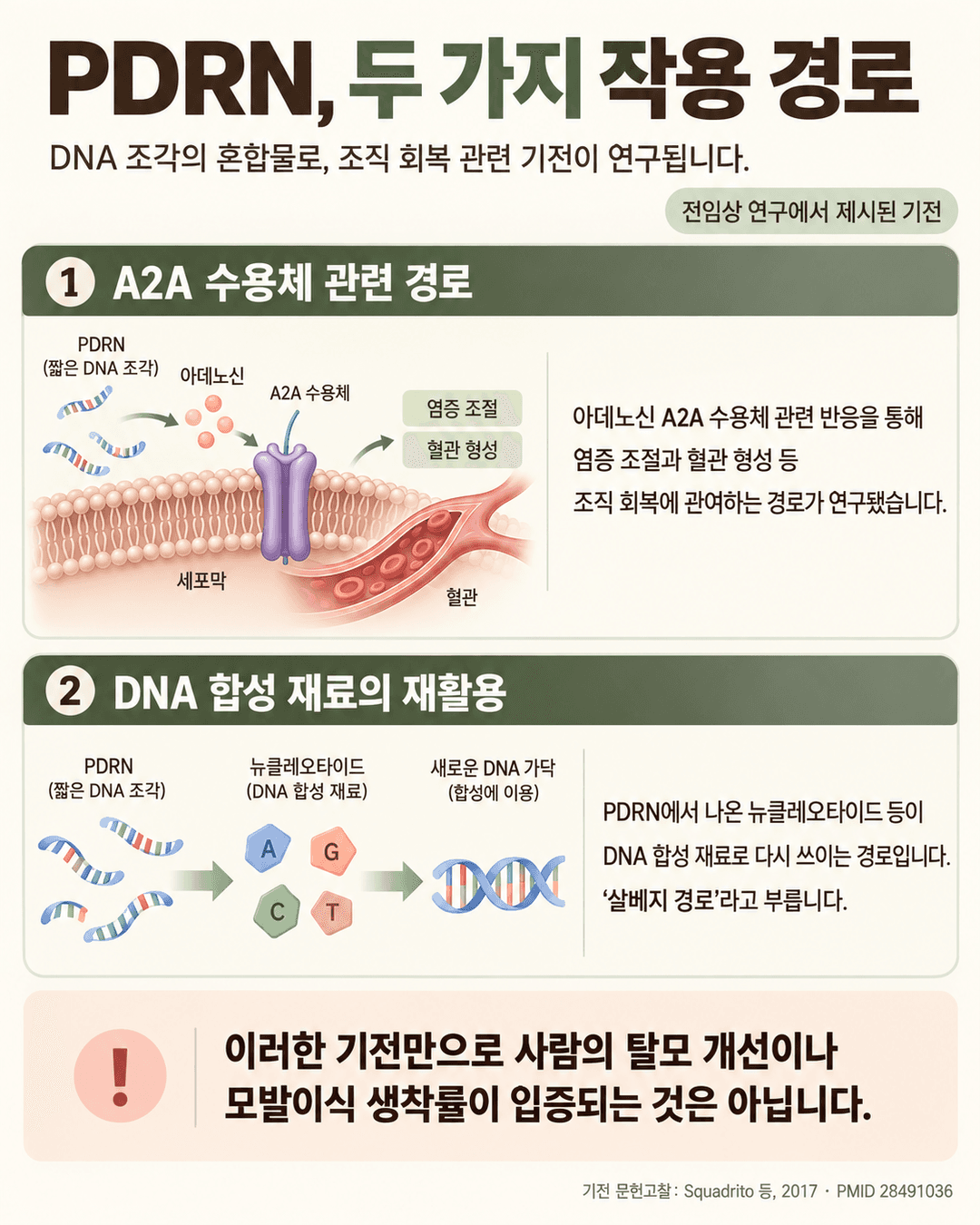
Mechanism reviews present A2A receptor-related responses and a pathway that recycles materials for DNA synthesis as the main explanations. This section mainly summarizes mechanisms proposed in cell and animal experiments. [1]
A2A Receptor-Related Pathway
Studies have examined the possibility that, through responses related to the adenosine A2A receptor, it may be involved in tissue recovery processes such as inflammation regulation and blood vessel formation.
Recycling of DNA Synthesis Materials
This is a pathway in which nucleosides and nucleotides derived from PDRN are reused as materials for DNA synthesis. It is called the "salvage pathway."
3. What Results Have Human Hair Loss Studies Shown?
A 2015 study by Lee et al. compared 40 patients with female pattern hair loss. Twenty received PDRN injections once a week for a total of 12 sessions, while the other 20 received one PRP treatment followed by 12 PDRN sessions. PRP is autologous platelet-rich plasma. [2]
| Outcome Measure | PDRN-Only Group | PRP + PDRN Group |
|---|---|---|
| Hair count | +17.9% | +23.2% |
| Hair thickness | +13.5% | +16.8% |
Improvement compared with pre-treatment was reported in both groups. However, the difference between the two groups was statistically significant only for hair thickness, not for hair count. The combination treatment should not be interpreted as superior on every measure simply because its numbers are larger.
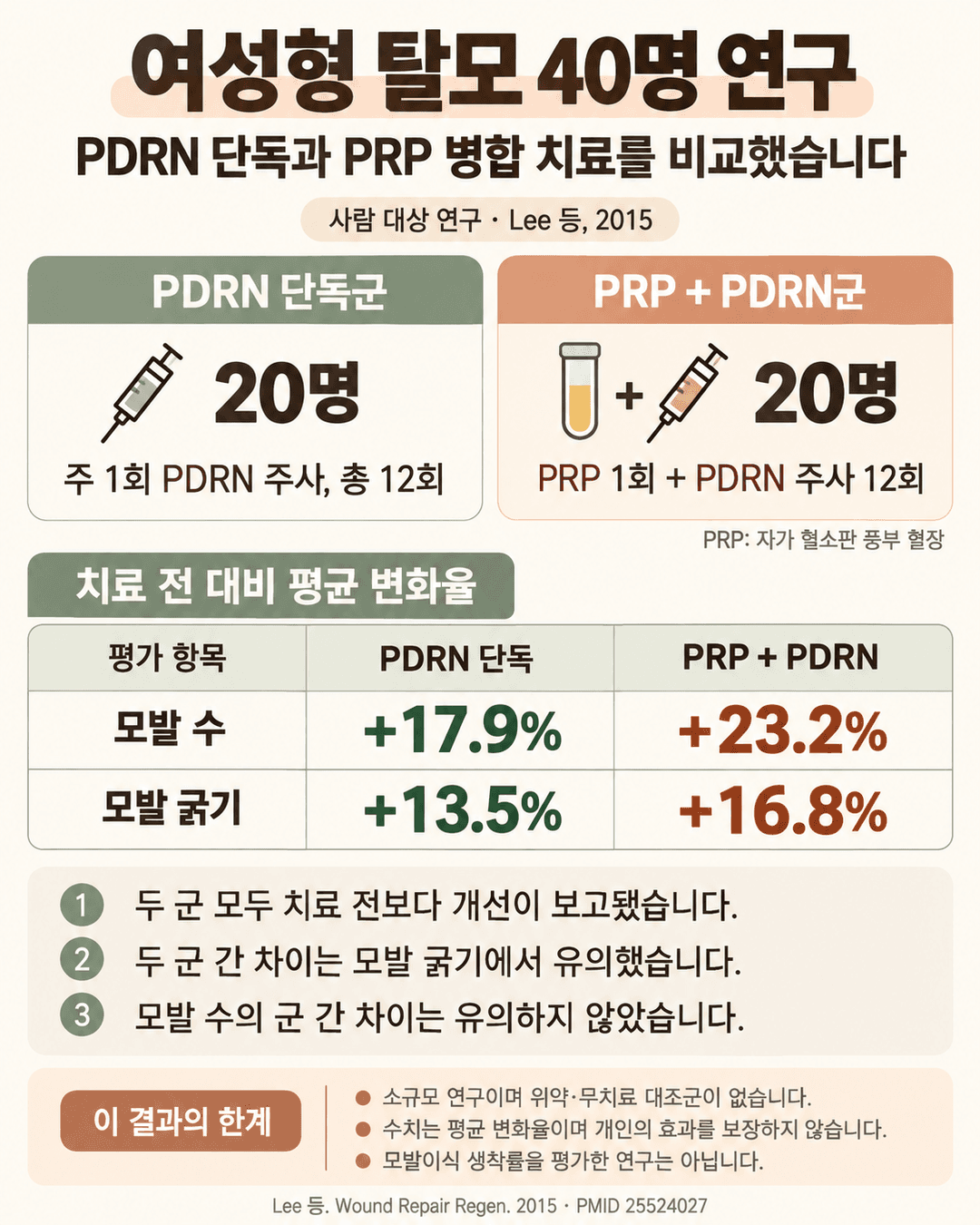
Limitations of this study: The number of participants was small, and there was no placebo or no-treatment control group. Therefore, uncertainty remains as to how much of the observed change can be attributed to PDRN itself. The results also cannot be applied directly to other types of hair loss or to hair transplant graft survival rates. The dosing schedule in the study is not a treatment schedule recommended for individuals.
4. Can Wound Healing Research Serve as Evidence for Hair Transplant Graft Survival?
A 2014 study by Squadrito et al. was a randomized, double-blind, placebo-controlled trial involving 216 patients with diabetic foot ulcers. It compared 110 patients in the PDRN group with 106 in the placebo group, with intramuscular and perilesional administration carried out for 8 weeks. [3]
At 8 weeks, the rate of complete ulcer healing was 37.3% in the PDRN group and 18.9% in the placebo group, and the difference between the two groups was statistically significant. This is a result concerning diabetic foot ulcer healing under those conditions.
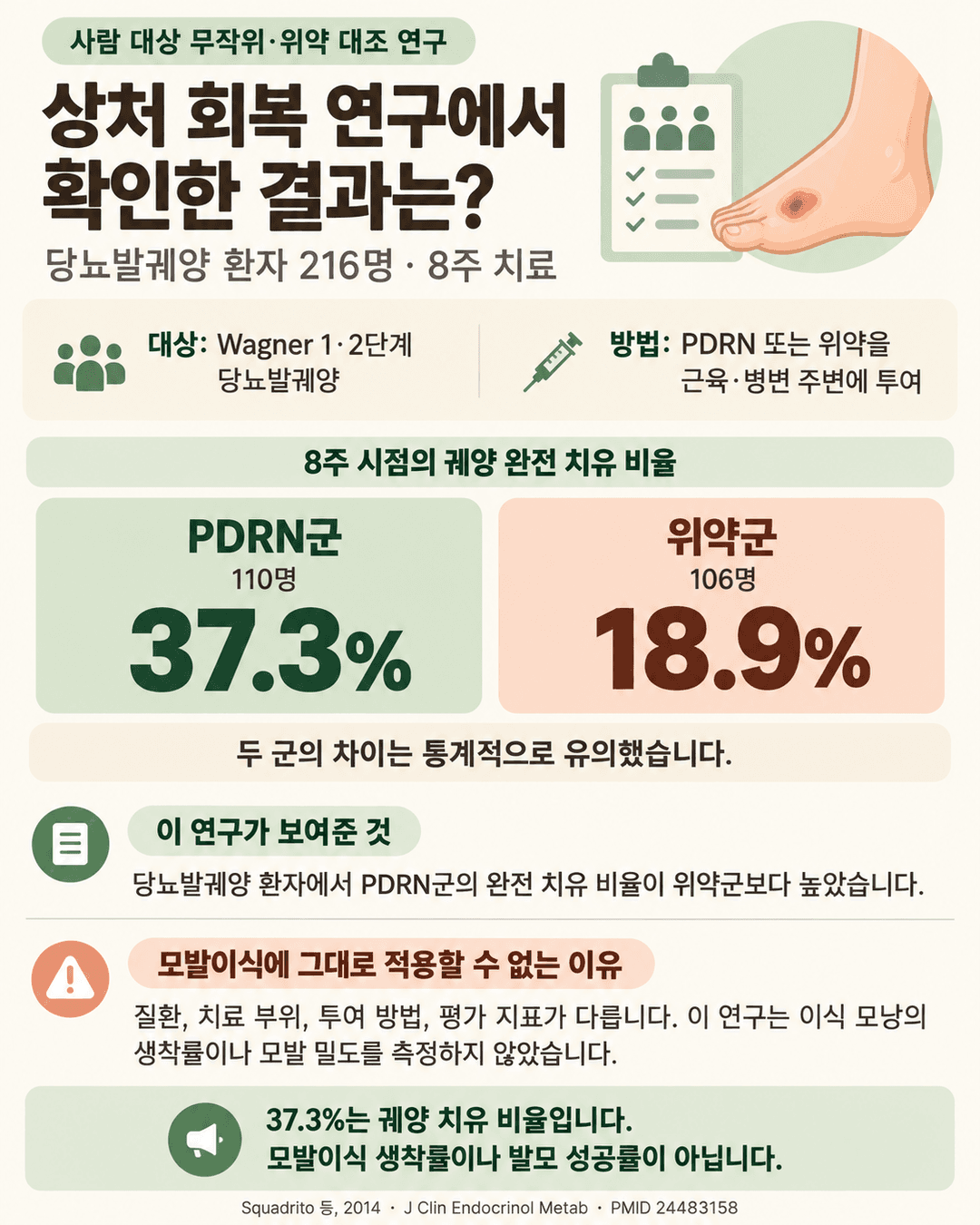
Diabetic foot ulcers and hair transplants differ in condition, treatment site, and administration conditions. In addition, a wound closing and a transplanted hair follicle surviving to produce hair are different outcomes. This study alone cannot be used to calculate how much graft survival may increase after a hair transplant.
5. How Do Clinical Experience, Human Studies, and Preclinical Research Differ?
Statements such as "it is used in practice," "there are published papers," and "a cellular response has been confirmed" each convey different information. Interpretation becomes easier when you look at both the nature of the evidence and the actual outcome measures, as shown below.
| Type of Evidence | What to Look At | Limitations of Interpretation |
|---|---|---|
| Clinical experience | Progress observed by medical staff in actual practice and the purpose of use | It is difficult to separate the effects of other treatments and the natural course. |
| Human studies | Target condition, comparison group, administration method, outcome measures | Additional review is needed when applying results to patients, products, or uses different from the study. |
| Preclinical/basic research | Mechanisms and responses confirmed in cell, animal, and experimental models | This does not mean the same effect will occur in humans. |
This article does not present any specific physician's experience as figures for treatment effects. In addition, the rabbit experiment included in the female pattern hair loss paper concerned PRP, so it has not been cited as an animal study result for PDRN alone. [2]
6. How Do PDRN Injections, Cosmetics, and Supplements Differ?
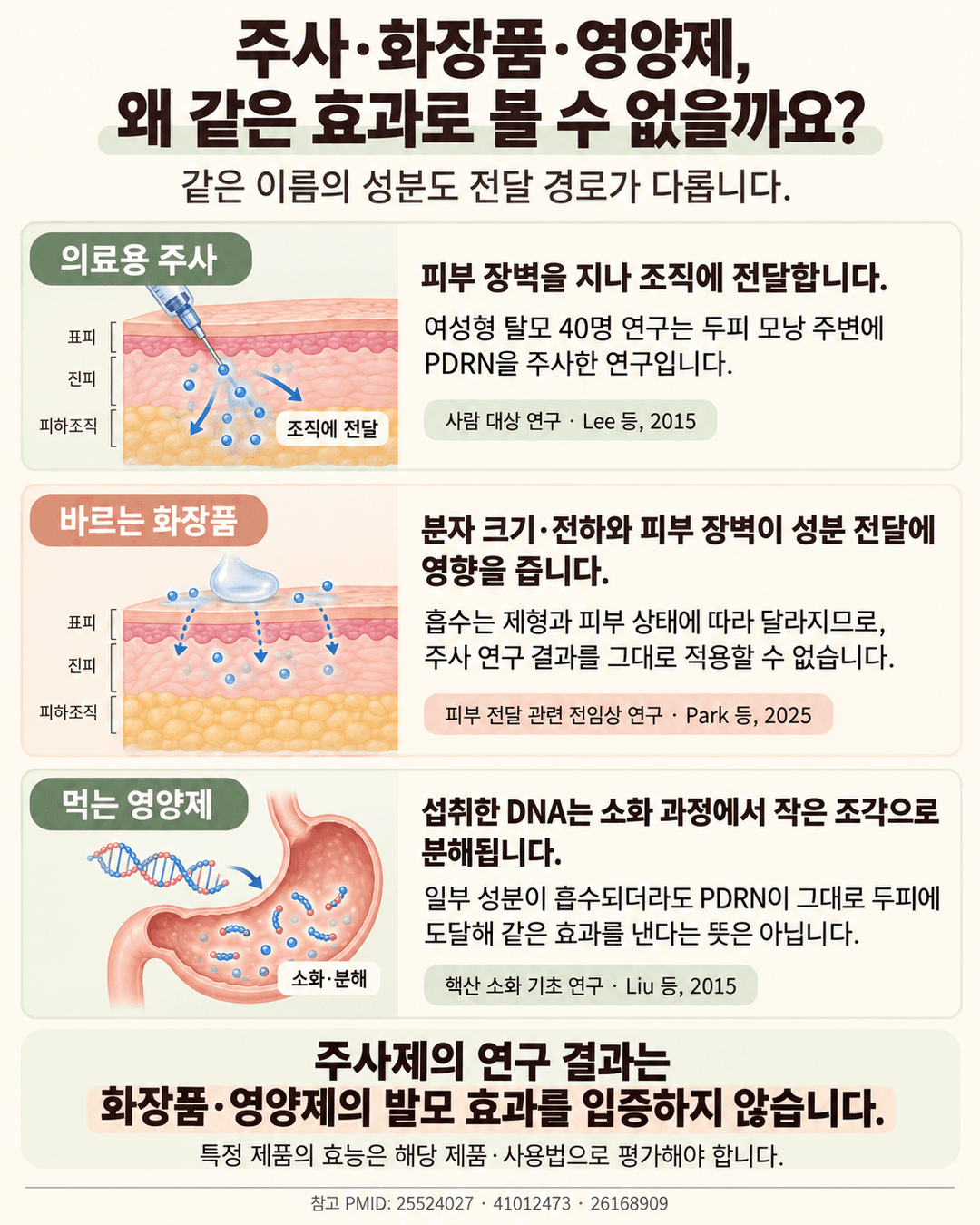
Even if the ingredient name is the same, a different route into the body can change the amount actually delivered and the conditions under which it acts. Therefore, results obtained with injections cannot be presented as results for topical or oral products.
Medical injections: research under conditions of delivery into tissue
The hair loss study introduced above involved injection around the hair follicles of the scalp. It did not evaluate products applied to the skin surface or taken orally. [2]
Cosmetics: the skin barrier and formulation must be considered together
PDRN's molecular size and charge, among other factors, affect skin delivery. A 2025 study by Park et al. modified the physical properties of PDRN and then examined its delivery characteristics in cells and an artificial skin membrane model. It was not a clinical trial evaluating the hair growth effect of cosmetics used by people. [4]
Nor can this be used to conclude that no cosmetic is absorbed at all. The actual formulation, skin condition, and method of use should be considered separately, and data on the specific product should be checked.
Supplements: they go through digestion and breakdown
A 2015 basic study by Liu et al. confirmed the breakdown of nucleic acids such as DNA in experiments using human gastric juice and pepsin. This was not a study evaluating improvement of hair loss in people taking PDRN supplements. [5]
Even if some breakdown components are absorbed, this does not mean PDRN reaches the scalp intact and produces the same effect as an injection. Conversely, the fact that it is digested alone cannot be used to deny all effects of a specific ingested product.
7. Is "4% PDRN Ingredient" the Same as 4% Pure PDRN?
Not necessarily. Ingredient blend ratio refers to how much of a mixture containing PDRN was added to the product, while finished product content refers to how much PDRN itself is contained in the final product.
For example, suppose an ingredient with a PDRN concentration of 0.1% is blended into the finished product at 4%. Assuming simple mixing on an equal-weight basis, the calculation is as follows.
Hypothetical Content Calculation Example
0.1% × 0.04 = 0.004% = 40ppm
Even though 4% of the ingredient was added, under these conditions the PDRN content of the finished product is 0.004%. 1% corresponds to 10,000ppm.
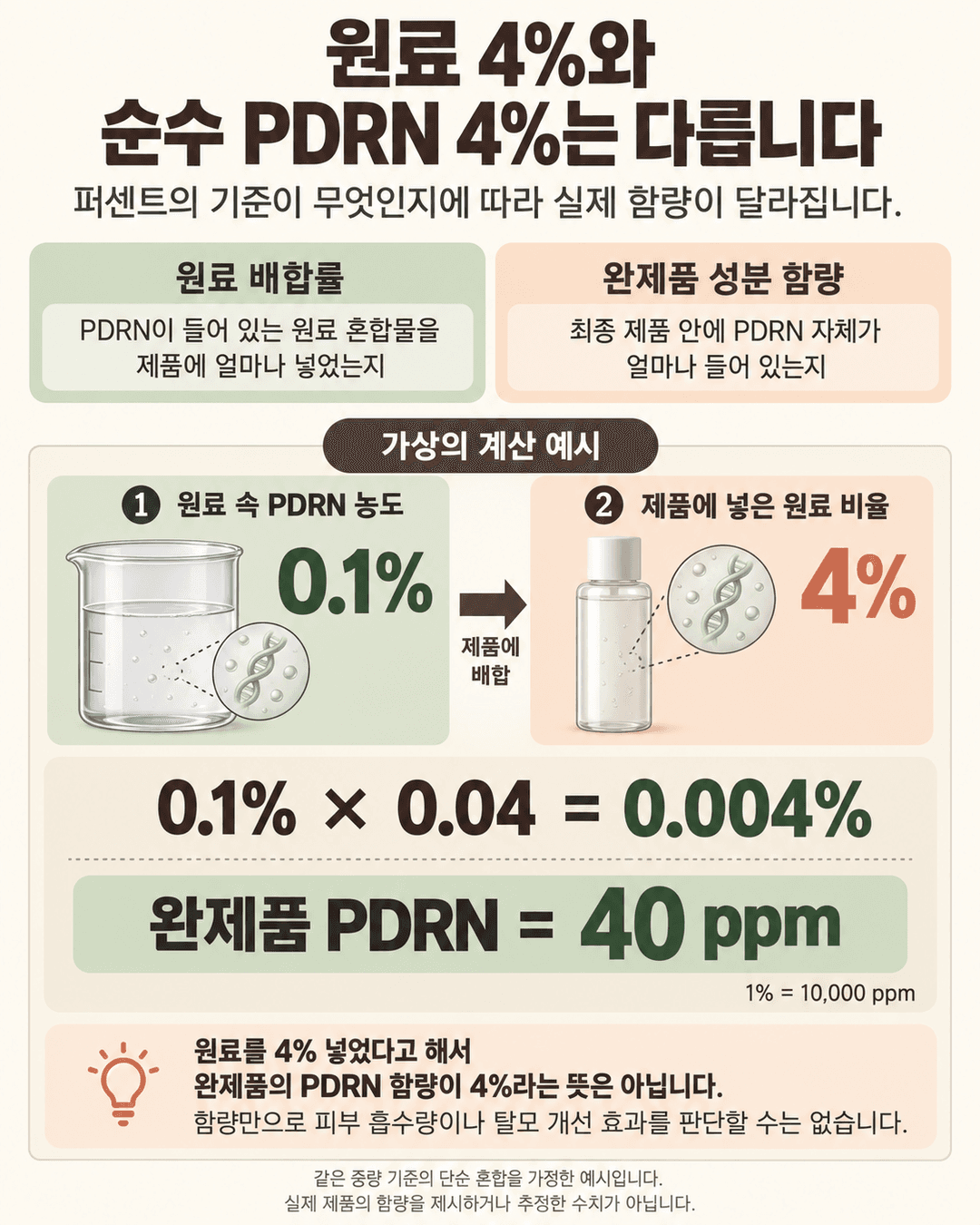
Therefore, before comparing labeled numbers, first check whether the figure is the proportion of an ingredient mixture or the content of the component in the finished product. Even if the content is confirmed, that alone does not tell you the amount absorbed through the skin or the effect on hair loss.
8. What Should You Check During a Consultation?
- Treatment goal: Confirm whether it is intended to improve hair count and thickness, or for scalp condition or post-surgical recovery.
- Actual product and application method: Check the ingredients, concentration, formulation, and application site, and ask how they differ from the study conditions you were told about.
- Evidence applicable to you: Confirm whether the data are relevant to your type and condition of hair loss, and what changes can be expected and what uncertainties exist.
- Treatment burden and evaluation plan: Discuss the number of sessions, cost, possible side effects and precautions, and when and how the effect will be evaluated.
During your consultation, please also share the hair loss medications and scalp products you currently use, as well as your previous treatment history. Whether to add a particular injection or product should be decided based on your current condition and overall treatment plan.
Frequently Asked Questions
If I get PDRN injections, can I stop taking my current hair loss medication?
The studies reviewed in this article did not examine whether existing treatment can be discontinued. Rather than changing your current treatment on your own, you should discuss whether to continue or change it with the physician who prescribed it.
How much does PDRN increase hair transplant graft survival?
The studies introduced here cannot provide a figure for any increase. The female pattern hair loss study evaluated hair count and thickness, and the diabetic foot ulcer study evaluated wound healing. These should be distinguished from data directly evaluating the survival of transplanted hair follicles.
Does this mean PDRN cosmetics are not absorbed at all?
That is not what is being concluded. Delivery may vary depending on molecular properties, formulation, and skin condition. However, data showing delivery of an ingredient and data demonstrating a hair growth effect in people should be examined separately.
Is a higher PDRN content more effective for hair loss?
This cannot be judged by content alone. Labeling standards, delivery routes, and product formulations differ, and separate comparative studies are needed to determine whether a higher concentration leads to a greater clinical effect.
Do I need 12 sessions, as in the study, to see an effect?
The number of sessions in a study does not mean it is an appropriate treatment standard for everyone. A plan should be decided with your physician based on your condition, treatment goals, the product, and your progress.
Review your current hair loss condition and treatment goals
If you are considering PDRN, start by organizing information about your type of hair loss and current treatment. During a consultation, you can discuss its applicability, the changes that may be expected, the limitations of the research, and the burden of treatment.
Related Video
This video covers PDRN salmon injections, hair loss, and hair transplants. This article was prepared by separately reviewing published research on the topic; please read the explanations in the video and the level of evidence of individual studies as distinct from each other.
References
- Squadrito F, et al. Pharmacological Activity and Clinical Use of PDRN. Front Pharmacol. 2017;8:224. DOI: 10.3389/fphar.2017.00224. A literature review of mechanistic and clinical data. A 2022 correction supplementing research funding and patent-related conflicts of interest is available.
- Lee SH, et al. Therapeutic efficacy of autologous platelet-rich plasma and polydeoxyribonucleotide on female pattern hair loss. Wound Repair Regen. 2015;23(1):30–36. DOI: 10.1111/wrr.12250. A comparative study in patients with female pattern hair loss.
- Squadrito F, et al. The effect of PDRN, an adenosine receptor A2A agonist, on the healing of chronic diabetic foot ulcers: results of a clinical trial. J Clin Endocrinol Metab. 2014;99(5):E746–E753. DOI: 10.1210/jc.2013-3569. A randomized controlled trial in diabetic foot ulcers; the route of administration reflects the corrected information.
- Park SJ, et al. Plasma-Engineered PDRN: Surface Charge Neutralization and Nanosizing Enhance Uptake and Regeneration Potential. Pharmaceutics. 2025;17(9):1136. DOI: 10.3390/pharmaceutics17091136. A preclinical study using physical property analysis, cells, and an artificial skin membrane model.
- Liu Y, et al. Digestion of Nucleic Acids Starts in the Stomach. Sci Rep. 2015;5:11936. DOI: 10.1038/srep11936. A basic study examining the digestion of nucleic acids.
Video source: Modi Hair Plant YouTube — Video on PDRN Salmon Injections, Hair Transplants, and Hair Loss
This article is intended to provide general medical information; the cause of an individual's hair loss cannot be diagnosed, nor a treatment plan determined, from online information alone. Treatment response and recovery vary from person to person, and the research findings presented do not guarantee the same effect for everyone. The need for, suitability, and method of treatment, as well as product-specific side effects and precautions, should be confirmed through a consultation with a physician.