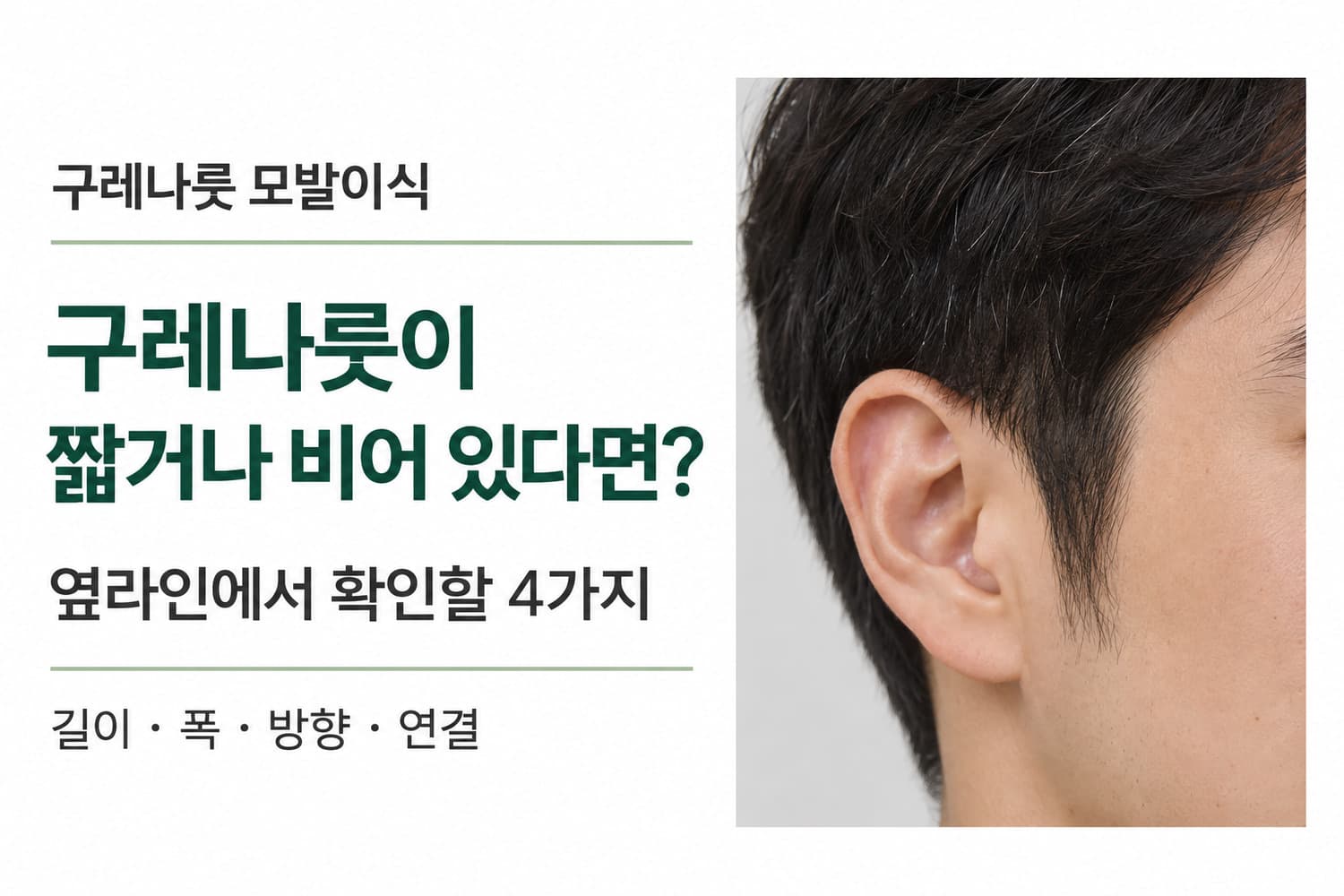
Sideburn Transplant · Side-Line Design
Sideburn Transplant: Considering Length and Connection to the Side Hair Together
If your sideburns look short or partially sparse, you may consider moving hair follicles to the areas that need them to supplement the side line. In this case, it is necessary to consider not only how long to make them, but also the width, hair direction, and connection with the existing side hair.
In this article, based on a sideburn transplant case by Director Yoo Hwa-jung of Modi Hair Plant, we summarize four things to check in the design, as well as post-operative style care.
3-Line Summary
- A sideburn transplant is a hair transplant that supplements sparse areas or a short side line, and it is not a surgery that changes the facial bone structure itself.
- We examine length, width, direction, and connection, and plan the range according to the thickness and density of the surrounding hair.
- The case of 600 hairs in total shown in the video is the early progress 2 weeks after surgery. Individual transplant amounts and subsequent growth results may vary.
What Areas Does a Sideburn Transplant Supplement?
A sideburn transplant is a method of transplanting hair follicles harvested from a donor area, such as the scalp, to the necessary areas in front of the ears. You may consult for the purpose of extending congenitally short sideburns or supplementing a side line that looks partially sparse.
Even if the hair on the front or crown is sufficiently dense, sideburns alone can be a concern. Rather than changing the entire hairline, the starting point is to discuss specifically which part in front of the ears you would like to supplement.
4 Things to Check in Sideburn Design
Even when drawn at the same length, the impression may look different depending on the width, the shape of the end, and the direction in which the hair grows. In this article, we divide the points to review during consultation into four parts.
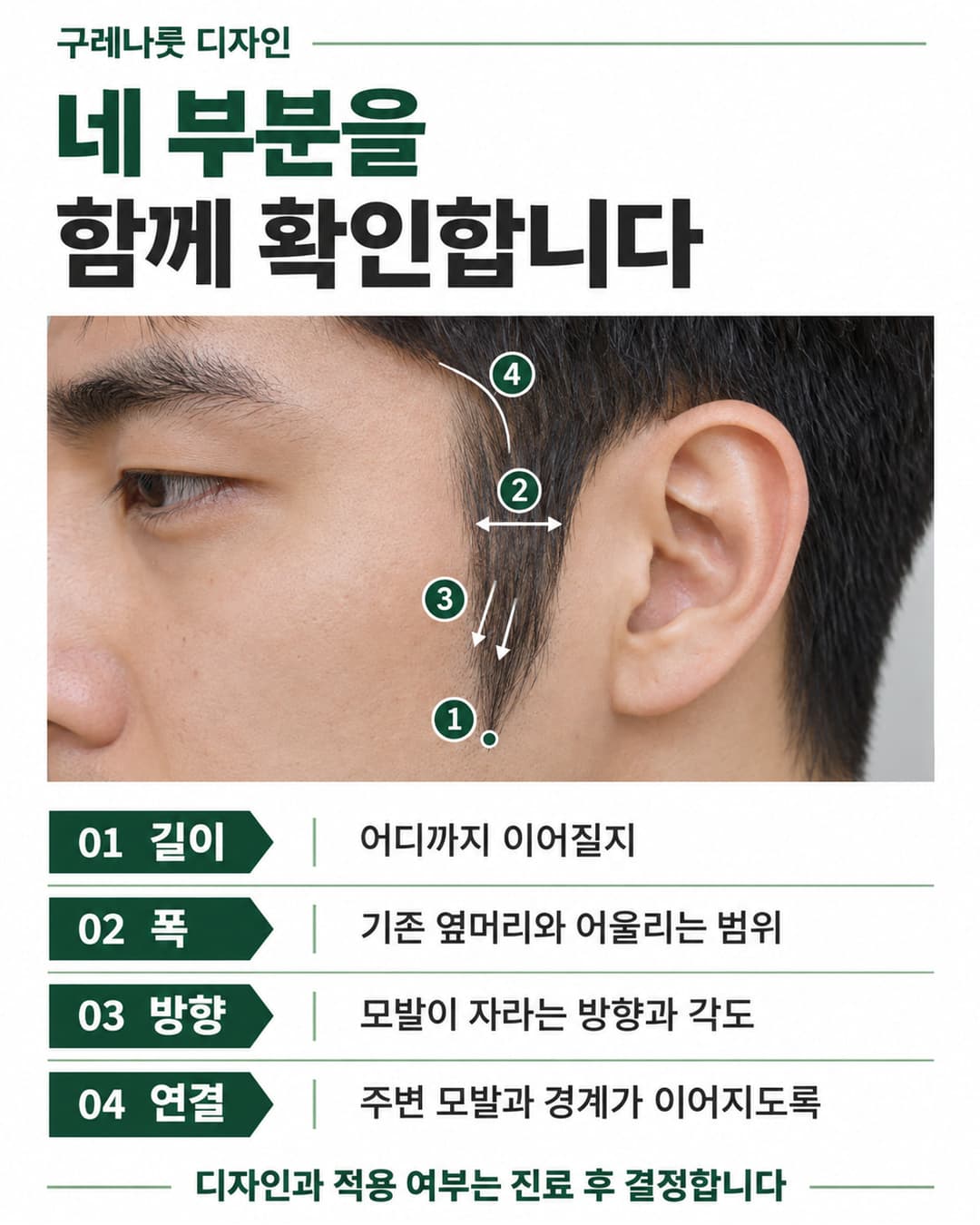
01. Length: How Far Should They Extend?
We draw the desired end position and check it from the front and side. Rather than making them long for its own sake, we consider whether the length suits your usual hairstyle.
02. Width: What Range Should Be Filled?
We look at the width of the sparse area together with the surrounding density. The plan differs depending on whether to extend a thin line or to supplement an area that connects with the side hair.
03. Direction: How Does the Existing Hair Grow?
We check the flow of the surrounding hair and the angle at which it emerges from the skin. Rather than always implanting hairs flat, we consider a placement that matches the existing side hair.
04. Connection: How Should the Boundary Blend?
We examine the area from where it meets the existing side hair to the end of the sideburn. We also discuss hair thickness and density, and whether to finish the end with a pointed or gentle shape.
The Literature Also Addresses Direction and Angle Together
A surgical technique paper on facial hair reconstruction published in 2021 describes considering direction, angle, and placement relative to existing hair when planning the sideburn area. It also presents differences in characteristics between donor hair and facial hair as a topic to address during consultation. [Reference 1]
This source describes reconstruction methods for the beard, moustache, and sideburns. It is not a clinical trial that compared the graft survival rates of a specific design or clinic to prove superiority.
Actual Case: Why 300 Hairs per Side, 600 Hairs in Total, Were Planned
The patient in the video is a man who originally had sufficient hair density but had short sideburns and was concerned about the empty space on his face when viewed from the side. He expressed his wish to make his sideburns a little longer and thicker.
Director Yoo Hwa-jung explains that she planned a long shape with a blunt end for this patient. This is a case in which 300 hairs were transplanted on each side, 600 hairs in total, using the non-incision method, and it does not mean that the same design and transplant amount are applied to everyone.
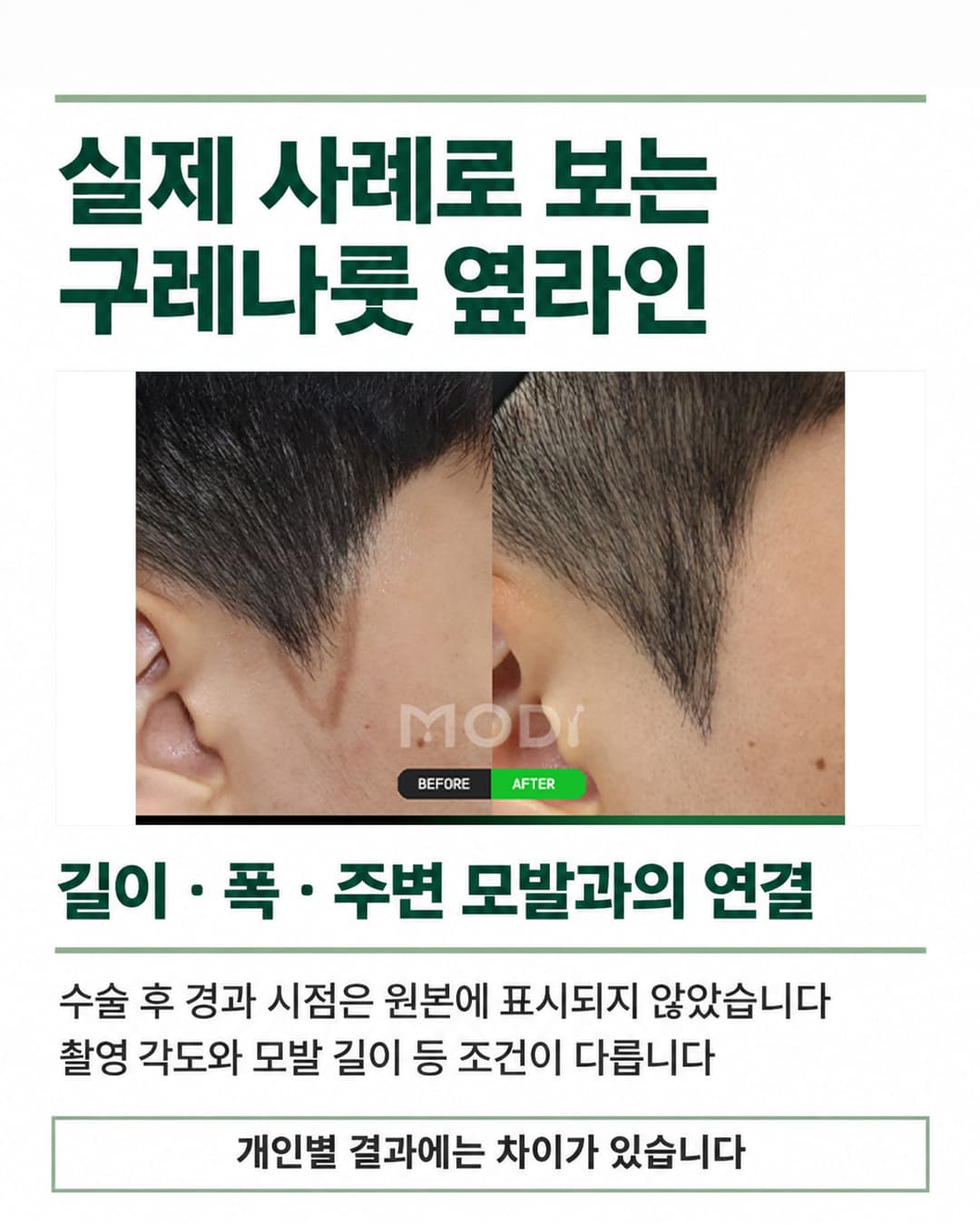
In this case, rather than increasing the number of hairs, the key consultation point was in what range to place the length and width the patient wanted. When viewing the photos, it is helpful to look at the end position and its connection with the surrounding side hair as well.
The 2-week photo does not represent the final result. It shows the early appearance of the transplanted area, and subsequent hair growth, direction, and skin condition must be checked during follow-up visits. The final graft survival rate or long-term maintenance cannot be judged from this photo.
Hairstyle Care After the Transplant Should Also Be Considered in Advance
In sideburn consultations, Modi Hair Plant advises patients to also consider the thickness of the side hair after the transplant, how much it tends to stick out, and their usual style. Please tell us not only the design you want but also the hair length you actually wish to maintain.
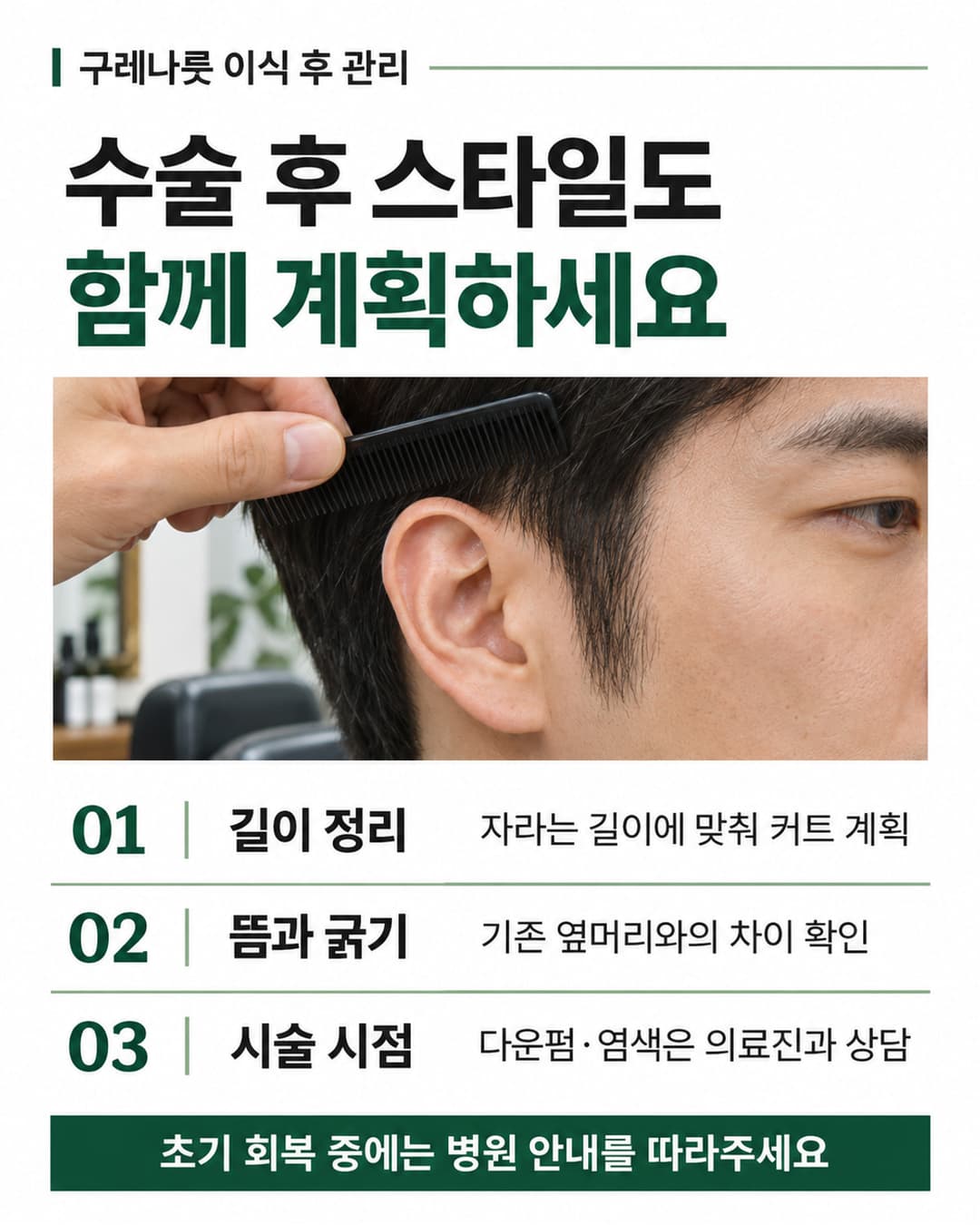
- Length trimming: We discuss how short you usually cut your side hair and at what length you want to keep your sideburns.
- Hair characteristics: We examine the thickness and growth pattern of the donor hair together with those of the existing side hair.
- Cosmetic hair treatments: During early recovery, do not decide on the timing of haircuts, down perms, or dyeing on your own; follow the guidance of the clinic that performed the surgery.
If You Have These Concerns, Check the Details During Consultation
The desired supplementation range differs depending on whether your sideburns are short, look sparse in the middle, or differ in shape on each side. If you have recently experienced sudden hair loss or have skin symptoms, identifying the cause should be discussed first, along with the cosmetic design.

- Usual style: Side hair length, haircut cycle, whether you get down perms
- Areas of concern: Which bothers you—short length, sparse areas, or left-right differences
- Desired look: Reference photos explaining the length, width, and end shape
- Previous history: Procedures related to tattoos, hair transplants, or scars, and any current uncomfortable symptoms
Reference photos are materials for conveying your desired style. The applicable range is determined after checking your hair and skin condition and harmony with your face.
Frequently Asked Questions
Does a style with very short side hair also affect the transplant plan?
Yes. Depending on the length you intend to maintain, how visible the hair direction and boundary are may differ, so this is something to check during consultation. Rather than showing only photos with your hair grown out, please also share how it looks when you usually keep it short.
If I get 600 hairs transplanted like in the video, will my sideburns look similar?
600 hairs is the amount planned for the patient in the video. Since your remaining sideburns, the area to be supplemented, desired density, and donor area condition differ, you cannot expect the same result from the same number of hairs. When comparing quotes, you should also check whether the count refers to individual hairs or follicles.
I have a tattoo on my sideburns. Can hair be transplanted over it?
Eligibility is not determined solely by the presence of a tattoo. The tattoo's location, skin condition, presence of scars, and desired supplementation range must be checked in person. Please also inform us of your tattoo history and any skin reactions that occurred at the time during consultation.
Will I need to keep getting down perms after the transplant?
A down perm is not necessarily required. We consult based on the characteristics of the donor hair, the existing side hair, and the style you wish to maintain. Rather than assuming direction will be corrected with down perms after surgery, it is important to consider hair direction and angle from the initial design.
Let's Design Your Desired Side Line Together
At Modi Hair Plant, we consult on the direction of supplementation by examining sparse areas of the sideburns, existing hair, and your usual style together. Please let us know which concerns you most: length, width, or end shape.
Phone inquiries: 02-544-8659
Watch Director Yoo Hwa-jung's Video
The video introduces the concerns of a patient who wanted to supplement only his sideburns, the design direction, and a case of non-incision transplantation of 600 hairs in total on both sides. From around 1 minute 31 seconds, you can see the explanation of the photos taken 2 weeks after surgery.
The design and number of hairs in the video are the individual plan for that patient. Your eligibility for transplantation, the range, and post-operative care must be confirmed through examination.
References and Sources
[Reference 1] Dua K, Verma V, Dua A. Beard and Moustache Reconstruction. Indian Journal of Plastic Surgery. 2021;54(4):483–488. DOI: 10.1055/s-0041-1739248. PMID: 34984089. View full text. A paper addressing techniques and considerations in facial hair reconstruction.
[Video Source] Modi Hair Plant. Sideburn Transplant: Recommended for These People I Hair Transplant, Hair Loss Treatment I. Watch on YouTube. Referenced for the patient's concerns, design and number of transplanted hairs, and explanation of 2-week early progress.
[Clinic Information] Modi Hair Plant Clinic. Sideburn Hair Transplant Information. These are the clinic's treatment information and case materials, distinct from academic research.
This article presents general medical information and individual cases and does not replace diagnosis or prescription. Surgery may carry risks such as infection, bleeding, scarring, abnormal hair direction, and insufficient graft survival. Eligibility, method, transplant amount, and recovery and growth results vary by individual and are determined after examination by the medical team.