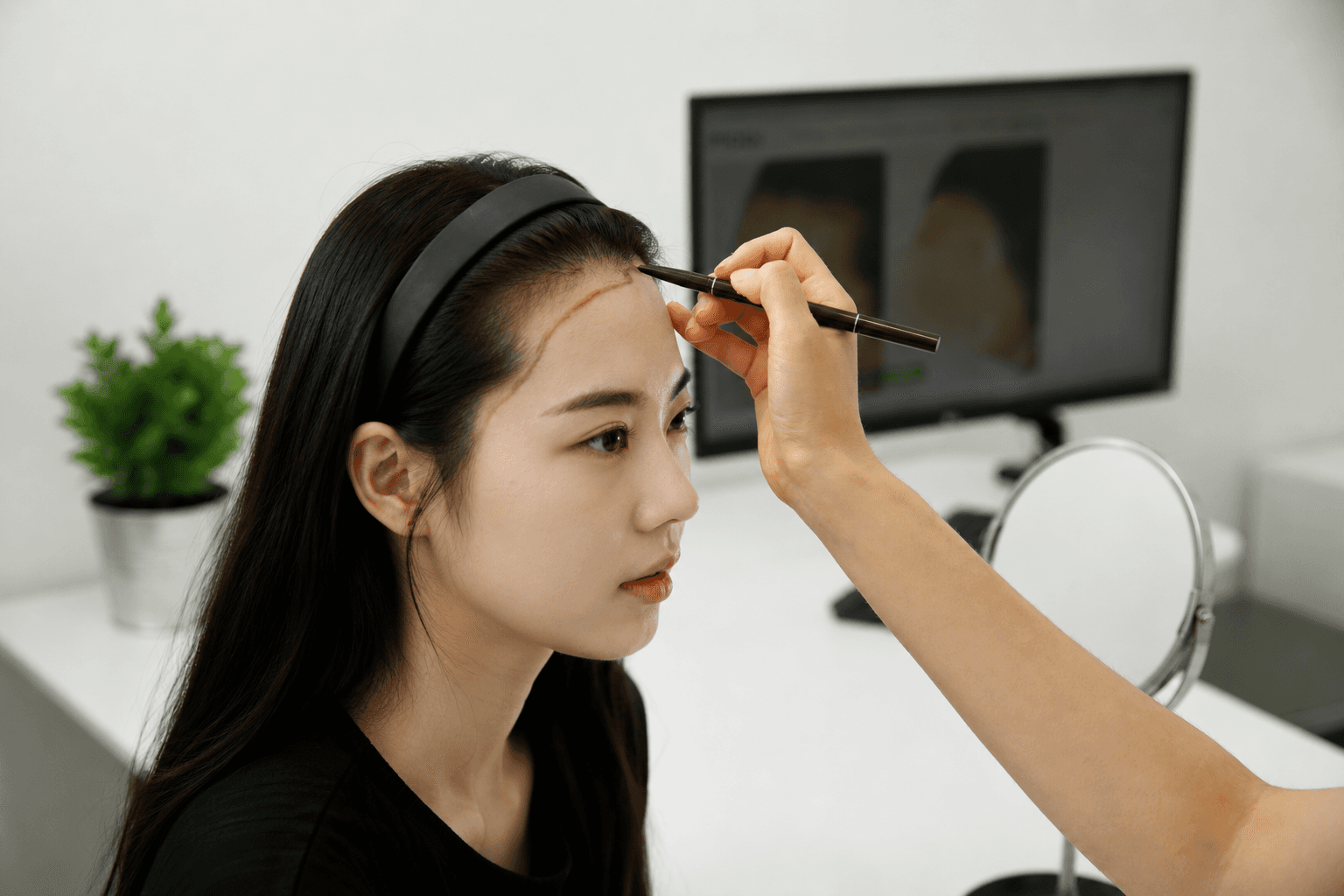
For a wide forehead, both hair transplant and forehead reduction surgery can be considered as options for improvement. However, the two methods differ in surgical principle, recovery process, scarring, and naturalness, so it is important to choose the method that suits your individual hairline and scalp condition.
In this article, we take a detailed look at the differences between forehead hair transplant and forehead reduction surgery, the two representative methods for improving a wide forehead, and the cases for which each may be suitable.

Is a Wide Forehead Always Caused by Hair Loss?
Many people concerned about a wide forehead worry about hair loss. In reality, however, there are quite a few cases where the forehead is naturally wide or the hairline is high regardless of hair loss.
Particularly among women, there are many cases where the forehead appears wide because of a naturally occurring hairline design rather than hair loss, and many seek consultation because bangs or hairstyling have not provided the improvement they wanted.
Because a wide forehead can have various causes, it is important to first accurately assess the current condition of the hairline.

What Is Forehead Reduction Surgery?
Forehead reduction surgery is a procedure that shortens the vertical length of the forehead by incising the forehead skin and then moving the scalp downward.
Because it reduces the skin directly through an incision, it has the advantage of shortening the forehead length relatively quickly.
Advantages of Forehead Reduction Surgery
- The forehead length can be shortened relatively quickly.
- No hair follicle harvesting is required.
- The surgery time is relatively short.
Considerations for Forehead Reduction Surgery
- An incision scar may remain.
- Depending on the individual, the hairline may appear somewhat straight.
- Scar care may be required.
- In some cases, the incision area is covered with bangs styling.
What Is Hair Transplant for a Wide Forehead?
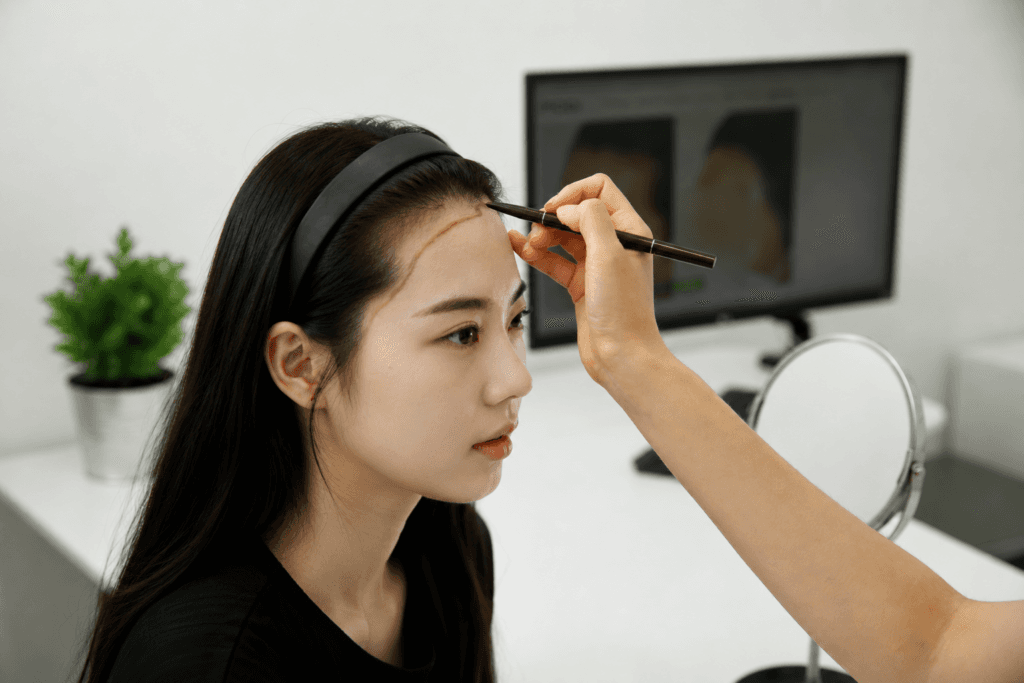
Hair transplant for a wide forehead is a method in which healthy hair follicles are harvested from the back of the head and transplanted to the hairline.
Rather than shortening the forehead by excising skin, it is a method of improving a wide-looking forehead by designing the hairline naturally further forward.
Advantages of Hair Transplant for a Wide Forehead
- A natural hairline can be created.
- The design can be tailored to your face shape.
- The side hairline can be corrected at the same time.
- There is less concern about incision scars.
Considerations for Hair Transplant
- A period for graft survival is required.
- The number of hair follicles that can be harvested from the back of the head varies by individual.
- The required transplant amount may vary depending on the desired design.

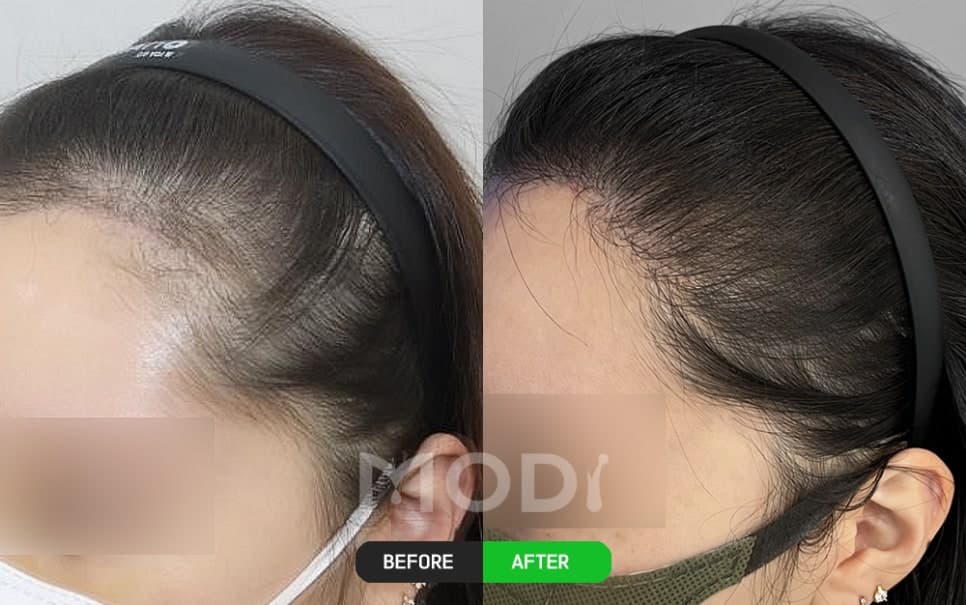
Are There Cases Where Hair Transplant Is Performed After Forehead Reduction Surgery?
In some cases, this is possible.
The case in the photo above is one in which the incision line became noticeable and the hairline looked unnatural after forehead reduction surgery, and it was corrected with hair transplant.
In cases like this, particularly when you want the hairline to connect naturally to the side hairline, hair transplant may be helpful.
However, because the tissue condition of the incision area may differ from that of normal skin, graft survival may vary by individual, and it is advisable to establish a surgical plan through thorough consultation.
In Which Cases Is Hair Transplant More Suitable for a Wide Forehead?
Hair transplant may be considered first in cases such as the following:
- When you want a natural hairline
- When you want a design tailored to your face shape
- When you also want to improve the side hairline
- When you want to reduce concerns about scarring
Conversely, if shortening the forehead length relatively quickly is the priority, forehead reduction surgery may be suitable.
Ultimately, what matters is not which surgery is better, but choosing the method that suits your current hairline, facial proportions, and scalp condition.
Thorough Consultation Is Important for Improving a Wide Forehead
Improving a wide forehead is not simply about shortening the forehead; satisfaction may be higher when the proportions of the entire face and the hairline design are considered together.
At Modi Hair Plant, after thoroughly analyzing each individual's hairline and scalp condition, we guide you through a surgical plan that prioritizes a natural design.
Frequently Asked Questions
Is everyone with a wide forehead a candidate for hair transplant?
No. The suitable method may vary depending on factors such as a congenital hairline, whether hair loss is progressing, and the condition of the hair follicles at the back of the head, so it is advisable to confirm this through consultation with the medical team.
Can I have a hair transplant after forehead reduction surgery?
In some cases, this is possible. In such cases, it can help make an awkward-looking hairline and incision area look more natural. However, since the surgical plan may vary depending on the condition of the incision area and the extent of scarring, it is advisable to decide after a thorough examination.
Does hair transplant for a wide forehead leave a lot of scarring?
With non-incision hair transplant, the small harvesting marks often become less noticeable over time. However, skin condition and the recovery process vary by individual.
How much can a wide forehead be reduced?
The extent of reduction is determined by comprehensively considering the current hairline, facial proportions, and the condition of the hair follicles at the back of the head. Rather than reducing the forehead excessively, it is important to prioritize natural proportions.
References
- Vila PM, Somani SN, Wafford QE, Sidle DM. Forehead Reduction: A Systematic Review and Meta-Analysis of Outcomes. Facial Plast Surg Aesthet Med. 2022;24(1):34–40. doi:10.1089/fpsam.2020.0474 (PubMed)
The above paper is a systematic review and meta-analysis summarizing the outcomes and complications of forehead reduction (hairline lowering). The choice of method depends on each individual's condition, and thorough consultation is necessary.
This content was published after review by the Modi Hair Plant medical team to provide accurate medical information.