Hair Transplant and Hair Loss Treatment: Why We Keep Researching Even the Culture Medium
The outcome of a hair transplant is not determined by surgery alone. For transplanted hair follicles to engraft and grow healthily, the environment around the follicles and the condition of the scalp are also important factors.
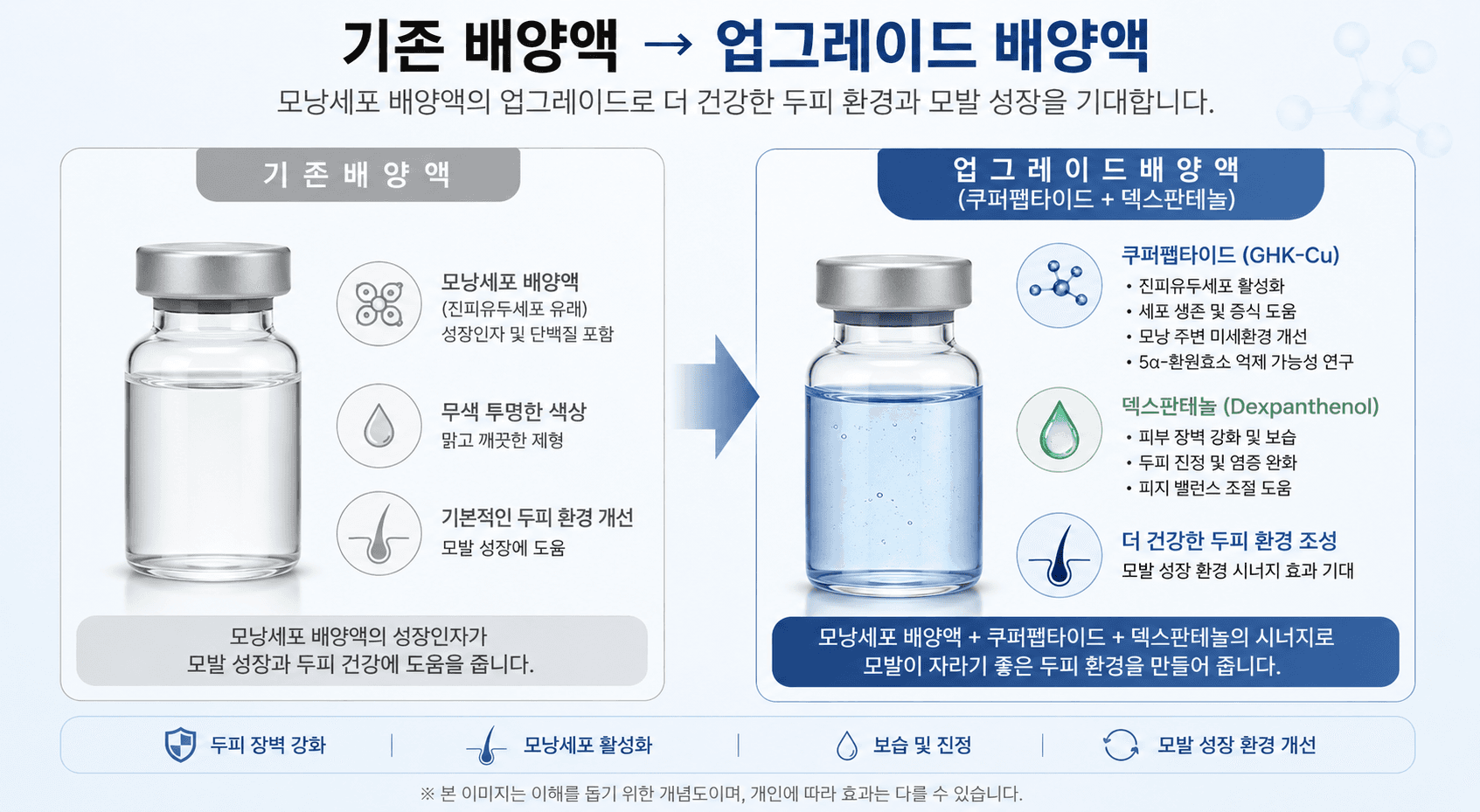
With this in mind, Modi Hair Plant has, based on recent research, additionally incorporated copper peptide (GHK-Cu) and dexpanthenol into its hair follicle cell culture medium.
In this article, we explain why these two ingredients were added, the roles they are expected to play, and why Modi Hair Plant continually updates its treatment protocols.
💡 Key Summary
- Copper peptide (GHK-Cu) is an ingredient being studied for its potential to activate dermal papilla cells and improve the scalp microenvironment.
- Dexpanthenol may help maintain a healthy scalp environment through skin barrier recovery and moisturization.
- Modi Hair Plant applies both ingredients together with the hair follicle cell culture medium, anticipating a supportive synergistic effect.
- Treatment plans may vary depending on the individual's cause and condition of hair loss, and are determined through consultation with our medical team.
Why Did Modi Hair Plant Upgrade Its Culture Medium?
New research continues to be published in the fields of hair transplantation and hair loss treatment.
While in the past the technique of implanting hair itself was the focus of treatment, recently there has also been active research into how to improve the environment in which hair follicles engraft and grow.
In particular, the following factors are considered important.
- Activity of dermal papilla cells
- Scalp microenvironment
- Skin barrier function
- Extracellular matrix (ECM)
- Inflammation control
- The environment in which growth factors act
Based on these research trends, Modi Hair Plant continually reviews ways to make better use of the advantages of hair follicle cell culture medium, and as a result, we currently use copper peptide and dexpanthenol together.
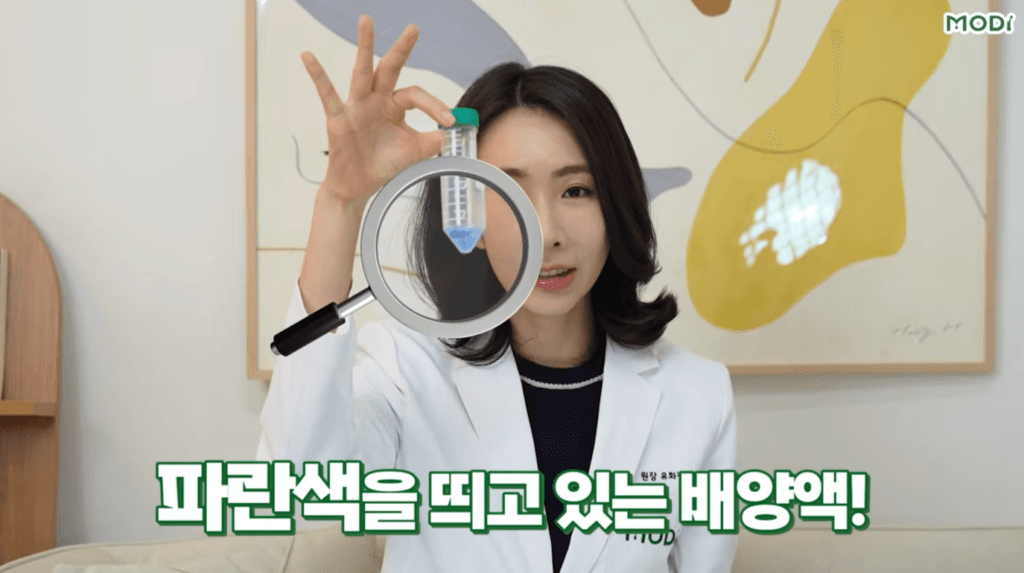
Why Is the Culture Medium Blue?
Some of our patients ask,
“Is the culture medium supposed to be blue?”
during treatment.
Our previous hair follicle cell culture medium was nearly colorless.
However, the culture medium we currently use has a light blue tint, because copper peptide itself is an ingredient with a bluish color.
Because Modi Hair Plant delivers the culture medium to the scalp using air-jet equipment, there is a very rare possibility that a small amount may splash onto clothing.
For this reason, we provide a thorough explanation before treatment and proceed only after obtaining consent.
Fortunately, copper peptide is a water-soluble ingredient, so most of it can be easily removed by washing with water.
What Is Copper Peptide (GHK-Cu)?
Copper peptide (GHK-Cu) is a bioactive peptide also known as Copper Tripeptide-1.
It is a small peptide naturally found in the human body, in a form bound to copper.
It has long been studied in the fields of skin regeneration and wound healing, and recently various studies have also been conducted in the field of hair loss treatment.
Studies published to date have reported the following possibilities.
- Activation of dermal papilla cells
- Maintenance of cell survival
- Promotion of skin regeneration
- Increased collagen production
- Improvement of the scalp microenvironment
However, the evidence to date is not at a level that would replace standard hair loss treatment, and it is appropriate to understand it as a supportive approach used alongside existing treatments.
① Potential to Support Dermal Papilla Cell Activity
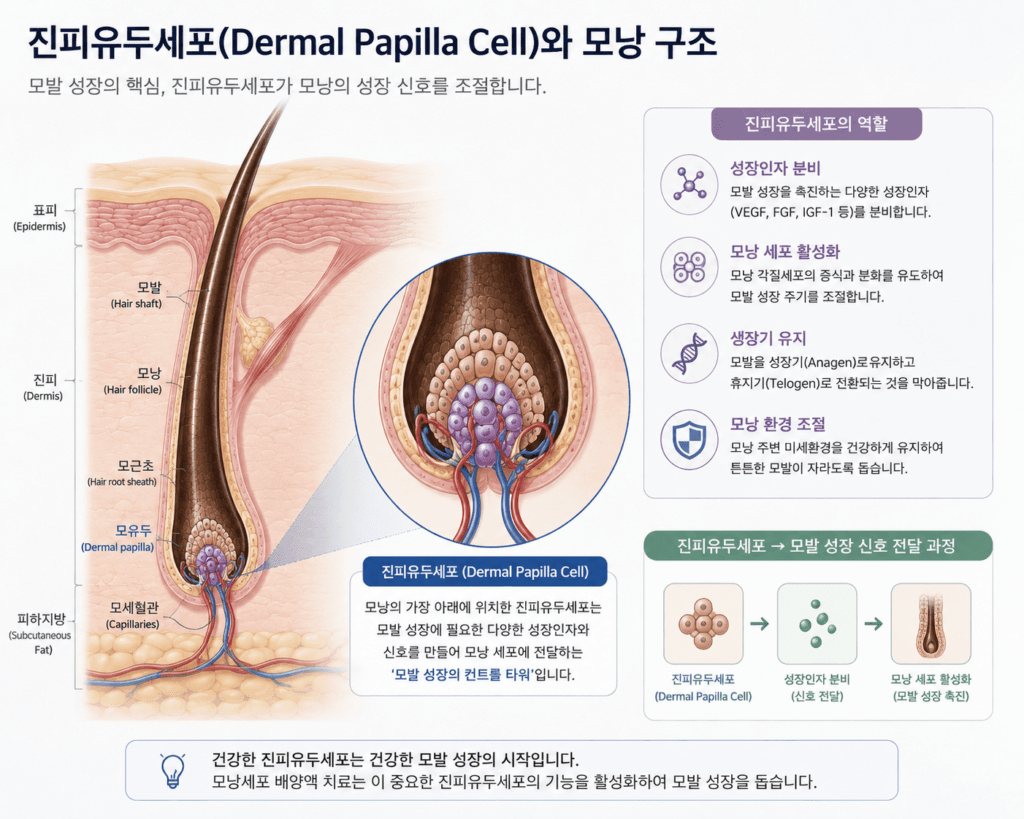
One of the most important cells for hair growth is the dermal papilla cell.
Dermal papilla cells are located at the base of the hair follicle and transmit various signals necessary for hair growth to surrounding cells.
Put simply, they can be understood as the key cells that control the growth switch of the hair follicle.
The hair follicle cell culture medium used at Modi Hair Plant also contains various growth factors derived from these dermal papilla cells.
Some recent studies have reported that copper peptide may potentially act to
- promote the proliferation of dermal papilla cells,
- maintain cell survival, and
- reduce cell death (apoptosis).
In other words, when applied together with the hair follicle cell culture medium already in use, it may help create an environment in which hair follicle cells can function well.
Of course, these findings are in an area that still requires further research, and Modi Hair Plant uses this as a strategy to complement existing treatments.
② Potential to Improve the Environment Around Hair Follicles (ECM)
Hair does not grow well simply because a single hair follicle is healthy.
The skin tissue and extracellular matrix (ECM) surrounding the hair follicle also play an important role.
The ECM is a structure that supports cells and serves as the foundation on which growth factors act.
Put simply, it is like a ‘scaffold’ that supports cells so they can function healthily. In dermatology, copper peptide has been studied for its involvement in collagen and elastin production and its role in supporting ECM formation.
These properties may also play a positive role in creating an environment in which the tissue around hair follicles on the scalp is kept healthy.
Therefore, Modi Hair Plant applies it in treatment, considering whether it may help create a microenvironment favorable for growth factors to act when used together with the hair follicle cell culture medium.
③ How Does Copper Peptide Affect the DHT Production Process?
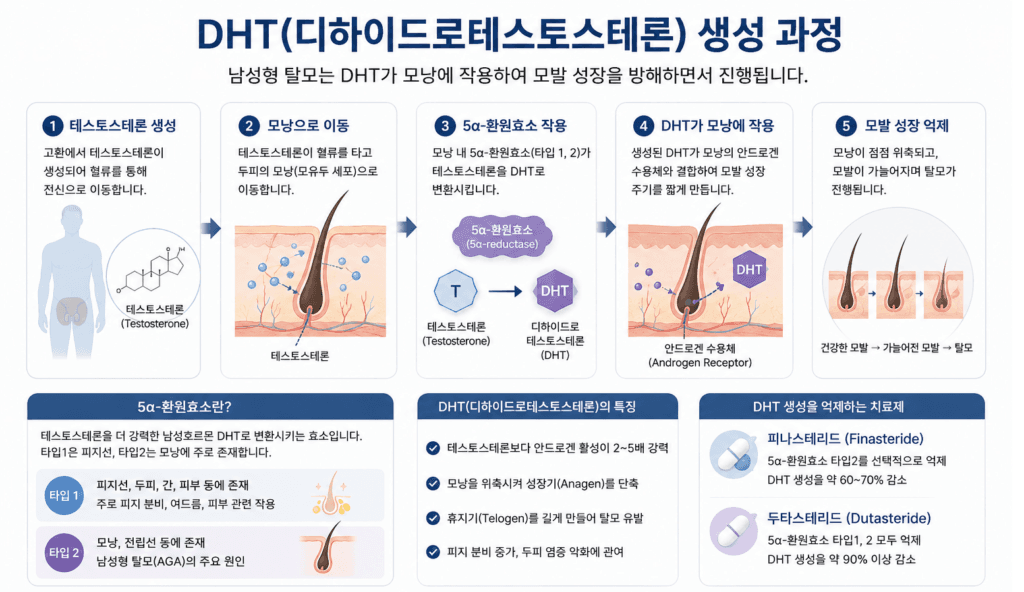
One of the most representative causes of male pattern hair loss is DHT (dihydrotestosterone).
DHT is produced when the male hormone testosterone is converted by 5α-reductase (5-alpha reductase), and in genetically susceptible hair follicles, this DHT causes the follicles to gradually shrink and the hair to become thinner.
The widely used medications finasteride and dutasteride are also used in hair loss treatment based on the principle of inhibiting this 5α-reductase.
Some recent cellular and preclinical studies have suggested that copper peptide (GHK-Cu) may influence this DHT production process or related signaling pathways.
However, the evidence to date is based mainly on preclinical studies and a limited number of other studies, and it cannot be considered on the same level as drugs with proven efficacy such as finasteride or dutasteride.
Therefore, Modi Hair Plant applies copper peptide not as a substitute for hair loss medication, but as a supportive synergistic ingredient that can be used together with the hair follicle cell culture medium.
Why Is Dexpanthenol Used Together?
If copper peptide is an ingredient focused on hair follicle cell function and the scalp microenvironment,
dexpanthenol is an ingredient more closely related to maintaining a healthy scalp environment.
Dexpanthenol is also known as provitamin B5, and when absorbed into the skin, it is converted into pantothenic acid.
In dermatology, it has long been widely used for
- skin barrier recovery
- moisturization
- skin soothing
- recovery of damaged skin
and similar purposes.
Why Is a Healthy Scalp Environment Important?
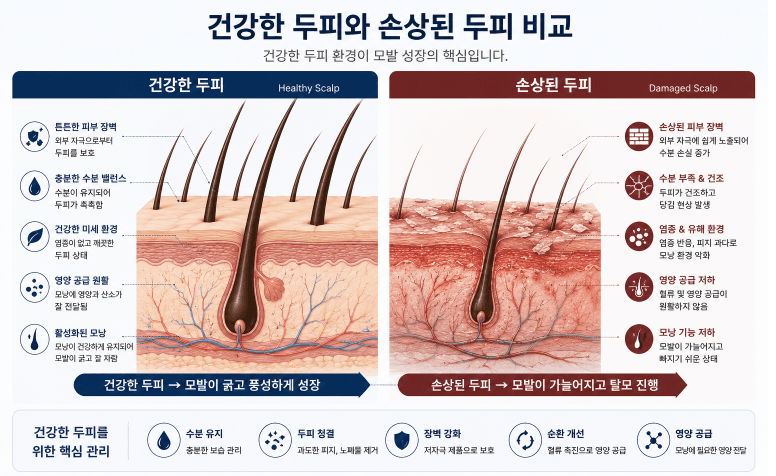
Hair grows from hair follicles, but for follicles to function healthily, the surrounding scalp environment is also very important.
In patients with hair loss, the following problems often appear together.
- Seborrheic dermatitis of the scalp
- Excessive sebum secretion
- Chronic inflammation
- Damaged skin barrier
- Dry scalp
In such an environment, hair follicles may have difficulty functioning even if sufficient growth factors are present.
Because dexpanthenol may help restore the skin barrier and retain moisture, it can be expected to play a supportive role in creating a scalp environment favorable for hair follicle cell activity.
Anticipated Synergy When Used Together with Hair Follicle Cell Culture Medium
At Modi Hair Plant, rather than looking at each ingredient separately,
we focus on how culture medium + copper peptide + dexpanthenol can play complementary roles.
The role of each ingredient is summarized below.
| Ingredient | Expected Role |
|---|---|
| Hair follicle cell culture medium | Supplying growth factors and creating an environment for hair follicle cell activity |
| Copper peptide | Potential to activate dermal papilla cells and improve the microenvironment around hair follicles |
| Dexpanthenol | Skin barrier recovery, moisturization, scalp environment improvement |
Because each has a different role, when used together we anticipate a synergistic effect in creating an environment in which hair follicles can function well.
Of course, treatment plans may vary depending on the individual's type of hair loss and scalp condition, and appropriate treatment is determined through consultation with our medical team.
Why Does Modi Hair Plant Keep Updating Its Treatment Protocols?
Medicine continues to advance.
New research on hair loss treatment is also being published, and established treatments are continually being refined.
Modi Hair Plant consistently reviews these research findings and updates its treatment protocols when they are worth applying in actual clinical practice.
Rather than adopting new ingredients indiscriminately,
- research evidence
- safety
- feasibility of actual clinical application
and other factors are comprehensively reviewed before being reflected in treatment.
The recent addition of copper peptide and dexpanthenol is also part of this process.
Modi Hair Plant's Treatment Philosophy
Modi Hair Plant aims to be not simply a clinic that performs hair transplants,
but a clinic that considers everything from before the hair transplant to post-operative recovery and engraftment care, as well as long-term hair maintenance.
To this end,
- hair follicle cell culture medium
- PDRN
- stem cell-based treatment
- scalp care programs
and various other treatments are applied according to each patient's condition.
Going forward, Modi Hair Plant will continue to review the latest research and strive to provide better medical services to patients through evidence-based treatment.
Recommended For
✔ Those who want to manage recovery after a hair transplant more systematically
✔ Those considering hair follicle cell culture medium treatment
✔ Those who want to care for their scalp environment as well
✔ Those interested in hair loss treatment that reflects recent research
✔ Those looking for stem cell-based hair loss treatment
Frequently Asked Questions (FAQ)
Q. Will using copper peptide alone improve hair loss?
Copper peptide is being studied as a supportive ingredient for hair loss treatment. To date, there is insufficient evidence for it to replace standard hair loss treatment, and it is generally applied together with existing treatments.
Q. Is dexpanthenol a hair loss medication?
No.
Dexpanthenol is used as an ingredient for skin barrier recovery, moisturization, and scalp environment improvement; it is not a drug that directly treats hair loss.
Q. Why is the culture medium blue?
Because copper peptide itself is an ingredient with a bluish color.
As it is water-soluble, most of it washes off easily with water.
Q. Can it be used after a hair transplant?
Depending on the patient's condition and at the discretion of the medical team, it may be used after a hair transplant as a supportive treatment for scalp recovery and managing the hair follicle environment.
Learn More in Our YouTube Video
“Why We Upgraded Our Culture Medium to Enhance Hair Transplant Outcomes”
References
- Pickart L, Margolina A. Regenerative and Protective Actions of the GHK-Cu Peptide in the Light of the New Gene Data. Int J Mol Sci. 2018;19(7):1987. doi:10.3390/ijms19071987 (Free access)
- Gorski J, Proksch E, Baron JM, Schmid D, Zhang L. Dexpanthenol in Wound Healing after Medical and Cosmetic Interventions (Postprocedure Wound Healing). Pharmaceuticals (Basel). 2020;13(7):138. doi:10.3390/ph13070138 (Free access)
The above are studies and reviews examining the tissue regeneration and recovery-related actions of copper peptide (GHK-Cu) and the skin barrier recovery effects of dexpanthenol. Both ingredients are used as supportive measures rather than as replacements for standard hair loss treatment, and the content presented in this article does not guarantee any specific result.
This content was reviewed by the medical team of Modi Hair Plant Clinic before publication.