Female Hairline · Baby Hair Transplant
Fine Baby Hairs: Starting with Growth Characteristics
Even when fine hairs are selected for a baby hair transplant, there is no guarantee that they will grow only as short as the original vellus hairs. It is advisable to review the characteristics of the hair to be used and your desired style, and to plan length management after the transplant as well.
"My temples look too bare when I tie my hair back." "I want to create a soft, wispy baby-hair look along my front hairline." If you have concerns like these, you should consider not only the shape you want but also how much of it can be achieved with your own hair.
3-Line Summary
- Fine hair and hair that grows short are not the same thing. Trimming may be needed to maintain your desired length.
- A natural front hairline is planned by considering hair thickness, direction and angle, and blending with the surrounding hair together.
- The suitability of fine nape hair must also be assessed individually, and graft survival rate or long-term retention cannot be judged from before-and-after photos alone.
Which Areas Does a Baby Hair Transplant Address?
In consultations, "baby hair" mainly refers to the fine, wispy hairs along the front hairline and around the temples. Where the hair looks lacking differs from person to person, so it is necessary first to identify whether the concern is the border of the forehead or the empty space on the sides.
At Modi Hair Plant, we design by examining not only the front hairline but also how the temples connect with the side hair. During your consultation, along with saying "I want baby hairs," please tell us which areas bother you in which of your everyday hairstyles. [Source 4]
If Hairs Are Transplanted as Fine as Vellus Hair, Will They Only Grow Short?
Hair thickness and growth characteristics should be considered separately. The original vellus hairs and the scalp hairs used for transplantation may have different characteristics, and even relatively fine hairs can grow long.
Therefore, in consultation we discuss both "how fine the hairs available for use are" and "what length they will be maintained at once they grow." We do not assert that the characteristics of the hair will not change at all after transplantation, nor, conversely, do we expect all of it to turn into vellus-like hair.
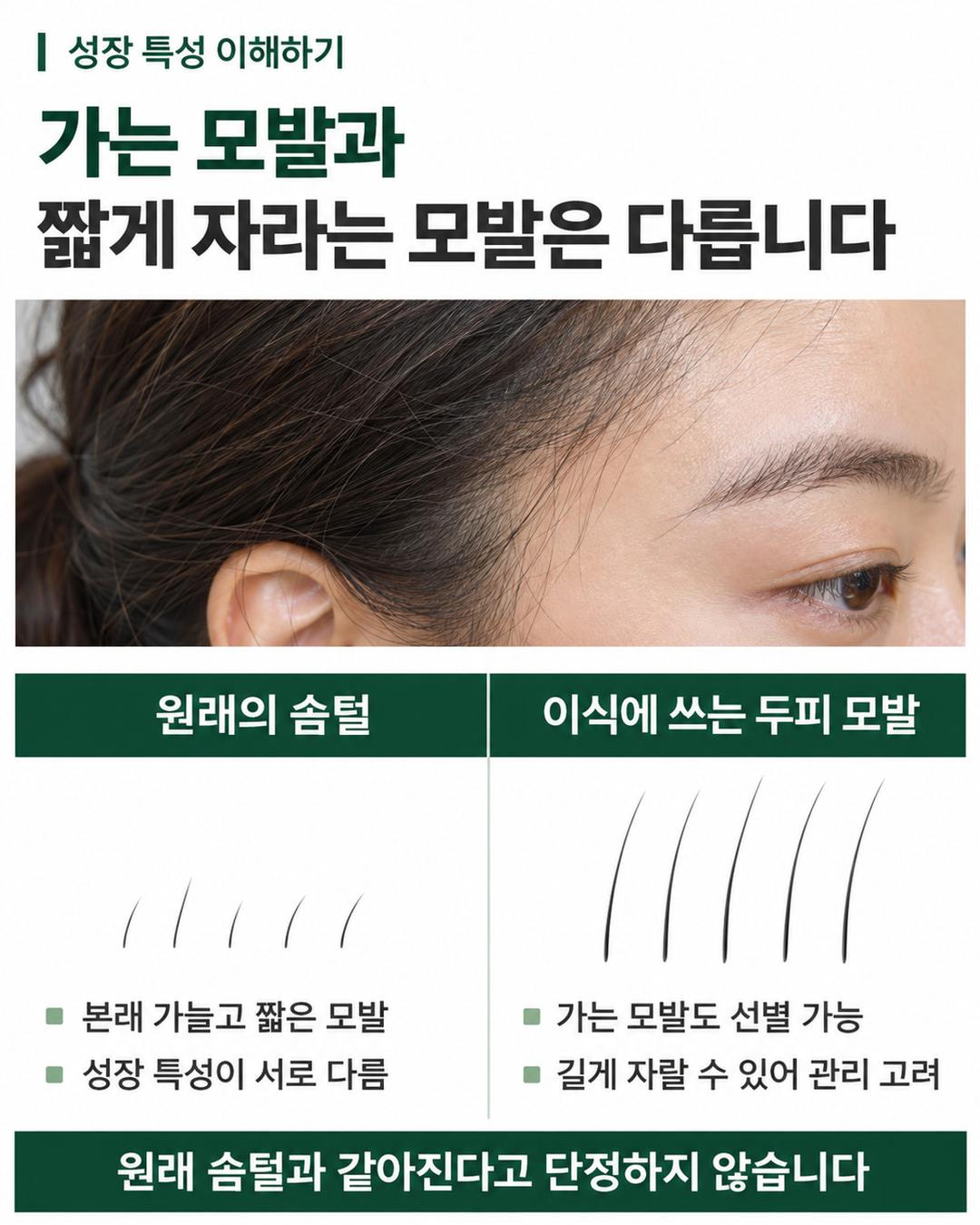
Reference photos are a means of conveying the look you want. Whether the thickness and length of the baby hairs in a photo can be reproduced should be discussed after examining your actual donor hair and scalp condition.
3 Factors Considered Together for a Natural Front Hairline
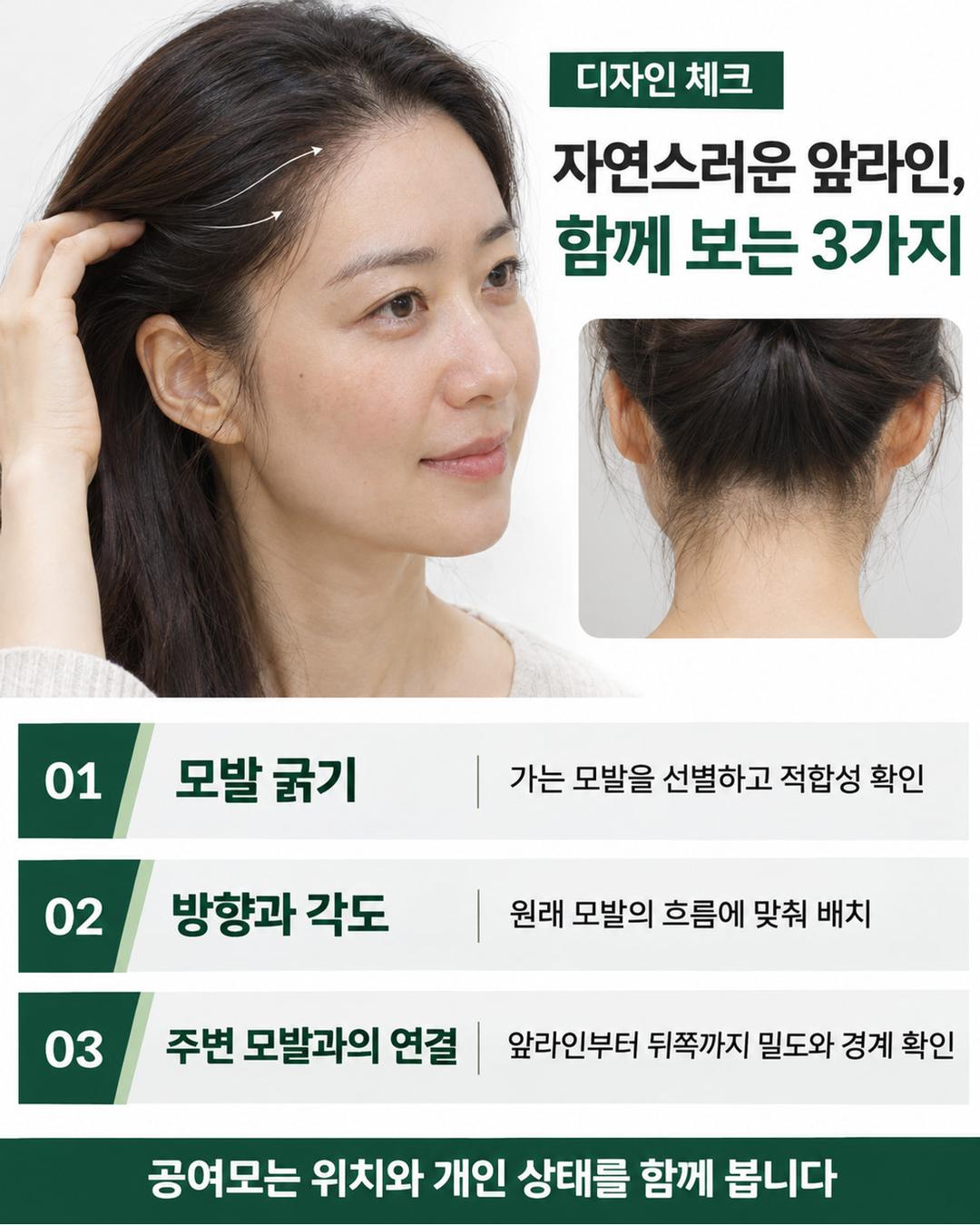
1. Thickness of the Hair to Be Used
Even within one person, hair thickness can vary depending on the location in the donor area. Modi Hair Plant provides guidance on examining fine hairs such as those at the nape and selecting hair suited to the area that needs it. However, we do not consider a particular area suitable for everyone simply because of its location. [Source 4]
2. Direction and Angle of the Existing Hair
At the front hairline and temples, we also look at which way the existing hair flows. Describing both how it looks when your hair is tied back and how it connects to the side hair when worn down will help convey the style you want.
3. Blending with the Surrounding Hair
Even if you want the front to look soft, we do not decide simply by reducing the number transplanted. We plan how the front hairline will blend into the surrounding hair by considering the thickness at the border, the density behind it, and the extent of the area to be addressed.
What Research Supports the Selection of Fine Donor Hair?
Thickness Differences by Donor Area Location
A study measuring occipital hair thickness in 27 people observed differences according to vertical position. This is useful as a reference when choosing a donor area suited to the purpose of surgery, but it is not a study verifying post-transplant length or permanent retention. [Reference 1]
Use of Fine Nape and Peri-Auricular Hair
A case study was reported on the use of nape and peri-auricular hair in 128 patients screened for suitability. Because there was no comparison group and there were limitations in survey responses and follow-up, the findings cannot be generalized to everyone's suitability or to long-term outcomes. [Reference 2]
There is also a study comparing the hairline and donor area characteristics of 101 Southeast Asian women. This, too, is hair thickness and density measurement data, not a trial showing the effectiveness of a specific surgical method or outcomes for Korean women as a whole. [Reference 3]
The studies above provide a basis for understanding donor hair selection. They should not be interpreted as studies directly verifying whether transplanted hair grows only short like vellus hair.
Review the Front Hairline and Sides in Actual Before-and-After Photos
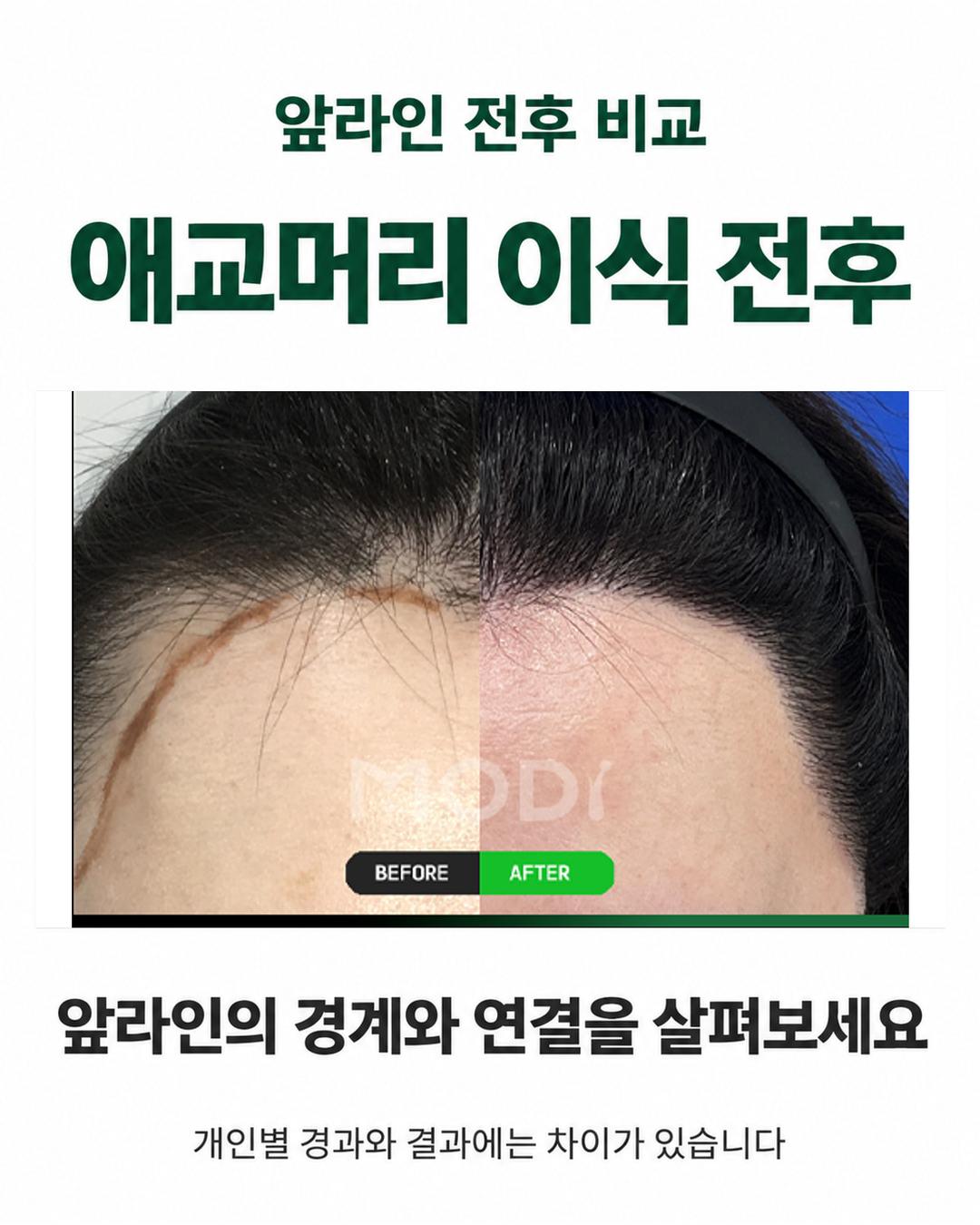
These are before-and-after photos presented by Modi Hair Plant. In the front view, you can see how the border blends into the surrounding hair; in the side view, you can see how the temples connect with the side hair. [Source 4]
Front Hairline: Before and After
Side View: Before and After
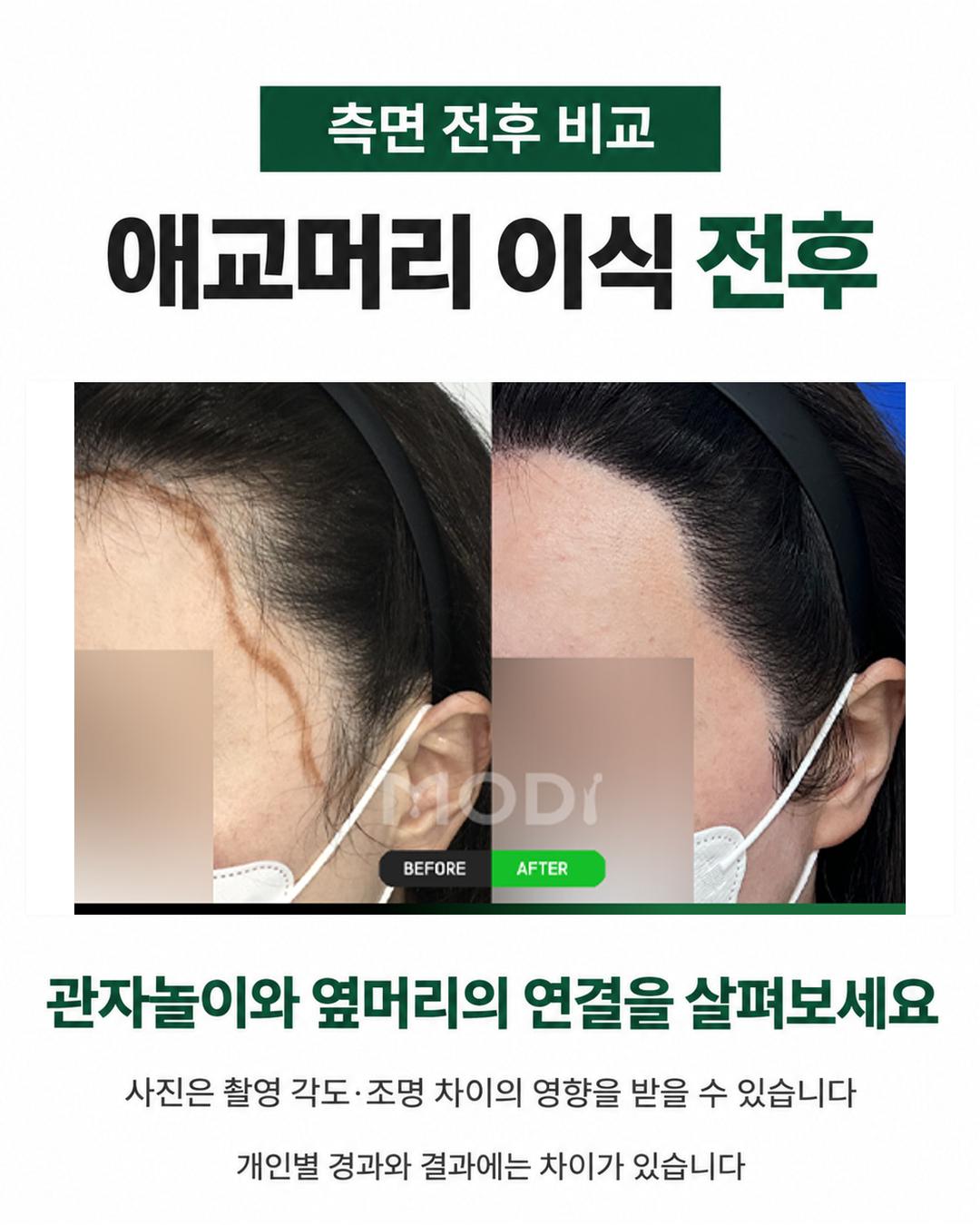
The original materials do not separately indicate when the post-operative photos were taken or the number of hairs transplanted. Graft survival rate or long-term retention cannot be determined from photos alone, and hair length, styling, and photographic conditions can also affect how the results appear.
Post-Transplant Length Management Is Also Part of the Design
During your consultation, discuss "what length to trim the hair to once it grows long" and "how you would like it to look when tied back and when worn down." Understanding in advance that trimming may be needed depending on your desired style helps in aligning expectations.

| What to Prepare | Questions to Discuss in Consultation |
|---|---|
| Areas you want to address | Which concerns you most: the front hairline border or the temples? |
| Everyday hairstyle | How would you like it to look when your hair is tied back and when it is worn down? |
| Expectations of donor hair | How fine are the hairs that can be selected from my own hair? |
| Aftercare | Depending on my recovery, from when and by what method will the length be trimmed? |
Please follow the clinic's guidance on the timing and method of trimming after surgery, based on your recovery. The same trimming date or care schedule does not apply to everyone.
Frequently Asked Questions
If my hair is naturally thick, is a baby hair transplant difficult?
Even if your hair is generally thick, there may be differences in thickness by area. We determine the extent of the area to be addressed after examining the hairs that can actually be selected and the condition of the donor area. We cannot promise the same design without confirming whether there are enough fine hairs.
If the front hairline is planted sparsely, won't it look soft like vellus hair?
The desired look is not determined by the number transplanted alone. The thickness of the hair to be used, the surrounding density, the direction, and the extent of the area to be addressed must be considered together. Please tell us specifically what you like in your reference photos—whether it is the fineness of the hair, the open spaces, or the flow.
Will fine nape hair be retained permanently after transplantation?
Long-term retention cannot be guaranteed simply because the hair comes from the nape. Suitability must be assessed by considering the condition of the hair in that area and the individual's pattern of hair loss. Studies using fine hair are also based on selected patients, so this does not mean the same results apply to everyone.
If the transplanted hair grows longer than expected, does that mean the design was wrong?
Hair growing longer is not in itself considered a design failure. It is advisable to discuss the growth characteristics of the hair to be used and your desired style before surgery, and to receive guidance on how to trim it afterward. If the direction or border concerns you beyond length, please have it checked at your follow-up appointment.
Review Your Desired Baby Hairs Together with the Characteristics of Your Own Hair
At Modi Hair Plant, we listen to the look you want and the areas you wish to address, and consult by examining donor hair thickness and the connection between the front and sides. Preparing photos of your hair tied back and worn down, along with reference photos of your desired style, will help with the consultation.
Phone inquiries: 02-544-8659
References and Sources
[Reference 1] Yun SS, Park JH, Na YC. Hair Diameter Variation in Different Vertical Regions of the Occipital Safe Donor Area. Archives of Plastic Surgery. 2017;44(4):332–336. DOI: 10.5999/aps.2017.44.4.332. PMID: 28728330. PMCID: PMC5533061. View full text.
[Reference 2] Umar S. Use of nape and peri-auricular hair by follicular unit extraction to create soft hairlines and temples: my experience with 128 patients. Aesthetic Surgery Journal. 2015;35(8):903–909. DOI: 10.1093/asj/sjv137. PMID: 26399317.
[Reference 3] Ingprasert S, Pathomvanich D, Pinyopawasutthi P. Donor Site Assessment for Female Hairline Restoration in Southeast Asians. Dermatologic Surgery. 2018;44(7):1012–1017. DOI: 10.1097/DSS.0000000000001490. PMID: 29543618.
[Source 4] Modi Hair Plant Clinic. Baby Hair Transplant Information. View information page. This is the source of the clinic's explanation of design and donor hair selection and of the before-and-after photos in this article, and is distinct from clinical trial data.
This article is intended to provide general medical information and does not replace individual diagnosis or treatment. Available donor hair, design, recovery progress, and results vary by individual, and whether to undergo surgery, the method, and the care plan are decided after examination by the medical team.