
Health Check Before a Hair Transplant
Why We Check Blood Sugar First for Hair Transplant Graft Survival
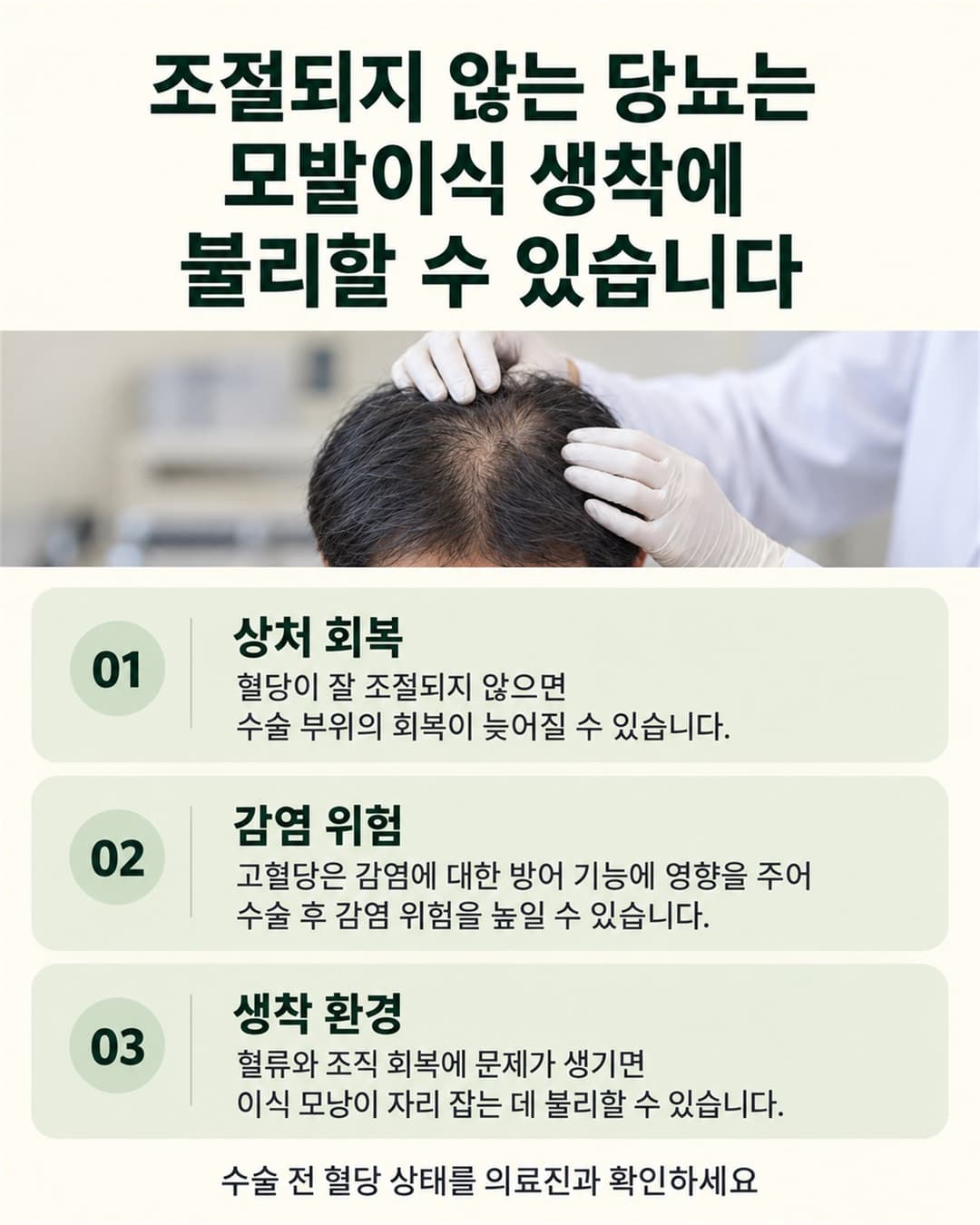
When preparing for a hair transplant, your pre-surgery health status is as important as the design and the number of hairs transplanted. In particular, uncontrolled diabetes can affect wound healing and blood flow, which may work against the transplanted hair follicles taking hold.
Based on a video explanation by Director Yoo Hwa-jung of Modi Hair Plant Clinic, this article covers the relationship between diabetes and hair transplant graft survival, fasting blood glucose and HbA1c tests, and how to prepare before your consultation.
Key Points
- Uncontrolled diabetes can be unfavorable for hair transplant graft survival and recovery. Wound healing, blood flow, and infection risk should all be considered.
- Fasting blood glucose and HbA1c measure different things. We evaluate both the blood sugar at the time of testing and the average blood sugar over approximately the past 3 months.
- Eligibility for surgery is not decided by a single test number. The timing of surgery is determined by considering blood sugar control, accompanying conditions, medications, and other factors together.
How Can Diabetes Affect Hair Transplant Graft Survival?
A hair transplant is a procedure in which hair follicles are harvested and moved to another area of the scalp. For transplanted follicles to take hold, the surrounding tissue needs to heal, and an environment is needed in which oxygen and nutrients can be supplied through the blood.
When blood sugar is poorly controlled, problems can arise in this healing process. With this in mind, Modi Hair Plant informs patients that uncontrolled diabetes may be unfavorable for graft survival and post-operative recovery.
1. Wound Healing May Be Delayed
Small wounds form in the areas where hair follicles are harvested and transplanted. Changes in tissue repair function caused by diabetes can interfere with wound healing, so it is important to check blood sugar control before surgery. [1]
2. Post-Operative Infection Risk Should Also Be Considered
Hyperglycemia around the time of surgery is associated with the risk of complications, including infection. However, this does not mean that having diabetes will necessarily lead to infection; it means that blood sugar should be evaluated as an important risk factor in surgical planning. [2]
3. It May Be Unfavorable for the Environment in Which Transplanted Follicles Take Hold
If problems arise with blood flow and tissue healing, this may also be unfavorable for the process by which transplanted follicles stably take hold. Therefore, surgical preparation with graft survival in mind includes an evaluation of not only the scalp condition but also overall health.
It cannot be stated definitively how much the graft survival rate decreases.
Some studies have mentioned diabetes as a factor that may affect growth after a hair transplant, but they have not presented a graft survival reduction figure applicable to all patients with diabetes. Individual results vary depending on many factors, including the degree of blood sugar control, vascular condition, surgical method, and aftercare. [3]
Previously Unknown Blood Sugar Problems Are Sometimes Discovered on the Day of the Hair Transplant
In the video, Director Yoo Hwa-jung explains that there have been cases in which, while reviewing medical history and medications and performing necessary tests before surgery, a blood sugar problem the patient was unaware of was discovered and the surgery was postponed.
If you have arranged time off and your schedule for surgery, a sudden change may be disappointing. However, a hair transplant is in most cases a planned surgery whose schedule can be adjusted. If a condition unfavorable for recovery is identified, it may be necessary to first evaluate and treat your health condition and then reschedule the surgery.
To reduce such same-day schedule changes, the video introduces a process of checking for recent health checkups, conditions, and medications from the consultation stage and performing necessary basic tests.
The content presented here reflects the clinic's clinical experience shown in the video. It does not mean that the same problem occurs in all hair transplant patients, or that all clinics apply the same testing and postponement criteria. Please confirm the actual test items and schedule during your consultation.
Why Check Both Fasting Blood Glucose and HbA1c?
Blood sugar can change depending on meals, stress, physical condition, and other factors. Therefore, if blood sugar is high at the time of testing, it is necessary to also review data showing long-term blood sugar status.
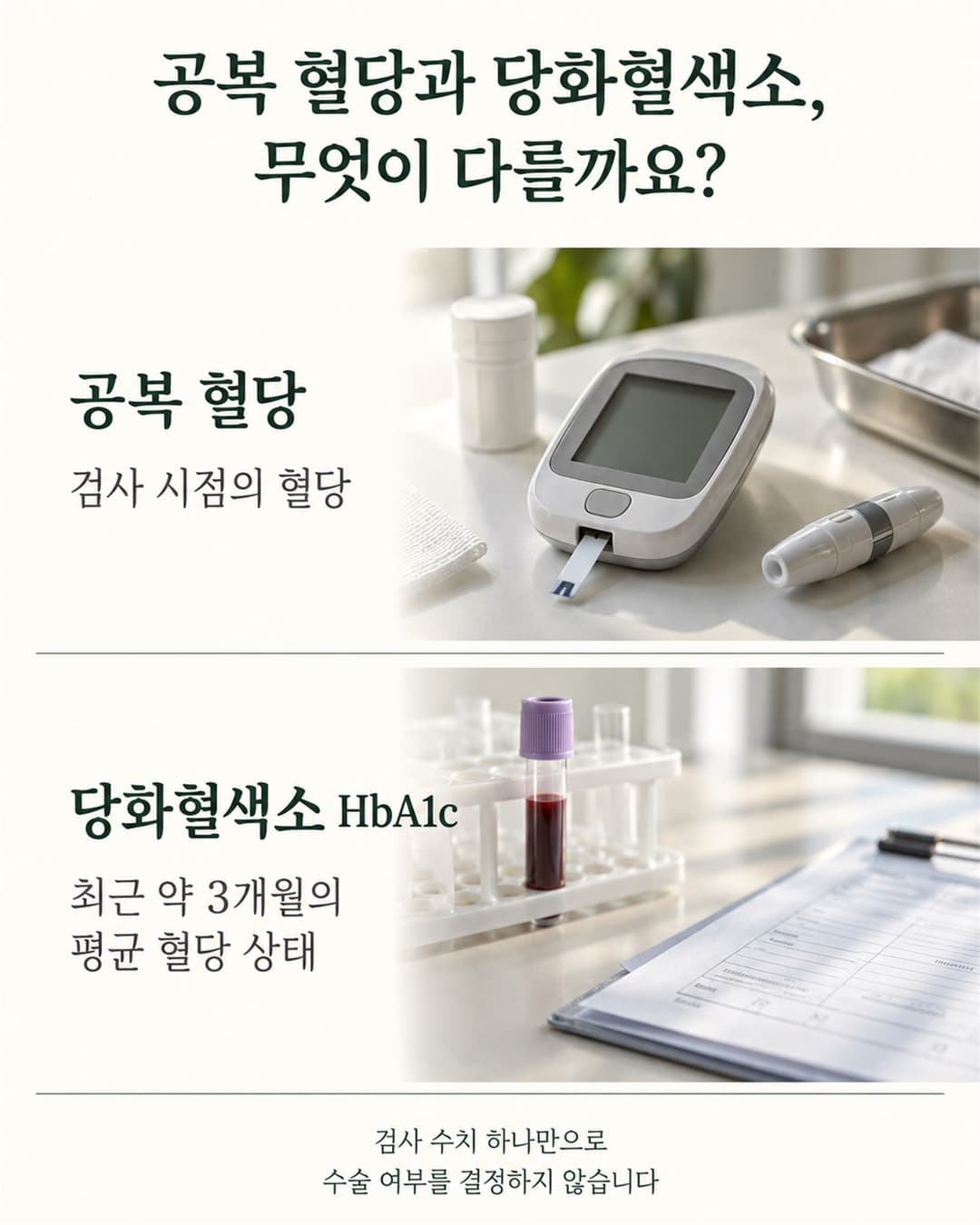
| Category | Fasting Blood Glucose | HbA1c (Glycated Hemoglobin) |
|---|---|---|
| What It Measures | Blood sugar at the time of testing, measured in a fasting state | Average blood sugar over approximately the past 3 months |
| Considerations for Interpretation | Effects of whether fasting was maintained, stress, acute illness, etc. | Conditions that may affect the value, such as anemia or a recent blood transfusion |
| Use Before Surgery | Checking current blood sugar status and the need for further evaluation | Supplementary data for understanding recent blood sugar control |
HbA1c reflects blood sugar status over approximately the past 3 months, but it is not accurate in every situation. Abnormal results in people without symptoms may require confirmatory testing, and test results should be interpreted by medical staff together with other clinical information. [4]
The video explains the process of additionally checking HbA1c when fasting blood glucose is found to be high. This is a process for understanding blood sugar status in more detail, and if necessary, it may lead to an internal medicine consultation and additional tests.
If My Blood Sugar Is High, Must the Hair Transplant Always Be Postponed?
Whether to postpone surgery is decided by considering blood sugar control and overall risk together. In addition to test values, current symptoms, accompanying conditions, medications, the scope of surgery, and the anesthesia plan should all be reviewed.
The American Diabetes Association's perioperative care guidelines also emphasize the importance of blood sugar management, while not recommending postponing surgery based on an HbA1c value alone. These are general surgical care guidelines, not graft survival criteria specific to hair transplants. [2]
Conversely, if blood sugar is not sufficiently controlled and it is judged difficult to perform surgery in the current condition, internal medicine treatment and monitoring may be carried out first. The reevaluation timing mentioned in the video is also guidance for an individual case and does not mean that every patient can have surgery simply after a certain period has passed.
What matters is not meeting the surgery date, but confirming that you are in a condition suitable for surgery.
Checking your health status, including blood sugar, in advance allows more time to prepare for any necessary treatment and schedule adjustments.
What Should I Prepare Before a Hair Transplant Consultation?

- Recent health checkup results: If you have test results such as blood glucose or HbA1c, please bring them along with the test dates.
- Diagnosed conditions and treatment history: Please let us know about any conditions you are currently being treated for or have been diagnosed with in the past, such as diabetes, hypertension, hyperlipidemia, or gout.
- List of medications and injections: Please check the medication names, doses, times taken, and the most recent dates of any injections. Photos of medication packets or prescriptions are also helpful.
- Recent changes in health: Please let us know about any recent illness, new symptoms, or medication changes.
- Fasting and day-of-surgery medication instructions: Please confirm with the clinic before surgery the preparation method that applies to you.
Do not stop taking medications on your own.
Adjustments to medications, including diabetes medications and insulin, should follow the instructions of your prescribing physician and surgical team. Do not apply someone else's surgical preparation method as is, or take additional medication to lower your blood sugar level.
How Far Does the Research Evidence Go?
The fact that diabetes and hyperglycemia can affect wound healing and post-operative complications is addressed in general wound care literature and perioperative diabetes management guidelines. [1] [2]
In the hair transplant field, a retrospective study of 73 patients mentioned diabetes as one of the factors that may affect the growth of transplanted hair. However, this study was not designed to precisely compare graft survival rates between patients with and without diabetes. [3]
Therefore, a distinction should be made between explaining that uncontrolled diabetes may be unfavorable for graft survival and recovery and asserting that diabetes lowers graft survival rates by a fixed percentage. Modi Hair Plant provides guidance on surgical planning by considering these risks together with each individual's health status.
Frequently Asked Questions
Does diabetes lower the hair transplant graft survival rate?
Uncontrolled diabetes can affect wound healing and blood flow, which may work against graft survival. However, evidence for describing the degree of reduction in individual graft survival rates with a uniform number is limited. It is important to check blood sugar control and accompanying conditions before surgery.
Can I have a hair transplant if I take diabetes medication?
Taking medication alone does not determine whether surgery is possible. The decision is made after reviewing recent test results, blood sugar control, and the presence of complications. Please tell us the medication names and doses during your consultation.
If my fasting blood glucose is high once, do I have diabetes?
In some cases, it is difficult to judge based on a single result. We check whether fasting was maintained and any symptoms, and if necessary, proceed with confirmatory testing and an internal medicine evaluation. Please do not interpret on-site test results on your own to self-diagnose or adjust medications.
If my HbA1c is high, will the surgery definitely be canceled?
We do not make a uniform decision based on HbA1c alone. Whether to proceed with or postpone surgery is determined by evaluating current blood sugar and overall condition together. If uncontrolled diabetes is identified, reevaluation after treatment may be necessary.
If surgery was postponed due to blood sugar, when can I have it?
It depends on how your blood sugar stabilizes and on any accompanying conditions. Eligibility for surgery is not determined simply because a certain period has passed; we discuss the timing of surgery again after reviewing your treatment progress and test results.
Should I take my diabetes medication as usual on the day of surgery?
Instructions may vary depending on the type of medication and the fasting and anesthesia plans. Do not take or stop medications on your own; please confirm your medication plan with your prescribing physician and surgical team before surgery.
Start Your Hair Transplant Preparation with a Health Check
If you have diabetes or were told of abnormal findings in a recent blood sugar test, please share your test results and medication information during your consultation.
At Modi Hair Plant Clinic, we review your scalp and hair condition together with your overall health, and you can receive guidance on necessary checks and the surgical preparation process.
This article is general medical information based on a video explanation by Director Yoo Hwa-jung of Modi Hair Plant Clinic and related literature. It does not replace individual diagnosis or prescription. Hair transplant results and recovery vary from person to person, and test items, whether to proceed with treatment or surgery, and timing are determined after a medical consultation.
References and Resources
- Sharp A, Clark J. Diabetes and its effects on wound healing. Nursing Standard. 2011;25(45):41–47. DOI: 10.7748/ns2011.07.25.45.41.c8626. View on PubMed
- American Diabetes Association Professional Practice Committee for Diabetes. 16. Diabetes Care in the Hospital: Standards of Care in Diabetes—2026. Diabetes Care. 2026. DOI: 10.2337/dc26-S016. View in Journal
- Loganathan E, Sarvajnamurthy S, Gorur D, Suresh DH, Siddaraju MN, Narasimhan RT. Complications of Hair Restoration Surgery: A Retrospective Analysis. International Journal of Trichology. 2014;6(4):168–172. DOI: 10.4103/0974-7753.142861. PMID: 25368473. View Full Text
- National Institute of Diabetes and Digestive and Kidney Diseases. The A1C Test & Diabetes. HbA1c Test Information