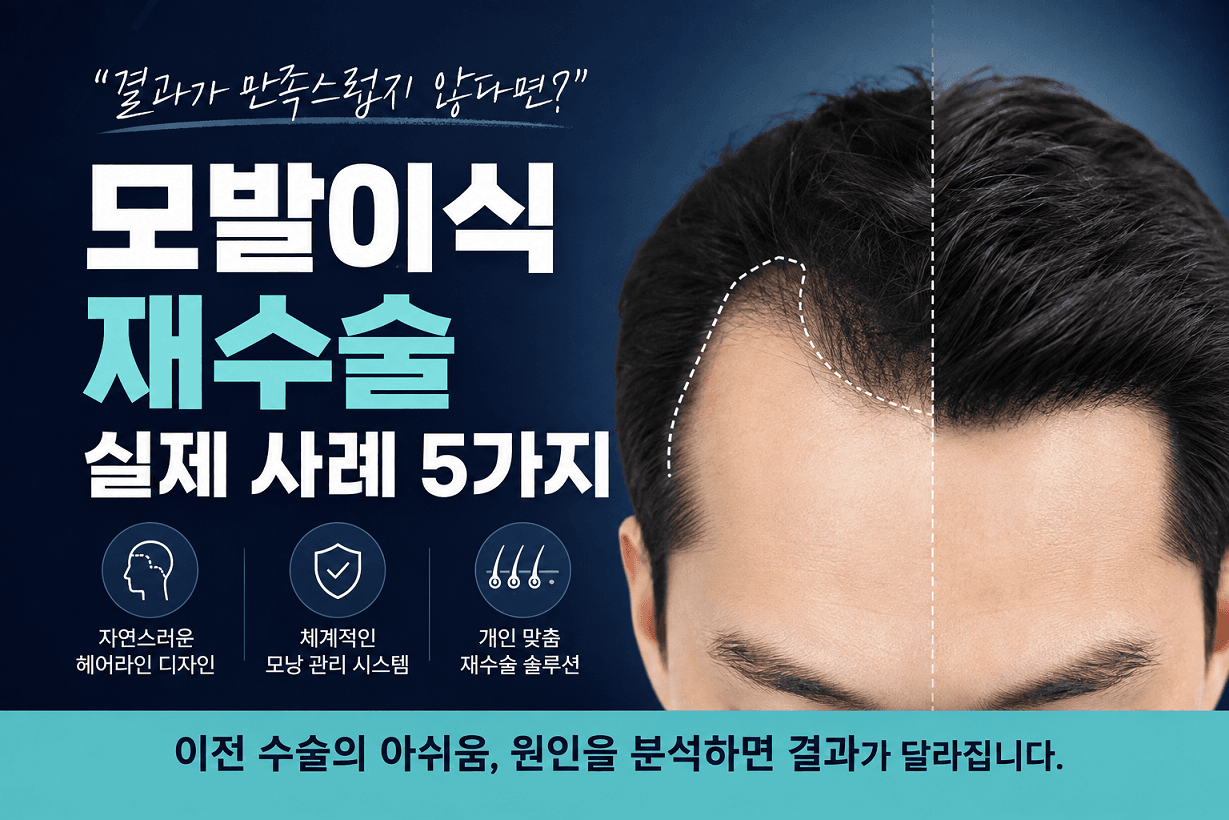
"What should I do if I'm not satisfied with the results of my hair transplant?"
This is a question we hear more often than you might expect during consultations.
Of course, many people achieve satisfying results. However, in actual clinical practice, there are also quite a few people considering revision surgery because their hair transplant results differed from their expectations.
The reasons vary: the hairline may not suit the face shape, the density may be insufficient, the direction of the transplanted hair may look unnatural, or hair loss may continue to progress over time.
Considering revision surgery does not necessarily mean the previous surgery was done wrong. However, there are certainly disappointments that could have been reduced had the clinic and medical team been chosen carefully from the start.
Today, based on actual revision surgery cases of patients who visited Modi Hair Plant, we will introduce common causes of unsatisfactory hair transplant results and the key aspects we examine in revision surgery.
Key Summary
- Hair transplant results can vary depending not only on the number of hairs, but also on design, density, direction, and angle.
- Revision surgery can be more challenging than the first surgery, as it must take into account the existing hairline and the remaining hair follicles in the occipital (back of the head) area.
- Rather than simply transplanting more hair, the causes of the unsatisfactory previous result should be analyzed first.
- When choosing a clinic, it is important to check the medical team's design experience and revision surgery experience rather than looking only at price.
The Number of Hairs Is Not the Only Factor That Determines Hair Transplant Results
When hair transplant results are unsatisfactory, many people first think of the graft survival rate. However, in actual revision surgery consultations, it is not uncommon for patients to feel dissatisfied due to design, density, or direction even though the hair has grown sufficiently.
A hair transplant is not simply a procedure that moves a set number of hair follicles. How natural it looks can vary greatly depending on which follicles are placed where, and in what direction and angle they connect with the existing hair.
In addition, if occipital hair follicles are overused in the first surgery, the range available for revision surgery may be reduced. Therefore, it is important to choose a medical team that plans with consideration not only for the current change but also for future hair loss progression and the remaining hair follicles.
A good hair transplant is not about transplanting a lot, but a surgery planned with consideration for the hair follicles that may be needed in the future.
Case ① Revision Surgery for a Patient Dissatisfied After Forehead Reduction and Multiple Hair Transplants
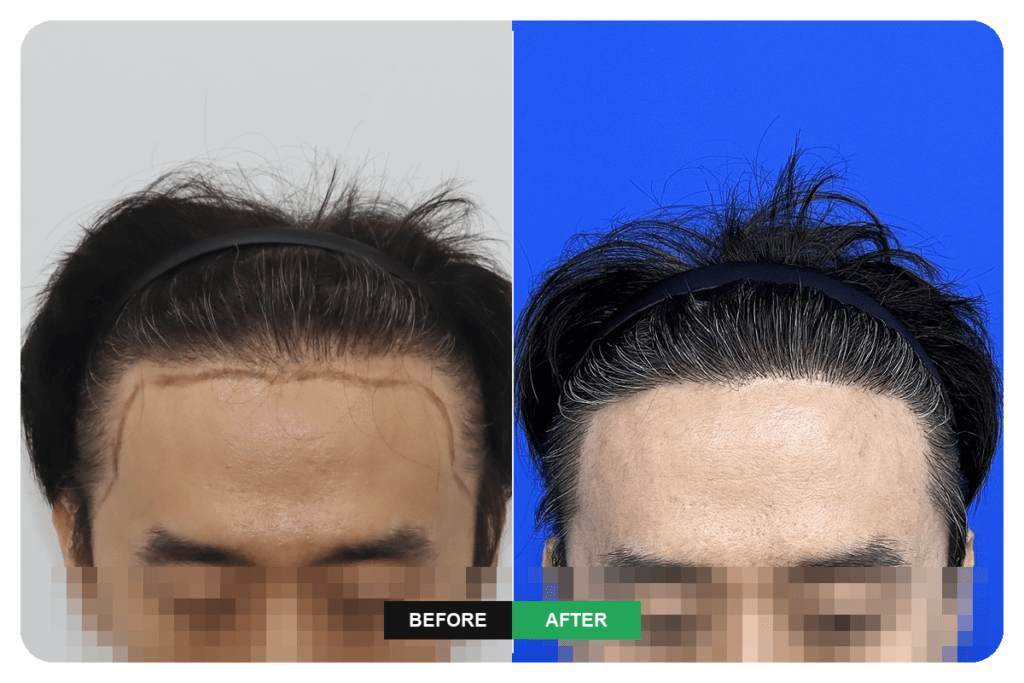
This patient had undergone forehead reduction surgery and multiple hair transplants, but visited because they were not satisfied with the shape and density of the hairline and how the forehead reduction area connected.
Having already undergone several surgeries, the remaining occipital hair follicles were limited, and the existing hairline, scars, and direction of the transplanted hair all had to be considered together.
At Modi Hair Plant, rather than simply adding hair, we re-planned the design so that the forehead reduction and the existing hairline could connect naturally, and supplemented both the insufficient density and the connection with the previously transplanted hair. Afterward, we observed a progression in which the hairline border and overall density became more naturally refined.
✔ Revision Surgery Points
- Natural hairline connection after forehead reduction
- Reinforcing density that was lacking after multiple surgeries
- Revision surgery planning that accounts for limited occipital hair follicles
Case ② Hairline Revision Surgery After Incision + Non-Incision Hair Transplants
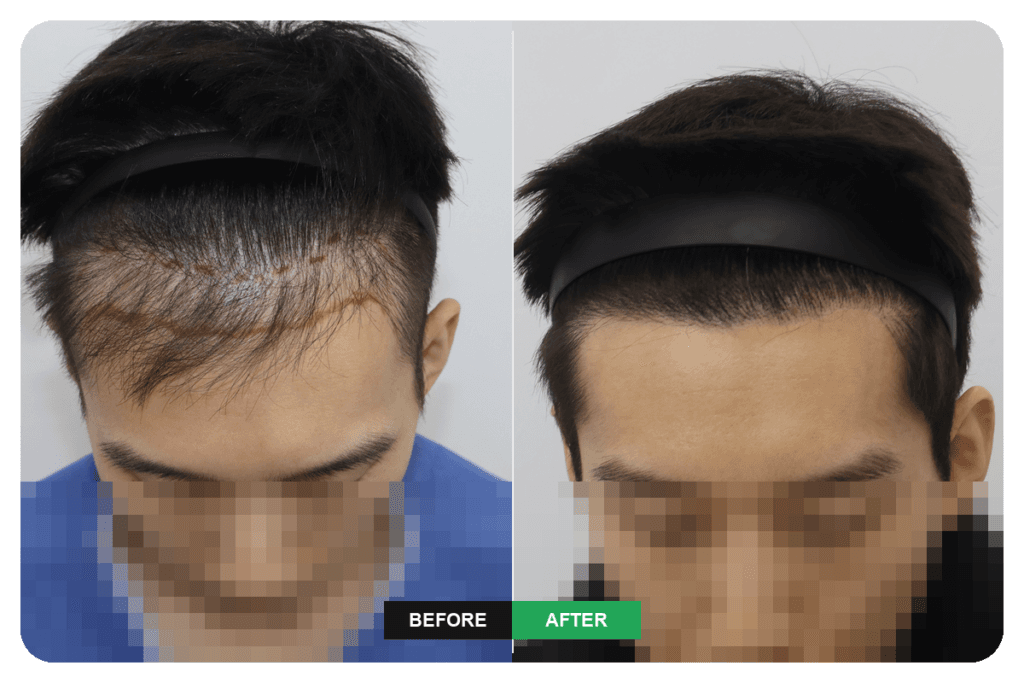
This patient received an additional non-incision hair transplant one year after an incision hair transplant, but visited for a revision surgery consultation because they were not satisfied with the density and shape of the hairline.
While preserving the existing transplanted hair, we redesigned
the direction and density of the hairline, focusing on the deficient areas,
and after revision surgery, a more natural hairline was achieved.
✔ Revision Surgery Points
- Final hairline correction after incision and non-incision procedures
- Reinforcing insufficient density
- Natural connection with existing transplanted hair
Case ③ Female Hairline Revision Surgery
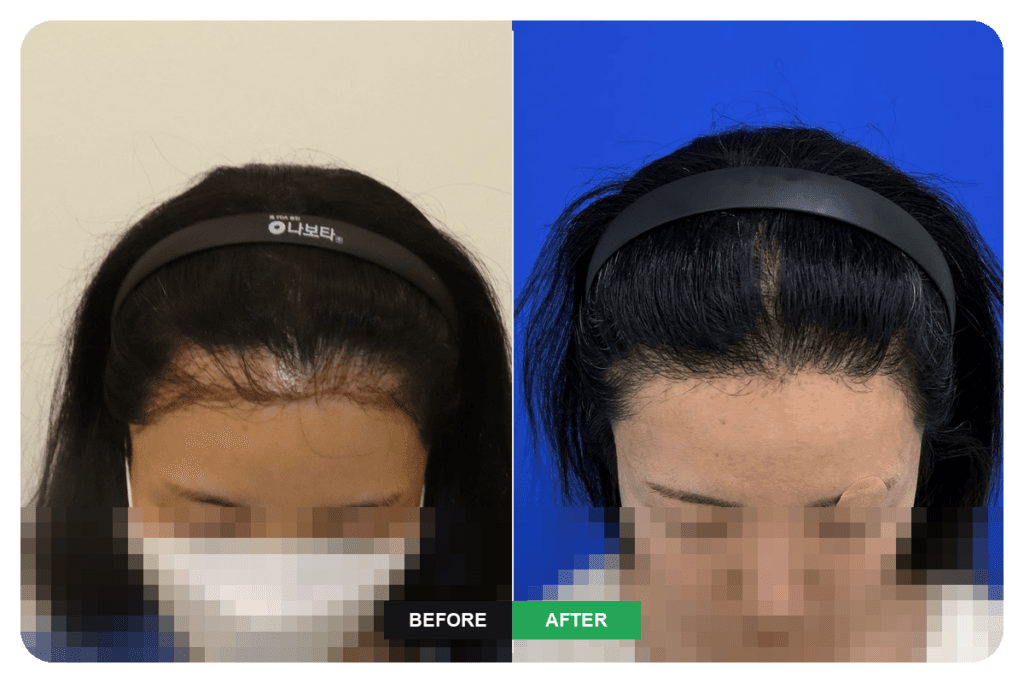
In this patient's previous hair transplant, the hairline had been lowered significantly, but the grafts did not survive, resulting in very low density. We planned the revision surgery with the aim of adjusting the hairline position and increasing density.
After revision surgery,
the hairline position and density improved naturally,
and the patient was also satisfied with the result.
✔ Revision Surgery Points
- Natural hairline curve design
- Soft border created by placing single-hair follicles in the front row
- Line correction considering harmony with the face shape
Case ④ Improvement Through Treatment Instead of Hair Transplant Revision Surgery
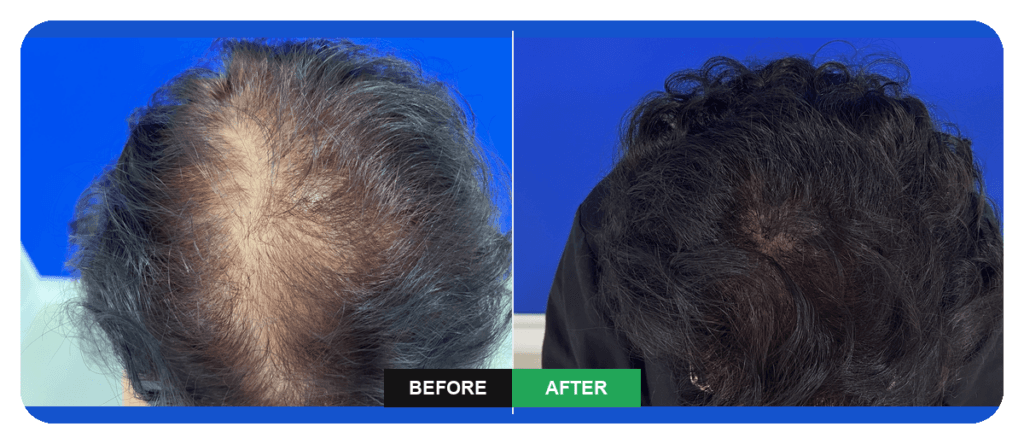
This patient visited for a revision surgery consultation after undergoing a hair transplant at another clinic.
Although the patient came for revision surgery, the diagnosis showed that the main cause was not a problem with the transplanted hair
but progressive hair loss and changes in the scalp environment.
At Modi Hair Plant,
instead of unnecessary revision surgery, we proceeded with treatment focused on hair follicle stem cell treatment
to manage the existing hair.
As a result,
we observed improved crown density, along with recovery in the thickness
and health of the existing hair.
✔ Revision Surgery Points
- A case where treatment was more appropriate than revision surgery
- Density improvement with hair follicle stem cell treatment
- Recovery of existing hair health
Case ⑤ Crown Hair Transplant Revision Surgery and Stem Cell Treatment
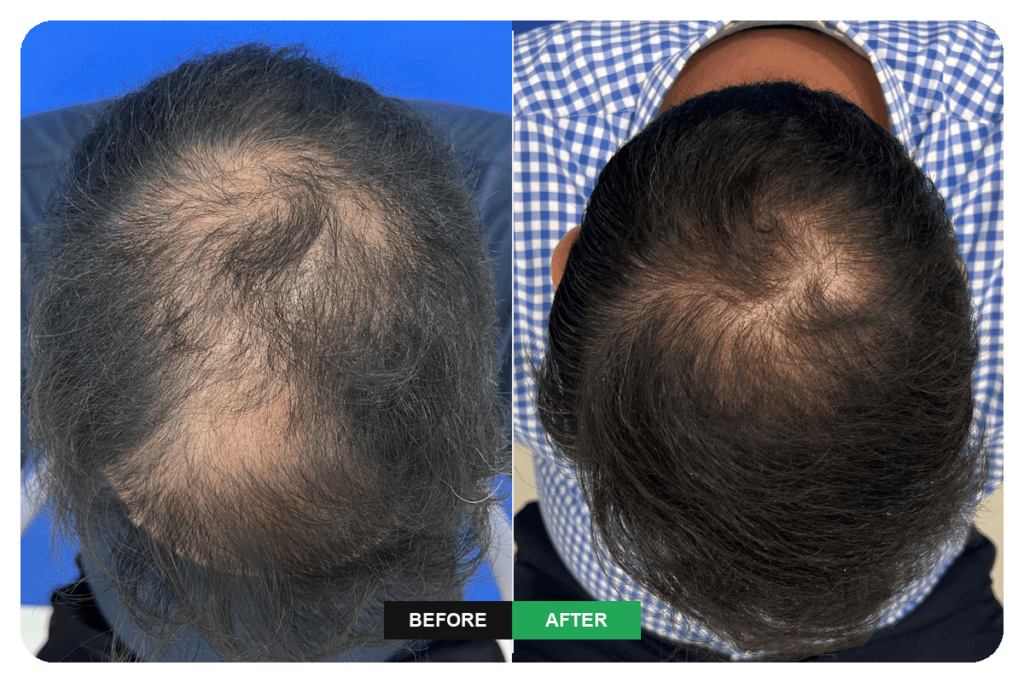
This patient had undergone a 6,000-hair incision surgery at another clinic,
but the crown density was insufficient
and hair loss continued to progress, so they visited us.
In the revision surgery, a 3,000-hair non-incision transplant
was combined with stem cell hair loss treatment
to manage both the existing hair and the transplanted hair.
As a result, the density of the transplanted crown area increased,
and the existing non-transplanted hair also became thicker and healthier.
The crown is
an area where existing hair loss is highly likely to continue progressing,
so it is important to plan revision surgery and hair loss treatment
together.
✔ Revision Surgery Points
- Reinforcing crown density with 3,000 hairs via non-incision
- Customized treatment plan combined with hair loss treatment
- Care considering both existing hair and transplanted hair
Common Causes Requiring Hair Transplant Revision Surgery
The following causes are repeatedly identified in revision surgery consultations.
- Hairline design that does not suit the face shape
- Insufficient or uneven transplant density
- Direction and angle that do not match the existing hair
- Thick hairs placed in the front row of the hairline
- Excessive harvesting of occipital hair follicles
- Surgical plans that did not consider future hair loss progression
- Mismatch between hairline tattooing and actual hair
These problems cannot be solved simply by adding more hairs. It is important to identify the causes of the unsatisfactory previous result and establish a revision surgery plan accordingly.
Revision surgery is not merely transplanting hair again, but a surgery that corrects the causes of the unsatisfactory previous result.
How Modi Hair Plant Plans Revision Surgery
Hair transplant revision surgery requires examining the existing hairline, transplanted hair, occipital harvesting condition, scars, and extent of hair loss progression, so there are more factors to consider than in the first surgery.
At Modi Hair Plant, rather than deciding the number of hairs first in a revision surgery consultation, we first analyze the causes of the unsatisfactory previous result.
- Checking the design and left-right balance of the existing hairline
- Analyzing the survival status, direction, and angle of the transplanted hair
- Evaluating the previous occipital harvesting range and remaining hair follicles
- Checking current density and the likelihood of future hair loss progression
- Determining the extent to which existing transplanted hair can be preserved and the areas for additional transplantation
Because hair follicles may be limited in revision surgery, rather than simply transplanting as much as possible, a plan is needed that prioritizes areas where improvement will be greatest and uses the remaining hair follicles efficiently.
The Hair Transplant Surgical System That Supports Revision Surgery
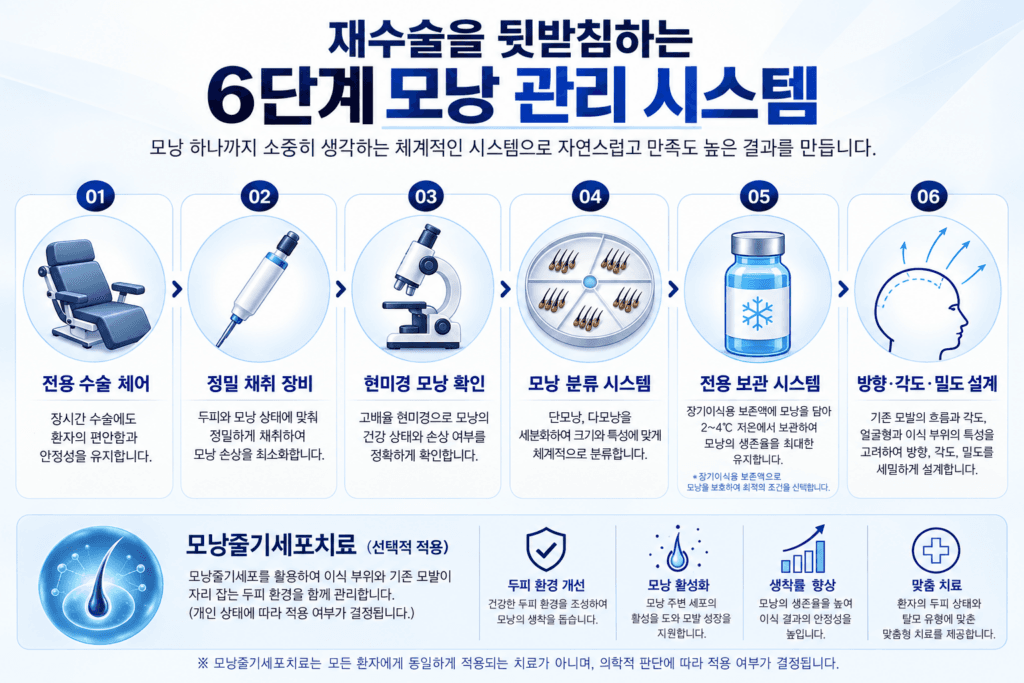
Modi Hair Plant systematically manages the entire process from harvesting to transplantation, including a dedicated surgical chair, precision harvesting equipment, microscopic inspection, hair follicle sorting, organ-transplant-grade preservation solution and a cold storage system, and direction, angle, and density design.
Equipment itself does not determine hair transplant results. However, a systematic setup helps the medical team inspect hair follicles more carefully and carry out a surgical plan suited to the patient's condition.
In addition, if there have been changes in scalp tissue due to previous surgery or the density of existing hair has decreased, hair follicle stem cell treatment may also be considered depending on the condition.
Hair follicle stem cell treatment is not a substitute for a hair transplant; it is approached as an adjunctive treatment to help manage the scalp environment in which the transplanted area and existing hair settle. Whether it is applied is decided by the medical team after checking the type of hair loss and scalp condition.
In revision surgery, how carefully the remaining hair follicles are used matters more than how many are transplanted.
We Recommend a Consultation in the Following Cases.
- If you are not satisfied with your previous hair transplant results
- If you are wondering whether revision surgery is possible
- If you want to correct your hairline design
- If you want to check the condition of your occipital hair follicles
- If your hair loss is continuing to progress
With revision surgery,
given thorough diagnosis and planning,
a more natural and satisfying result
can be expected.
Frequently Asked Questions
Q. When can hair transplant revision surgery be performed?
Generally, the decision is made after a sufficient recovery period following the previous surgery, once the growth and results of the transplanted hair have stabilized to some extent. However, the appropriate timing may vary depending on the scope of surgery and recovery status.
Q. Is revision surgery more difficult than the first surgery?
Because previously transplanted hair, scars, remaining occipital hair follicles, and the extent of hair loss progression must all be considered together, planning is often more complex than for the first surgery.
Q. Is revision surgery possible even if occipital hair follicles are insufficient?
After checking the previous harvesting range and current occipital density, we evaluate the hair follicles available for use. If there are not enough hair follicles, rather than filling the entire area, areas where improvement will be greatest can be selectively supplemented.
Q. Is non-incision revision surgery possible after an incision hair transplant?
It is possible in some cases. However, the location of the existing incision scar, the condition of the occipital area, and the range available for additional harvesting must be checked first.
Q. Is a hair transplant possible after hairline tattooing?
Yes, it is possible. After checking the location, color, and extent of the tattoo and the direction of the existing hair, we design the transplant so that the actual hair connects naturally.
Closing
Hair transplant results are not determined solely by how many hairs were transplanted. Design suited to the face shape, hair direction and angle, density by area, future hair loss progression, and the remaining occipital hair follicles must all be considered together.
In revision surgery in particular, the available hair follicles may be limited, so it is important to accurately analyze the current condition and set realistic improvement goals.
Good revision surgery is not about transplanting more,
but begins with using the remaining hair follicles in the most valuable way.
Modi Hair Plant
thoroughly analyzes the causes for revision surgery, which differ for each patient,
and then establishes a treatment plan suited to the patient's current condition,
from design to harvesting, transplantation, and aftercare.
Recommended Reading
If you are curious about non-incision, no-shave hair transplants
👉 True Non-Incision, No-Shave Hair Transplant
If you are curious about stem cell treatment
👉 Hair Follicle Stem Cell Treatment
If you are curious about costs
👉 Go to the Hair Transplant Hair Count Calculator
References
- Garg AK, Garg S. Donor Harvesting: Follicular Unit Excision. J Cutan Aesthet Surg. 2018.
- Mohmand MH, Ahmad M. Effect of Follicular Unit Extraction on the Donor Area. World J Plast Surg. 2018.
※ This article was reviewed by our medical team before being published.