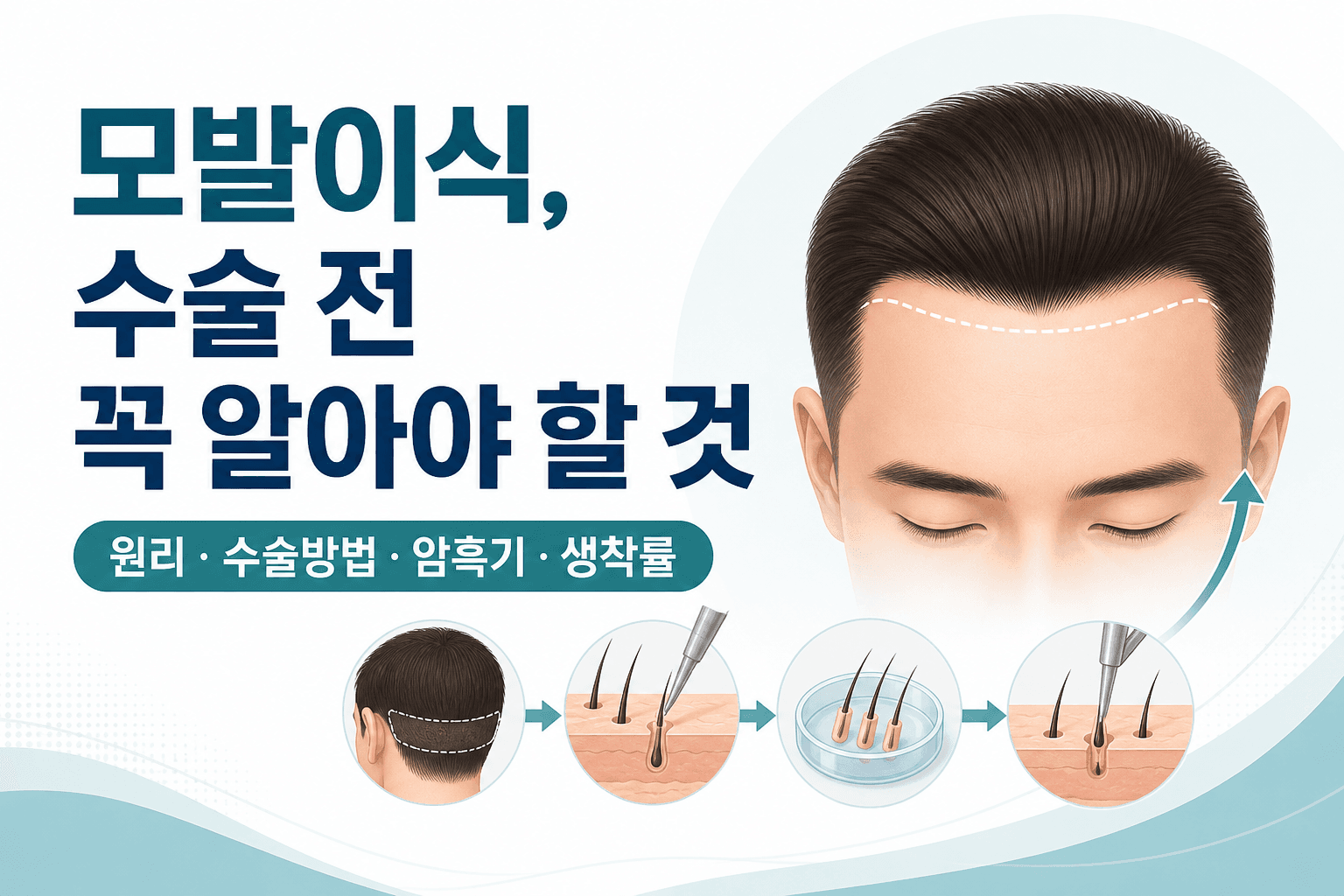
When you first look into hair transplantation, you may have many questions, such as "Why doesn't transplanted hair fall out again?", "Which is better, the incision or non-incision method?", and "Is it normal for transplanted hair to fall out after surgery?"
A hair transplant is a procedure that moves hair follicles from the back and sides of the scalp, which are relatively less affected by hair loss, to the areas where they are needed. However, simply transplanting a large number of hairs does not by itself produce a good result.
A comprehensive assessment is needed, covering your current hair loss status and its likely future progression, the condition of the donor area, hairline design, harvesting and implantation methods, follicle handling, and post-operative recovery.
In this article, based on explanations from Director Yoo Hwa-jung of Modi Hair Plant Clinic, we will go step by step through the principle of hair transplantation, suitable candidates, the difference between incision and non-incision methods, implanters and slits, the shedding phase, graft survival rate, and post-operative care.
Key Summary | 7 Things to Know Before a Hair Transplant
- A hair transplant is a procedure that moves hair follicles from the back and sides of the scalp to areas of hair loss.
- A hair transplant itself is not a treatment that stops the progression of existing hair loss.
- Donor hair at the back of the scalp is limited, so a long-term plan for allocating follicles is important.
- The main harvesting methods are the incision method and the non-incision FUE method.
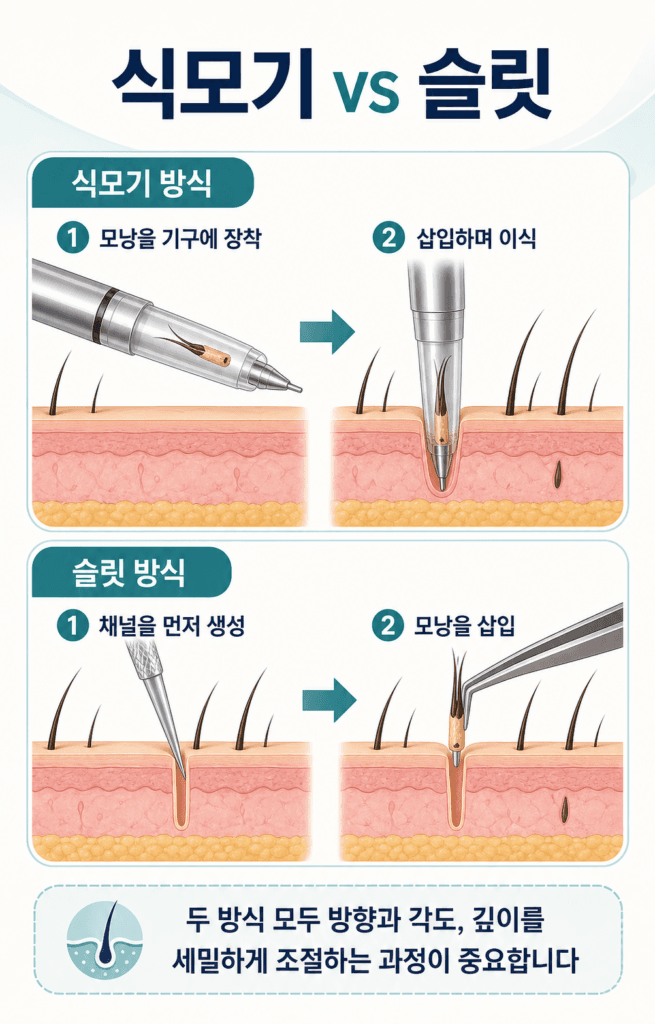
- The main implantation methods are the implanter method and the slit method.
- From about 2 weeks after surgery, a shedding phase may occur in which transplanted hairs temporarily fall out.
- When evaluating results, you should consider not only the number of transplanted hairs but also follicle survival and natural-looking design.
Everything About Hair Transplant Surgery on Video
In the video, Director Yoo Hwa-jung personally explains everything from the basic principle of hair transplantation to surgical methods, the recovery process, and care that takes graft survival into account.
What Is a Hair Transplant?
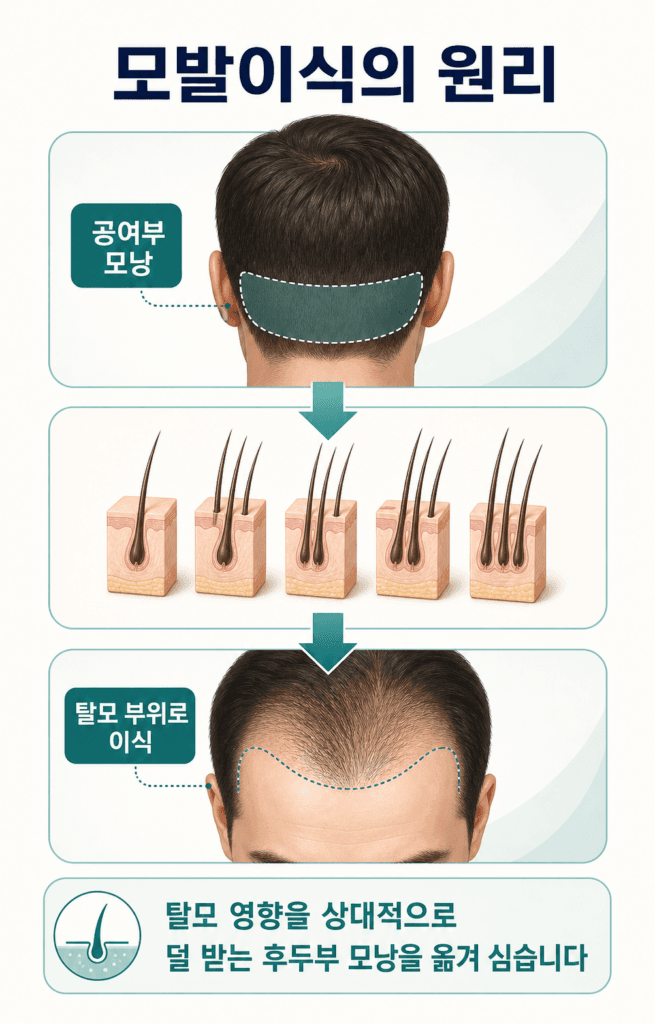
A hair transplant is a procedure in which healthy hair follicles are harvested from the back or sides of the scalp, which are relatively less affected by hair loss, and moved to areas that need hair, such as the hairline, M-shaped recession, or crown.
In male pattern hair loss, the male hormone testosterone is converted to DHT (dihydrotestosterone) by 5α-reductase, and hair follicles that are genetically sensitive to DHT may undergo miniaturization, gradually becoming thinner.
In contrast, some follicles at the back and sides of the scalp are relatively less sensitive to this effect. The phenomenon in which these follicles retain much of their original characteristics even after being moved to areas of hair loss is commonly described as donor dominance.
Why Are Hairs Transplanted in Follicular Units Rather Than One Strand at a Time?
When the scalp is magnified, you can see that hairs do not always exist independently as single strands; rather, one or more hairs grow together from a single follicular unit.
This is called a follicular unit.
In modern hair transplantation, it is important to harvest and implant while preserving natural follicular units as much as possible. At the hairline in particular, how follicle thickness, number of hairs, position, direction, and angle are arranged can affect how natural the result looks, more than the number of hairs alone.
Does a Hair Transplant Also Stop Hair Loss?
No. A hair transplant does not treat the underlying cause of hair loss, nor does it automatically prevent future hair loss.
Separately from the transplanted hair, hair loss may continue to progress in the surrounding existing hair.
Therefore, at a stage where hair is thinning but follicles still remain, non-surgical hair loss treatment such as medication may be considered first or in combination, depending on the patient's condition.
Conversely, in areas where hair loss has progressed for a long time and sufficient follicle structure no longer remains, a hair transplant may be considered.
Who Can Have a Hair Transplant?
When determining whether a hair transplant is possible, it is necessary not only to look at the size of the hair loss area but also to evaluate both the recipient area and the condition of the donor area.
- Whether sufficient follicles remain in the hair loss area
- Whether there is enough donor hair at the back and sides of the scalp
- How far hair loss has currently progressed
- In which direction hair loss is likely to progress in the future
- Whether you have had a hair transplant before
- Whether the patient's age and desired hairline are appropriate in the long term
These and other factors must be reviewed comprehensively.
Why Are Donor Follicles a Limited Resource?
A hair transplant is not a procedure that creates new follicles; it moves the follicles you already have to a different location.
Therefore, the donor hair that can be harvested from the back and sides of the scalp is limited.
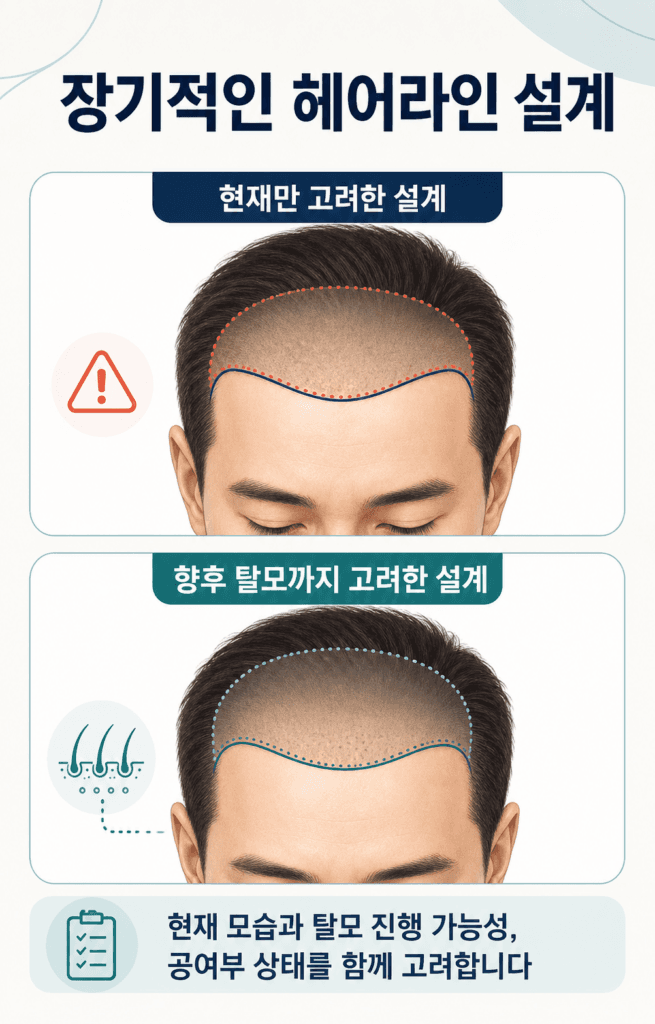
If the hairline is lowered excessively or a large amount of donor hair is used right away, you should also consider the possibility that there may not be enough follicles available if hair loss progresses further in the future.
That is why hair transplant design requires long-term planning that considers not only your current appearance but also future hair loss progression and the possibility of additional surgery.
What Is the Difference Between Incision and Non-Incision Hair Transplants?
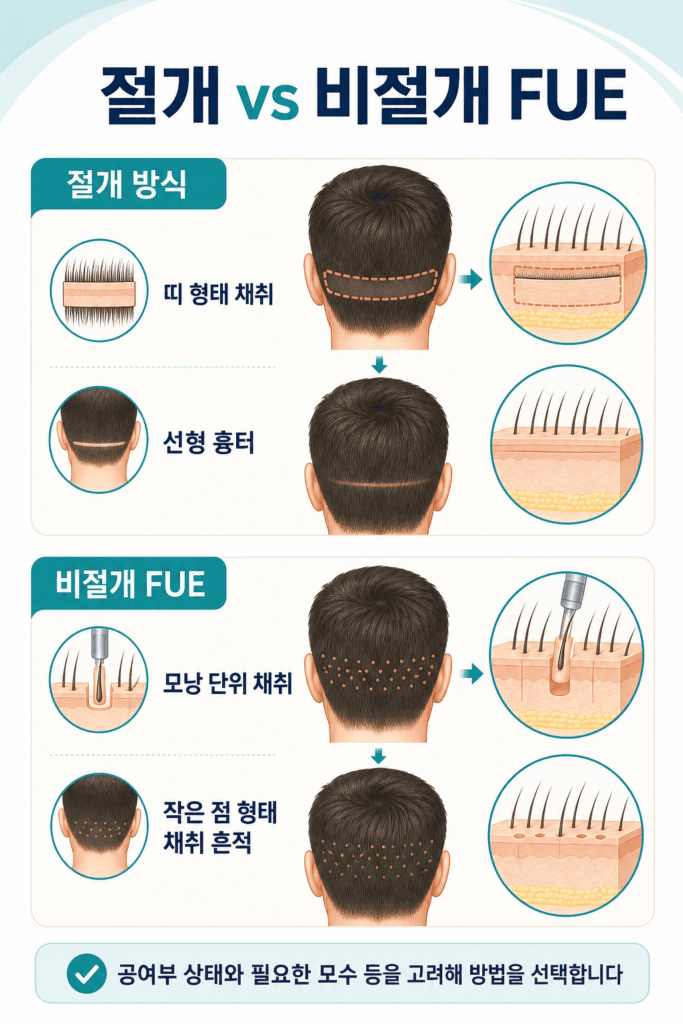
A hair transplant can broadly be divided into the process of harvesting follicles and the process of implanting them in the required areas.
Incision Hair Transplant
In the incision method, a strip of scalp is removed from the back of the head and the wound is sutured; the harvested tissue is then divided into follicular units and implanted.
Depending on the situation, it has the advantage of efficiently securing a large number of follicles, but a linear scar may remain at the incision and suture site, and post-operative pain or tightness should be taken into account.
Non-Incision Hair Transplant (FUE)
Non-incision FUE (Follicular Unit Excision) is a method in which follicular units are harvested one by one from the back of the scalp using a small punch.
It has the advantage of leaving no linear incision scar, and depending on the number of hairs needed and harvesting conditions, the surgery may take longer than the incision method.
Neither incision nor non-incision is absolutely superior for every patient. The decision should take into account the condition of the donor area, the number of hairs needed, previous surgical history, hairstyle, and other factors.
How Do the Implanter and Slit Methods Differ?
After the follicles are harvested, they are implanted in the required locations. The main approaches are the implanter method and the slit method.
Implanter Method
In this method, a follicle is loaded into an implanter, which is inserted into the scalp to place the follicle. During the procedure, it is important to finely control direction, angle, and depth.
Slit Method
In this method, small channels or openings for the follicles are first made in the scalp, and the follicles are then inserted using forceps or similar instruments.
Because each method has its own characteristics, rather than judging which gives better results by the name of the tool alone, it is important to also consider how skillfully the medical team uses that method.
What Is the Shedding Phase After a Hair Transplant?
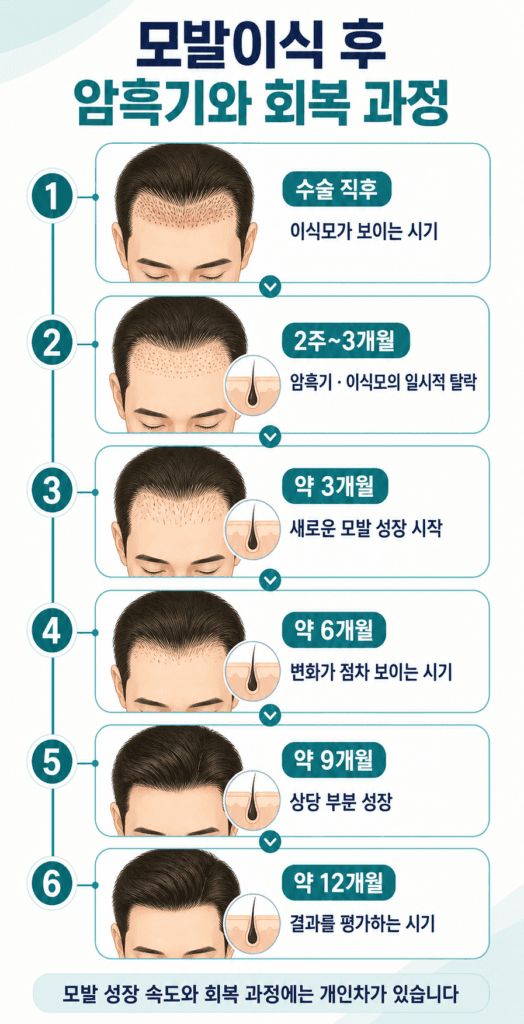
The shedding phase refers to the period after surgery when the shafts of the transplanted hairs temporarily fall out. The fact that transplanted hairs fall out does not immediately mean that the follicles themselves have been lost.
Generally, transplanted hairs may shed from about 2 weeks to several months after surgery, after which new hair gradually begins to grow.
- 2 weeks to 3 months after surgery: Shedding phase, during which transplanted hairs may fall out
- After about 3 months: New hair gradually begins to grow
- About 6 months: Changes gradually become noticeable
- About 9 months: Much of the change can be seen
- Around 12 months: Final results are evaluated
However, growth rates and recovery vary between individuals, so not every patient progresses at the same pace.
Why Graft Survival Rate Matters in Hair Transplantation
In hair transplant consultations, one of the most common questions is "How many hairs will be transplanted?"
However, along with the number of transplanted hairs, it is also important to look at how stably the harvested follicles are handled and implanted.
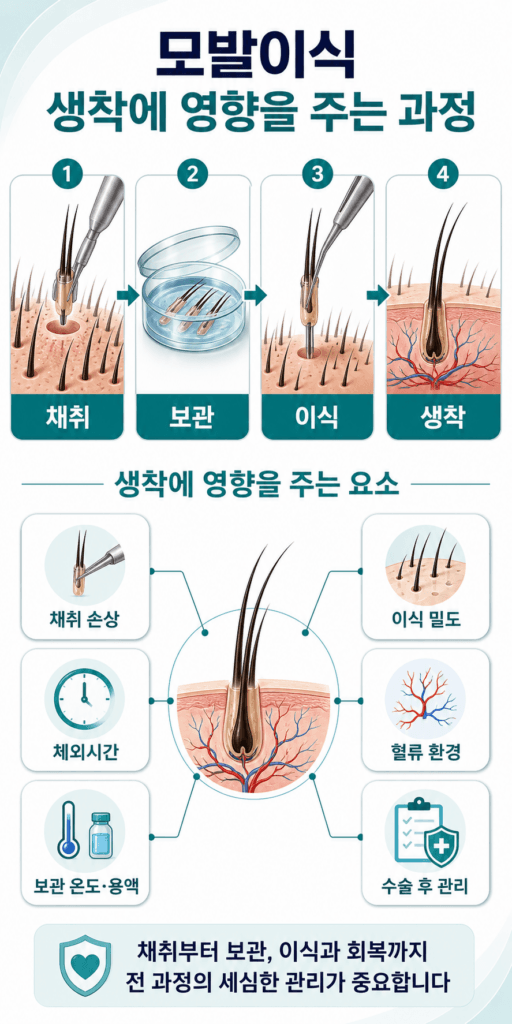
Follicle survival can be influenced by a combination of factors, including not only the patient's health but also the harvesting process, time outside the body, follicle storage conditions, physical damage, implantation density, and the condition of the recipient area.
- Damage during follicle harvesting
- Time the follicles spend outside the body
- Follicle storage solution and temperature
- Physical stress during implantation
- Condition of the recipient area
- Implantation density
- Post-operative care
- The patient's health and smoking status, among others
Is Denser Implantation Always Better?
High-density implantation should not simply mean packing many follicles into a small space.
Sufficient density is needed for a natural, full result, but when many follicles are implanted in an overly small space, the burden on the tissue and the blood flow conditions of the recipient area must also be considered.
Therefore, rather than being decided by a single number, the target density should be determined by comprehensively considering hair thickness, scalp condition, the donor area, the recipient area, and the overall design.
Why Modi Hair Plant Clinic Also Manages the Follicle Environment After Transplantation
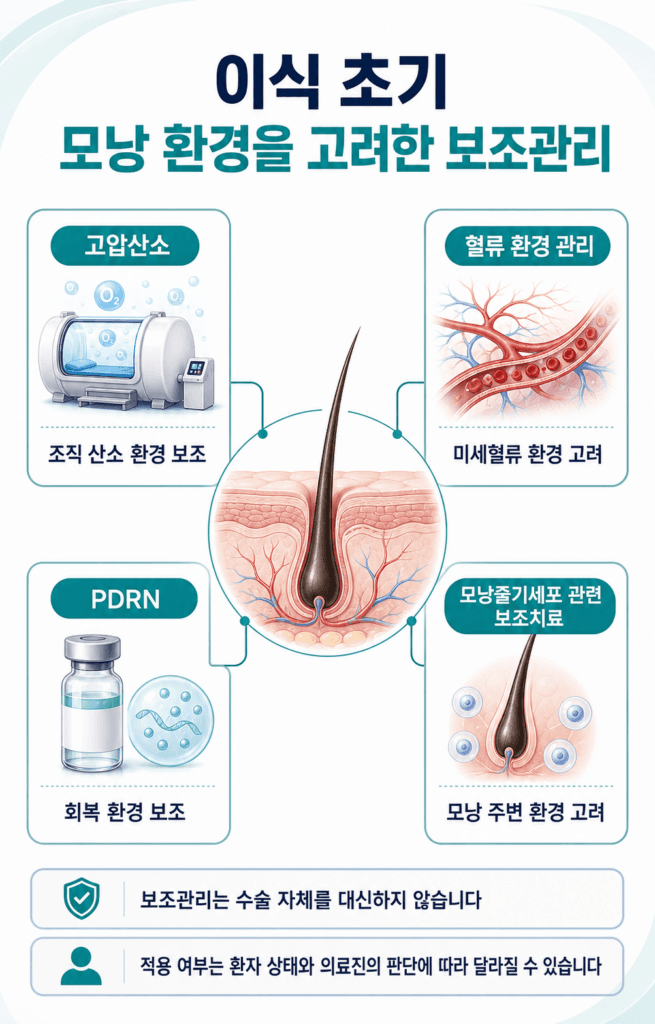
At Modi Hair Plant Clinic, on the premise that accurate follicle harvesting and storage, design, and implantation technique are fundamental, we also consider the environment in which follicles settle in the early period after transplantation.
Depending on the patient's condition and indications, hyperbaric oxygen therapy, treatment that takes blood flow conditions into account, PDRN, and hair follicle stem cell–related adjunctive treatment may be considered.
Hyperbaric Oxygen Therapy
This treatment supplies oxygen in a high-pressure environment and is used with the aim of improving oxygen supply to tissues.
Treatment Considering Blood Flow Conditions
Depending on the patient's condition, adjunctive care that takes into account the microcirculation of the recipient area may be provided.
PDRN
PDRN is a substance used in relation to the tissue recovery process and, at the discretion of the medical team, may be used to support the recovery environment of the recipient area.
Hair Follicle Stem Cell–Related Adjunctive Treatment
Modi Hair Plant Clinic also provides adjunctive treatment using hair follicle stem cells, taking into account the environment around the follicles and recovery.
However, these adjunctive treatments cannot replace a properly performed hair transplant itself. Appropriate design, accurate harvesting, follicle handling, and implantation come first, and adjunctive treatments may be additionally considered depending on the patient's condition.
Why Results Differ Even With the Same Hair Transplant
Hair transplant results are not determined simply by whether incision or non-incision, implanter or slit, is used.
How accurately the current hair loss status was evaluated, how the limited donor hair was allocated, how carefully the follicles were harvested and handled without damage, how the direction and angle of the hairline were created, and how post-operative care is carried out can all affect the result together.
A good hair transplant is not simply about transplanting many hairs; it is a process of planning limited follicles for the long term, arranging them naturally, and managing them stably.
Things to Check Before a Hair Transplant Consultation
- What stage is my hair loss currently at?
- Do I need a hair transplant now?
- Is the density and condition of the donor area sufficient?
- How will future hair loss progression be addressed?
- Why is this hairline and number of hairs being recommended?
- How will the follicles be harvested and handled?
- What implantation method will be used?
- What is the post-operative recovery process and how should I care for my scalp?
Hair Transplant FAQ
Q. Will transplanted hair fall out again?
Follicles harvested from areas relatively less affected by hair loss, such as the back of the scalp, are known to retain much of their original characteristics after transplantation. However, hair thickness and condition may change with aging, health status, and other factors.
Q. Will a hair transplant stop my existing hair loss?
No. Hair loss in existing, non-transplanted hair may continue to progress. Therefore, if necessary, hair loss treatment for existing hair, such as medication, may be used in combination based on the medical team's diagnosis.
Q. Which is better, incision or non-incision?
No single method can be said to be better for every patient. The decision should be based on a comprehensive evaluation of the number of hairs needed, donor area condition, previous surgical history, preferences regarding scarring, and other factors.
Q. If hair falls out after a hair transplant, does that mean it failed?
Not necessarily. A shedding phase, in which transplanted hairs fall out for a certain period after surgery, may occur, after which new hair may grow from the follicles.
Q. When can I see the results of a hair transplant?
Generally, new hair begins to be observed little by little after about 3 months, and changes may become gradually more noticeable over 6–9 months. Final results are usually evaluated at around 12 months, but this varies between individuals.
Q. Is it better to transplant more hair?
Not necessarily. Donor follicles are limited, and the number of hairs needed should be determined by considering the size of the recipient area, hair thickness, the likelihood of hair loss progression, target density, and other factors.
If You Are Considering a Hair Transplant
When deciding on a hair transplant, rather than comparing only price, number of hairs, or a single surgical technique, it is important to check whether a long-term plan is made that considers both your current hair loss status and its future progression.
Because a hair transplant uses limited donor hair, it requires a comprehensive approach from the outset, covering appropriate design, allocation of hairs, follicle handling, implantation method, and post-operative care.
Check the Number of Hairs You Need Before Your Consultation
▶ Hair Transplant Hair Count Calculator
https://app.modihair.com/patient_calculator/
▶ Modi Hair Plant Clinic Website
https://modihairplant.com/
▶ KakaoTalk Consultation
https://pf.kakao.com/_ExmRuT
References
- Orentreich N. Autografts in alopecias and other selected dermatological conditions. Ann N Y Acad Sci. 1959;83:463-479. https://doi.org/10.1111/j.1749-6632.1960.tb40920.x (Concept of donor dominance)
- Dua A, Dua K. Follicular unit extraction hair transplant. J Cutan Aesthet Surg. 2010;3(2):76-81. https://doi.org/10.4103/0974-2077.69015 (Non-incision FUE harvesting method)
- Romera de Blas C, Vega Díez D, Ricart Vayá JM, Gómez Zubiaur A. Complications in follicular unit excision hair transplantation: current evidence and practical approaches. Front Med (Lausanne). 2026;13:1750989. https://doi.org/10.3389/fmed.2026.1750989 (Recent evidence on FUE complications and graft survival)
※ Hair transplant methods, recovery, treatment applicability, and results vary between individuals, and the appropriate treatment should be determined through consultation with a medical professional.
This article was reviewed by our medical team before publication.