
Hairline Health · Traction Alopecia
You Tie Your Hair Every Day—Is Your Hairline Okay?
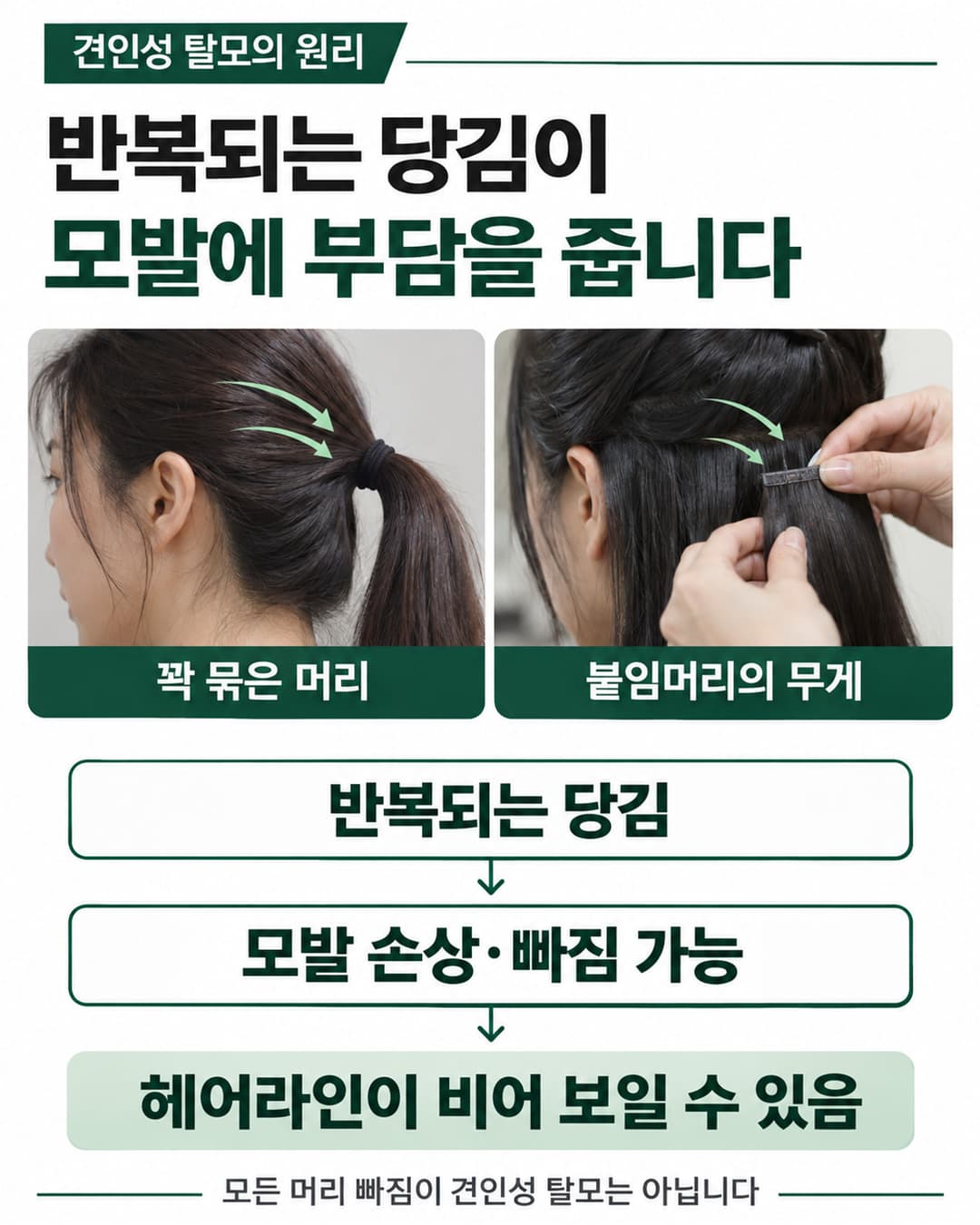
When hair is repeatedly pulled by tight hairstyles or hair extensions, traction alopecia can develop. Rather than judging based solely on the fact that you tie your hair, it is important to look at the degree of pulling, repeated habits, and changes in your hairline together.
If your temples look thinner than before or you notice more short hairs, it may be worth reviewing your styling habits. In this article, we outline the signs to check, daily care, and the criteria used during consultation to determine a treatment approach.
3-Line Summary
- Repeated pulling can cause hair to break or fall out.
- Thin areas along the hairline, short hairs, and scalp discomfort are changes worth checking, but a diagnosis cannot be confirmed by a single symptom alone.
- Habits that reduce pulling are the foundation; the likelihood of recovery and whether treatment or a hair transplant is appropriate are determined after examining the scalp.
What Is Traction Alopecia?
Traction alopecia is hair loss associated with repeated pulling on the hair. Tight ponytails or updos, tightly braided hair, and hair extensions that add weight can be contributing causes. [Source 1]
What matters is not the name of the style but how strongly and how repeatedly the hair is pulled. Not everyone who ties their hair will experience the same problem. [Source 4]
3 Hairline Changes to Check Together
Compare with your usual styling and see whether any of the following changes are present. The American Academy of Dermatology describes broken hairs around the forehead, a receding hairline, and partial hair loss in areas being pulled as changes to look for. [Source 1]
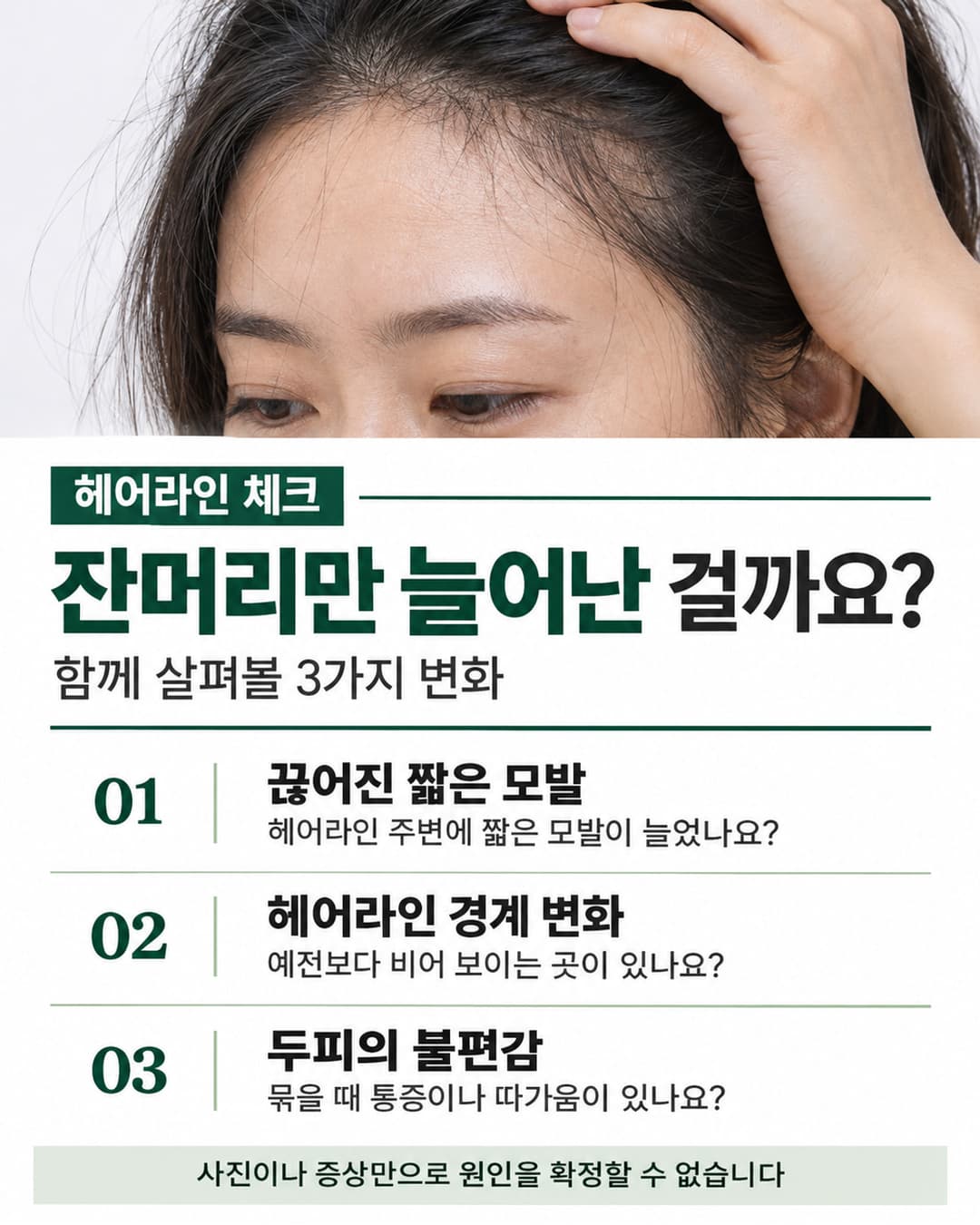
- Changes in short hairs: Whether short, broken-looking hairs have increased around the forehead and temples
- Changes in the border: Whether the hairline has receded compared to before or certain areas look thin
- Scalp discomfort: Whether tying your hair is painful or stings, and whether redness or scabbing is present
Seeing short baby hairs does not always mean traction alopecia. Whether they are newly growing hairs or broken hairs, and whether another type of hair loss is also present, must be distinguished during a consultation. Please do not determine the cause based on a single photo or hair length alone.
Start by Reducing the Pulling
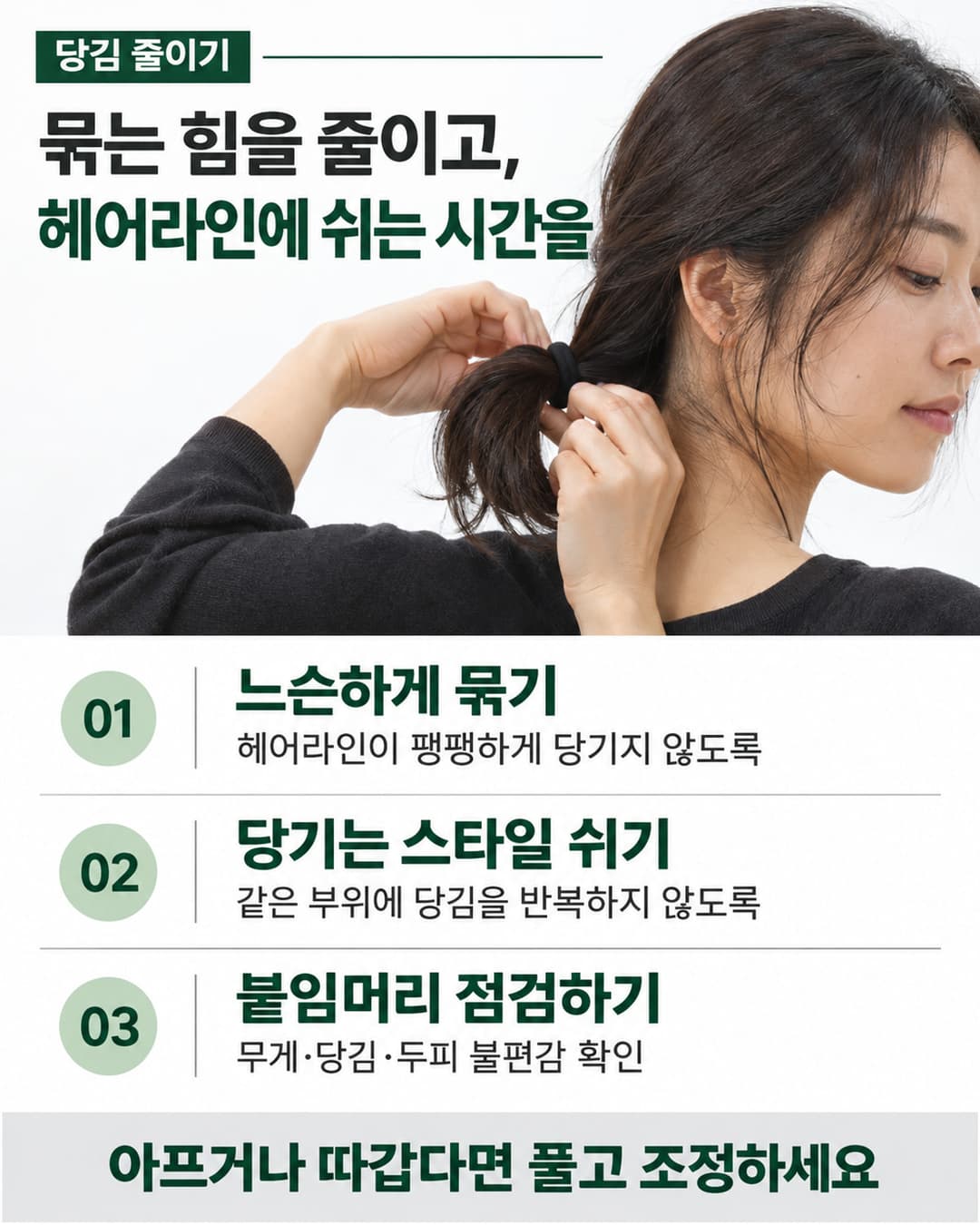
If you feel pain or stinging after tying your hair, let it down and reduce the pulling. In daily life, you can consider tying your hair loosely, taking breaks from styles that pull, and checking the weight and discomfort of hair extensions. [Source 1]
| Situation | What to Check |
|---|---|
| Ponytails · Updos | Check whether the hair at the forehead and sides is pulled taut, and whether there is discomfort when you let it down. |
| Hair extensions | Check the weight and pulling at the attachment points; if there is pain or irritation, consult about removal or adjustment. |
| Styles repeated daily | Check whether you can take breaks from or change styles that pull, and reduce tension as much as possible. |
Will Hair Grow Back If I Stop Tying It?
Recovery may be possible in the early stages
Before hair follicles are permanently damaged, recovery may be possible with measures to reduce pulling and any necessary treatment. However, the extent and duration of recovery vary depending on the individual's condition.
Long-standing damage requires a different approach
If repeated pulling continues, scarring changes may develop in some cases, making natural recovery difficult. The degree of damage cannot be judged solely by how long the hair has been tied.
These differences between stages are also described in a literature review on traction alopecia. This source summarizes existing research and is not a clinical trial guaranteeing the effectiveness of any specific treatment or an individual's recovery period. [Reference 2]
When Are Medication or a Hair Transplant Considered?
During a consultation, the cause of hair loss and the condition of the scalp are assessed to determine whether treatment is needed. If there is inflammation or treatment to support recovery is needed, an approach suited to the condition is considered. There are reports of topical minoxidil treatment for traction alopecia, but the evidence includes a small number of case reports, so treatment is not started with the expectation of the same effect for everyone. [Reference 2]
For some patients whose follicle damage has progressed and left thin areas, a hair transplant may be an option. However, surgical suitability and the expected range of results must be determined through an individual consultation, and a transplant does not resolve the pulling habit itself.
What Is Checked During a Consultation?
We ask when the hair loss began and how it has progressed, and examine the scalp and hair to distinguish the cause. We also check whether other causes, such as female pattern hair loss, are present, and additional tests are decided based on the examination results. [Source 3]

Before your consultation, briefly organize the following information.
- When and where you first noticed hairline changes or hair shedding
- How you usually tie your hair, whether you use hair extensions, and any scalp discomfort
- Recent health changes, current medications, and history of hair loss treatment
- If possible, comparison photos taken under similar lighting and angles, with dry hair
Photos are a record of change and do not replace an examination. If your hairline changes, shedding increases, or pain and redness recur, consider a consultation about your current condition.
Frequently Asked Questions
I have more baby hairs—can I tell whether they are new growth or broken hairs?
It is difficult to tell by length alone. You need to consider where they appeared, whether density has changed compared to earlier photos, and whether there are other symptoms. During a consultation, the hair and scalp are examined to determine the cause.
Tying my hair doesn't hurt, but my temples look thin. Could it be from pulling?
The cause cannot be determined by the presence or absence of pain alone. Your usual tying habits are one piece of information to check, and other causes of hair loss in the thin areas should also be examined. If you have photos from before the change, please bring them.
I have to tie my hair every day for work—is it okay if I tie it low?
It is difficult to determine safety based on tying height alone. Even a low tie can pull tightly, so reduce the tension and set aside time to rest from styles that pull. If adjustments are difficult due to work or you notice changes, please describe your usual style during your consultation.
If thin areas remain even after letting my hair down for a while, do I need a hair transplant right away?
Surgery is not decided based on the waiting period alone. After checking whether recovery is in progress, whether follicle damage remains, and whether other causes are present, we review the suitability of observation, treatment, or surgery. Even if a hair transplant is needed, we discuss the expected range of results and aftercare.
Hairline Changes: Let's Start by Identifying the Cause
At Modi Hair Plant, when consulting on concerns about a thinning hairline, we look at your current hair and scalp condition along with your usual habits. If you are wondering about the likelihood of recovery and the appropriate treatment direction, please share your record of changes and your usual styling methods.
Phone inquiries: 02-544-8659
References and Sources
[Source 1] American Academy of Dermatology. Hairstyles that pull can lead to hair loss. Updated November 6, 2024. View source. A patient guide explaining hairstyles, traction alopecia, and daily care.
[Reference 2] Billero V, Miteva M. Traction alopecia: the root of the problem. Clinical, Cosmetic and Investigational Dermatology. 2018;11:149–159. DOI: 10.2147/CCID.S137296. PMID: 29670386. PMCID: PMC5896661. View full text. A literature review on causes, diagnosis, and treatment; some treatment reports include a small number of cases.
[Source 3] American Academy of Dermatology. Hair loss: Diagnosis and treatment. View source. A general guide explaining how the causes of hair loss are identified and the consultation and treatment process.
[Source 4] Syed HA, Kaliyadan F. Traction Alopecia. In: StatPearls [Internet]. Treasure Island (FL): StatPearls Publishing; 2025. Updated May 4, 2025. PMID: 29262008. Bookshelf ID: NBK470434. Clinical education material summarizing the diagnosis and stage-based management of traction alopecia.
This article is intended to provide general medical information and does not replace individual diagnosis or prescription. The causes of hair loss, the course of recovery, and treatment results vary from person to person, and whether and how testing, medication, or a hair transplant is performed is decided after a consultation with a medical professional.