
Wedding Preparation · Timing of Hairline Correction Consultation
Wedding Photo Shoot or Ceremony: Start With Whichever Comes First
If you are considering hairline correction before your wedding, you may consider planning to begin consultation when there is about one year or more before the first important event, whether that is the wedding photo shoot or the ceremony. This is a scheduling suggestion that reflects the time needed for recovery and growth after a hair transplant; it is not a surgical deadline that applies to everyone, nor a period that guarantees results.
You may be concerned about the M-shaped areas or the temple region that become visible when your hair is worn up. This article explains how to consider your event schedule together with the recovery process when preparing for hairline correction through hair transplant.
Key Points
- Check the photo shoot date, which may come before the ceremony. Consultation and surgical plans are reviewed based on whichever important event is scheduled first.
- Initial recovery and hair growth are separate processes. It is difficult to predict how you will look on the photo shoot or ceremony day based on your appearance immediately after surgery.
- There is no need to rush surgery to fit the remaining time. Depending on your current condition and expected progress, surgery may also be planned for after your wedding.
1. What Is Hairline Correction Through Hair Transplant?
Hairline correction through hair transplant is a procedure in which hair follicles are harvested from a donor area, such as the back of the head, and moved to the areas that need them along the edge or sides of the forehead. This article covers correction by this hair transplant method, as distinct from forehead reduction surgery or hairline tattooing.
When deciding whether surgery is appropriate, your current hair and scalp condition, the extent that can be harvested from the donor area, and your desired design and expectations are reviewed together. Hair transplant practice guidelines also emphasize evaluation and planning based on each patient's individual conditions. View hair transplant practice guidelines
2. Why Allow Plenty of Time Before Consultation?
The time it takes for the scalp to recover differs from the time it takes for transplanted hair to grow. Even if the surgical area appears healed on the surface, a longer period of observation may be needed before the desired length and density can be assessed.
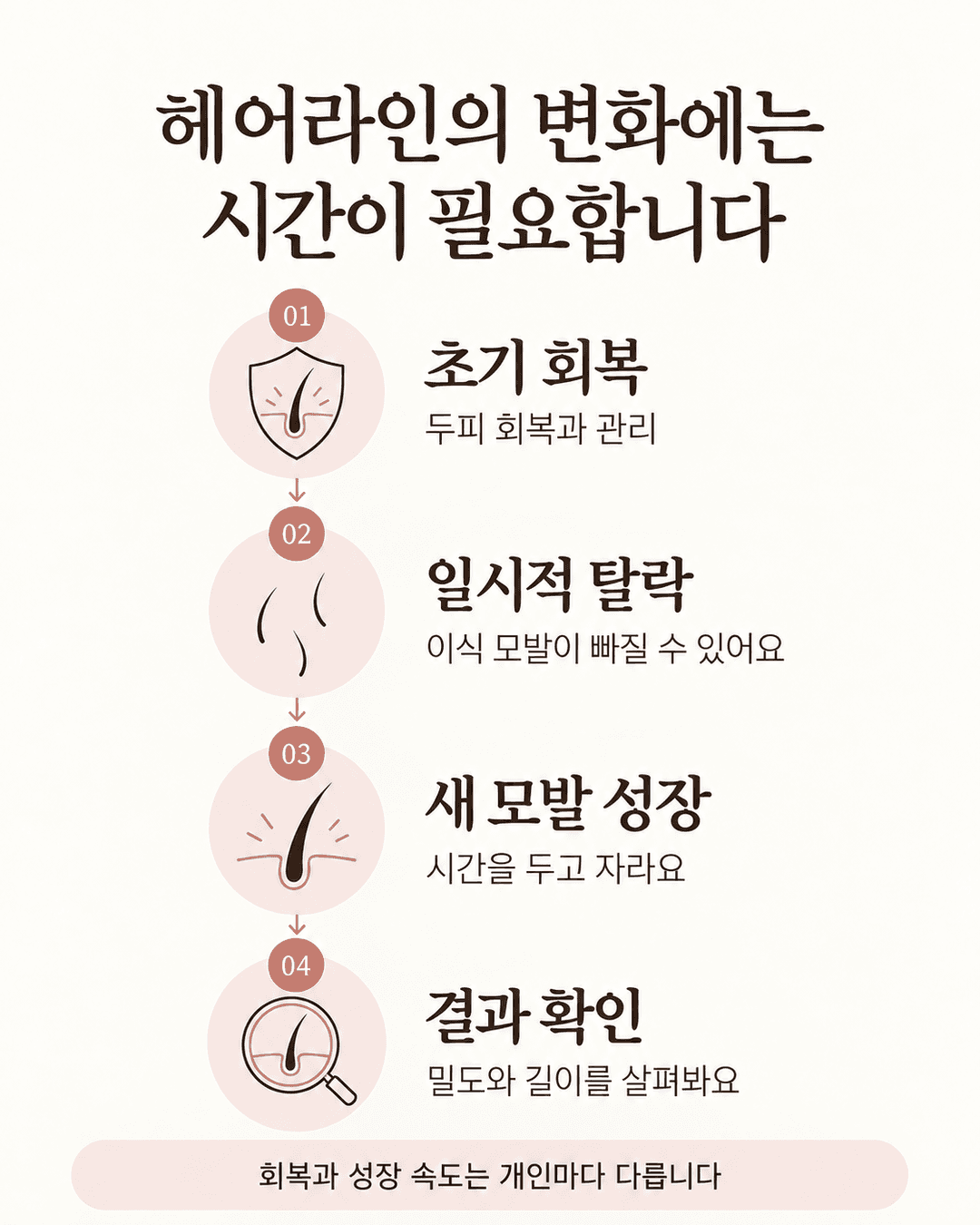
- Early post-surgery period: Swelling or scabbing may occur, and the transplanted area should be carefully protected, especially during the first 2 weeks.
- About 2–8 weeks after surgery: Transplanted hair may temporarily fall out. Around 3 months, the hair may even appear thinner than before.
- About 6–9 months after surgery: The American Academy of Dermatology states that many patients see results during this period, while for some it may take 12 months.
- Longer follow-up: The UK NHS describes the time to see final results as about 10–18 months.
The above periods summarize the American Academy of Dermatology patient information and the UK NHS patient information. The point at which changes begin to appear differs from the point at which final results are evaluated, and neither source can be applied identically to every patient.
"Consulting with one year or more to spare" is a suggestion for schedule planning. It means allowing enough time to review consultation and whether to have surgery in light of the growth periods above; it does not mean that your desired appearance will necessarily be achieved after one year.
3. Share Your Wedding Photo Shoot Date Along With Your Ceremony Date
For example, if the ceremony is in October and the wedding photo shoot is in May, there is a 5-month gap between the two events. If you plan based only on the ceremony date, you may still be going through the recovery or growth process at the time of the photo shoot.
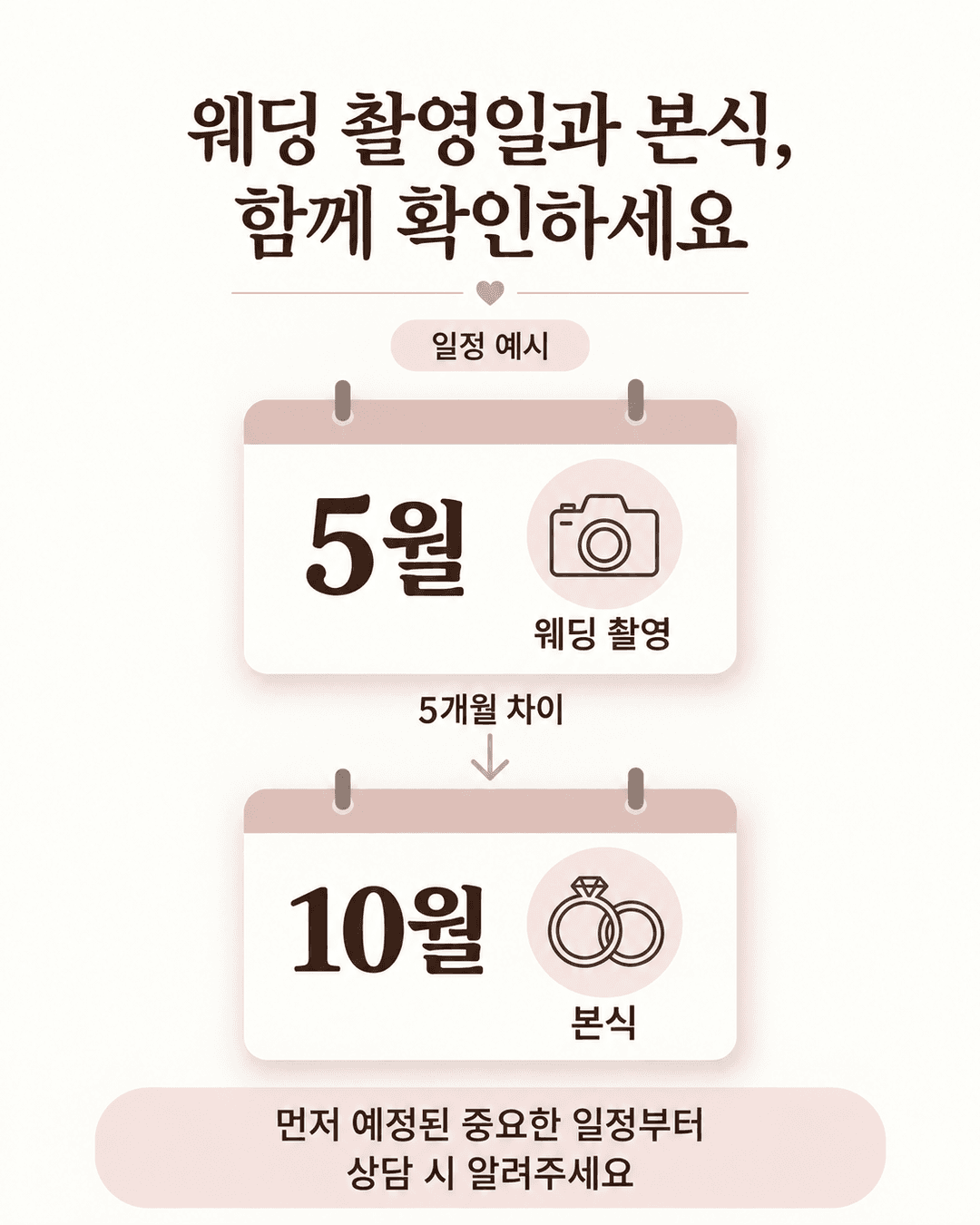
If the hairstyle you want for the photo shoot differs from the one for the ceremony, please let us know about that difference as well. Preparing photos of styles that reveal the hairline to different degrees, such as an updo, a half-up style, or a style with bangs, can help you explain the look you want.
4. What If Your Wedding Is Only 3–6 Months Away?
There is no need to conclude that it is too late for a consultation. However, you should not expect to achieve both your desired length and density within the remaining time. First, your current condition and the expected progress at the time of the event need to be assessed.
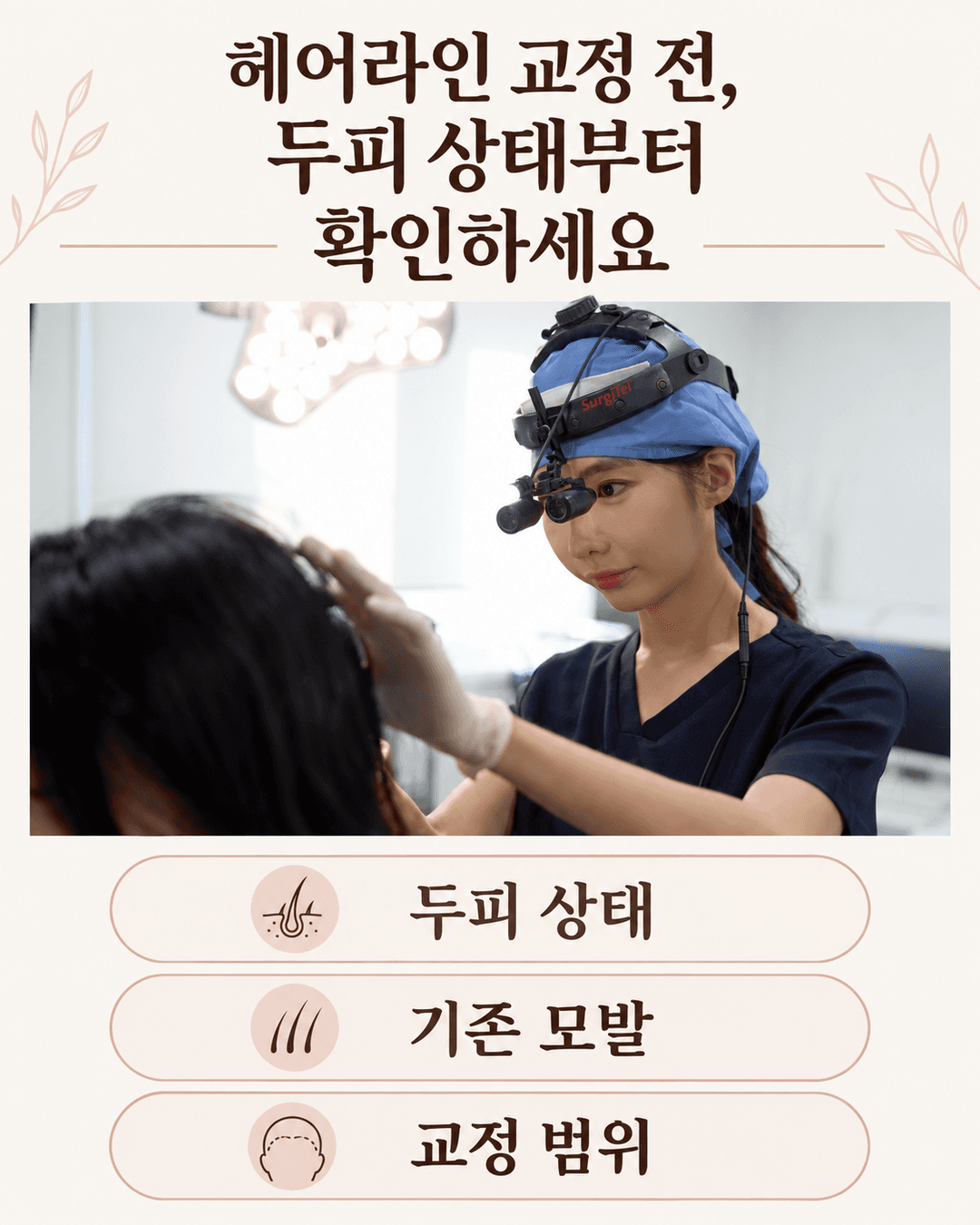
If You Have Not Yet Had Surgery
Your desired correction range, donor area condition, and the time remaining until the event are reviewed together. If it is difficult to adequately achieve the look you expect, having surgery after your wedding schedule may also be considered.
If You Have Already Had Surgery
Please inform your medical team of your current progress and event schedule. It is advisable to confirm when hair coloring, perms, hairline cover products, and styling can be used based on your scalp's recovery.
After surgery, swelling, pain, temporary scabbing, and scarring may occur, and infection or less growth than expected is also possible, so plans made shortly before an event should take these possibilities into account. If you experience severe pain or unexpected symptoms, contact the medical facility where you had surgery. NHS information on recovery and risks
5. Considering Both Your Wedding Hair and Everyday Style
In hairline design, not only forehead height but also the side lines, the connection to the temples, and the direction and density of existing hair are considered together. Sharing both the look you want for your wedding photo shoot and the style you usually wear can help in discussing the design.
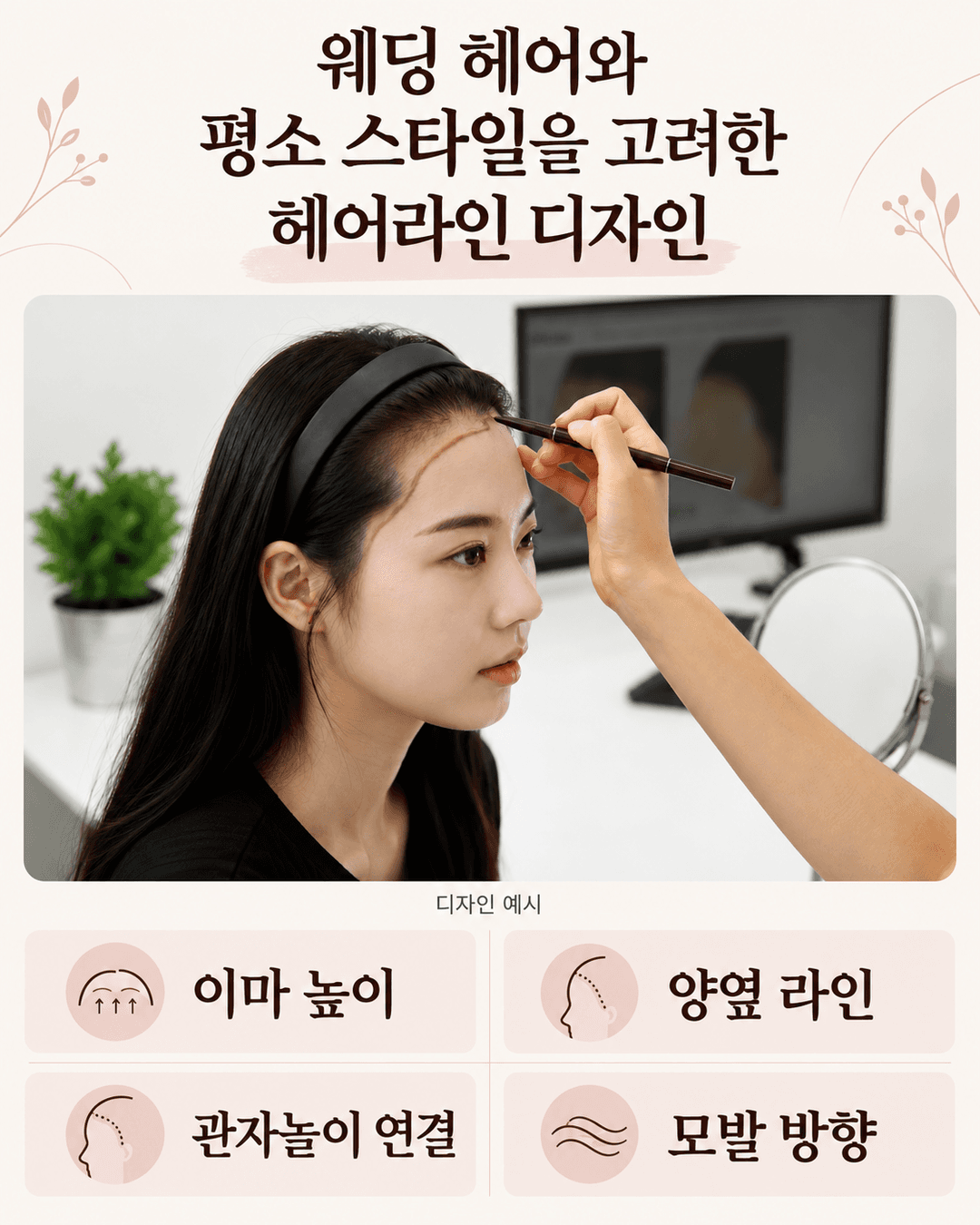
Modi Hair Plant's surgical process guide describes drawing the hairline directly while considering facial proportions, head shape, and existing density, and reviewing it together with the patient. After you share the line you want, the applicable range and limitations are reviewed together. Hairline design and surgical process guide
6. What Are the Basis and Limitations of This Consultation Timing Guidance?
This article draws on patient information from professional societies and public health organizations, as well as practice guidelines that synthesize the literature and expert opinion. It is helpful to read these sources with their nature distinguished as follows.
- Clinical experience and expert recommendations: The 2021 hair transplant practice guidelines include expert consensus on items for which published evidence is limited. Such recommendations aid individual patient decisions but differ from comparative clinical trials that demonstrate results at specific time points.
- Human studies: The sources cited in this article do not include studies that directly compared consultation timing among people preparing for marriage to verify that "a certain number of months beforehand is best." The suggestion of allowing about one year or more is a planning suggestion based on general growth periods.
- Preclinical studies: Results from cell or animal studies were not applied to the consultation timing guidance in this article. Such studies alone cannot predict human recovery periods or your appearance on the wedding day.
In addition, the periods presented in patient information from professional societies and public health organizations are not predictions that reflect every surgical technique or individual condition. In actual planning, examination findings and post-surgical progress should be prioritized. View bibliographic information and abstract of the practice guidelines
7. Organize What to Prepare Before Your Consultation
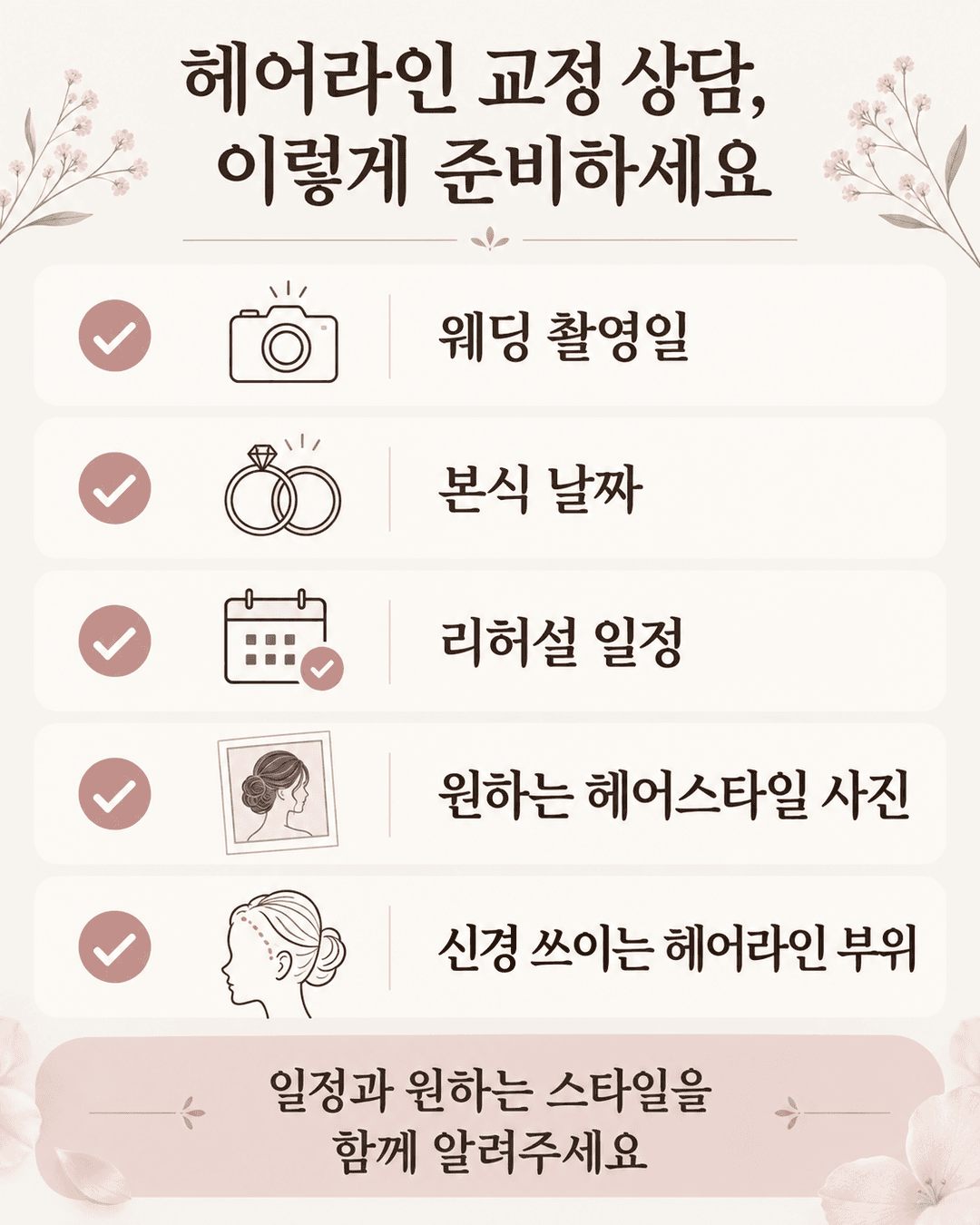
- Wedding photo shoot and ceremony dates: Please specify which event is scheduled first.
- Rehearsals and other key events: Events that may overlap with the recovery period are reviewed together.
- Photos of desired hairstyles: Try preparing photos of both your wedding hair and everyday style.
- Areas of concern: Please describe specific locations, such as the central forehead, M-shaped areas, or temples.
- Health status and current medications: Please share these with the medical team so that surgical suitability can be assessed.
Frequently Asked Questions
My ceremony is 6 months away. Is it okay to have a consultation now?
A consultation allows you to review your current condition and possible options. However, it cannot be guaranteed that your desired density and length will be achieved in 6 months. Share both your photo shoot and ceremony dates, and compare options including having surgery after the events.
Do I have to set a surgery date right after the consultation?
At the consultation, surgical suitability, possible designs, expected progress, and limitations can be reviewed first. After hearing the explanation and considering whether it fits the change you want and your schedule, you can decide whether to have surgery.
Must I have hairline correction before my wedding photo shoot?
Surgery is not necessary. It is advisable to see whether your desired style can be achieved with your existing hair, and even if you want correction, to review whether there is enough time for growth. Rather than rushing surgery because of an event schedule, first confirm whether it is the right choice for you.
To Review Options Suited to Your Current Condition and Schedule
You can organize your wedding photo shoot date, ceremony date, desired hairstyle, and areas of concern to share at your consultation. During the consultation, after the condition of your scalp and donor area is checked, surgical eligibility, expected progress, and limitations are reviewed together.
References and Sources
- Mysore V, Kumaresan M, Garg A, et al. Hair Transplant Practice Guidelines. J Cutan Aesthet Surg. 2021;14(3):265–284. DOI: 10.4103/JCAS.JCAS_104_20. PMID: 34908769. Source type: Practice guidelines synthesizing the literature and expert consensus. Evidence for some recommendations is limited, and this is not a clinical trial that directly verified consultation timing before marriage.
- American Academy of Dermatology. A hair transplant can give you permanent, natural-looking results. Source type: Patient education material. Describes general timing of shedding and seeing results, and does not guarantee individual progress.
- NHS. Hair transplant. Source type: Patient information from a public health organization. Explains initial care, the period for seeing results, and surgery-related risks.
- Modi Hair Plant. Hair Transplant Surgical Process. Source type: Clinic guide to its treatment process. This source is for reviewing the design procedure described by the clinic and is not a clinical study verifying treatment efficacy.
This article is provided for general medical information, and individual diagnosis or treatment plans cannot be determined from online information and images alone. Suitability for hair transplant, the required recovery period and growth progress, and final results vary from person to person. Swelling, pain, inflammation, scarring, and other effects may occur after surgery, and whether to proceed with treatment and the specific schedule should be decided after consultation with a medical professional.