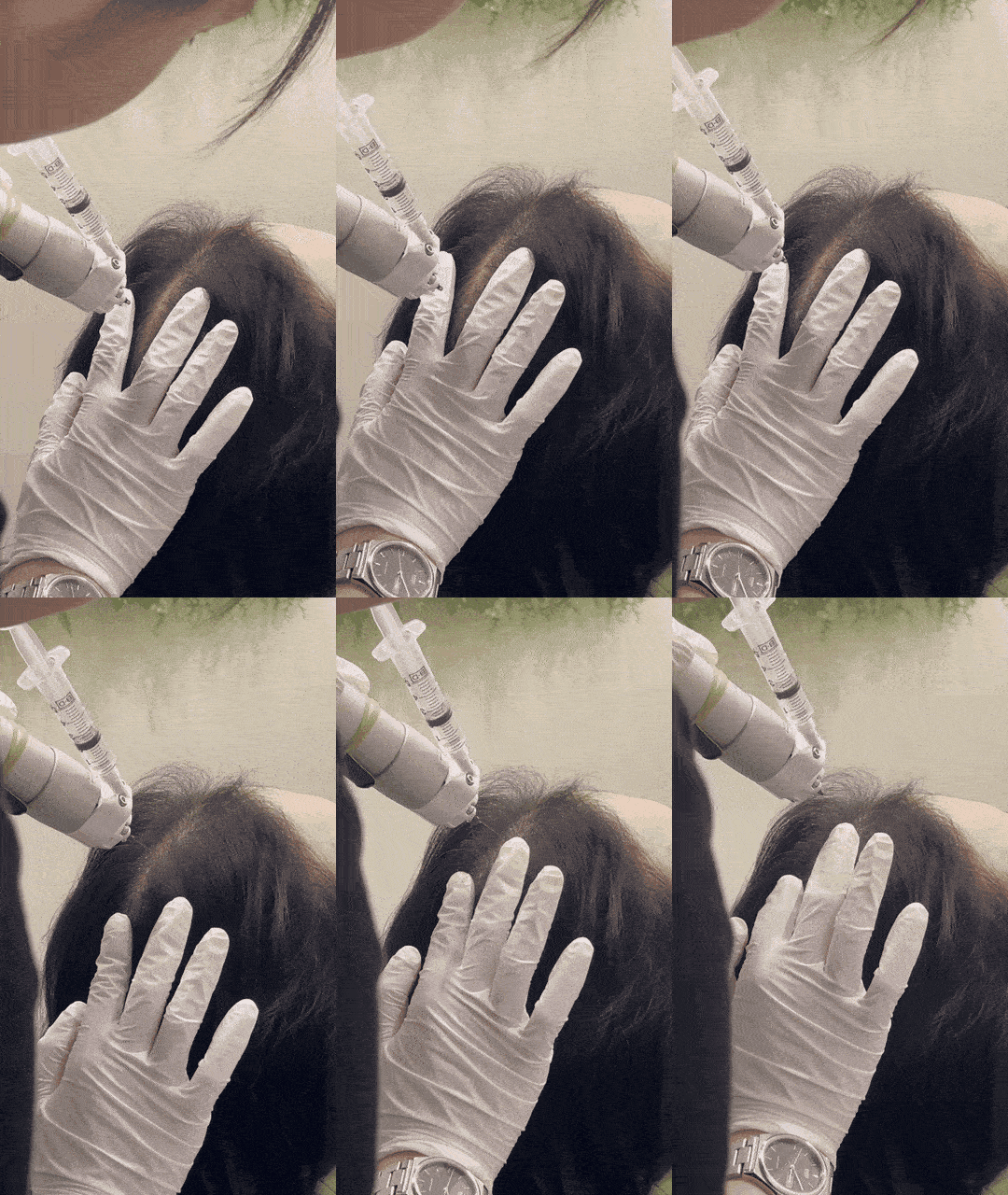
Crown hair loss often begins not with hair falling out all at once, but with existing hair gradually becoming thinner until the scalp starts to show through.
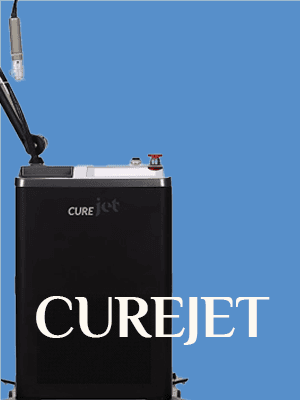
When thinned hair still remains on the crown like this, non-surgical treatment using CureJet may be considered.
However, areas where hair follicles have already been lost and the scalp is bare cannot be treated in the same way, so it is important to check the current condition of the hair on the crown.
Today, we will look at how CureJet hair loss treatment is applied to crown hair loss and in which cases the treatment may be considered.
Why Does the Scalp Show Through with Crown Hair Loss?
As crown hair loss progresses, one of the first changes to appear is in hair thickness.
The onset of hair loss does not mean that all the hair falls out from the beginning.
As existing hair gradually becomes thinner and the growth phase of the hair shortens, overall density decreases and the scalp begins to show through.
In particular, because the crown is an area that is difficult to check on your own, hair loss is often discovered only after it has progressed to some extent.
If you notice the following changes, it is advisable to have the condition of the hair on your crown checked.
- The crown looks lighter than before
- More scalp is exposed around the part
- The hair on the crown has become thinner than before
- The scalp is more visible after washing or drying your hair
- Volume at the crown flattens easily
In these cases, rather than simply counting the number of hairs being shed, you should also check the thickness and density of existing hair and whether hair follicles remain.
How Is CureJet Applied to Crown Hair Loss?
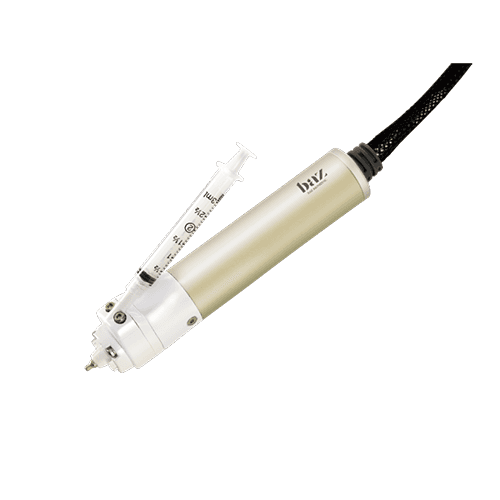
CureJet is a treatment that delivers stem cell conditioned medium directly to the area of crown hair loss.
At Modi Hair Plant, we check the patient's hair and scalp condition and then perform CureJet treatment on the areas where it is needed.
For crown hair loss, the treatment may be considered when existing hair remains but has become thinner and crown density has decreased, rather than when the hair has already disappeared completely.
In other words, CureJet should not be decided on simply by how bare the scalp looks; it is important to determine whether it is appropriate after checking the current condition of the hair follicles and hair.
Does Everyone with Crown Hair Loss Need CureJet?
No, not necessarily.
Even with crown hair loss, the treatment method may differ depending on how far the hair loss has progressed and the condition of the hair follicles.
If the hair and scalp show thinning, stem cell treatment via CureJet may be helpful;
on the other hand, if hair loss has progressed for a long time, the hair follicles have been lost, and the truly bare area is large, a hair transplant may need to be considered.
Therefore, we distinguish the treatment direction as follows, based on the current condition of the hair and hair follicles.
- When thinned existing hair remains → Consider treatments such as hair follicle stem cell treatment via CureJet
- When hair follicles have been lost and the area is bare → Consider a hair transplant
Of course, when hair transplant surgery, hair follicle stem cell treatment, and medication are carried out together, we may also plan them so that each treatment works in a complementary way.
In this way, the treatment direction is determined according to the current condition.
Are Hair Transplants and CureJet Ever Combined for Crown Hair Loss?
Yes. For many of Modi's crown hair loss patients, we plan hair transplant surgery, hair follicle stem cell treatment, and medication together so that each treatment works in a complementary way.
Not every patient has the same condition across the entire crown.
Some areas may be bare because the hair follicles have been lost,
while thinned existing hair may remain in the surrounding areas.
In such cases, a hair transplant for the bare areas and treatment for areas where existing hair remains may be considered together.
A hair transplant is a treatment that transplants new hair follicles to the areas where they are needed,
whereas CureJet is a treatment performed with consideration of the condition of areas where existing hair remains, so the treatment goals are different.
Therefore, rather than one of the two treatments being unconditionally better, it is important to distinguish which treatment is needed based on your current hair loss condition.
Crown Hair Loss: What Should Be Checked Before Treatment?
Before stem cell treatment
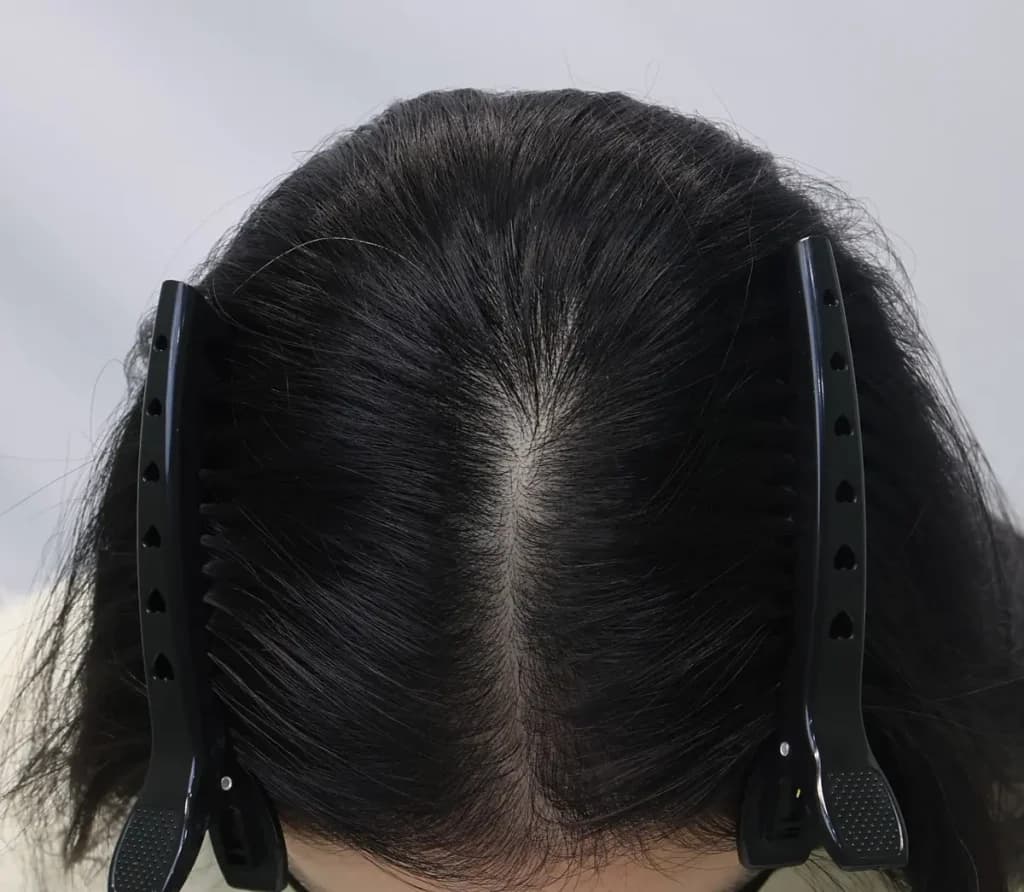
1 year and 1 month after stem cell treatment
*This is the case of an actual female patient in her 40s with a wide part due to crown hair loss who received hair follicle stem cell treatment with CureJet. Drug delivery is one part of the treatment, and results reflect the combined effect of multiple treatments. Individual results may vary.
Before deciding on crown hair loss treatment, the following should be checked.
- Current hair density on the crown
- Thickness of existing hair
- Whether thinned hair remains
- The extent of areas where hair follicles have been lost
- Whether hair loss is still progressing
- Whether the condition requires a hair transplant
In particular, how much of the scalp is visible on the crown can vary depending on lighting and the direction of the hair.
Therefore, rather than deciding on a treatment method based on photos alone, it is important to establish a treatment plan after checking the actual condition of the hair and scalp.
You May Consider a Consultation for Crown Hair Loss Like This.
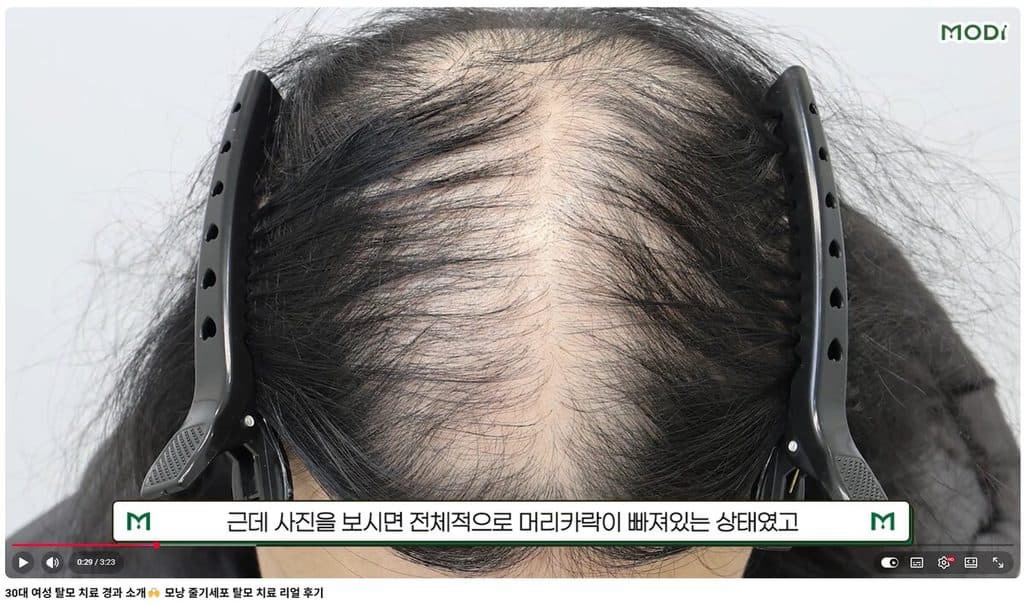
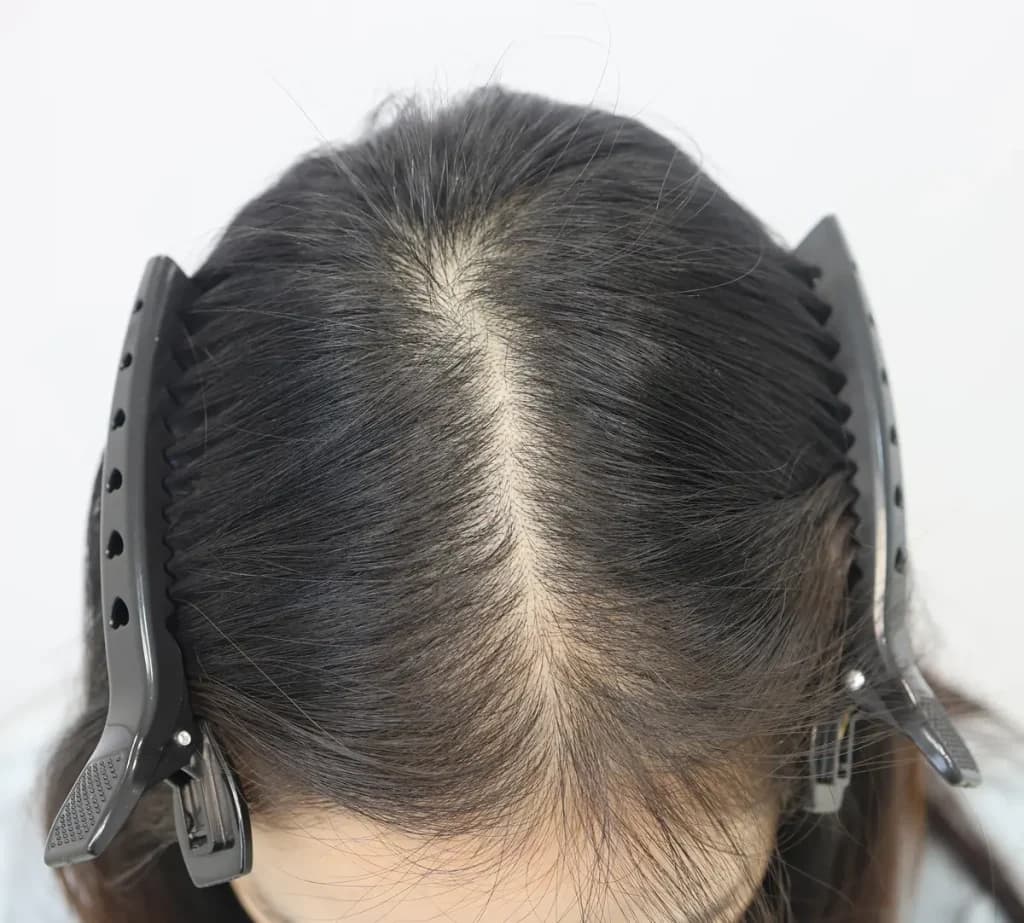
*Crown hair loss condition of a female patient in her 30s who visited Modi
- The hair on the crown is gradually becoming thinner
- Much more of the crown scalp is visible than before
- Existing hair still remains
- You are unsure whether medication alone is enough
- You want to know whether your condition requires a hair transplant
Conversely, if there are many areas that are completely bare because the hair follicles have already been lost, it is necessary to consider other treatment methods such as a hair transplant as well, rather than relying on CureJet alone.
Crown Hair Loss: What Matters Is Checking Whether Hair Follicles Remain.
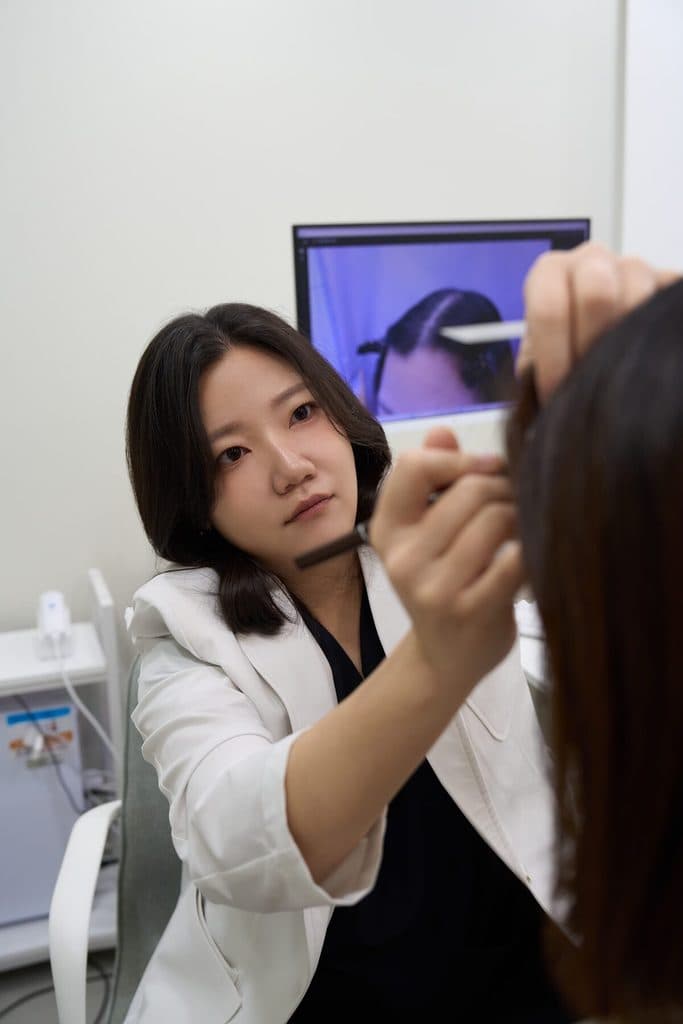
Crown hair loss is often not simply a matter of hair falling out, but also involves a process in which existing hair becomes thinner.
Therefore, it is not appropriate to apply the same treatment to everyone just because the scalp shows through.
If thinned existing hair remains, non-surgical treatment such as CureJet may be considered; if there are areas that are bare because the hair follicles have already been lost, a hair transplant may be considered.
Ultimately, what matters is accurately checking the current condition of the crown and deciding on a treatment method based on the remaining hair follicles and the degree of hair loss progression.
At Modi Hair Plant, we check the thickness and density of the hair on the crown, the scalp condition, and other factors, and then provide consultation on a treatment direction suited to each individual's condition.

※ Treatment methods and progress may vary from person to person. Please confirm whether CureJet treatment is suitable for you through a consultation with our medical staff.
Learn More About Modi Hair Plant Clinic
▶Hair follicle stem cell treatment principles page
▶Customized diagnosis by hair loss type page
References
- Bekkers VZ, Bik L, van Huijstee JC, Wolkerstorfer A, Prens EP, van Doorn MBA. Efficacy and safety of needle-free jet injector-assisted intralesional treatments in dermatology — a systematic review. Drug Deliv Transl Res. 2023;13(6):1584–1599. doi:10.1007/s13346-023-01295-x (PubMed)
The above paper is a systematic review summarizing the efficacy and safety of drug delivery using needle-free jet injectors in dermatology. CureJet itself is not a device that treats hair loss; it is used as one method of drug delivery.
This post was written directly by Modi Hair Plant Clinic for the purpose of providing medical information in compliance with the Medical Service Act and was reviewed by our medical staff. For all hair loss treatments, treatment effects and progress may vary depending on each patient's scalp condition, cause of hair loss, constitution, and health status, and reactions such as temporary irritation or redness may occur. Please be sure to make your decision only after a thorough consultation with a medical specialist before the procedure.