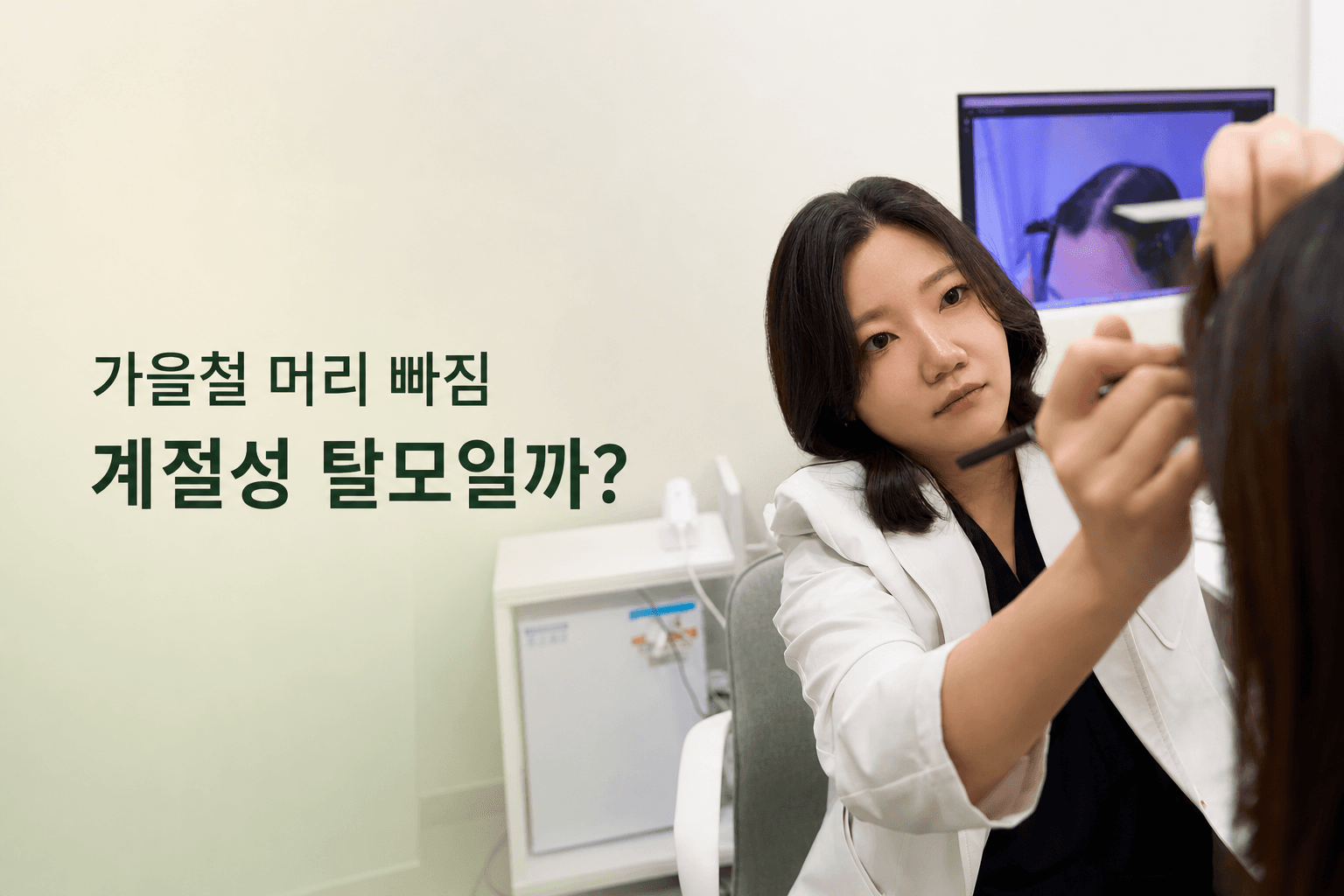
MODI HAIR GUIDE · Seasonal Hair Loss
Shedding more hair than usual in autumn does not necessarily mean you need hair loss treatment. However, if it is accompanied by changes such as thinning hair or a widening part and crown, it may be worth checking whether this is progressive hair loss rather than simple seasonal shedding.
Hello, this is Modi Hair Plant Clinic.
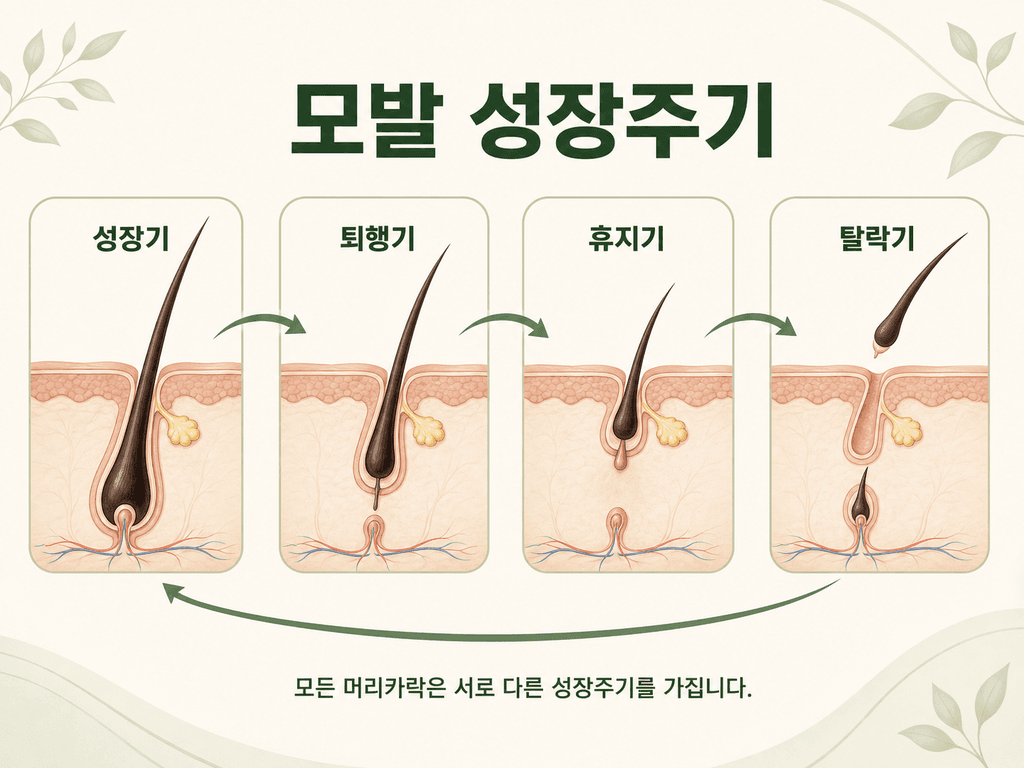
As the weather turns cooler, many people become concerned, saying things like “I've been losing noticeably more hair when I wash it lately” or “More hair is collecting in the drain.” Hair repeatedly goes through a cycle of the growth (anagen), regression (catagen), and resting (telogen) phases before shedding. Because each hair is at a different point in this cycle, a certain amount of hair naturally falls out while new hair grows in.
However, you should not conclude that it is seasonal hair loss based on shedding alone. The onset of male or female pattern hair loss may coincide with this period, or existing hair loss may simply become more noticeable during seasonal transitions.
Key Summary
If only the amount of shedding has temporarily increased, you may observe how it progresses. However, if it is accompanied by reduced hair thickness, a widening part, visible scalp, or a receding hairline, it is advisable to consider a diagnosis by a medical professional.
Why Does Hair Shed More in Autumn?
Not all hairs grow and fall out at the same time; each has its own growth cycle. Hair that has completed the growth phase passes through the regression and resting phases and then sheds naturally. Various factors such as seasonal change, changes in daylight, daily rhythms, and stress can affect the hair cycle, which may make you feel that you are shedding more during seasonal transitions.
If this change is temporary and overall hair density and thickness are maintained, it may be part of the natural hair cycle. Conversely, if shedding continues for an extended period or density decreases in specific areas, other causes should also be examined.
The Difference Between Seasonal Shedding and Progressive Hair Loss
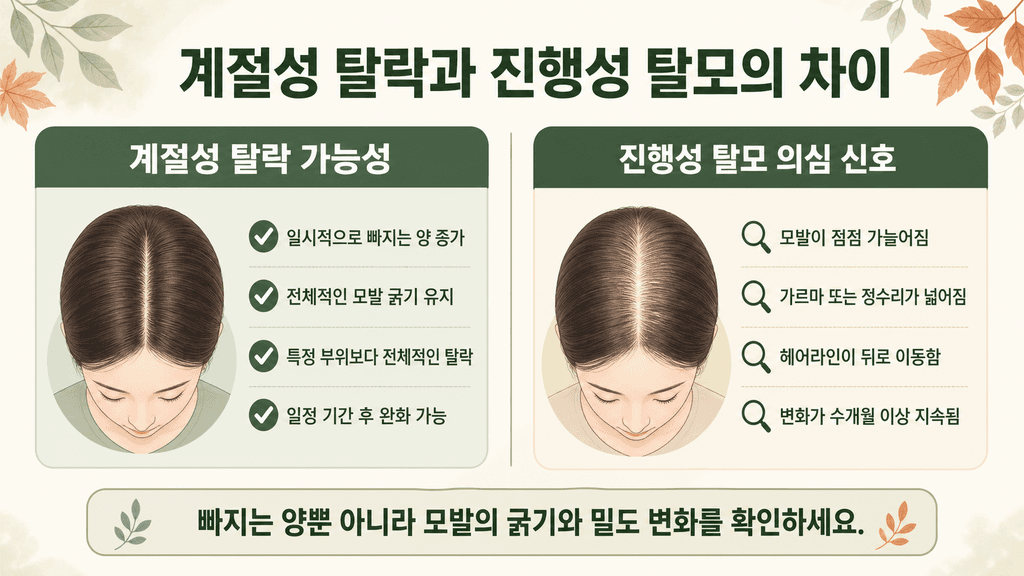
| Category | Likely Seasonal Shedding | Warning Signs of Progressive Hair Loss |
|---|---|---|
| Duration | Increases for a period, then eases | Persists for several months or longer, or gradually worsens |
| Hair Thickness | No major overall change | More short, fine hairs |
| Affected Areas | Shedding is relatively uniform | Specific areas such as the crown, part, or front hairline are prominent |
| Change in Appearance | Little change in density | Increased scalp visibility, widening part, receding hairline |
| How to Respond | Review lifestyle habits and monitor progress | Consider a diagnosis of scalp and hair condition |
※ The above are general guidelines; the type or cause of hair loss cannot be determined from symptoms alone.
Look at ‘Changes in Your Hair’ Rather Than the Number of Hairs Shed
When worried about hair loss, it is easy to focus only on the number of hairs lost each day. However, it is difficult to count shed hairs accurately every day, and the visible amount also varies depending on how often you wash your hair and your brushing habits.
It is therefore important to also check for the following changes in appearance.
- Your hair feels weaker and thinner than before.
- Your part is wider and your scalp shows through easily.
- The area of visible scalp increases in photos of your crown.
- The M-shaped area or front hairline appears to have moved back.
- Short, fine hairs fall out frequently.
- A family member has experienced male or female pattern hair loss.
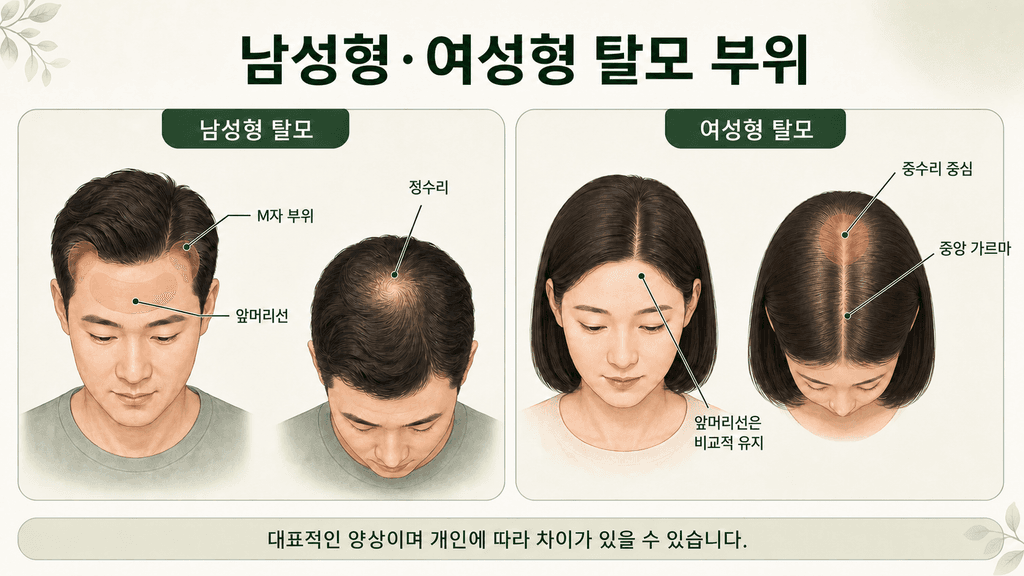
Hair Loss Patterns May Differ Between Men and Women
Male Pattern Hair Loss
It may appear as a receding front hairline and M-shaped area, or as thinning hair at the crown. Because the affected area can widen over time, it is important to watch for early changes.
Female Pattern Hair Loss
A common pattern is reduced hair density centered on the part and crown while the front hairline is relatively preserved. It may begin with changes such as feeling that your hair is less full when tied up, or that your part looks wider.
Consider a Hair Loss Examination in These Cases
- Shedding continues for several months or gradually increases
- Scalp visibility at the crown or part has noticeably increased
- The shape of the front hairline or M-shaped area has changed
- There are more fine, short hairs than thick hairs
- A sudden round patch of hair loss is found
- Scalp pain, inflammation, severe itching, or flaking is present
- Shedding has worsened after childbirth, rapid weight loss, illness, or taking medication
In particular, if hair falls out in round patches, scalp symptoms are severe, or rapid shedding occurs over a short period, it is advisable to see a doctor rather than assuming it is only a seasonal change.
Lifestyle Habits for Managing Hair Loss During Seasonal Transitions
- Avoid extreme dieting.
Rapid weight loss or nutritional imbalance can affect the hair growth cycle. - Wash regularly according to your scalp condition.
Washing your hair less often does not stop shedding. It is best to properly wash away scalp oil and debris. - Don't leave your hair wet for long.
After shampooing, use air that is not hot to dry your hair thoroughly, all the way to the scalp. - Pay attention to sleep and stress management.
Irregular sleep and ongoing stress can affect your overall health and hair condition. - Take photos in the same setting.
Photographing your part and crown at one-month intervals helps you compare changes objectively rather than relying on vague impressions.
With Hair Loss, Checking Whether It Is Progressing Matters More Than ‘How Much Is Shed’
At Modi Hair Plant Clinic, we comprehensively review your current scalp and hair condition, hair loss pattern, lifestyle habits, and more, and provide guidance on a management and treatment approach suited to your individual condition.
Frequently Asked Questions About Autumn Hair Loss
If I shed a lot of hair in autumn, is it always hair loss?
No. A temporary increase in shedding can occur due to the hair cycle or seasonal changes. However, if your hair is becoming thinner or scalp visibility at the part and crown is increasing, it is advisable to check for progressive hair loss.
How many hairs lost per day indicates hair loss?
It is difficult to judge hair loss by the number of hairs shed alone, because the perceived amount varies depending on shampooing frequency, hair length, and other factors. Along with the number, it is important to look at hair thickness, density in specific areas, and changes in the hairline and part.
Can seasonal hair loss improve on its own?
If it is a temporary change in the hair cycle, the amount of shedding may decrease over time. However, if it persists for a long period or hair density decreases, you should check whether there is another cause.
If I suspect hair loss, should I get a hair transplant right away?
No. Depending on the type and degree of hair loss, various options can be considered, such as monitoring, lifestyle management, and medication or scalp treatment. A hair transplant is decided after comprehensively considering your current condition, the likelihood of future progression, donor area conditions, and other factors.
In Summary
Autumn hair shedding can occur as a natural change in the hair cycle, but not every case is seasonal shedding. The key is to look at whether the amount of shedding has increased temporarily, and whether your hair is gradually getting thinner and density is decreasing in specific areas.
The approach to hair loss varies depending on its cause and pattern of progression. If changes that are difficult to assess on your own persist, we recommend accurately checking your current condition and then deciding on an appropriate management approach.
MODI HAIRPLANT
Is it the season, or the start of hair loss?
If it's hard to tell on your own
If your hair keeps getting thinner or changes at your part and crown continue,
start by checking your current scalp and hair condition.
Modi Hair Plant Clinic · 1-minute walk from Nonhyeon Station Exit 8
Modi Building, 13 Gangnam-daero 91-gil, Seocho-gu, Seoul
References and Supporting Sources
This article was written with reference to the following academic papers and publicly available materials from professional dermatology organizations.
- Randall VA, Ebling FJG. Seasonal changes in human hair growth. British Journal of Dermatology. 1991;124(2):146–151. A study observing seasonal changes in hair growth and the amount of shedding. View on PubMed
- American Academy of Dermatology Association. Do you have hair loss or hair shedding? A resource explaining the difference between temporary excessive hair shedding and progressive hair loss, and factors that can trigger telogen shedding. View Resource
- British Association of Dermatologists. Telogen effluvium. A patient information leaflet on telogen shedding, which can occur when the normal hair cycle is affected by illness, stress, or major bodily changes. View Resource
- American Academy of Dermatology Association. Hair loss: Signs and symptoms. A resource describing early changes of hair loss, such as a widening part, gradual thinning, and a receding hairline. View Resource
- Piraccini BM, Alessandrini A. Androgenetic alopecia. Giornale Italiano di Dermatologia e Venereologia. 2014;149(1):15–24. A paper describing frontotemporal recession and crown changes in male pattern hair loss, and diffuse thinning centered on the crown with a preserved front hairline in female pattern hair loss. View on PubMed
- Carmina E, Azziz R, Bergfeld W, et al. Female Pattern Hair Loss and Androgen Excess: A Report From the Multidisciplinary Androgen Excess and PCOS Committee. The Journal of Clinical Endocrinology & Metabolism. 2019;104(7):2875–2891. An expert report addressing typical clinical features of female pattern hair loss, such as reduced hair density on the central scalp and a relatively preserved front hairline. View on PubMed
※ Seasonal hair changes vary from person to person, and the seasonal study above was conducted on a limited number of participants from a specific population. The contents of these references alone cannot be used to diagnose an individual's type or cause of hair loss; an examination by a medical professional is required for an accurate assessment.
This article is intended to provide general health information and does not replace diagnosis or treatment of individual symptoms. Because the causes of hair loss and appropriate treatment methods may vary depending on each individual's condition, please make decisions after thorough consultation with a medical professional.