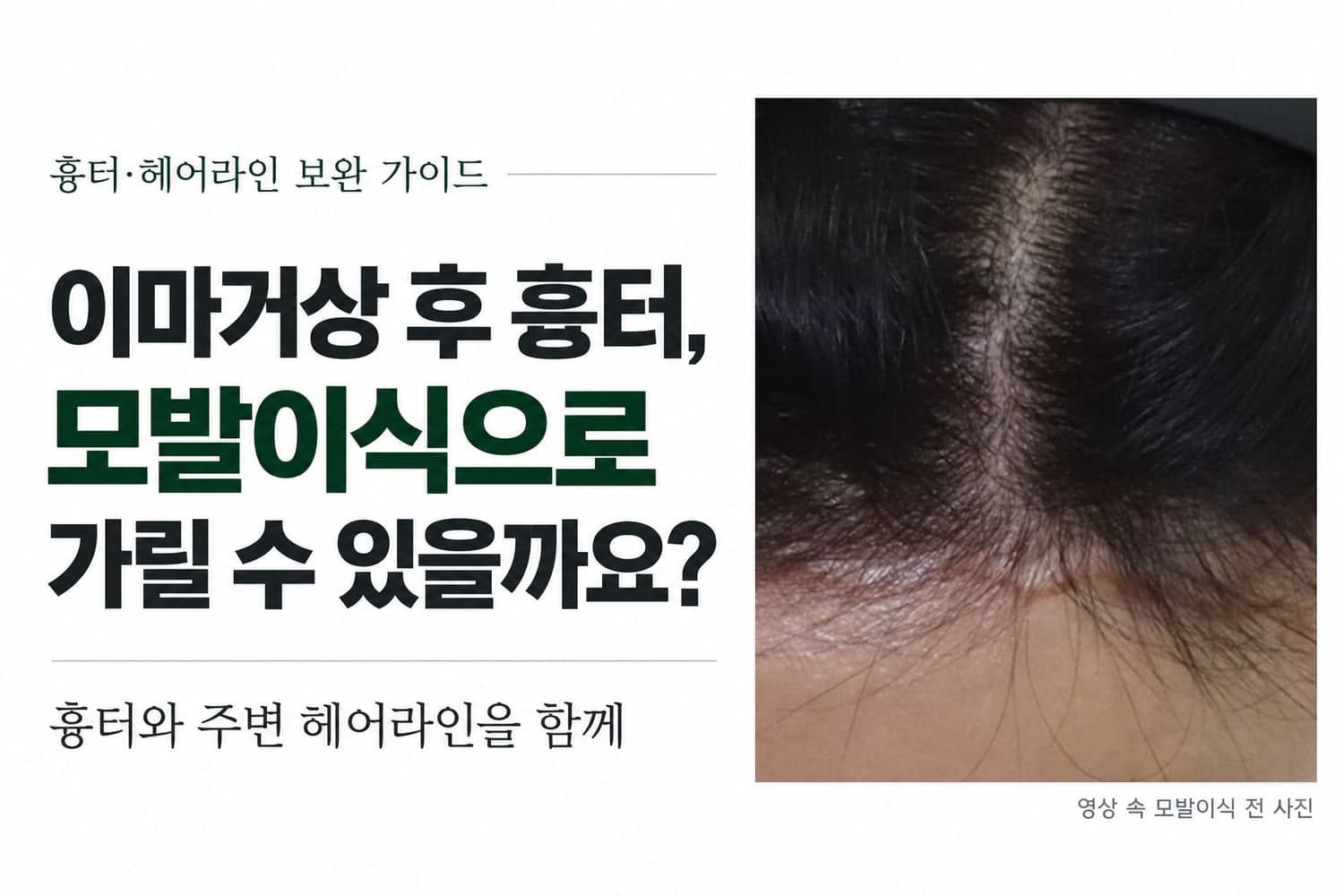
Scar Hair Transplant · Video Case by Director Yoo Hwa-jung
Why Scars and the Hairline Should Be Assessed Together After a Forehead Lift
If a scar remaining after a forehead lift or forehead reduction bothers you, you may consider a hair transplant as a way to make the scar less noticeable. However, whether it is suitable, and to what extent, should be decided after examining the condition of the scar, your previous surgical history, and the distribution of the surrounding hair.
In this article, we look at how the scar area and the surrounding hairline were planned together, using a video case from Director Yoo Hwa-jung of Modi Hair Plant.
Summary in 3 Points
- A scar hair transplant is a method of reducing the visibility of a scar with hair; it is not a surgery that removes scar tissue.
- The plan is made after reviewing previous surgical and procedural history, the condition of the scar tissue, and the surrounding hairline.
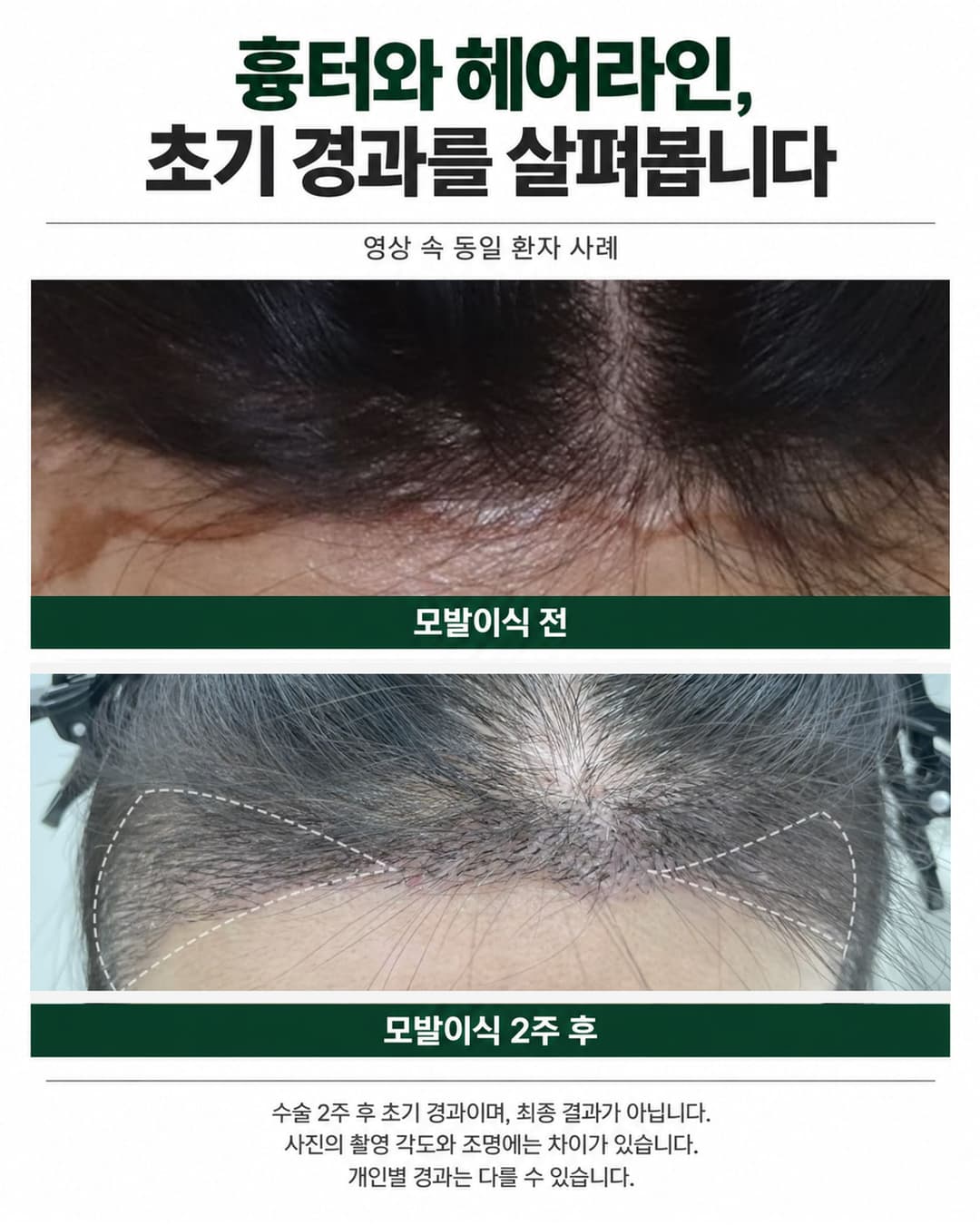
- The photo taken 2 weeks after surgery in the video shows the early progress. Final graft survival and hair growth results must be confirmed through later follow-up.
How Does a Scar Hair Transplant Work?
Hair follicles are transplanted into or around the scar area and arranged so that the hair that grows covers the scar. Concealment is planned by considering how much of the scar is visible and the direction of the existing hair.
However, a hair transplant alone does not resolve every aspect of a scar, such as its color or whether it is raised or depressed. Depending on which aspect of the scar is bothersome, other treatments may be considered first or in combination.
Video Case: The Concern Was Not Only the Scar but Also the Left and Right Hairline
The patient in the video had a history of a silicone implant placed on one side due to congenital head asymmetry, followed by forehead fat grafting, fillers, a forehead lift, and forehead reduction. The patient also had a history of hairline tattooing, making this a case in which multiple surgeries and procedures had to be considered together.
The scar was not the patient's only concern. Another concern was that the receding M-shaped areas at the sides became visible when the wind blew or when the hair was tied back. Therefore, the plan was made to address both the empty areas around the scar and the visual balance of the left and right hairline.
Points to Note When Viewing This Case
Because the patient had multiple surgical histories in addition to the forehead lift, the cause of the current appearance cannot be attributed to any single surgery. In the video, this hair transplant method is labeled as 'strip shaving.'
Why Does the Scar Area Require Separate Assessment?
Post-surgical scar tissue may differ from normal scalp in blood circulation, thickness, and firmness. Even for empty areas of the same size, the transplant plan and the results that can be expected may vary depending on the tissue condition. [Reference 1]
Previous Surgical and Procedural History
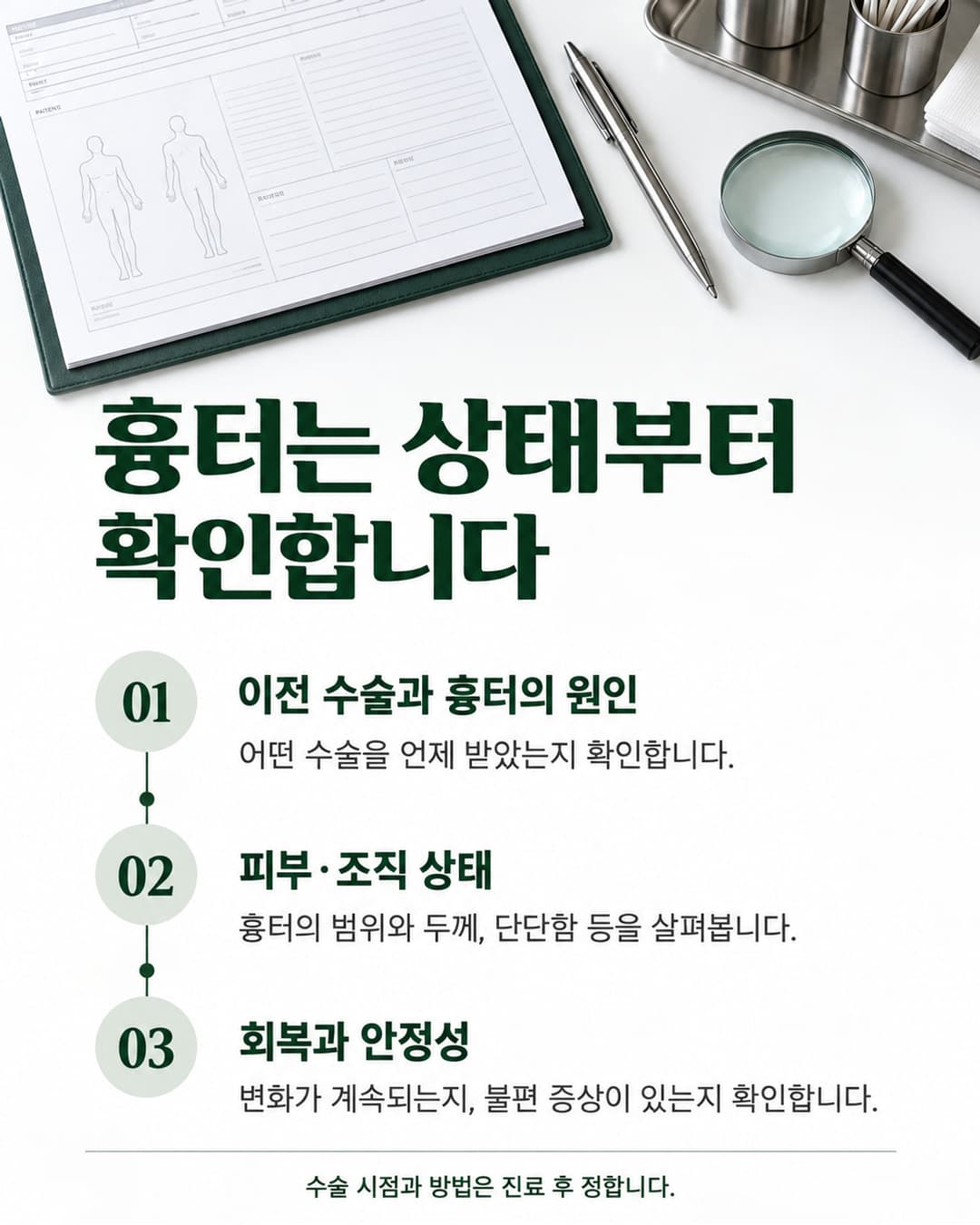
We check which surgeries you had and when, and where any implants, fillers, or fat grafts were placed. Please also let us know about any history of hairline tattooing.
Current Condition and Changes
We examine the extent of the scar, the skin condition, and the surrounding hair. Whether the scar is still changing recently and whether there are any bothersome symptoms are also checked during consultation.
What Possibilities Have Been Reported in Research?
A study published in 2019 retrospectively reviewed the medical records of 15 patients with post-surgical scalp scars and evaluated their progress 12 months after hair transplantation. The study included 2 patients with forehead lift-related scars and 1 patient with a forehead reduction scar, and reported improvement in scar appearance ratings. [Reference 1]
However, as it was a small study without a comparison group, it cannot be taken as evidence that the same effect or graft survival can be expected for all scars. It is not a Modi Hair Plant study and is separate from the 2-week photo in this video.
Rather Than Lowering the Forehead Significantly, Each Area Was Planned Separately
In the video, Director Yoo Hwa-jung explains that there was no need to lower the central forehead significantly. Reflecting the patient's wishes, the center was adjusted slightly, while the receding side areas and the empty areas around the scar were designed separately.
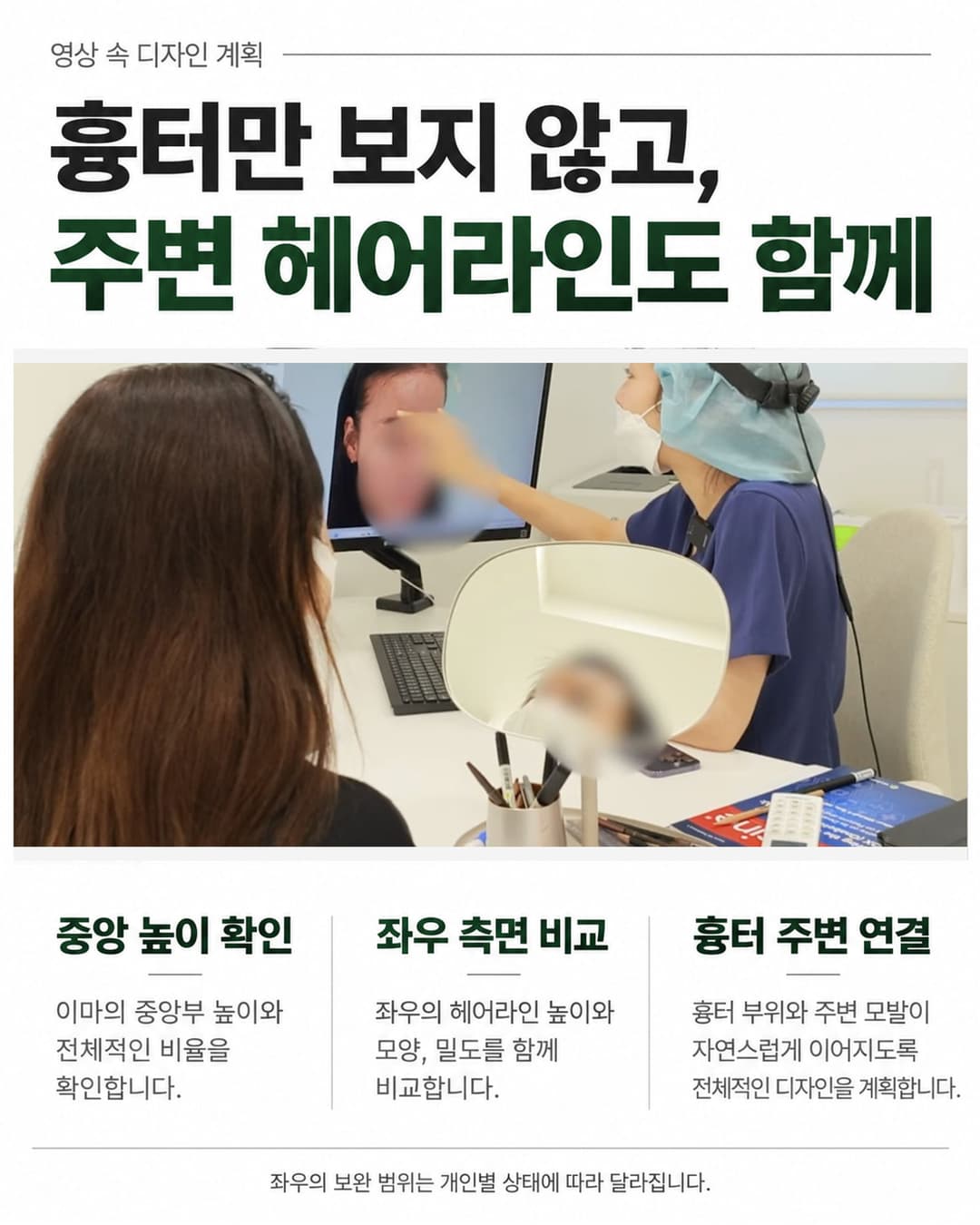
- Central height: Rather than simply lowering it as much as possible, the extent of adjustment was determined based on the face and the existing hairline.
- Left and right sides: Rather than placing the same amount on both sides, the transplant amount and placement were planned differently according to how empty each side appeared.
- Around the scar: Both the goal of concealing the scar and the connection with the surrounding hair were considered.
This is a case in which the visible balance of the hairline was addressed. It does not mean surgery that changes the skull structure or the shape of the existing implant itself.
The video also shows the process of selecting dark donor hairs as much as possible at the request of the patient, who had a lot of gray hair. This was the patient's choice and does not mean the transplanted hair will not turn gray in the future.
What Can Be Seen in the Photo Taken 2 Weeks After Surgery?
In this photo, you can see the transplanted locations, the early hairline shape, and the appearance of the skin at that time. The patient also shares personal satisfaction with having the areas that looked different on the left and right addressed together.
Early appearance and the final result should be distinguished. How the transplanted hair grows afterward, how much the scar is concealed, and whether it blends naturally with the surrounding hair must be confirmed over time. The final graft survival rate or long-term maintenance cannot be determined from this photo alone.
What Should I Prepare Before a Scar Hair Transplant Consultation?
If a scar from a previous surgery is visible, the surrounding hair appears sparse, or your hairline bothers you when you tie your hair back, you can check your current condition and the possible scope of improvement during consultation. If you have the following materials, please bring them.

- Previous surgery names and dates: Surgical records for forehead lift, forehead reduction, etc., and before-and-after photos
- Procedure and implant information: Location and timing of silicone implants, fat grafting, fillers, and hairline tattooing
- Changes in the scar: Recent changes in color or shape, and bothersome symptoms such as pain
- Desired scope of improvement: Your priorities among scar concealment, central height, M-shaped areas, and left-right balance
You do not need to have all of these materials to receive a consultation. Please share the history you remember first, along with any medications you are taking and details of previous treatments.
Frequently Asked Questions
Can I have a hair transplant right away once 6 months have passed since my forehead lift?
The decision is not based on elapsed time alone. The referenced study included patients for whom at least 6 months had passed since their previous surgery, but this was a condition of that study. The actual timing of surgery is determined after examining the details of the previous surgery, the stability of the scar, and the tissue condition. Please consider the timing of consultation and the timing of surgery separately.
Can a scar hair transplant be considered if I have implants or fillers?
The patient in the video case also had a history of implants and fillers, but that alone does not mean others can undergo surgery in the same way. Because the type, location, timing, and current condition must be checked, please inform the medical team of relevant records in advance.
If only the scarred side is filled in, will the left and right hairline become even?
The area needed to conceal the scar and the area needed for left-right balance may differ. In the video case as well, the center and both sides were planned separately. Whether to address only the scar area or also the surrounding area is decided by looking at the existing hair and the overall hairline together.
Can scar concealment and forehead lowering be planned at the same time?
Both goals can be discussed together, but the desired height and the scope that can actually be addressed may not be the same. As in the video, a plan that slightly adjusts the center while addressing the sides and the area around the scar is also possible. Priorities should be set after checking the skin condition, donor area hair, and the required transplant area.
Consult About Your Scar and Surrounding Hairline Together
At Modi Hair Plant, we review your previous surgical history, current scar condition, and desired hairline together to discuss the direction of improvement. Please let us know which concerns you most: scar concealment, forehead height, or left-right balance.
Phone inquiries: 02-544-8659
See the Consultation Process in Director Yoo Hwa-jung's Video
The video includes the process of reviewing previous surgical history, the design that separates the center and sides, and an interview 2 weeks after surgery. Watching it alongside the photos in this article can help you understand why each area was planned differently.
The video presents the early progress of one patient with a complex surgical history. Whether the same plan can be applied to your own scar must be confirmed through an individual examination.
References and Sources
[Reference 1] Yoo H, Moh J, Park JU. Treatment of Postsurgical Scalp Scar Deformity Using Follicular Unit Hair Transplantation. BioMed Research International. 2019;2019:3423657. DOI: 10.1155/2019/3423657. PMID: 31214613. View full text.
[Video] Modi Hair Plant. Hair Transplant After Forehead Lift: A Hair Transplant Case Addressing Head Asymmetry and Hairline Concerns. Published November 23, 2023. Watch on YouTube.
[Clinic Information] Modi Hair Plant Clinic. Scar Hair Transplant Information. This is the clinic's treatment information material and is distinct from academic research.
This article presents general medical information and an individual case and does not replace diagnosis or prescription. Suitability, graft survival and growth, concealment, and recovery may vary depending on scar condition and previous surgical history. Surgery carries risks such as infection, bleeding, scarring, and insufficient graft survival, and whether to proceed with treatment and the method are determined after examination by the medical team.