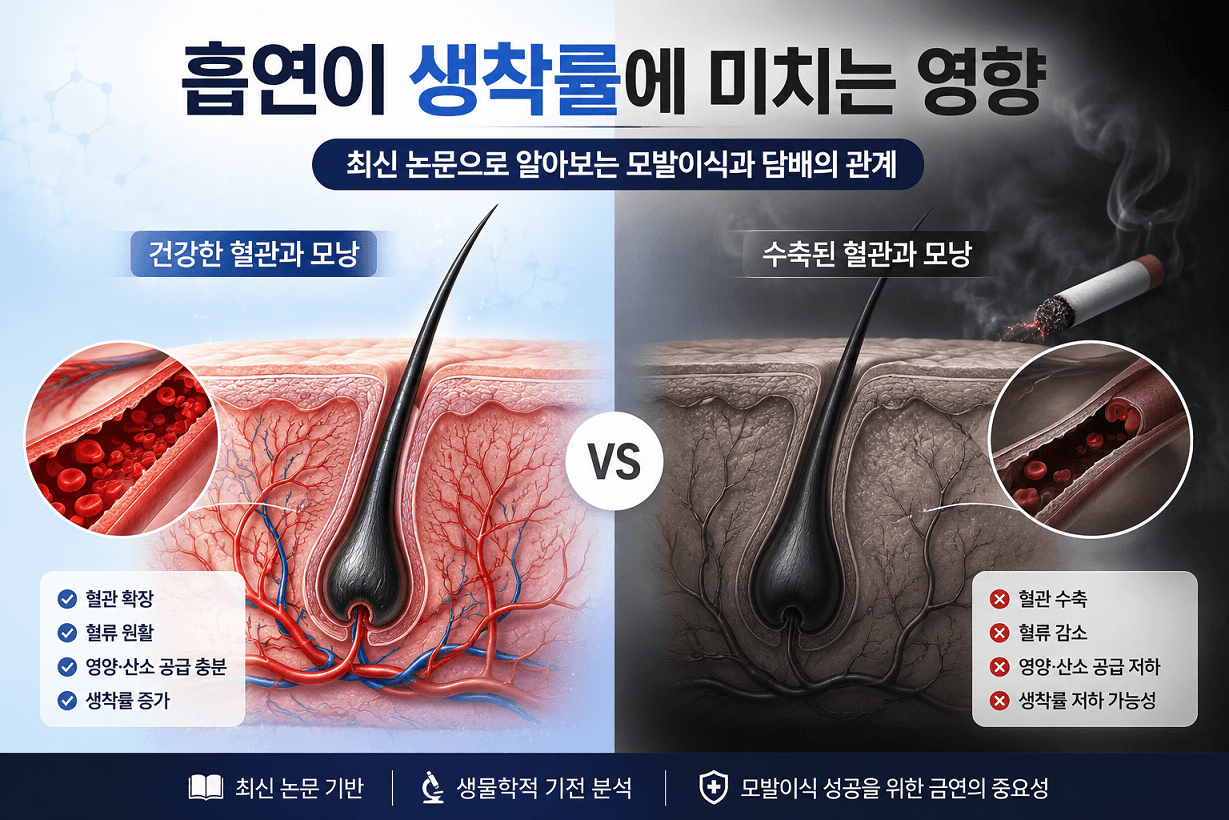
To start with the conclusion: it cannot be stated definitively that smoking necessarily lowers the graft survival rate of a hair transplant.
However, because of several biological mechanisms such as vasoconstriction, reduced oxygen supply, and delayed wound healing, most hair transplant specialists recommend quitting smoking before and after surgery.
“Doctor, wouldn't one or two cigarettes after surgery be okay?”
This is one of the questions we are asked most often in consultations at Modi Hair Plant.
That is why, when I begin a consultation, I always ask:
“Do you smoke?”
“How much do you smoke per day?”
Many people assume this is simply about lung health, but in fact it is because smoking is also related to the environment in which hair follicles recover.
In this article, based on recent research papers, we will look at how smoking may affect hair follicles and the recovery process after a hair transplant.
Key Summary
✔ Smoking can constrict capillaries and reduce blood flow.
✔ Oxidative stress and chronic inflammation can create an unfavorable environment for hair follicles.
✔ It has been reported that smoking may accelerate DNA damage and cellular aging.
✔ Quitting smoking is recommended during the early recovery period after a hair transplant, when blood vessels are connecting.
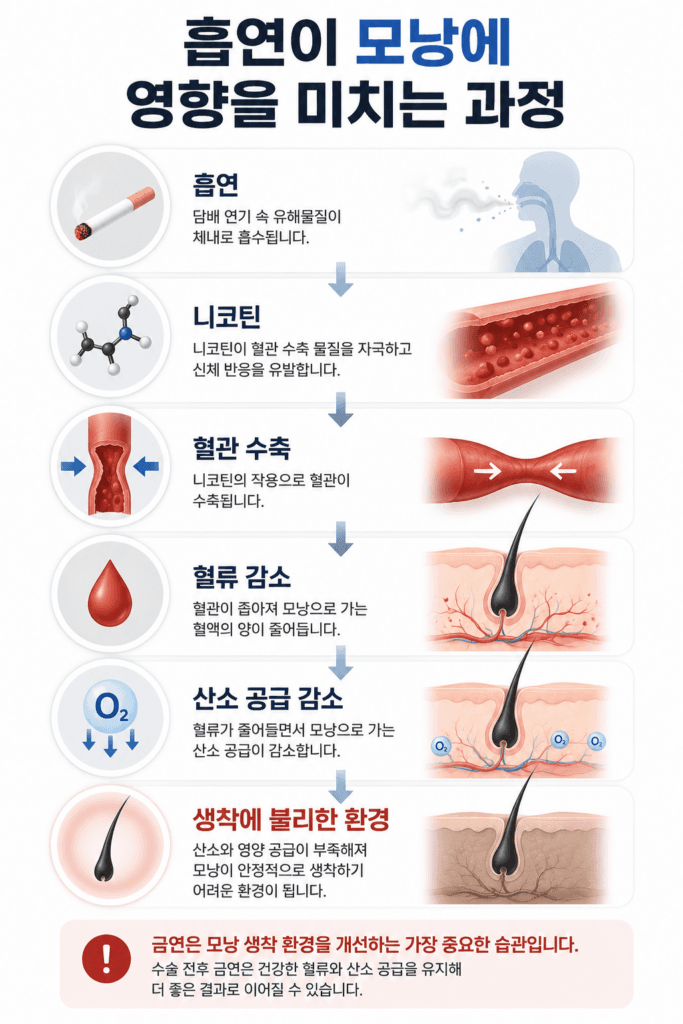
The effects of smoking do not end with simply ‘constricting blood vessels.’
The systematic review 『The Effects of Smoking on Hair Health』, published in 2021, analyzed 32 studies.
The review suggested that smoking may affect hair health through various pathways, including reduced blood flow, increased oxidative stress, DNA damage, chronic inflammation, and impaired hair follicle cell function.
📚 Key Points of the Paper
The Effects of Smoking on Hair Health
(2021 Systematic Review)
✔ Analysis of 32 studies
✔ Recent literature review on smoking and hair health
✔ Reduced blood flow
✔ Increased oxidative stress
✔ DNA damage
✔ Chronic inflammation
Which is worse for hair health: smoking or drinking?
Both smoking and drinking can affect hair health depending on lifestyle and amount consumed, but taking together the biological mechanisms known to date, smoking is more likely to have a directly unfavorable effect on hair follicles and on the recovery environment after a hair transplant.
This is because smoking can affect hair follicles not only through nicotine-induced vasoconstriction but also through multiple pathways such as reduced oxygen supply, increased oxidative stress, DNA damage, and chronic inflammation.
By contrast, unless drinking is heavy or chronic, the evidence for its direct effect on hair transplant graft survival is relatively limited. However, because alcohol can affect blood pressure, bleeding, swelling, sleep, and medication, it is best to avoid it before and after surgery as instructed by the clinic.
In other words, if comparing the two, smoking should be managed as a higher priority in terms of follicular blood flow and the graft survival environment.
① When blood vessels constrict, blood flow to hair follicles also decreases.
Hair follicles receive oxygen and nutrients through very small capillaries.
Nicotine acts to constrict the microvessels of the skin, which can reduce blood flow.
This is even more important in hair transplantation.
This is because newly transplanted hair follicles need new blood vessels to connect to them in order to survive stably.
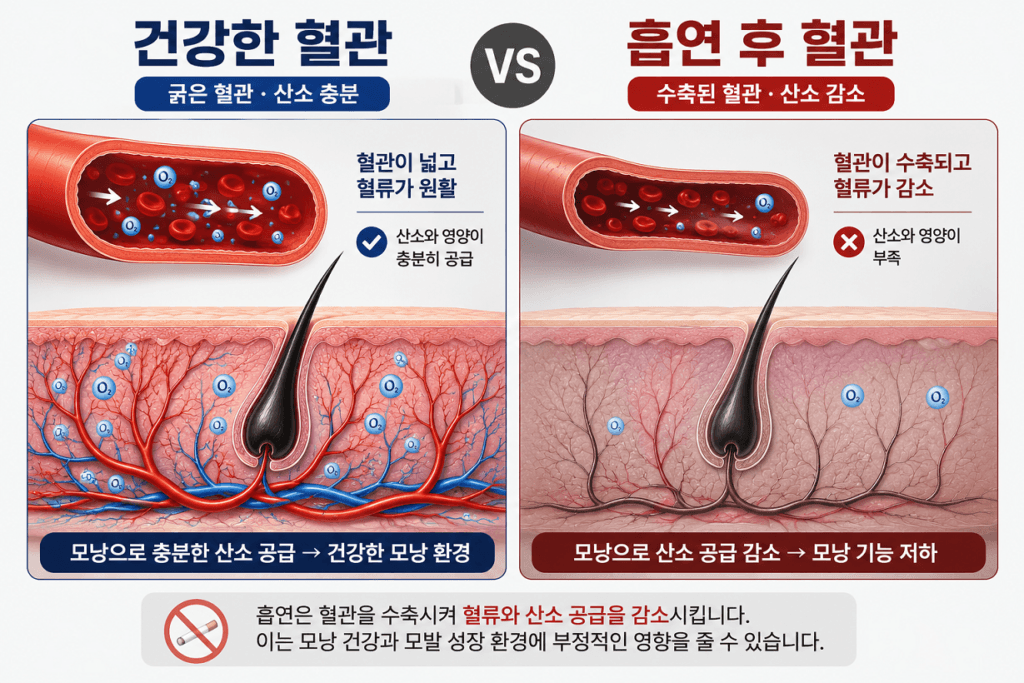
② After a hair transplant, ‘the process of blood vessel growth’ is the most important.
Many patients ask,
“Why does the clinic insist that I quit smoking for about 2 weeks?”
The reason is that for transplanted hair follicles to survive in their new location, new blood vessels (angiogenesis) must form.
Immediately after a hair transplant, the process of new blood vessels connecting with the transplanted hairs is the most important.
Therefore, taking this period into account, Modi Hair Plant recommends that patients refrain from smoking for at least 2 weeks after surgery without exception.
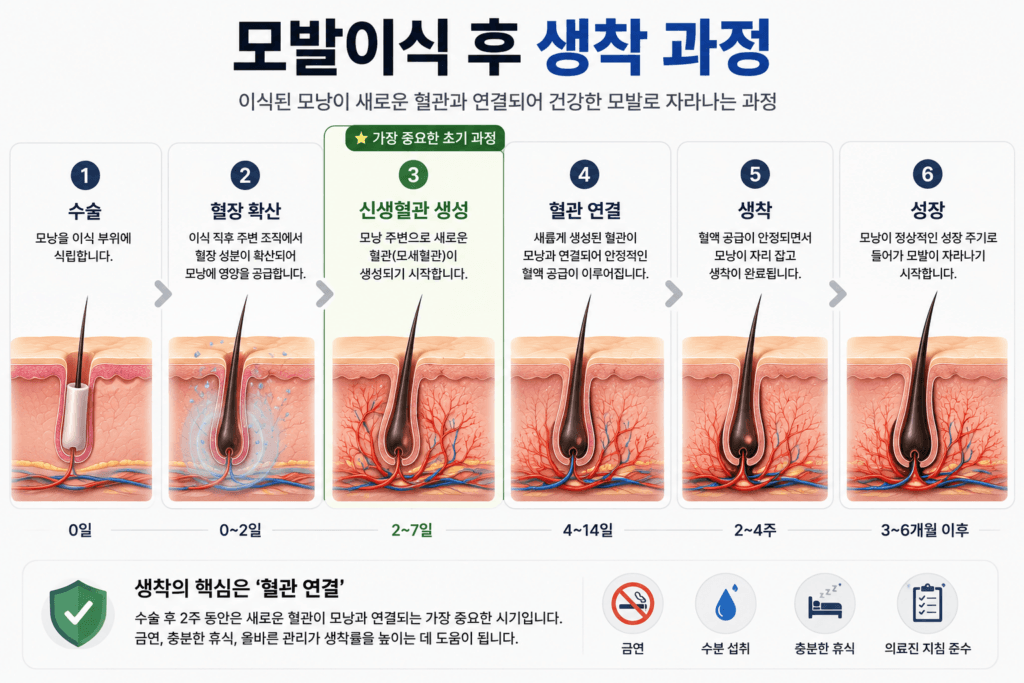
③ Cigarettes can also affect DNA.
In addition to nicotine, cigarette smoke contains thousands of chemical substances.
Some of these can form DNA adducts that may cause cellular damage, and it has been suggested that they may also affect the normal function of hair follicle cells.
💡 Put simply
Smoking does not directly burn the hair follicles;
it is easier to understand it as worsening the environment in which the follicles must recover on their own.
Smoking

↓

DNA damage

↓

Cellular aging

↓

Reduced hair follicle function
④ Oxidative stress wears out hair follicles more quickly.
Smoking is known to increase reactive oxygen species (ROS) in the body and disrupt the balance of the antioxidant system.
Hair follicles are tissues sensitive to oxidative stress.
When reactive oxygen species increase, cells around the hair follicles may be damaged, and the normal growth cycle may be disrupted.
Smoking

↓

Increased ROS

↓

Reduced antioxidant capacity

↓

Increased hair follicle stress
⑤ Chronic inflammation can change the environment around hair follicles.
It has been reported that smoking may increase the expression of inflammatory cytokines and cause persistent micro-inflammation around hair follicles (perifollicular inflammation).
A hypothesis has also been proposed that if these changes persist over a long period, the tissue around the hair follicles may become fibrotic, which could affect the progression of hair loss.
Smoking

↓

Chronic inflammation

↓

Perifollicular inflammation

↓

Possible progression of hair loss
⑥ Nicotine can also affect cellular signaling.
Nicotine acts on nicotinic acetylcholine receptors (nAChR).
It has been reported that excessive stimulation may interfere with normal cellular signaling and may be involved in functional changes in keratinocytes and hair follicle cells.
Nicotine

↓

nAChR

↓

Changes in cellular signaling

↓

Possible impaired tissue recovery
Then, will grafts necessarily fail in smokers?
No, not necessarily.
Based on research to date, there are still not enough large-scale clinical trials to conclude exactly by what percentage smoking lowers the graft survival rate of a hair transplant.
However, several mechanisms, such as reduced blood flow, decreased oxygen supply, delayed wound healing, and increased oxidative stress, have been reported relatively consistently.
In other words,
Although smoking does not necessarily cause grafts to fail, many experts agree that it does not create an environment favorable to graft survival.
Why does Modi Hair Plant emphasize quitting smoking?
A hair transplant is not simply a procedure that moves hair follicles.
The process by which transplanted hair follicles connect with new blood vessels, receive sufficient oxygen and nutrients, and settle in stably is important.
That is why we explain quitting smoking before and after surgery not as a mere lifestyle rule, but as part of the treatment that manages the graft survival environment.
Summary of Key Findings
| Mechanism reported in the paper | Possible effect on hair follicles |
|---|---|
| Vasoconstriction | Reduced blood flow |
| Reduced tissue oxygen supply | Poorer recovery environment |
| DNA damage | Possible reduced cellular function |
| Increased oxidative stress | Possible hair follicle damage |
| Chronic inflammation | Possible deterioration of the perifollicular environment |
| Changes in nAChR signaling | Possible effect on the cellular recovery process |
FAQ
Q. Are e-cigarettes okay?
If they contain nicotine, they can affect vasoconstriction, so the same caution as with regular cigarettes is needed.
Q. When should I stop smoking before surgery?
The recommended period may vary by clinic, but generally, quitting smoking for a certain period before and after surgery is recommended. It is best to follow the guidance of your medical team for the exact period.
Q. Will a hair transplant necessarily fail if I smoke?
No. However, smoking can create several biological conditions that are unfavorable to graft survival and recovery, so quitting is recommended.
Q. Should I avoid nicotine patches as well?
Nicotine patches do not expose you to the tar and carbon monoxide contained in cigarette smoke, but nicotine itself can affect vasoconstriction. Therefore, before and after a hair transplant, especially during the early graft survival period, it is best to consult your medical team rather than using them on your own.
Conclusion
Smoking does not necessarily cause a hair transplant to fail.
However, taken together, the papers published to date have consistently reported that smoking may create an environment unfavorable to hair follicle recovery through several mechanisms, including reduced blood flow, decreased oxygen supply, increased oxidative stress, and chronic inflammation.
In particular, the first 2 weeks after a hair transplant are the most important period, when new blood vessels connect.
If you hope for a good result, refraining from smoking at least during this period may help graft survival.
A hair transplant is a treatment in which the recovery process, more than the day of surgery, shapes the result.
📌 This article is in-depth content based on the video above, with recent papers and research findings added.
References
- Babadjouni A, Pouldar Foulad D, Hedayati B, Evron E, Mesinkovska N. The Effects of Smoking on Hair Health: A Systematic Review. Skin Appendage Disord. 2021;7(4):251–264. PubMed
Recommended Reading
If you have questions about quitting smoking or the recovery process after a hair transplant, it is best to consult thoroughly with our medical team and establish a care plan suited to you.
- 📞 Phone consultation: 02-544-8659
- 🌐 Website
- 💬 KakaoTalk consultation
This content has been medically reviewed by the medical team of Modi Hair Plant Clinic.