MODI HAIR MEDICAL GUIDE
8 Things to Know Before a Hair Transplant
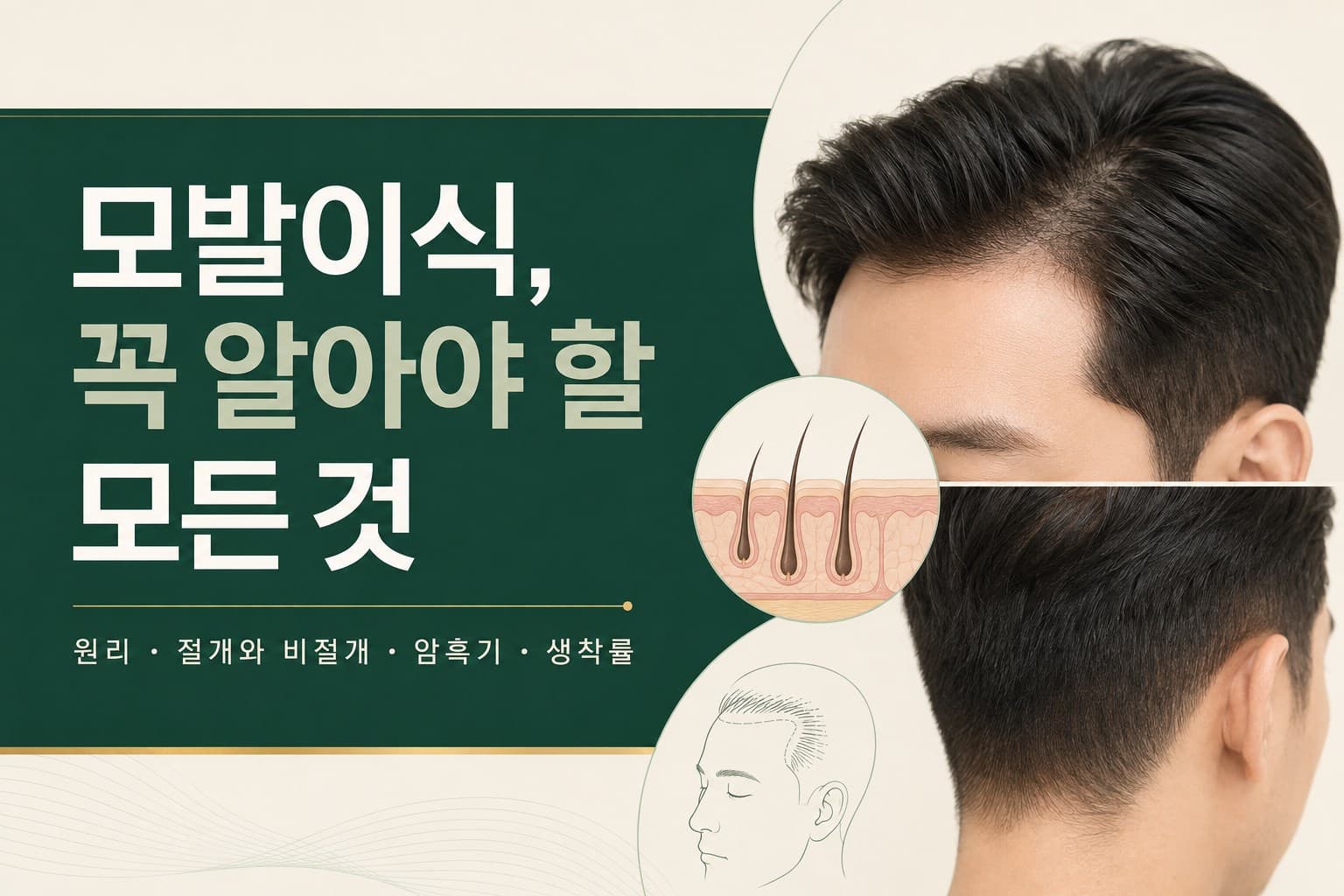
Have you wondered why transplanted hair tends to last relatively long, how incision and non-incision methods differ, or whether the shedding phase—when transplanted hairs fall out after surgery—is normal? This guide explains step by step everything from the principles of hair transplant to candidate criteria, surgical methods, the recovery process, and factors that affect graft survival.
Key Points
- A hair transplant is a procedure that moves hair follicles from the back and sides of the head, which are relatively less affected by hair loss, to the areas where they are needed.
- Incision vs. non-incision refers to differences in the harvesting method, while implanter vs. slit refers to differences in the implantation method; no single method is superior for everyone.
- Transplanted hairs may temporarily shed after surgery, and the overall result is assessed over several months.
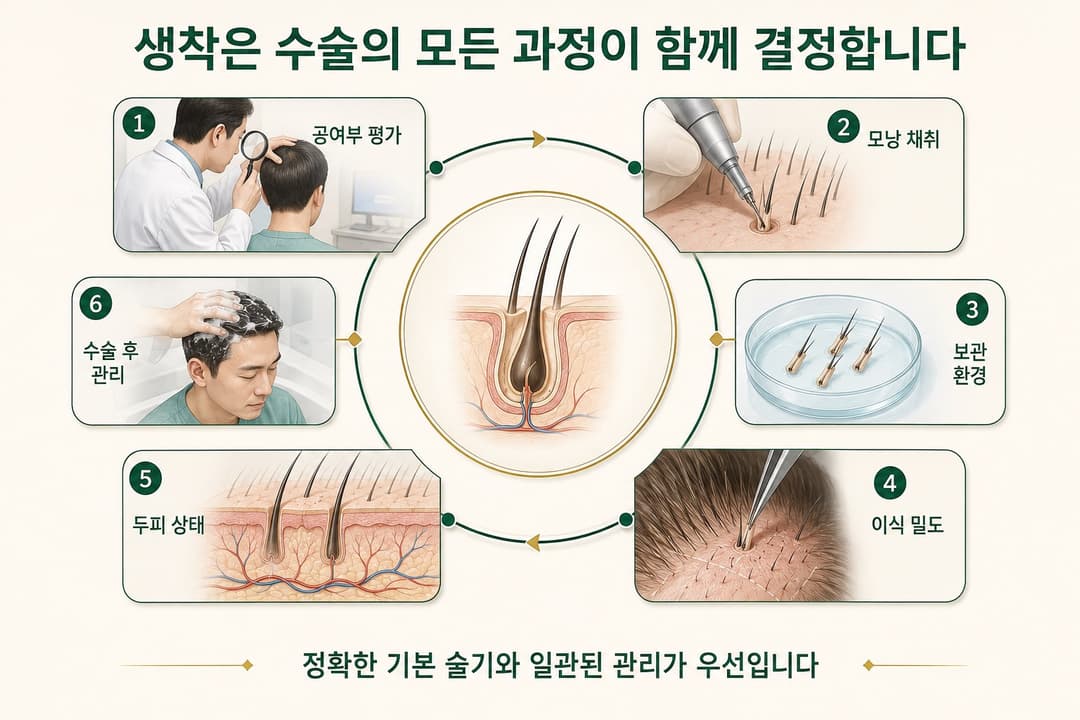
- Results depend not only on the number of hairs transplanted but also on long-term design, allocation of the donor area, follicle harvesting, storage and implantation, and post-operative care.
Watch the Video First
Dr. Hwajeong Yoo, Chief Director of Modi Hair Plant Clinic, explains everything from the basic principles of hair transplant to incision vs. non-incision, implanter vs. slit, the shedding phase, and graft survival care.
1. What Is the Principle Behind a Hair Transplant?
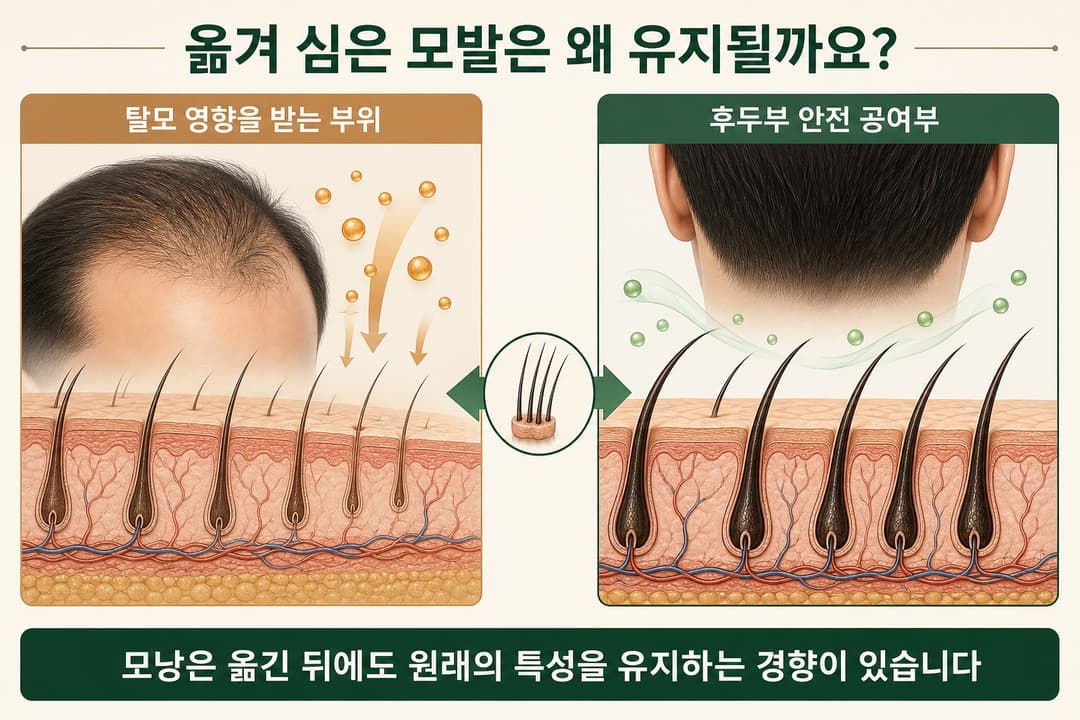
A hair transplant is a procedure in which hair follicles are harvested from areas relatively less affected by male pattern hair loss, such as the back or sides of the head, and transplanted to areas that need hair, such as the hairline, M-shaped recession, or crown.
In male pattern hair loss, hair follicles that are genetically sensitive to androgens can gradually become thinner under the influence of DHT. In contrast, follicles in the safe donor area are relatively less affected by this, and tend to retain much of their original characteristics even after being moved to another location. This is explained by the concept of donor dominance, which forms the basis of hair transplantation.1
Why Are Hairs Moved in Follicular Units Rather Than One Strand at a Time?
Scalp hair does not always grow as individual strands; one or more hairs may grow together from a single follicular unit. Modern hair transplantation aims to harvest and implant these natural follicular units with as little damage as possible. A natural appearance requires consideration of thickness, direction, and angle—for example, placing fine single hairs along the hairline and using follicles containing multiple hairs further inward.2
Separate from the transplanted follicles, hair loss may continue to progress in existing hair that was not transplanted. Therefore, depending on the diagnosis, care for existing hair, such as medication, may also be necessary.
2. Am I a Candidate for a Hair Transplant?
An area appearing thin does not by itself make someone a surgical candidate. If there are enough follicles that have thinned but are still alive, non-surgical treatments such as medication may be considered first. On the other hand, a hair transplant may be considered for areas where follicles are congenitally lacking or where hair loss has progressed for a long time and few recoverable follicles remain.
What to Check in the Recipient Area
- Whether follicles currently remain
- Type and rate of progression of hair loss
- Area to be transplanted and required density
- Presence of scalp disease or scarring
What to Check in the Donor Area
- Extent of the safe donor area
- Follicle density and hair thickness
- Harvesting marks from previous surgery
- Reserve of follicles for future use
Why Is Donor Hair a Limited Resource?
A hair transplant does not create new follicles; it relocates existing ones. Since the same follicles do not regenerate at the harvest site, donor hair must be allocated with consideration not only for the current surgery but also for future hair loss progression and the possibility of additional surgery.
The non-incision method may be advantageous in some situations for planning repeat procedures, but this does not mean the number of surgeries is unlimited. With both incision and non-incision methods, the total amount of donor hair that can be safely harvested is limited.2, 3
3. Why Design Should Consider the Future, Not Just the Present
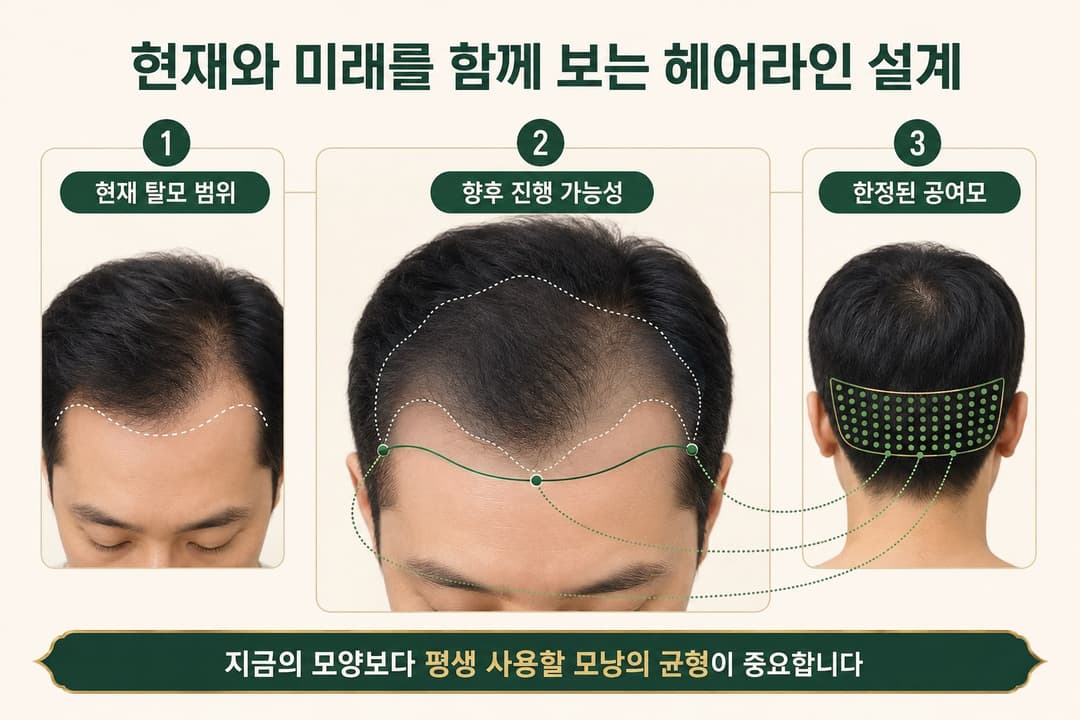
At a young age, you may want a low, straight hairline, but the appearance of the face and hair changes over time. If hair loss in existing hair progresses backward while only the front hairline remains excessively low, it may look unnatural or leave insufficient donor hair for additional surgery.
Therefore, not only hairline height, the connection with the temples, and hair direction and angle, but also age, family history, current stage of hair loss, and expected extent of progression must be considered together. Good design goes beyond filling the immediate empty space; it is closer to a plan for using limited donor hair in a balanced way over the long term.
4. What Is the Difference Between Incision and Non-Incision Hair Transplants?
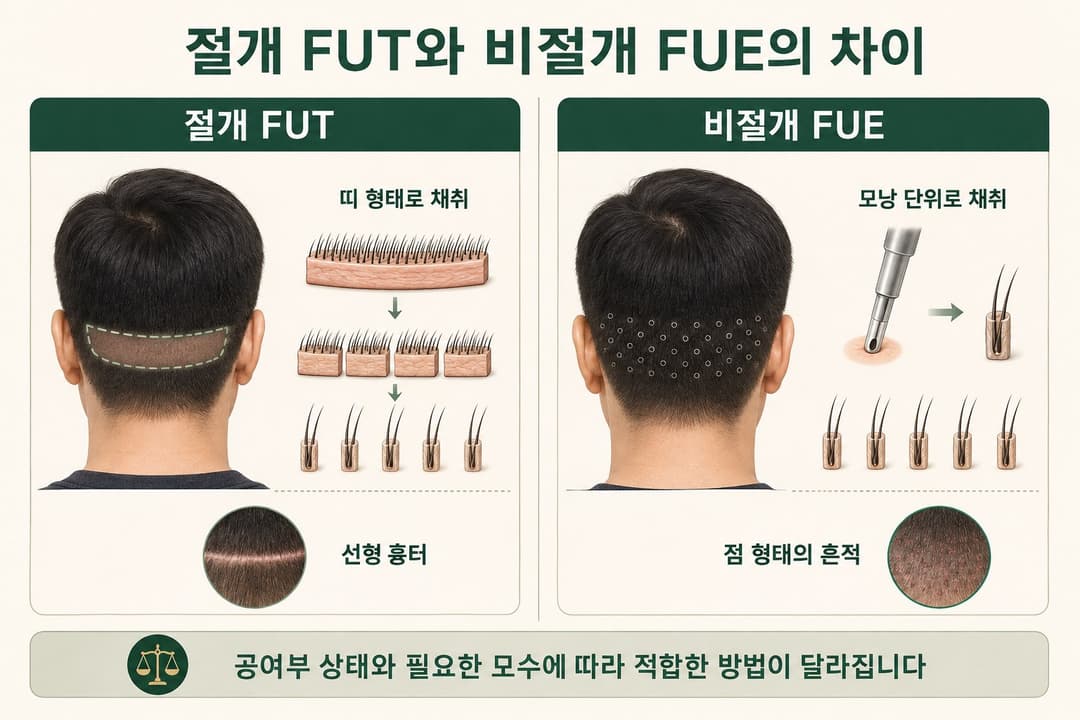
A hair transplant is broadly divided into the harvesting stage, in which follicles are obtained from the back of the head, and the implantation stage, in which they are moved to the required locations. Incision and non-incision refer to the method of harvesting follicles.
| Comparison | Incision Method (FUT) | Non-Incision Method (FUE) |
|---|---|---|
| Harvesting method | A strip of scalp is harvested from the back of the head and then divided into follicular units | Follicular units are harvested one by one with a small punch |
| Scar type | A linear scar may remain at the suture site | Small dot-like marks may remain, dispersed |
| Surgery time | Depending on conditions, a large number of follicles can be obtained relatively efficiently | Time may be longer depending on the number of hairs needed and harvesting difficulty |
| Considerations | Scalp elasticity, linear scar, and suture-site healing | Extent of shaving, harvest distribution, risk of follicle transection and over-harvesting of the donor area |
Non-incision means "no incision line," not that there is no scarring or pain at all. Conversely, the incision method can also be a reasonable choice depending on the patient's donor area condition and the number of hairs needed. Rather than concluding that one method is superior for all patients, the decision should be made by considering the donor area condition, desired hairstyle, number of hairs needed, and previous surgical history together.2, 3
5. How Do the Implanter and Slit Methods Differ?
After follicles are harvested, they are implanted according to the planned location and direction. In the implanter method, follicles are loaded into a dedicated device and inserted; in the slit method, small channels are first made in the scalp and follicles are then placed using forceps or similar instruments.
Implanter Method
Follicles are inserted into the scalp with a loaded device. Skill in handling follicles while consistently controlling depth, direction, and angle is important.
Slit Method
Small channels for the follicles are made first, followed by implantation. Planning the size, spacing, direction, and depth of the channels is important.
Evidence directly comparing the two methods is still limited; in a recent comparative study, there were differences in some measures such as implantation speed and density, but no significant difference in final survival rate was observed. Therefore, rather than judging results by the name of the tool alone, it is appropriate to look at how consistently and carefully the medical staff and team perform their chosen method.4, 5
6. Why Does Transplanted Hair Fall Out During the Shedding Phase?
The period after surgery when the shafts of transplanted hairs temporarily fall out is commonly called the shedding phase. Losing visible hair does not immediately mean the follicle beneath the skin has been lost. After the transplanted hair goes through a resting phase, new hair can grow from the follicle.
The timeline above is a general range provided for understanding. Figures mentioned in the video, such as 60% at 6 months, 90% at 9 months, and 100% at 12 months, are not guaranteed values that apply equally to all patients. They vary depending on hair growth rate, implantation site, individual health, and surgical extent, and in some cases thickness and shape may continue to change after one year. Clinical guidelines state that generally 9 months or more is needed to evaluate sufficient growth.2, 6

7. What Factors Affect Graft Survival?
In a hair transplant, as important as the number of hairs transplanted is the process of handling harvested follicles without damage and implanting them in appropriate locations. From the moment of harvesting, follicles are temporarily cut off from blood supply, so physical damage, drying, time outside the body, storage temperature, and solution must be carefully managed. In an actual clinical trial, differences in post-implantation shedding patterns and timing of early growth were observed depending on the storage solution, although there was also the finding that final survival rates did not differ between the two groups.7
Surgical Process Factors
- Follicle damage during harvesting
- Drying and time outside the body
- Storage solution and temperature
- Implantation depth, direction, and density
Patient and Scalp Factors
- Condition of donor and recipient areas
- Smoking and underlying conditions
- Inflammation or scalp disease
- Adherence to post-operative care
Is Denser Implantation Always Better?
Appropriate density is needed for a natural sense of fullness, but placing more follicles in a small area is not always better. In a small study comparing the density of single-hair follicular units in 4 Korean patients, the 20 and 30/㎠ groups showed higher survival rates than the 40 and 50/㎠ groups. However, since the study had only 4 participants and evaluated only single-hair follicular units, it should not be interpreted as a universal standard such as "30 is safe and 50 fails."8
The actual target density should be determined by considering hair thickness, number of hairs per follicle, scalp blood flow and scarring, transplant area, and the medical staff's surgical skill together.
8. What Role Do Post-Operative Adjunctive Treatments Play?
At Modi Hair Plant Clinic, accurate design, harvesting, follicle storage, and implantation are the foundation, and adjunctive treatments to support the post-operative recovery environment are considered according to the patient's condition and indications. Adjunctive treatments do not replace the surgery itself or guarantee good results.
Hyperbaric Oxygen Therapy
A treatment that supplies oxygen under high pressure to support the oxygen environment of tissues. In a study of 34 patients, post-operative shedding and some discomfort symptoms decreased, but the difference in 9-month survival rate was not statistically significant.9
Treatment Considering the Blood Flow Environment
When necessary, the medical staff may consider treatment addressing the microcirculatory environment after reviewing the patient's health status and medications. Whether to use medication, and which kind, requires individual consultation.
PDRN
PDRN is an ingredient with accumulated research on wound healing, angiogenesis, and inflammation regulation. However, large-scale comparative trials directly demonstrating graft survival in human hair transplants are insufficient, so it should be understood as an adjunctive option for recovery.10
Follicle-Derived Cell Therapy
There are studies evaluating autologous follicle-derived cell therapy for androgenetic alopecia, but methods vary and long-term evidence is limited. Its effects cannot be equally applied as an adjunctive treatment immediately after a hair transplant.11
Diagnosis and long-term planning, safe donor harvesting, follicle storage and accurate implantation, infection prevention, and post-operative monitoring take priority over whether adjunctive treatments are used.
Checklist Before a Hair Transplant Consultation
- What is my current type and stage of hair loss?
- Should medication be considered first or alongside surgery?
- Are the density and harvestable extent of the safe donor area sufficient?
- Are the proposed hairline and transplant amount appropriate in the long term?
- Why is the incision or non-incision method being recommended?
- In what environment are harvested follicles handled and stored?
- What is the expected recovery process, and what are the possible side effects?
- What is the plan if hair loss in existing hair progresses?
Hair Transplant FAQ
Will transplanted hair never fall out for life?
Follicles moved from the safe donor area tend to retain much of their original characteristics. However, hair thickness and density may change with aging, health status, and the environment of the surgical site, so it cannot be claimed that it will "never fall out."
Will a hair transplant also stop existing hair loss?
No. Male or female pattern hair loss may continue to progress in surrounding hair that was not transplanted. Depending on the diagnosis, medication or other treatment for existing hair may be considered together.
Which is better, incision or non-incision?
No single method can be said to be better for everyone. The decision is made by considering the number of hairs needed, donor area density and elasticity, previous surgical history, and preferences regarding scarring and hairstyle.
If transplanted hair falls out after surgery, does that mean it failed?
Not necessarily. A shedding phase may occur in which the shafts of transplanted hairs temporarily fall out after surgery, after which new hair can grow from the follicles beneath the skin.
When can I see the results of a hair transplant?
Generally, new hair begins to be observed after about 3 months, and changes may gradually become more noticeable between 6 and 9 months. Overall evaluation is commonly done around 12 months, but this varies by individual and surgical area.
Does transplanting more improve graft survival and results?
Not necessarily. Donor hair is limited, and excessively dense implantation can place a burden on the tissue in the recipient area. The appropriate transplant amount and density should be determined by considering hair characteristics, scalp condition, the area needed, and long-term planning.
Before Choosing a Technique, Review a Long-Term Plan That Suits You
An appropriate hairline and transplant amount can be planned only by examining your current hair loss, donor area condition, and possible future progression together.
Through a consultation, calmly start by confirming whether surgery is needed at this time.
This article is general health information based on video explanations by Dr. Hwajeong Yoo, Chief Director of Modi Hair Plant Clinic, and medical literature. It does not replace individual diagnosis or treatment, and the surgical method, transplant amount, pain, recovery period, graft survival, and final results may vary depending on the patient's type of hair loss and donor area, scalp, and health condition. Whether to apply adjunctive treatments should also be decided after consultation with the medical staff.
References
- Orentreich N. Autografts in alopecias and other selected dermatological conditions. Ann N Y Acad Sci. 1959;83:463-479. PMID 14429008 · DOI
- Mysore V, et al. Hair Transplant Practice Guidelines. J Cutan Aesthet Surg. 2021;14(3):265-284. PMID 34908769 · DOI
- Dua A, Dua K. Follicular unit extraction hair transplant. J Cutan Aesthet Surg. 2010;3(2):76-81. PubMed · DOI
- Whitworth JM, et al. A comparison of graft implantation techniques for hair transplantation. Semin Cutan Med Surg. 1999;18(2):177-183. PMID 10385286 · DOI
- Zhao Y, et al. Premade Incisions vs. Stick and Place: A Multicenter Retrospective Comparison of Hair Transplantation Outcomes in China. Aesthetic Plast Surg. 2025;49(13):3597-3604. PMID 40316792 · DOI
- Patwardhan N, Mysore V; IADVL Dermatosurgery Task Force. Hair transplantation: standard guidelines of care. Indian J Dermatol Venereol Leprol. 2008;74 Suppl:S46-S53. PMID 18688103
- Zhou Y, et al. Evaluation of a Novel Graft-Holding Solution in Hair Transplantation: A Randomized Controlled Clinical Study. Dermatol Surg. 2023;49(7):675-681. PMID 37036372 · DOI
- Lee W, et al. Survival rate according to grafted density of Korean one-hair follicular units with a hair transplant implanter: experience with four patients. Dermatol Surg. 2006;32(6):815-818. PMID 16792647 · DOI
- Fan Z, et al. The effect of hyperbaric oxygen therapy combined with hair transplantation surgery for the treatment of alopecia. J Cosmet Dermatol. 2021;20(3):917-921. PMID 32770782 · DOI
- Colangelo MT, et al. The effects of polydeoxyribonucleotide on wound healing and tissue regeneration: a systematic review of the literature. Regen Med. 2020;15(6):1801-1821. PMID 32757710 · DOI
- Gasteratos K, Kouzounis K, Goverman J. Autologous Stem Cell-derived Therapies for Androgenetic Alopecia: A Systematic Review of Randomized Control Trials on Efficacy, Safety, and Outcomes. Plast Reconstr Surg Glob Open. 2024;12(2):e5606. PMID 38352219 · DOI