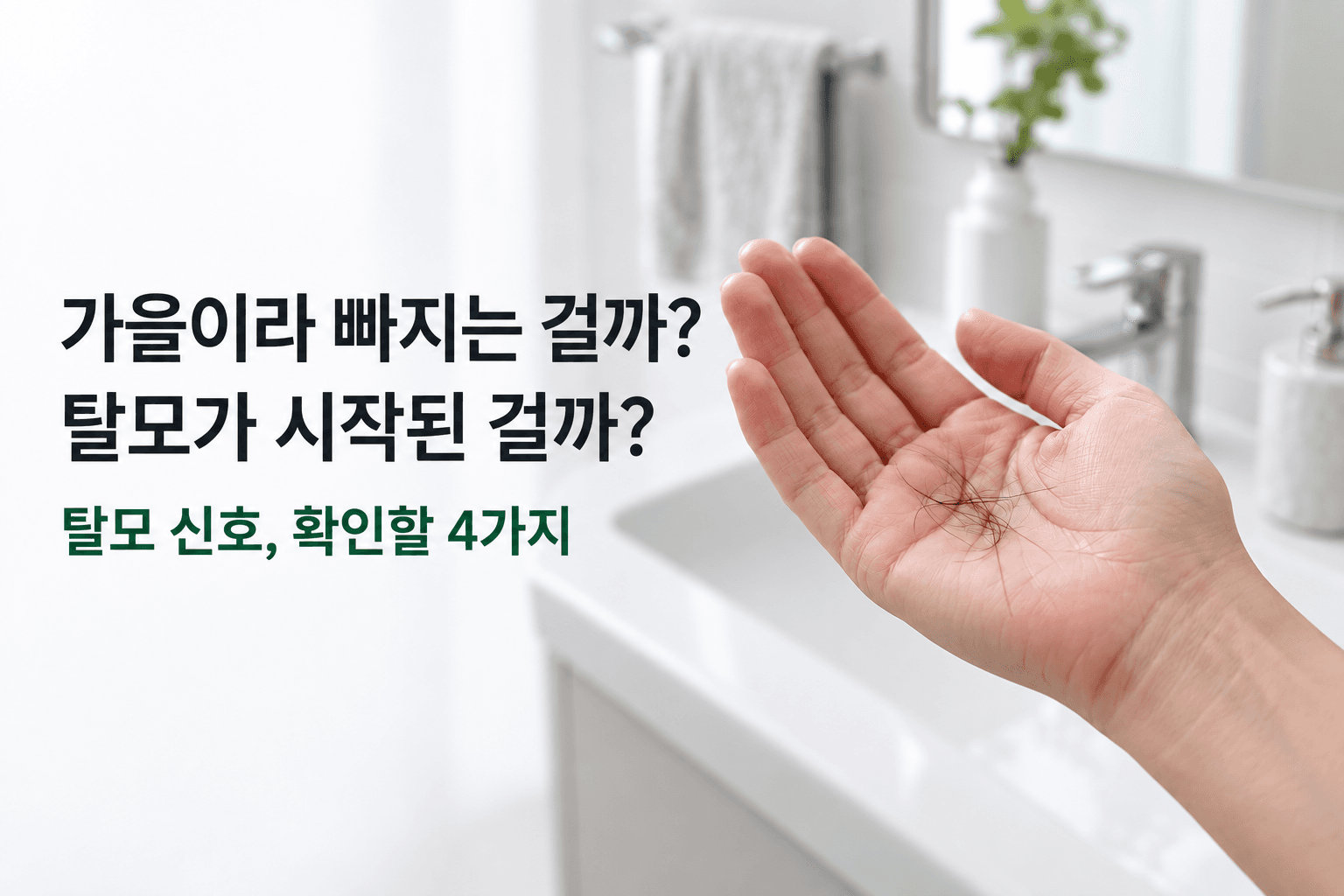
Autumn Hair Loss · Hair Care During Seasonal Transitions
Is It Because of Autumn, or Has Hair Loss Begun?
When shampooing, when drying your hair, when you see strands left in your palm. If you are shedding more than usual, you may wonder whether it is due to the season or whether hair loss has started.
Seasonal changes have been observed in hair growth and shedding, but you cannot conclude that shedding is temporary simply because it began in autumn. It is important to look not only at the amount of shedding but also at its duration, the affected area, hair thickness, and any accompanying symptoms.
Based on Director Yoo Hwa-jung of Modi Hair Plant's explanation of seasonal hair loss, we have summarized the related research and what to check before a consultation.
Key Points
- Studies in humans have observed seasonality in hair growth and shedding, but the same changes do not occur in everyone.
- Check how long, from which area, and what thickness of hair is shedding, along with any scalp symptoms.
- If changes are clear, such as a widening part or a specific area looking thin, it is better to identify the cause rather than attribute it to the season.
1. Does Hair Really Shed More in Autumn?
There is research suggesting that hair condition can vary with the seasons. However, this does not mean that "everyone develops hair loss in autumn."
A Study Observing 14 Men
A 1991 study observed 14 healthy men in the UK for 18 months. In this group, the number of shed hairs was highest around August–September, with an average of about 60 per day at that time—more than twice that of the preceding winter. [1]
This result was observed in a small group of men from a specific region. It cannot be interpreted to mean that everyone experiences the same degree of increase at the same time.
A Study Analyzing the Records of 823 Women
A 2009 study retrospectively analyzed the records of 823 women selected from those who complained of hair shedding. A seasonal pattern was observed, with the proportion of telogen (resting phase) hairs highest in summer and lowest in late winter. [2]
This study analyzed clinical records accumulated over 6 years; it did not follow each participant for 6 years or measure the number of hairs shed each day.
What these studies identified is a seasonal tendency. These results alone cannot determine the cause of your current hair shedding or whether you need treatment.
2. Is Hair Shed Today a Problem That Started Today?
Hair is replaced as it passes through the anagen (growth) phase, the catagen (regression) phase in which growth activity declines, and the telogen (resting) phase. Therefore, the time when a change occurs in your body or lifestyle may not coincide with the time you actually notice hair shedding.
For example, after rapid weight loss, an illness with high fever, surgery, or major stress, hair shedding may increase several months later. This is why, even if symptoms began in autumn, you should also look back on health changes over the past few months. [3]

Why Might It Vary by Season?
The video introduces possible explanations, such as the relationship between sunlight exposure and the hair cycle. However, the mechanism of seasonal hair shedding has not been fully established. Rather than attributing it to a specific hormone or autumn weather alone, it is better to distinguish between seasonal tendencies and your individual condition.
3. Hair Loss Signs: 4 Things to Check
Rather than judging based only on the hair collected in the drain, try recording the following. It will help you describe the course of changes during a consultation.

① Duration: Since When, and in What Pattern?
Record when you first felt shedding had increased and how it has changed since. What matters is whether it increased briefly and then decreased, stayed about the same, or gradually worsened.
The video suggests considering a consultation if it persists for about 3 months or longer. However, this is not a period you must wait out.
② Area: Is It Overall, or Has a Specific Area Changed?
Check whether shedding has increased across the whole scalp, or whether the appearance of a specific area—such as the part, crown, or front—is changing.
If, compared with older photos, your part looks wider or your hairline appears to have moved back, it is better not to regard it as simple seasonal shedding.
③ Thickness: Does Your Hair Look Thinner Than Before?
Look not only at the number of hairs shed, but also at the thickness of the remaining hair and changes in overall volume.
Short, fine hairs alone cannot confirm hair loss. They need to be distinguished from newly growing or broken hairs, so if changes persist, they are checked through a scalp and hair examination.
④ Accompanying Symptoms: Are There Other Changes in Your Scalp or Body?
Check whether scalp symptoms such as itching, redness, pain, or flaking are also present.
Noting recent weight changes, illnesses, stress, and when you started or changed any medications will also help during the consultation. Even if you suspect a medication, do not stop taking it on your own.
Compare Photos Under Similar Conditions
How visible the scalp is depends on lighting, camera angle, part position, and whether the hair is wet. If possible, record with dry hair, in the same place and at the same angle. Changes over time provide more useful information than a single photo.
4. Can Pulling on Your Hair Tell You Whether You Have Hair Loss?
The hair pull test introduced in the video is an auxiliary test that can be used in clinical practice. However, the type or cause of hair loss cannot be determined solely by how many strands come out when you pull at home.
A 2017 study also suggested that the existing normal range for the hair pull test needs to be reexamined. Test results should be interpreted together with the method used and other examination findings. [4]
Rather than repeatedly pulling your hair out of worry, it is better to prepare a record of when shedding increased and your photos.
5. When to Get Checked Rather Than Blaming the Season
If you notice the following changes, get checked through a consultation regardless of how long they have lasted.
- When the thin area at your part or crown appears to be gradually widening
- When your hairline differs from before or a specific area suddenly looks thin
- When hair shedding worsens rapidly or does not decrease
- When accompanied by symptoms such as scalp pain, redness, or severe itching
- When accompanied by weight loss or health changes, or when the cause is unclear
Temporary hair shedding and pre-existing hair loss can occur together. During a consultation, scalp condition, hair changes, and medical history are reviewed to decide on any necessary tests and whether treatment is needed.
6. What Can You Manage at Home?
Rather than adding several kinds of shampoos or supplements just because shedding has increased, start with basic care and recording changes.

Keep Up Basic Care
- Cleanse according to your scalp condition and do not scratch hard with your nails.
- Dry your scalp gently after washing.
- Avoid excessive dietary restriction and eat a balanced diet.
- Review your sleep and daily rhythm, and record when changes began.
Things Not to Decide on Your Own
- Do not assume all hair shedding is normal just because it is autumn.
- Do not automatically add high-dose supplements without confirming a nutritional deficiency.
- Do not stop or change medications or hair loss treatments on your own.
- Do not postpone a consultation just to wait out a certain period when symptoms are clear.
Seasonal Hair Shedding Explained in Video
Director Yoo Hwa-jung explains research on seasonal hair changes and points to observe when looking at hair shedding. The self-check items in the video do not replace a consultation, and this article also summarizes the limitations of the research and precautions in interpreting tests.
The key message of the video is not "It's autumn, so it's definitely fine." It is to understand that seasonal changes may occur, while also checking for persistent changes or reduced density in specific areas.
Frequently Asked Questions
If my hair sheds every autumn and then settles down, can I just wait this year too?
Past recurring patterns are a useful reference. However, if shedding lasts longer this year or the appearance of your part or hairline also changes, do not assume it is the same phenomenon. It is important to compare what is different from previous years.
If shedding has decreased but my part still looks wide, is that okay?
The amount of shedding and visible hair density need to be checked separately. Photo conditions and how you style your hair can also have an effect, so compare photos taken under the same conditions, and if the widened appearance persists, it is advisable to get checked through a consultation.
If I see short, fine hairs among the shed hair, does that mean hair loss is progressing?
That fact alone cannot determine it. Changes in hair thickness, whether hairs are breaking, and the condition of hair growing from the scalp need to be considered together. Overall changes and examination findings matter more than a few shed strands.
The video mentions 3 months—does that mean I don't need to see a clinic before then?
No. Three months is not a period you must wait. If a specific area suddenly becomes thin, symptoms worsen rapidly, or you have scalp pain or signs of inflammation, get checked sooner.
I went on a diet a few months ago—could that be related to my current shedding?
It is possible. There can be a time lag between weight changes and hair shedding. Let your medical team know when and how much weight you lost, any dietary changes, and medications you are taking. However, whether dieting is the only cause needs to be checked separately.
Changes in Your Own Hair Matter More Than the Season
Research on seasonality helps in understanding autumn hair shedding. However, it cannot diagnose your individual condition.
Duration, area, thickness, and accompanying symptoms. Observe changes with a focus on these four points, and if a different appearance from before persists, have the cause checked.
If You Are Unsure Whether It Is a Seasonal Change or Hair Loss That Needs Checking
Bringing notes on when shedding first increased, photos taken under the same conditions, recent health changes, and medications will help during your consultation.
At Modi Hair Plant, you can have your current scalp and hair condition checked and receive a consultation on whether observation is appropriate or treatment should be considered.
References and Video Source
[1] Randall VA, Ebling FJG. Seasonal changes in human hair growth. British Journal of Dermatology. 1991;124(2):146–151. DOI: 10.1111/j.1365-2133.1991.tb00423.x.
[2] Kunz M, Seifert B, Trüeb RM. Seasonality of hair shedding in healthy women complaining of hair loss. Dermatology. 2009;219(2):105–110. DOI: 10.1159/000216832. PMID: 19407435.
[3] American Academy of Dermatology Association. Do you have hair loss or hair shedding? Patient education material.
[4] McDonald KA, Shelley AJ, Colantonio S, Beecker J. Hair pull test: Evidence-based update and revision of guidelines. Journal of the American Academy of Dermatology. 2017;76(3):472–477. DOI: 10.1016/j.jaad.2016.10.002. PMID: 28010890.
Video source: Modi Hair Plant YouTube, Director Yoo Hwa-jung's video on seasonal hair loss. Watch the original video.
This article is intended to provide general medical information and does not replace individual diagnosis or prescription. The causes and course of hair shedding vary from person to person, and the need for and methods of testing and treatment are determined after a consultation with the medical team.