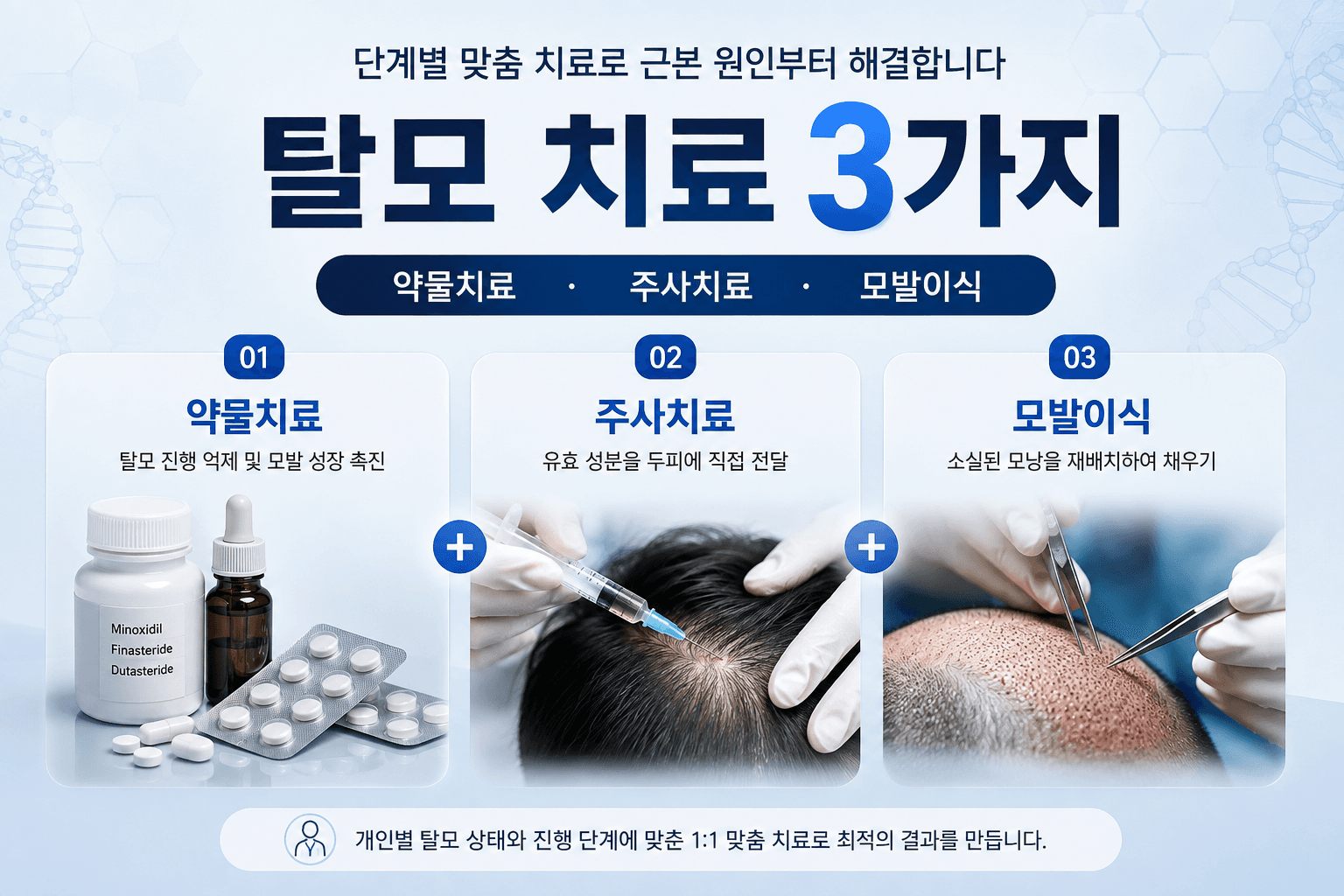
“What hair loss treatment is right for me?”
“Is medication alone enough, or do I need a hair transplant?”
Hello, I am Director Yoo Hwa-jung of Modi Hair Plant.
When you start looking into hair loss treatment, you come across a wide range of options, from minoxidil, finasteride, and dutasteride to scalp injections and hair transplants.
Because there are so many options, patients often ask questions such as “Which treatment should I start with?”, “Is medication alone enough?”, and “When should I start considering a hair transplant?”
What matters in hair loss treatment is not simply choosing the strongest treatment, but identifying what stage your hair loss is currently at and choosing a treatment suited to that condition.
Today, I will summarize in one place the basic mechanism of how hair loss progresses, as well as the role each of medication, injection treatment, and hair transplant plays.
First, please keep one thing in mind. Medication, injection treatment, and hair transplant are not treatments that must be followed in a 1→2→3 order, nor do they replace one another. They are different treatment methods that may be considered alone or in combination depending on your current hair loss condition.
Key Points
- In androgenetic alopecia, a representative form of male and female pattern hair loss, DHT and the genetic sensitivity of hair follicles play an important role.
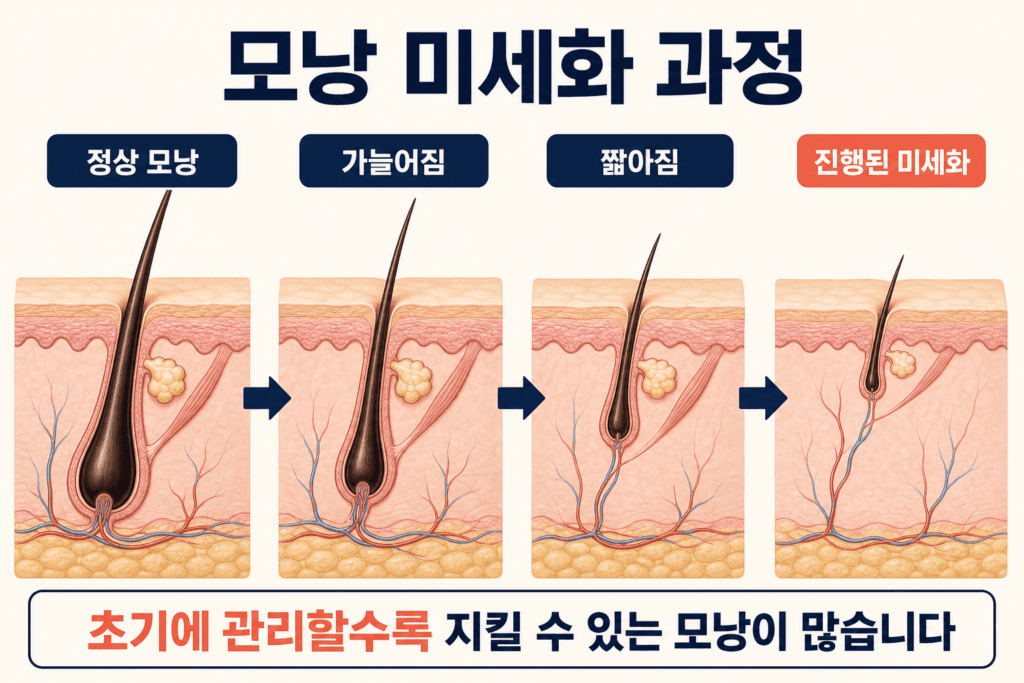
- In the early stages of hair loss, hair follicles do not disappear immediately; instead, follicle miniaturization, in which follicles gradually become thinner and smaller, may progress.
- Medication is mainly used to manage the progression of hair loss in existing hair and to maintain it.
- If needed, treatments applied directly to the scalp, such as injection treatment, may be considered in combination.
- In areas where hair is already insufficient or follicle loss has progressed, relocating hair follicles through a hair transplant may be considered.
- Therefore, the starting point of hair loss treatment is not “Which treatment is the best?” but checking “What is my current hair loss condition?”
Why Does Hair Fall Out? The Mechanism of Androgenetic Alopecia
There are various causes of hair loss, but one of the most common types seen in the clinic is androgenetic alopecia.
What is commonly referred to as male pattern hair loss and female pattern hair loss falls into this category.
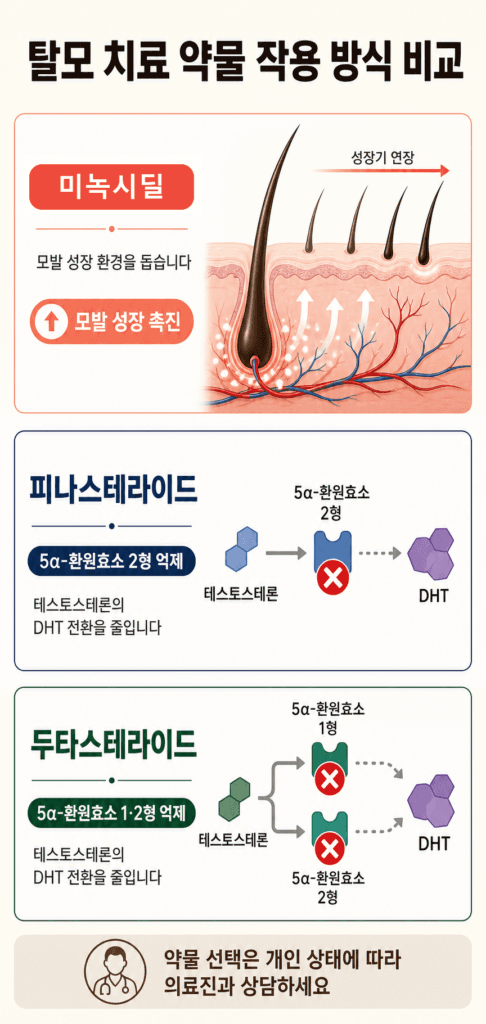
In androgenetic alopecia, the process by which the male hormone testosterone is converted into DHT (dihydrotestosterone) by 5-alpha reductase (5α-reductase) plays an important role.
When hair follicles that are genetically sensitive to DHT are affected, the growth phase of the hair can shorten, and as the follicles gradually shrink, hair may grow thinner and shorter than before.
This process in which hair follicles gradually become smaller is called follicle shrinkage or miniaturization.
Why It Is Important to Start Treatment in the Early Stages of Hair Loss
The onset of hair loss does not mean that hair follicles disappear all at once.
In the early stages, it may appear as a decrease in the number of hairs growing from a single follicular unit, or as an increase in hairs that are thinner and shorter than before.
In other words, this is a stage in which the hair follicles still remain but are gradually becoming miniaturized.
At this stage, there is room to manage the progression of hair loss and to maintain or improve existing hair through appropriate treatment.
Conversely, in areas where hair loss has progressed for a long time and follicle loss has advanced, it may be difficult to expect sufficient change from medication or injection treatment alone.
That is why, in hair loss treatment, it is important not to miss the period when there are still hair follicles that can be managed.
Hair Loss Treatment ① Medication
One of the most fundamental treatments considered for androgenetic alopecia is medication.
Representative examples include minoxidil, finasteride, and dutasteride, each of which differs in its mechanism of action and the patients for whom it is indicated.
Minoxidil
Minoxidil is an ingredient widely used in hair loss treatment.
The topical form is the most common, and depending on the patient's condition, low-dose oral minoxidil may also be used at the discretion of the medical team.
Minoxidil is known to support hair growth through several mechanisms that affect hair growth and the growth phase.
However, depending on the type and degree of hair loss, it may be considered together with other treatments rather than used alone.
Finasteride and Dutasteride
Finasteride and dutasteride are medications that inhibit 5-alpha reductase, the enzyme involved in converting testosterone into DHT.
Because they act on a key mechanism of androgenetic alopecia, they are important in the treatment of male pattern hair loss.
A network meta-analysis published in JAMA Dermatology in 2022 compared several medications and doses used for male androgenetic alopecia, and oral dutasteride 0.5 mg/day showed a high efficacy ranking among the treatments analyzed.
However, this does not mean that dutasteride is the most suitable option for every patient. The average effect confirmed in research and choosing the treatment that is actually suitable for an individual are separate matters.
Age, degree of hair loss progression, health status, potential side effects, and the feasibility of long-term use must all be considered together.
Should I Start with the Most Effective Hair Loss Medication?
You might think it is better to start with a highly effective medication from the beginning, but in hair loss treatment, medications are not chosen simply by comparing their effectiveness.
This is because each medication has different characteristics and potential side effects, and underlying conditions and individual circumstances also differ.
Above all, since hair loss often requires long-term management, it is also necessary to consider whether the treatment is currently suitable for you and whether you can use it consistently.
If You Are Planning to Have Children, Your Choice of Hair Loss Medication May Differ
Men who plan to have children in the future are advised to consult thoroughly with their medical team before using finasteride or dutasteride.
A study published in 2025 analyzed the duration of dutasteride use and changes in semen parameters in young men.
Improvement in some semen parameters was observed after discontinuing the medication for 6 months, but results were also reported showing insufficient recovery of some parameters in the group with a longer duration of use. However, as this was a single-center study with limitations in study design and potential confounding factors, these results alone cannot predict changes in reproductive function in all users.
Therefore, if you are planning to have children or have concerns in this regard, rather than choosing or stopping a medication on your own, it is advisable to consult your physician and consider relevant testing if necessary.
Hair Loss Treatment ② Injection Treatment
For patients who are already taking medication but need somewhat more active management, or who have difficulty using certain oral medications for personal reasons, treatments applied directly to the scalp may also be considered.
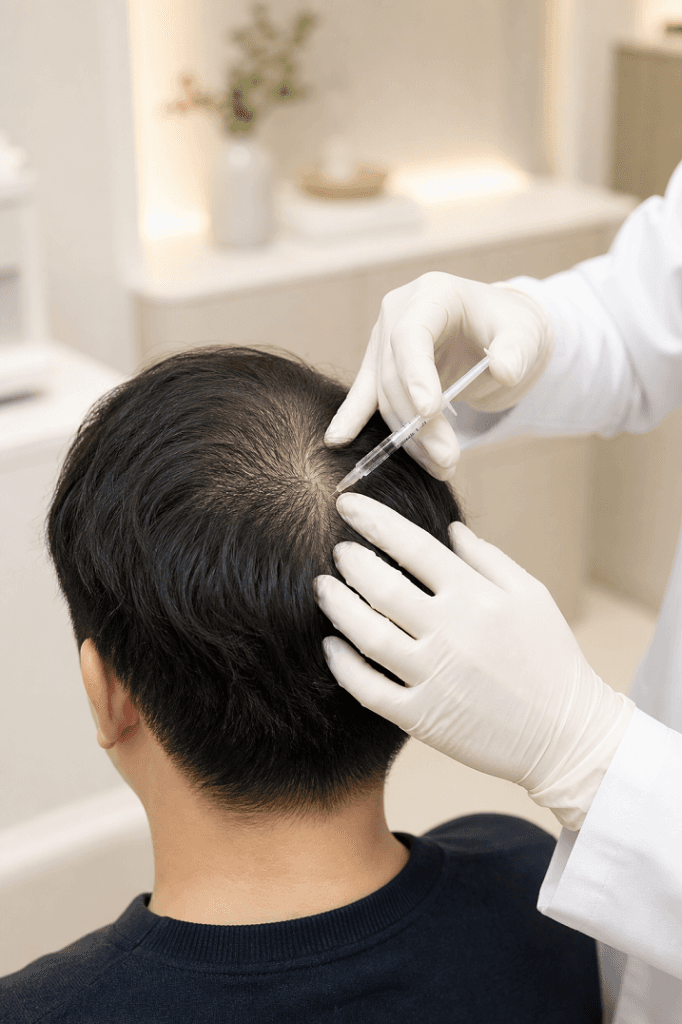
Scalp injection treatment is characterized as a localized approach that delivers ingredients directly to the areas where they are needed.
Dutasteride Scalp Injections
This is a method of applying dutasteride locally to the scalp.
It is being studied as a treatment option, including for cases where oral medication is difficult to use, and whether to apply it and how should be decided in consultation with the medical team, taking into account the type of hair loss and the individual's condition.
Minoxidil Mesotherapy
This is an injection treatment method that applies minoxidil locally to the scalp.
In a randomized, placebo-controlled trial conducted in female patients with androgenetic alopecia, improvements in some parameters, such as the terminal-to-vellus hair ratio and the proportion of anagen (growth-phase) hairs, were reported after intradermal minoxidil injections into the scalp.
However, as the study was limited in size and treatment protocols may vary, this does not mean that the same results will occur in all patients.
Hair Loss Treatment in the Field of Regenerative Medicine
Recently, research related to regenerative medicine that focuses on the microenvironment around hair follicles and growth signals has also been conducted in the field of hair loss treatment.
While medication addresses key mechanisms of hair loss such as DHT, the field of regenerative medicine focuses on the environment around hair follicles and various signals involved in hair growth.
However, the level of evidence for regenerative medicine treatments varies depending on the ingredients and methods used, and there are still areas where further research is needed on the durability of effects and methods of application.
Therefore, it is important to take a careful approach, considering both the research findings accumulated to date and the individual's condition.


Hair Loss Treatment ③ Hair Transplant
While medication and injection treatment are mainly treatments for managing the hair that currently remains, the role of a hair transplant is somewhat different.
In areas where hair loss has progressed for a long time and follicle loss has advanced, it may be difficult to expect sufficient improvement from medication or injection treatment alone.
In such cases, a hair transplant, in which healthy hair follicles are harvested from areas such as the back of the head and transplanted to areas lacking hair, may be considered.
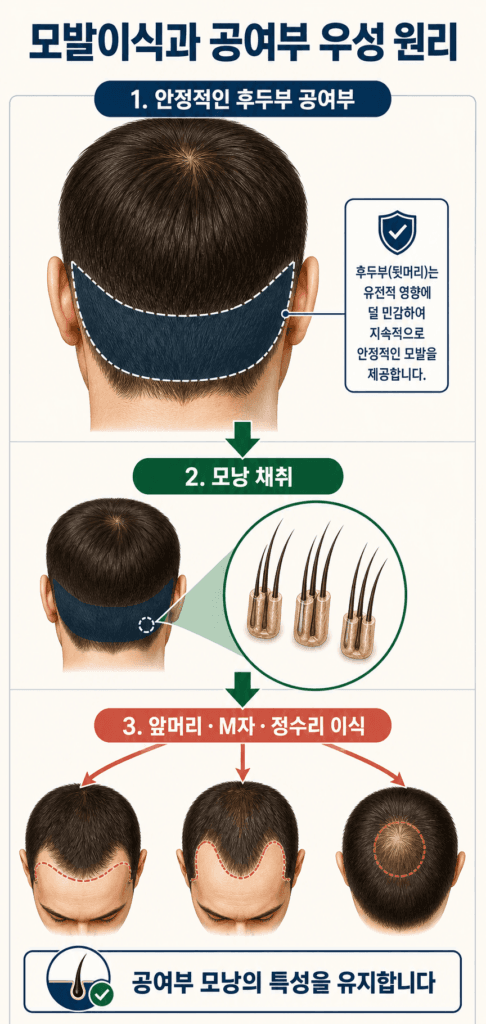
Why Hair from the Back of the Head Can Continue to Grow After Being Moved
One important concept in understanding the basic principle of hair transplantation is donor dominance.
Generally, the hair follicles in the stable donor area at the back of the head used for hair transplants are relatively less affected by androgens compared with follicles in the front or crown, where hair loss progresses.
The basic principle of hair transplantation is that even when these follicles are moved to areas of hair loss, they retain much of the characteristics they had in the original donor area.
In a Hair Transplant, How Follicles Are Handled Matters as Much as the Number of Hairs
When looking into hair transplants, many people first check “how many hairs will be transplanted.”
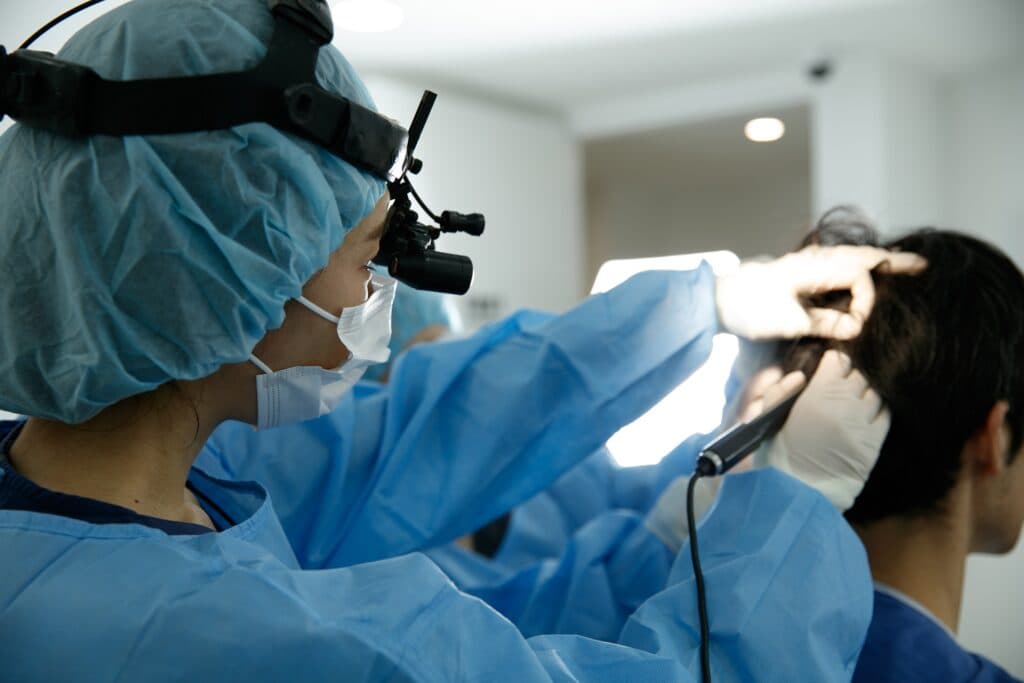
Of course, planning the required number of hairs is important, but in a hair transplant, how carefully the harvested follicles are handled without damage and how appropriately they are preserved until transplantation is also important.
Several stages, including follicle harvesting, ex vivo preservation, follicle sorting and handling, and the transplantation process, can affect the final outcome.
In addition, for a natural-looking hair transplant, it is necessary to consider not only the number of hairs but also a design suited to the face shape and existing hairline, density, the direction and angle of hair, the possibility of further hair loss in existing hair, and the condition of the available donor area at the back of the head.
Does Hair Loss Treatment End After a Hair Transplant?
This is something I hope everyone considering a hair transplant will keep in mind.
A hair transplant is not a surgery that treats existing androgenetic alopecia itself or prevents future hair loss.
It is closer to a surgery that relocates healthy hair follicles to areas lacking hair to supplement what is visibly lacking.
Therefore, androgenetic alopecia may continue to progress in the original hair surrounding the transplanted hair.
This is why, depending on the patient's condition, it may be necessary to manage the progression of hair loss in existing hair through medication or other means even after a hair transplant.
Medication, Injections, and Hair Transplant Are Not Competing Treatments
We have looked at three treatments so far, but the most important point is that you do not have to choose only one of medication, injection treatment, or hair transplant.
| Treatment Method | Main Role | Typically Considered When |
|---|---|---|
| Medication | Managing hair loss progression and maintaining existing hair | Androgenetic alopecia with remaining hair follicles |
| Injection Treatment | Local application of necessary ingredients to the scalp | When additional treatment is considered depending on individual condition |
| Hair Transplant | Relocating healthy hair follicles to areas lacking hair | Areas where hair is insufficient or follicle loss has progressed |
For example, areas already lacking hair may be supplemented with a hair transplant, while the surrounding existing hair is managed through medication or other means.
Rather than replacing one another, the three treatments are closer to methods that each play their own role in managing hair loss.
That is why the first question in hair loss treatment should not be “Which treatment is the best?” but “What stage is my current hair loss at?”
Frequently Asked Questions
Should I start treatment even if my hair loss is not severe?
In the early stages of hair loss, the hair follicles may not be completely lost but may be undergoing miniaturization. Therefore, if you suspect hair loss, it is advisable to check the current condition of your hair follicles and, if necessary, begin management at an appropriate time. However, since hair loss has various causes, an accurate diagnosis comes first.
Which is better, finasteride or dutasteride?
Studies have reported differences in average effects between medications, but a more effective medication is not necessarily the most suitable for every patient. It is advisable to decide in consultation with the medical team, considering the degree of hair loss progression, age, health status, potential side effects, and plans to have children.
Can women use the same hair loss medications as men?
For women, there may be restrictions on which medications can be used depending on the possibility of pregnancy and pregnancy plans. In particular, whether to use finasteride, dutasteride, or similar medications should be determined in consultation with the medical team.
Can hair loss medication and scalp injection treatment be combined?
Depending on the patient's type and condition of hair loss, medication and scalp injection treatment may be considered together. However, which ingredients and methods are applied may vary according to the individual's condition.
Can hair loss medication and a hair transplant be combined?
Yes. Because a hair transplant and medication serve different roles, they are sometimes used together depending on the patient's condition. Areas lacking hair are supplemented with a hair transplant, while the surrounding existing hair is managed with medication or other means.
Can I stop taking hair loss medication after a hair transplant?
Having a hair transplant does not automatically stop the progression of hair loss in existing hair. If androgenetic alopecia is likely to continue progressing, medication or other treatment may be needed to manage the existing hair around the transplanted hair. Whether to take medication and for how long should be discussed with the medical team based on your individual condition.
Ultimately, Hair Loss Treatment Begins with Checking Your Current Condition
Even with the same kind of hair loss, the stage of progression differs from person to person, so the treatment needed may also differ.
If hair follicles still remain and miniaturization is progressing, treatment to maintain and manage existing hair may be important.
Conversely, in areas where hair is already significantly lacking or follicle loss has progressed, a hair transplant may also be considered.
What matters is not letting the manageable early stage pass by and accurately identifying your current hair loss condition.
If you have been confused by the many hair loss treatment options, rather than starting with the question “Which treatment is the best?”, we recommend first checking the current condition of your hair and hair follicles.
Consultation Information
“I don't know whether I should start with medication or get a hair transplant.”
“I'm curious how far my hair loss has progressed.”
If you have concerns like these, it is advisable to first have your scalp and hair condition checked.
At Modi Hair Plant, we check the current degree of hair loss progression, the condition of existing hair, and, if necessary, the donor area at the back of the head, and provide consultation on a treatment direction suited to each individual's situation.
Wondering Which Treatment Suits Your Hair Loss Condition?
The degree of hair loss progression and the treatment needed differ from person to person. If you are wondering whether you need a hair transplant or roughly how many hairs might be needed, check below.
Watch the Video
The content of this article is also available in the YouTube video by Director Yoo Hwa-jung of Modi Hair Plant, “Complicated and Confusing Hair Loss Treatment, Summarized in One Go!”
References
- Gupta AK, Venkataraman M, Talukder M, Bamimore MA. Relative Efficacy of Minoxidil and the 5-α Reductase Inhibitors in Androgenetic Alopecia Treatment of Male Patients: A Network Meta-analysis. JAMA Dermatology. 2022;158(3):266-274. doi:10.1001/jamadermatol.2021.5743.
- Kim YJ, Lee SR, Yu YD. Long-term use of dutasteride to treat androgenic alopecia in young men may lead to persistent abnormalities in semen parameters. Clinical and Experimental Reproductive Medicine. 2025;52(4):376–385. doi:10.5653/cerm.2024.07675.
- Uzel BPC, Takano GHS, Chartuni JCN, et al. Intradermal injections with 0.5% minoxidil for the treatment of female androgenetic alopecia: A randomized, placebo-controlled trial. Dermatologic Therapy. 2021;34(1):e14622. doi:10.1111/dth.14622.
※ This article was written for the purpose of providing general medical information and cannot replace diagnosis and treatment based on an individual's condition. Whether a medication or treatment method is appropriate may vary depending on the individual's condition, so please make your decision after thorough consultation with the medical team.
This article was reviewed by the medical team before being published.