MODI HAIR MEDICAL GUIDE
If You Are Losing Hair After Weight-Loss Injections
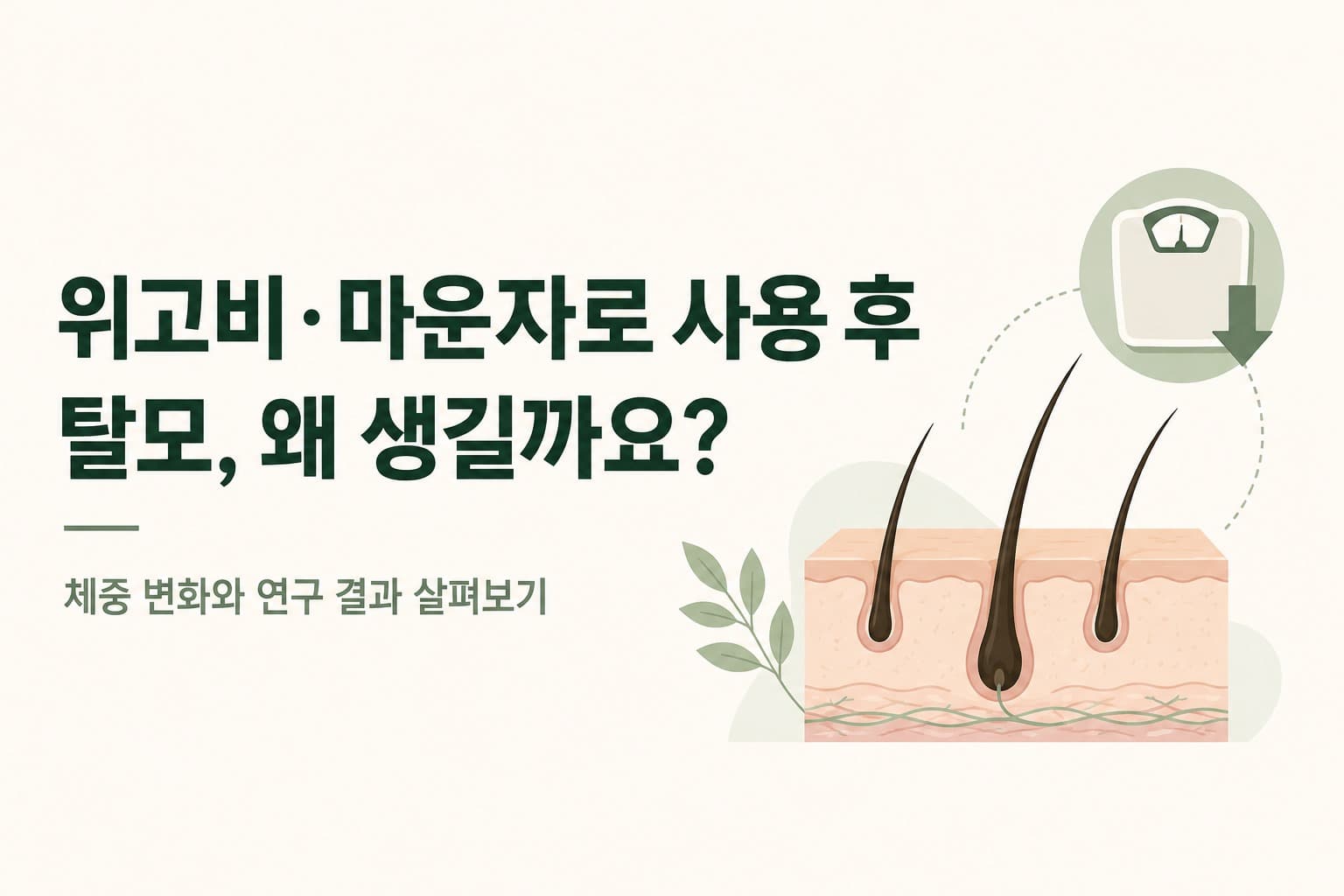
If you notice significant hair shedding after using Wegovy or Mounjaro, you may wonder whether it is caused by the medication or by the weight loss itself. Rapid weight change can be a trigger for telogen effluvium, but an individual's cause cannot be attributed solely to either the medication or the weight loss. Medication history, rate of weight loss, dietary status, pre-existing hair loss, and coexisting conditions should all be reviewed together.
Summary in 3 Points
- Hair loss during weight loss may involve multiple factors, including weight change, nutrition, hormones, and pre-existing hair condition.
- A preprint comparing the two ingredients observed a difference in recorded hair loss, but a direct causal relationship with the medication has not been proven.
- If hair loss occurs, rather than changing your prescription on your own, please inform both your prescribing clinician and your scalp and hair care clinician of your progress.
Weight-Loss Injections and Hair Loss: Video Overview
Based on a video by Director Yu Hwa-jeong of Modi Hair Plant Clinic and related materials, we review what the research has observed and what has not yet been confirmed. The text below adds interpretation of the statistics and the limitations of the research.
What Are the Active Ingredients in Wegovy and Mounjaro?
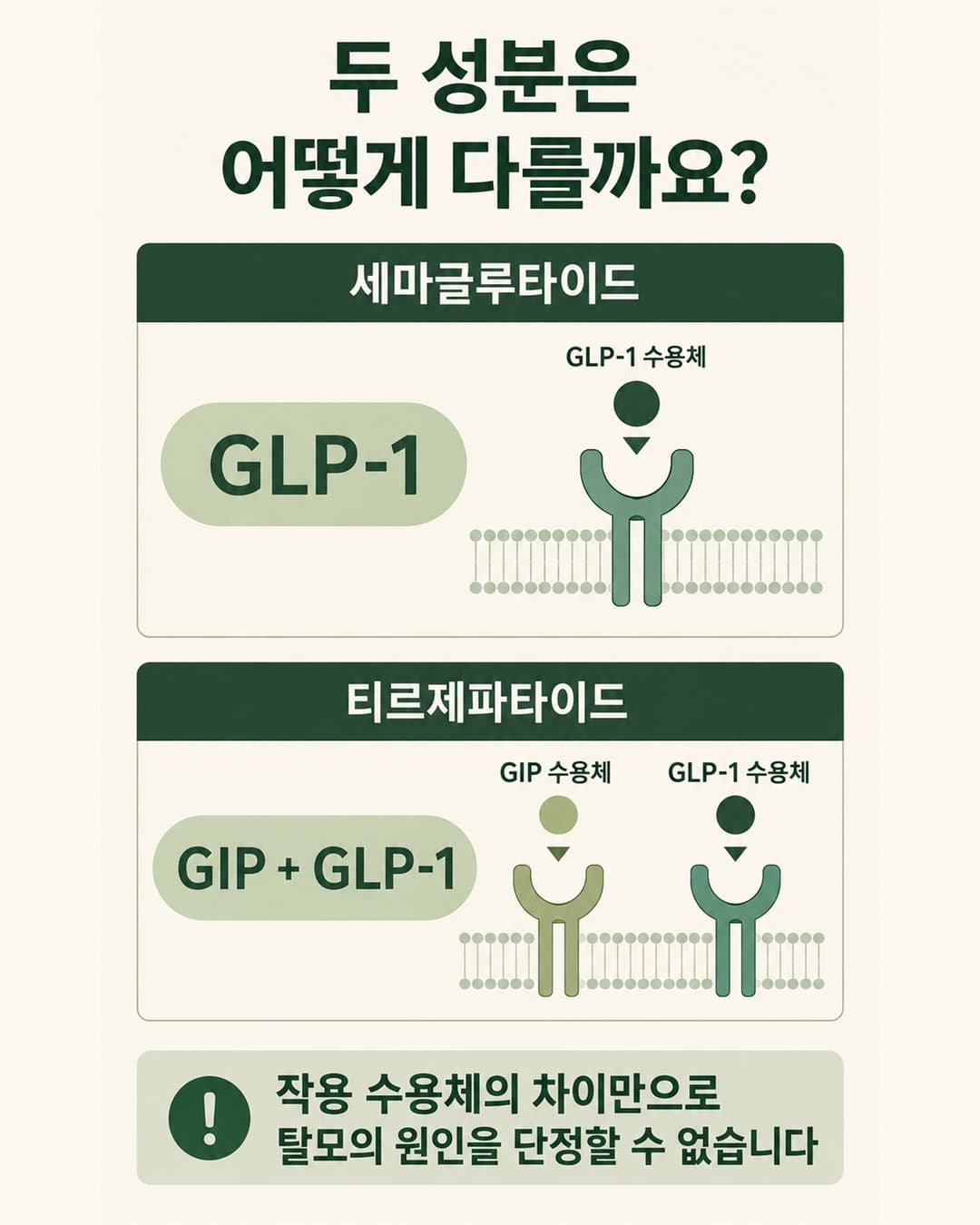
Both medications use incretin signaling, but they act on different receptors. Even the same ingredient may have different intended uses and prescribing information depending on brand name, formulation, dose, and country of approval.
Semaglutide
An ingredient contained in Wegovy, Ozempic, and others, which acts on the GLP-1 receptor.
Tirzepatide
An ingredient contained in Mounjaro and Zepbound, which acts on the GIP and GLP-1 receptors.
In SURMOUNT-5, a head-to-head trial in adults with obesity without diabetes, the mean change in body weight after 72 weeks of treatment at the maximum tolerated dose was −20.2% in the tirzepatide group and −13.7% in the semaglutide group. These are average results under specific trial conditions and do not guarantee individual weight-loss outcomes.[2]
Is Hair Loss Listed in the Product Prescribing Information?
The U.S. FDA prescribing information lists hair loss as an adverse reaction for both Wegovy and Zepbound. In pooled data from adult weight-reduction trials of Wegovy 2.4 mg, hair loss was reported in 3.3% of patients versus 1% in the placebo group. In pooled data from Zepbound weight-reduction trials, it was reported in 4–5% depending on dose, versus 1% in the placebo group.[3], [4]
Both prescribing information documents describe hair loss as an adverse reaction associated with weight reduction. However, adverse reaction rates from different trials should not be directly compared to judge which medication is safer. The figures above are U.S. data for the respective products and doses and do not substitute for the approved labeling of products in Korea.
What Did a Recent Comparative Study Find?
First, check the nature of the study. This is a retrospective electronic health record analysis released on July 20, 2026, and the version reviewed is a preprint that has not yet undergone peer review. It compared users who had no record of hair loss before the prescription.[1]
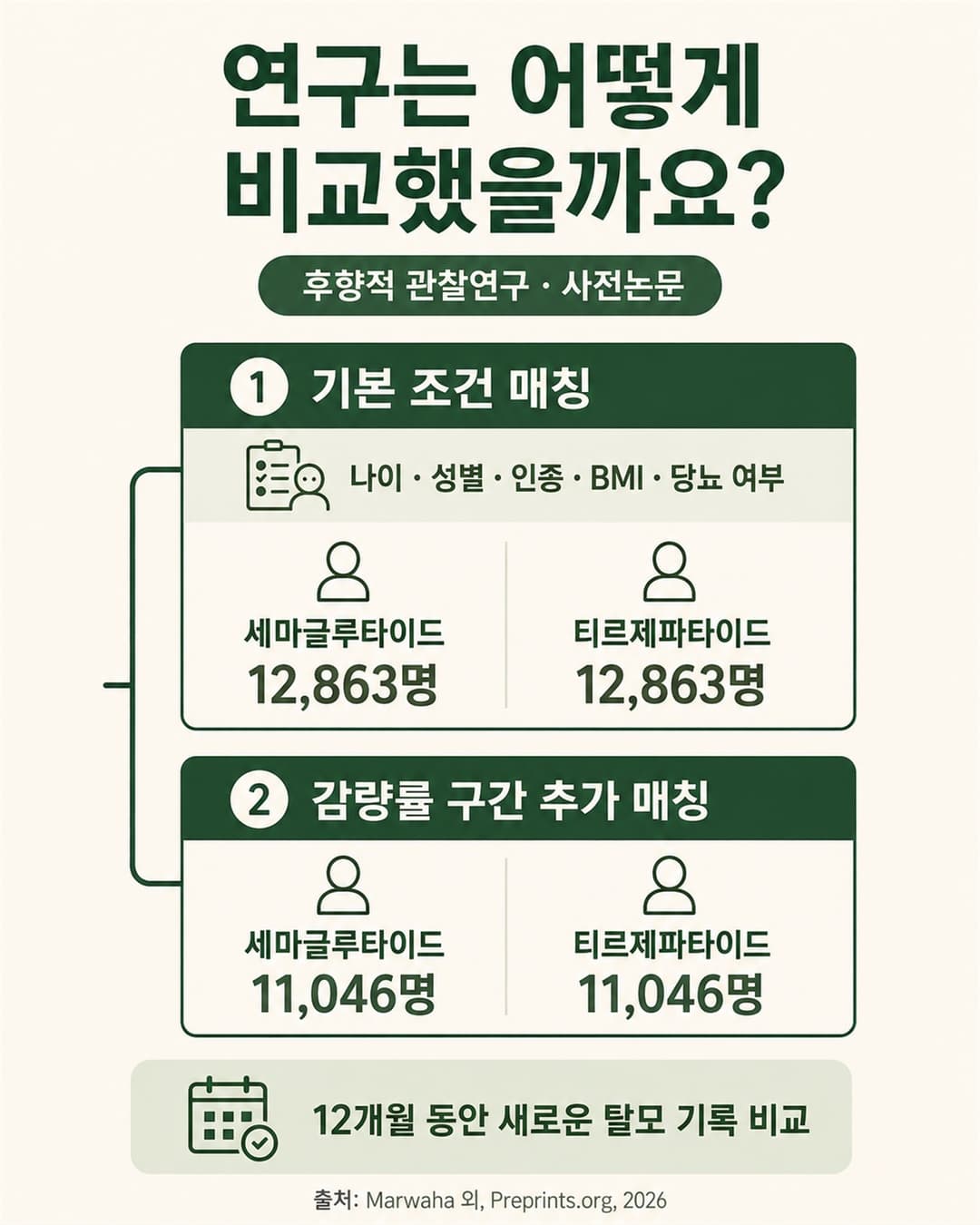
| Analysis | Semaglutide | Tirzepatide |
|---|---|---|
| Baseline matching · 12,863 per group | 2.88% | 4.20% |
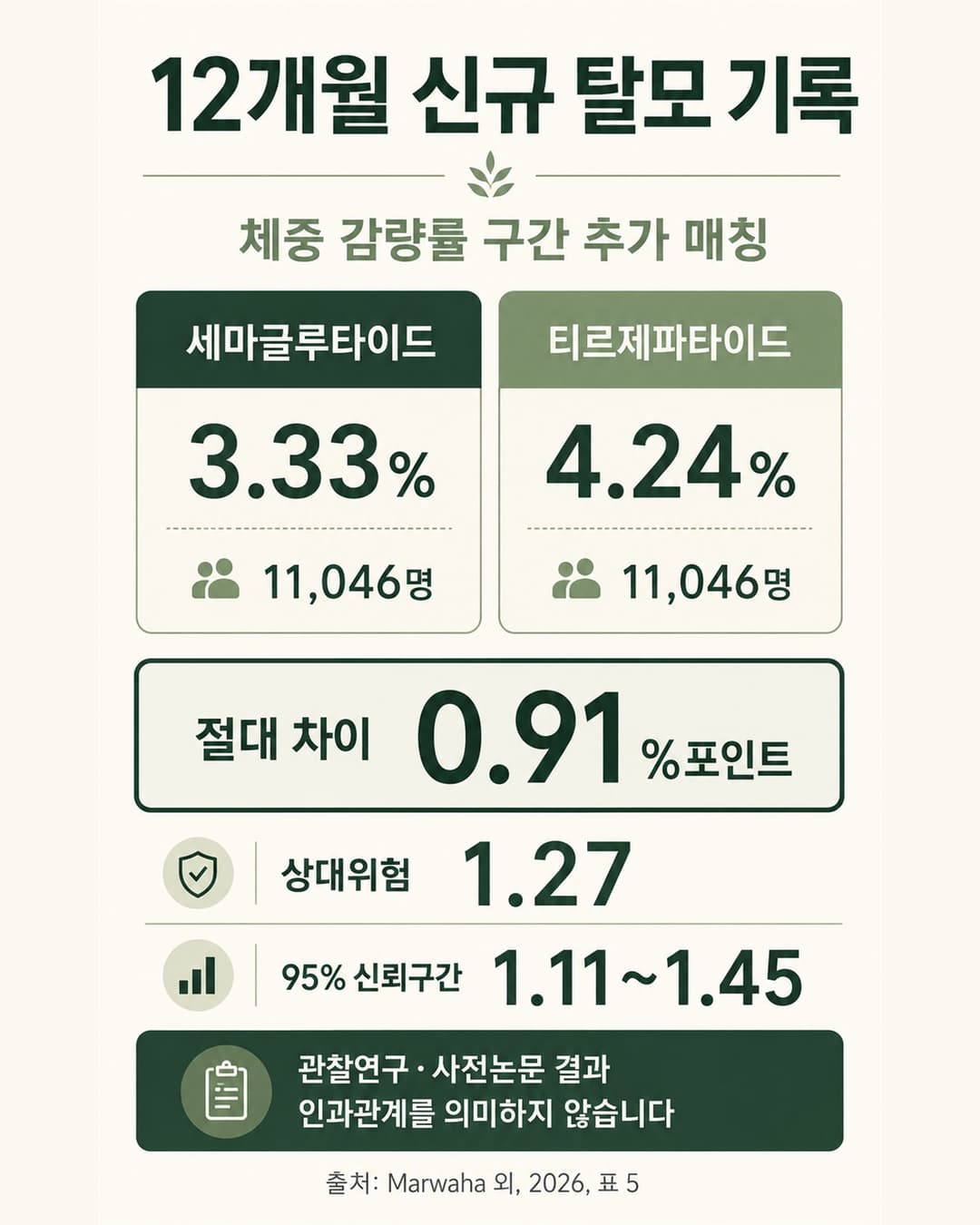
| Additional weight-loss range matching · 11,046 per group | 3.33% | 4.24% |
In the additional matching analysis, the relative risk was 1.27 and the absolute difference was 0.91 percentage points. The 95% confidence interval was 1.11–1.45. This does not compare people who lost exactly the same amount of weight, and the figures should not be reinterpreted as values for specific brand names.[1]
Does This Mean the Medication Itself Causes Hair Loss?
That cannot be concluded. Factors such as the rate of weight loss and food intake could not be fully controlled, and medical records are subject to omissions and reporting bias. Nor does it mean that everyone without a record lost weight without hair loss.[1]
Although some repeated nutritional tests showed no clear decline, nutritional causes cannot be ruled out. The exploratory RNA analysis finding that receptor signals were not detected in hair follicle keratinocytes is also not evidence that excludes a direct effect. The involvement of the surrounding immune and vascular environment remains a hypothesis.[1]
Timing of Hair Shedding and Telogen Effluvium
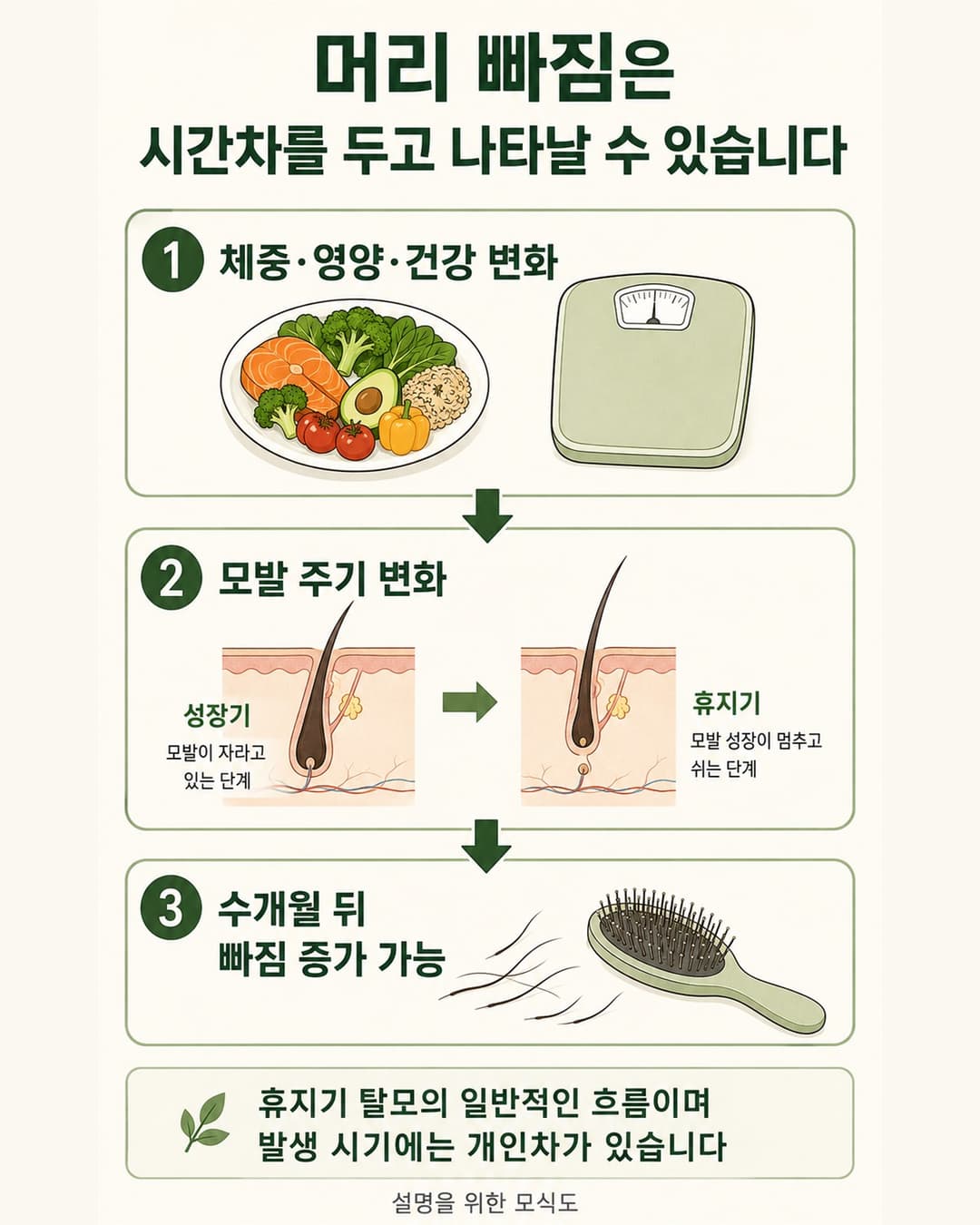
Telogen effluvium is a condition in which many hair follicles shift into the resting (telogen) phase, resulting in increased shedding across the entire scalp. Rapid weight loss, dietary restriction, illness, and hormonal changes can be triggers, and shedding may appear several months after the triggering event.[5], [6]
In the comparative study, the cumulative record curves began to diverge from around 6 months. This should not be interpreted as “it mostly starts at 5–6 months” or “it is all telogen effluvium.” New minoxidil prescription records were also more frequent, but this did not measure the need for treatment itself.[1]
What Other Conditions Should Be Checked?
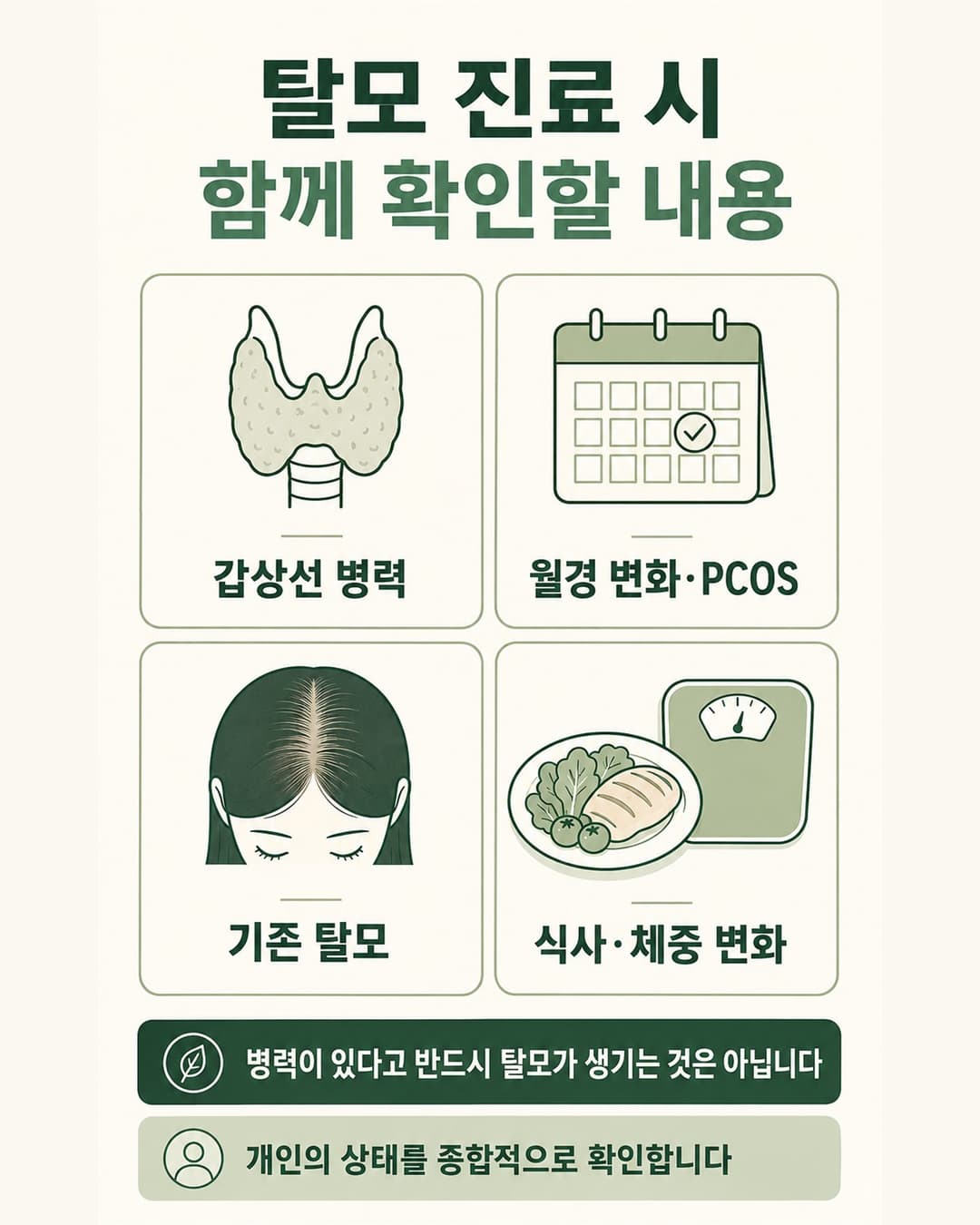
In the group with hair loss, women and a history of certain endocrine disorders were relatively more common. The hypothyroidism figures of 28.1% and 21.6% in the original paper are history rates within the tirzepatide group according to whether hair loss was recorded, not the incidence of hair loss among thyroid patients. They also cannot be used for definitive individual risk prediction.[1]
During your consultation, sharing not only any history of thyroid disease or polycystic ovary syndrome but also menstrual changes, recent illness, dietary restriction, other medications, and any pre-existing changes in your part line or hairline will help in evaluating the cause. Tests are determined based on symptoms and examination findings.[5], [6]
If Hair Loss Develops While Using Weight-Loss Injections
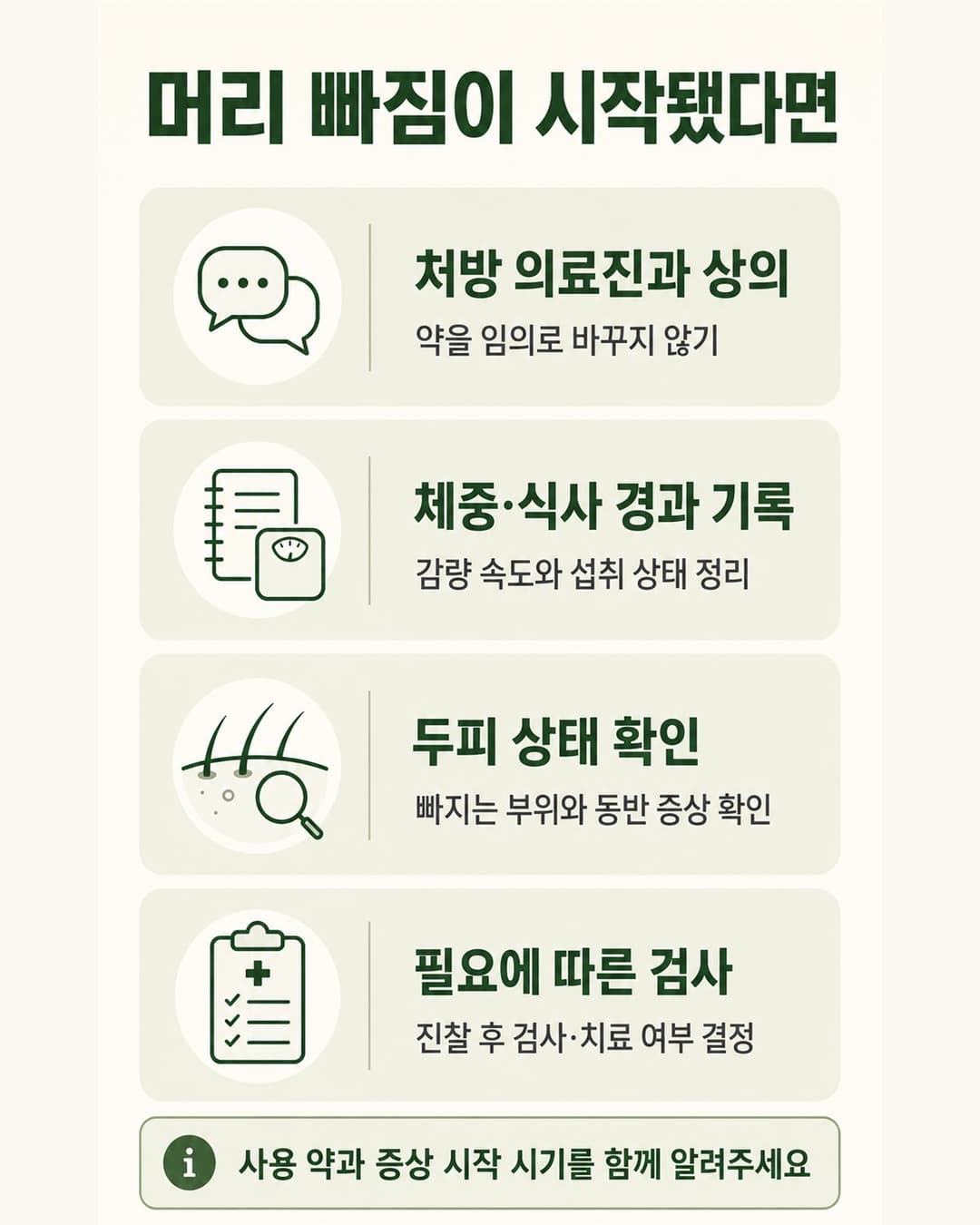
It is important to weigh the benefits of treatment against its drawbacks. Rather than stopping, reducing, or changing your prescription on your own, please inform your prescribing clinician of your hair loss symptoms and weight change. A dermatology consultation can help examine the cause and determine appropriate care.[7]
What to Prepare Before Your Consultation
- Date you started the medication and history of dose changes
- Weight changes and when hair shedding began
- Food intake, protein intake, and symptoms that interfered with eating, such as vomiting
- Underlying conditions and use of other medications or supplements
What Is Checked During a Scalp Consultation
- Whether shedding is diffuse or specific areas are thinning
- Whether pre-existing androgenetic alopecia is present
- Whether there is scalp inflammation or another hair loss condition
- Whether blood tests and treatment are needed
Supplements and minoxidil are not equally necessary for everyone. It is advisable to decide whether to use them after confirming whether there is a nutritional deficiency and what type of hair loss is present. If round bald patches suddenly appear, or if pain or redness is present, do not dismiss it as simple weight-loss-related hair loss—please seek a consultation.
Frequently Asked Questions About Wegovy, Mounjaro, and Hair Loss
Will using Wegovy or Mounjaro definitely cause hair loss?
Not necessarily. Hair loss is one of the reported adverse reactions, but not all users experience it. Individual symptoms should be evaluated considering not only medication use but also weight change, diet, health status, and pre-existing hair loss.
Should I stop the medication right away if my hair falls out?
Do not stop or switch to another medication on your own; consult your prescribing clinician. Whether to continue or adjust treatment should be determined after reviewing the treatment goals, weight change, severity of symptoms, and other possible causes.
Can I choose between Wegovy and Mounjaro based only on concerns about hair loss?
It is difficult to choose a medication based on hair loss data alone. The decision should be made with your prescribing clinician, considering approved indications, coexisting conditions, expected treatment effects, and the overall adverse reaction profile.
Does hair loss after weight loss recover?
Telogen effluvium often recovers once the triggering factor is resolved, but the speed and extent of recovery vary. Because other types of hair loss may coexist, it is advisable to have the cause evaluated if it persists or worsens.
Can using minoxidil or supplements in advance prevent it?
It is difficult to regard these as methods with established preventive effects for all users. Check for deficiencies and the type of hair loss, and discuss the need for treatment with your clinician. The fact that prescriptions were more frequent in the study alone is not a basis for recommending preventive use.
Review Your Weight Changes and Hair Condition Together
At Modi Hair Plant Clinic, you can receive a consultation on your scalp and hair condition. Please discuss any changes to obesity or diabetes medications with the clinician who prescribed them.
This article is intended to provide general medical information and does not replace individual diagnosis or prescription. The cause of hair loss and whether treatment is needed are determined after consultation, and results vary by individual. The comparative study is described based on the pre-peer-review version reviewed on September 7, 2026. Product approval details may vary by country, indication, formulation, and dose.
References and Sources
- Marwaha A, Venkatakrishnan AJ, Murugadoss K, Soundararajan V. New-Onset Alopecia Is Significantly Higher with Tirzepatide than with Semaglutide, Even After Weight-Loss Matching. Preprints.org. 2026 Jul 20. Version 1. Manuscript 202607.1370. Preprint (not peer-reviewed). View original text and tables
- Aronne LJ, et al.; SURMOUNT-5 Trial Investigators. Tirzepatide as Compared with Semaglutide for the Treatment of Obesity. N Engl J Med. 2025;393:26-36. DOI: 10.1056/NEJMoa2416394. Article
- U.S. Food and Drug Administration. WEGOVY prescribing information. 2026. Reference ID 5819850. Section 6.1, Hair Loss. U.S. FDA prescribing information
- U.S. Food and Drug Administration. ZEPBOUND prescribing information. 2026. Reference ID 5731061. Section 6.1, Table 1 and Hair Loss. U.S. FDA prescribing information
- Hughes EC, Syed HA, Saleh D. Telogen Effluvium. StatPearls. StatPearls Publishing. PMID: 28613598. PubMed
- Shrivastava SB. Diffuse hair loss in an adult female: approach to diagnosis and management. Indian J Dermatol Venereol Leprol. 2009;75(1):20-27. DOI: 10.4103/0378-6323.45215. PMID: 19172026. PubMed
- American Academy of Dermatology. How can GLP-1 drugs affect my skin, hair, and nails? American Academy of Dermatology patient guide