
MODI HAIR AFTERCARE GUIDE
Washing Your Hair After a Hair Transplant: When and How Should You Start?
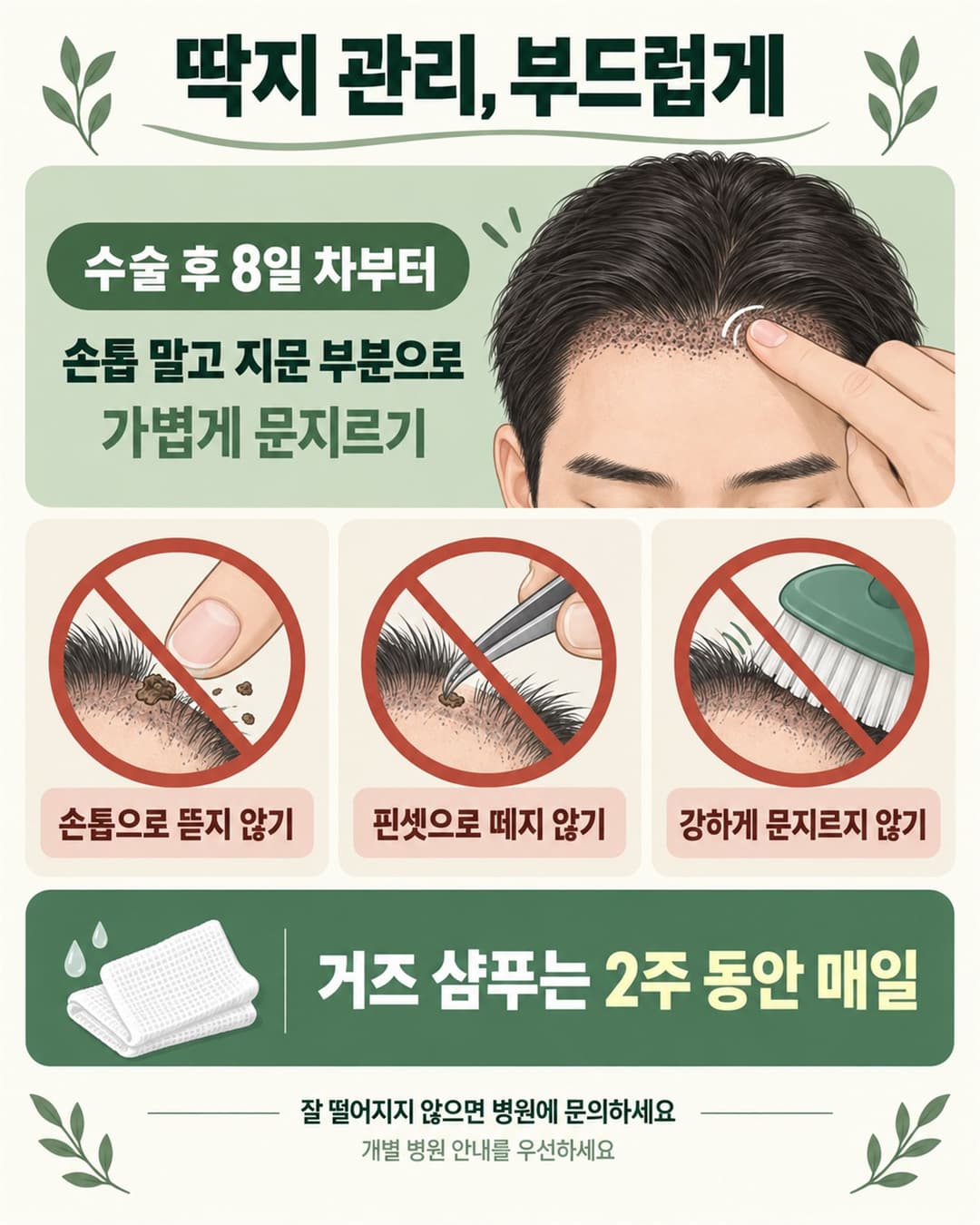
At Modi Hair Plant, we advise patients to have their first shampoo the day after surgery. Patients usually visit the clinic to receive their first shampoo from a nurse, and are then shown how to wash at home. At home, the shampoo routine using wet gauze continues daily for 2 weeks, and from day 8 after surgery, dead skin and scabs are managed by gently rubbing with the fingerprint area of the fingertips.
3-Line Summary
- First shampoo the day after surgery: Patients usually visit the clinic and receive assistance from a nurse.
- Gauze shampoo daily for 2 weeks: Use lukewarm water at low pressure and wet gauze.
- Gently from day 8: Rub lightly using the fingerprint area, not the fingernails.
The schedule and washing methods in this article are Modi Hair Plant's care guidelines. If you had surgery at another clinic, please follow that clinic's instructions first. Even if you had surgery at Modi, if you received separate instructions based on your wound condition or surgical method, please follow the guidance of your medical team.
Why Shampooing Requires Care After a Hair Transplant
“Will the transplanted hair follicles fall out if they get wet?” “Scabs have formed—should I just leave them?” After a hair transplant, even routine hair washing can feel worrying.
In the early stage, it is important to avoid unnecessary friction on the transplanted area. That said, you should avoid both repeatedly postponing the washing recommended by the clinic out of worry, and, conversely, rubbing hard to remove scabs. Keeping the scalp clean while protecting the transplanted area according to each stage of recovery is the key to aftercare. The International Society of Hair Restoration Surgery also advises following your medical team's hair care instructions immediately after surgery. [1]
The First Shampoo Is the Day After Surgery, Usually at the Clinic
At Modi Hair Plant, we advise patients to visit the clinic the day after surgery to receive their first shampoo from a nurse. At this time, you will also be shown how to continue washing at home.
If you are unable to visit, please do not wash your hair as usual on your own or postpone washing; instead, contact the clinic to confirm how to do your first shampoo. Being told “you may start shampooing” does not mean “you may rub as hard as you did before surgery.”
Gauze Shampoo at Home in 5 Steps
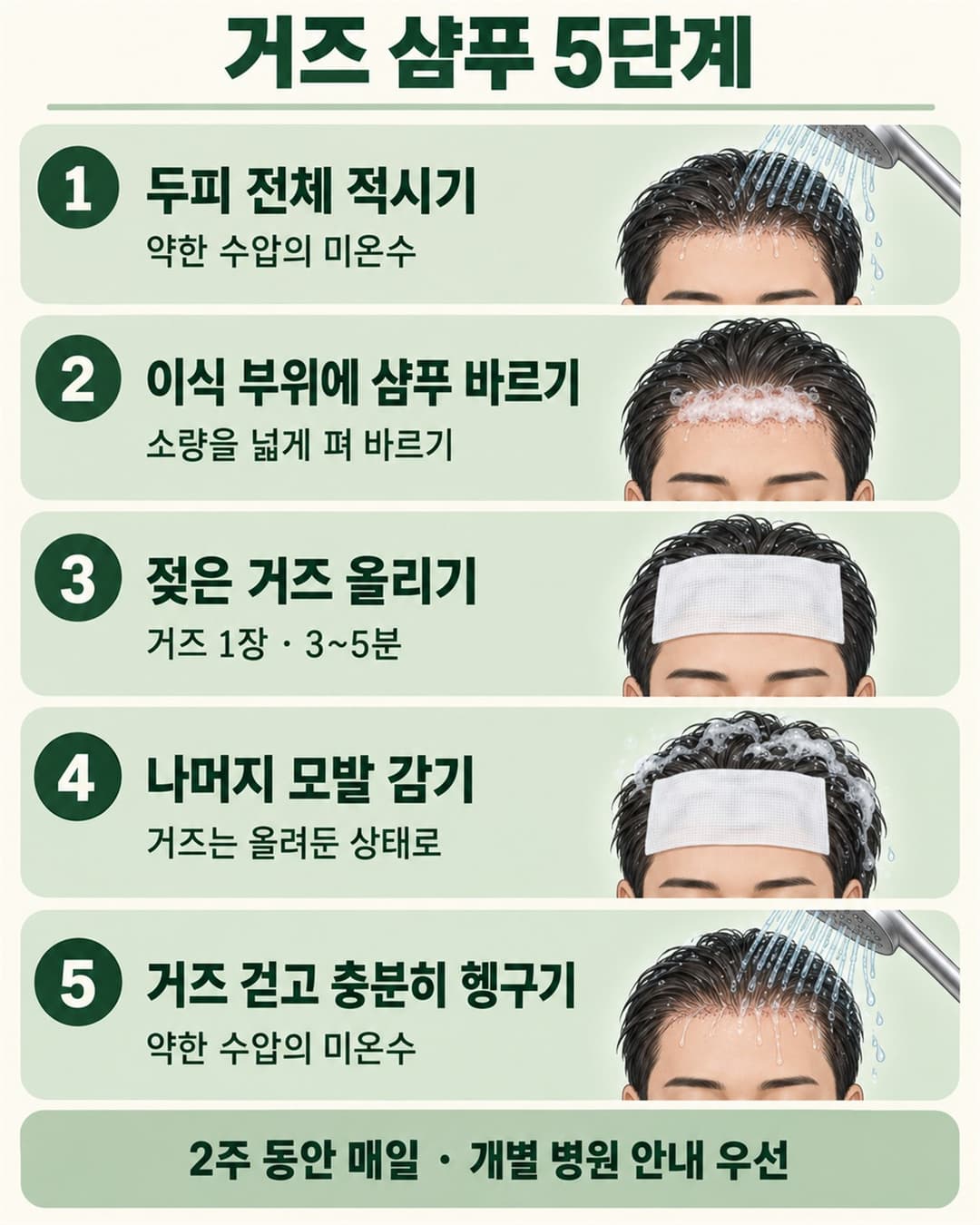
Prepare the shampoo and gauze recommended by the clinic. Use lukewarm water at low pressure from start to finish, and in the early stage, do not scratch the transplanted area with your fingernails or rub it hard.
1. Wet the entire scalp, including the transplanted area
Thoroughly wet your scalp and hair with lukewarm water at low pressure. Wet the transplanted area as well, but do not direct a strong stream of water onto it.
2. Spread shampoo evenly over the transplanted area
Take a small amount of shampoo and spread it evenly over the transplanted area. There is no need to rub the transplanted area hard to create a lot of lather.
3. Place 1 sheet of wet gauze on the area for 3–5 minutes
Wet 1 sheet of gauze with water and place it on the transplanted area. Leave it for about 3–5 minutes to let the shampoo soak. This step involves placing the gauze on top, not rubbing the transplanted area with it.
4. Shampoo the rest of your hair with the gauze in place
With the transplanted area covered by the gauze, wash the rest of your non-transplanted hair. If you received separate care instructions for the donor area at the back of the head or the sutured area, please follow them as well.
5. Remove the gauze and rinse thoroughly with lukewarm water
When you have finished shampooing, remove the gauze and thoroughly rinse any remaining shampoo from the transplanted area with lukewarm water at low pressure. If the gauze sticks and does not come off easily, do not pull it; soak it thoroughly with lukewarm water and then remove it carefully.
From Day 8 After Surgery, Rub Gently With Your Fingertips
According to Modi Hair Plant's guidelines, from day 8 after surgery, you may gently rub the transplanted area when shampooing. Use the soft fingerprint area of your fingertips, not your fingernails, to gently remove dead skin and scabs.
What matters here is the amount of pressure. Do not repeatedly rub hard to remove all the scabs at once, and do not scratch them off with your fingernails. Do not forcibly remove scabs that do not come off easily; please contact the clinic instead.
Continue the gauze shampoo even after you begin rubbing from day 8. The process of shampooing with wet gauze continues daily for 2 weeks after surgery. Day 8 is not the day to stop the gauze shampoo.
Shampoo Methods by Period at a Glance
| Period | Care Method | Points to Remember |
|---|---|---|
| Day after surgery | Usually visit the clinic to receive the first shampoo from a nurse. | You will be shown how to continue care at home. |
| After first shampoo to day 7 | Shampoo daily using wet gauze. | Do not rub the transplanted area or pick at scabs. |
| Day 8 to 2 weeks | Continue the gauze shampoo while gently rubbing with the fingerprint area. | Do not forcibly remove dead skin and scabs all at once. |
| After 2 weeks | Adjust the washing method according to your recovery and the clinic's instructions. | If wounds or scabs remain and cause discomfort, contact the clinic first. |
Why Shouldn't You Pick Scabs by Hand?
Scabs may form on the surgical area as blood or exudate dries. In the early stage, scabs are attached to the transplanted area, so pulling on them can transfer force to the grafts.
A study of 42 patients observed that when scabs attached in the early postoperative period were pulled, grafts could come out along with them. However, this was a small study published in 2006, and it does not mean that it is safe for all patients to rub hard from a specific day onward. This study can be regarded as a basis for understanding why early scabs should not be forcibly removed. [2]
Please Care for Your Scalp Like This
- Continue the recommended gauze shampoo daily.
- From day 8, care gently using the fingerprint area.
- Contact the clinic about scabs that do not come off easily.
Please Avoid the Following
- Picking scabs with fingernails or tweezers
- Rubbing hard to remove scabs
- Scratching the transplanted area with a comb or scalp brush
If Hair Falls Out While Shampooing, Have the Follicles Come Out Too?
Seeing loose hairs or hair attached to scabs does not by itself mean that the hair follicles have been damaged. Conversely, it is also difficult to confirm there is no problem based only on photos or appearance.
In particular, if bleeding occurred after rubbing the transplanted area hard or bumping it in the early postoperative period, please contact the clinic. Letting us know how many days it has been since surgery, what you were doing when it occurred, and whether there is bleeding or pain will help us assess your condition.
Please do not pull on surrounding hair or repeatedly touch the transplanted area to check. If necessary, the medical team will examine your condition directly.
How Should You Use a Hair Dryer After Shampooing?
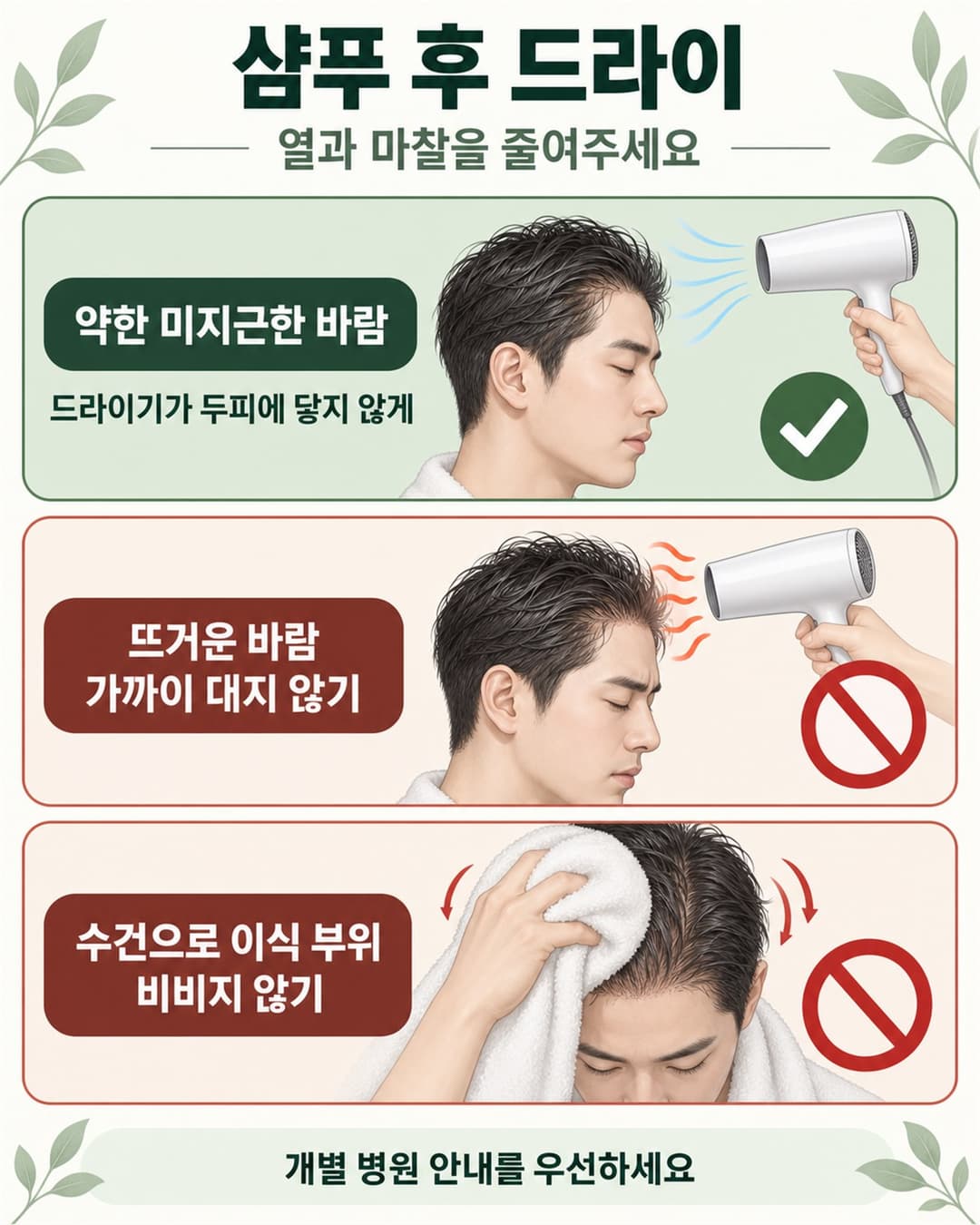
When drying your hair, it is also important not to rub the transplanted area or bring hot air close to it. Following Modi's guidelines, dry your hair with lukewarm air that is not too hot, and set the airflow to low.
- Do not rub with a towel: Do not rub the transplanted area to remove moisture.
- Do not hold hot air close: Do not keep heat on one area for a long time while it feels hot.
- Avoid contact with tools: Make sure the dryer nozzle or comb does not touch the transplanted area.
- Follow separate instructions first: If you received specific drying instructions based on your skin condition, follow them.
Can You Use Your Usual Hair Loss Shampoo or Disinfectant?
Immediately after surgery, scalp care and wound care differ from your usual routine. Do not assume a product is suitable for the surgical area simply because it is called a hair loss shampoo; please prioritize products provided or recommended by the clinic. The International Society of Hair Restoration Surgery also recommends avoiding care products that may interfere with recovery in the early stage and following the medical team's instructions. [1]
Do not add disinfectants, ointments, or scalp scrubs on your own just because you want to keep the area clean. Please also confirm separately when to resume topical hair loss medications or styling products. No particular shampoo or care product guarantees graft survival.
Please Contact the Clinic If You Notice These Changes
- Bleeding that continues or increases after washing
- Pain, redness, or swelling that gradually worsens
- Pus-like discharge or fever
- Changes after scratching hard or bumping the transplanted area
In these cases, rather than rubbing further or applying products on your own, contact the clinic for guidance. If there is heavy bleeding or you feel generally unwell, prompt medical attention is needed.
Frequently Asked Questions About Shampooing After a Hair Transplant
When is the first shampoo after a hair transplant?
At Modi Hair Plant, we advise having the first shampoo the day after surgery, usually received from a nurse at the clinic. If you are unable to visit or have received separate instructions, please confirm the method with the clinic.
Do I need to wash my hair every day after a hair transplant?
At Modi, we recommend doing the prescribed gauze shampoo daily for 2 weeks after the first shampoo. Please follow the instructions rather than repeatedly postponing washing out of anxiety, or increasing the frequency and intensity on your own to get cleaner.
How long should the wet gauze be left on?
After spreading shampoo over the transplanted area, place 1 sheet of water-soaked gauze on it for about 3–5 minutes. Wash the rest of your hair with the gauze in place, then remove the gauze at the end and rinse thoroughly with lukewarm water at low pressure.
Can I stop using gauze from day 8?
No. From day 8, you begin washing by gently rubbing with the fingerprint area, but the process of shampooing with gauze continues for 2 weeks.
If scabs remain, can I remove them by hand?
Do not forcibly remove them with fingernails or tweezers. From day 8, care for them gently using the recommended method, and contact the clinic if they do not come off easily or if there is pain or bleeding.
If hair falls out while shampooing, does it mean there is a problem with graft survival?
Graft survival cannot be determined solely from shed hair or the appearance of scabs. If there was trauma or bleeding in the early postoperative period, please inform the clinic of the number of days since surgery and the circumstances. Do not pull on hair or keep touching the transplanted area to check.
When can I use my usual shampoo and topical hair loss medication?
This may vary depending on your skin's recovery and the product, so please check with the clinic. Do not assume that all scalp products can be used right away simply because 2 weeks have passed.
From the First Shampoo to 2 Weeks, Just Remember This
First shampoo the next day → Daily gauze shampoo → Gently with the fingerprint area from day 8 → Gauze shampoo until 2 weeks.
The goal of aftercare is not to remove scabs quickly, but to keep the recovering scalp clean while reducing unnecessary irritation. If you are unsure about the method, please check with the clinic where you had surgery rather than combining various instructions from the internet.
If You Are Unsure About Postoperative Care, Please Contact Us
If you had surgery at Modi Hair Plant and are having difficulty with shampooing or scab care, please let us know your surgery date and current symptoms. We will guide you on care appropriate to your progress.
Related Guides
- Modi Hair Plant's Postoperative Care System
- Reduced Sensation After a Hair Transplant: Why the Scalp Feels Numb
- Guide to Pain During and After Hair Transplant Surgery
This article is intended to provide Modi Hair Plant's postoperative care guidelines and general medical information, and does not replace individual medical care. The timing of the first shampoo, use of gauze, washing from day 8, and the 2-week care schedule are based on guidelines provided by the clinic, and do not mean that the studies below have verified the effectiveness of the same care methods. Care methods may vary depending on the surgical method and wound condition, and recovery and surgical results vary from person to person. The images in this article are illustrations to help explain care methods and are not photos of actual patients.
References and Basis for This Article
- International Society of Hair Restoration Surgery. Hair Grooming & Styling After Hair Restoration Surgery. Patient information material. View ISHRS Original
- Bernstein RM, Rassman WR. Graft anchoring in hair transplantation. Dermatologic Surgery. 2006;32(2):198–204. DOI: 10.1111/j.1524-4725.2006.32033.x. PMID: 16442039. PubMed Record
Basis for the clinic-specific care schedule: Modi Hair Plant's guidelines for the first shampoo the day after surgery and gauze shampoo for 2 weeks. This schedule is the clinic's clinical care guideline and is not a standard that applies equally to all medical institutions.