
Men's Hair Transplant Consultation Guide
M-Shaped Hairline and Crown: How Is the Transplant Order Decided?
When both the M-shaped hairline and the crown look thin, the transplant order is decided by considering the area that concerns you most, the thickness and density of your remaining hair, and the hair follicles that can be harvested from the back of the head together. The plan may start with the front hairline, may first observe the progress of hair loss treatment at the crown, or may transplant both areas together. [Modi Men's Design Transplant]
3-Line Summary
- For the M-shaped hairline, we look at how far the temples have receded and how the shape connects to the existing front hair.
- For the crown, we examine the direction of the whorl, the extent of visible scalp, and the thickness and density of the hair remaining within it.
- The donor area is where hair follicles are harvested. We consider both the follicles needed now and the possibility that additional transplants may be needed in the future.
Are the M-Shaped Hairline and the Crown Planned the Same Way?
For the M-shaped area, we assess how far along the hairline at both temples the restoration should extend. At the crown, hair spreads in multiple directions from the whorl, so we check both the extent seen from above and the direction of existing hair. Even for the same area size, the required amount of transplanted hair may differ depending on the thickness and density of the remaining hair. [Hair Transplant Hair Count Calculation Criteria]
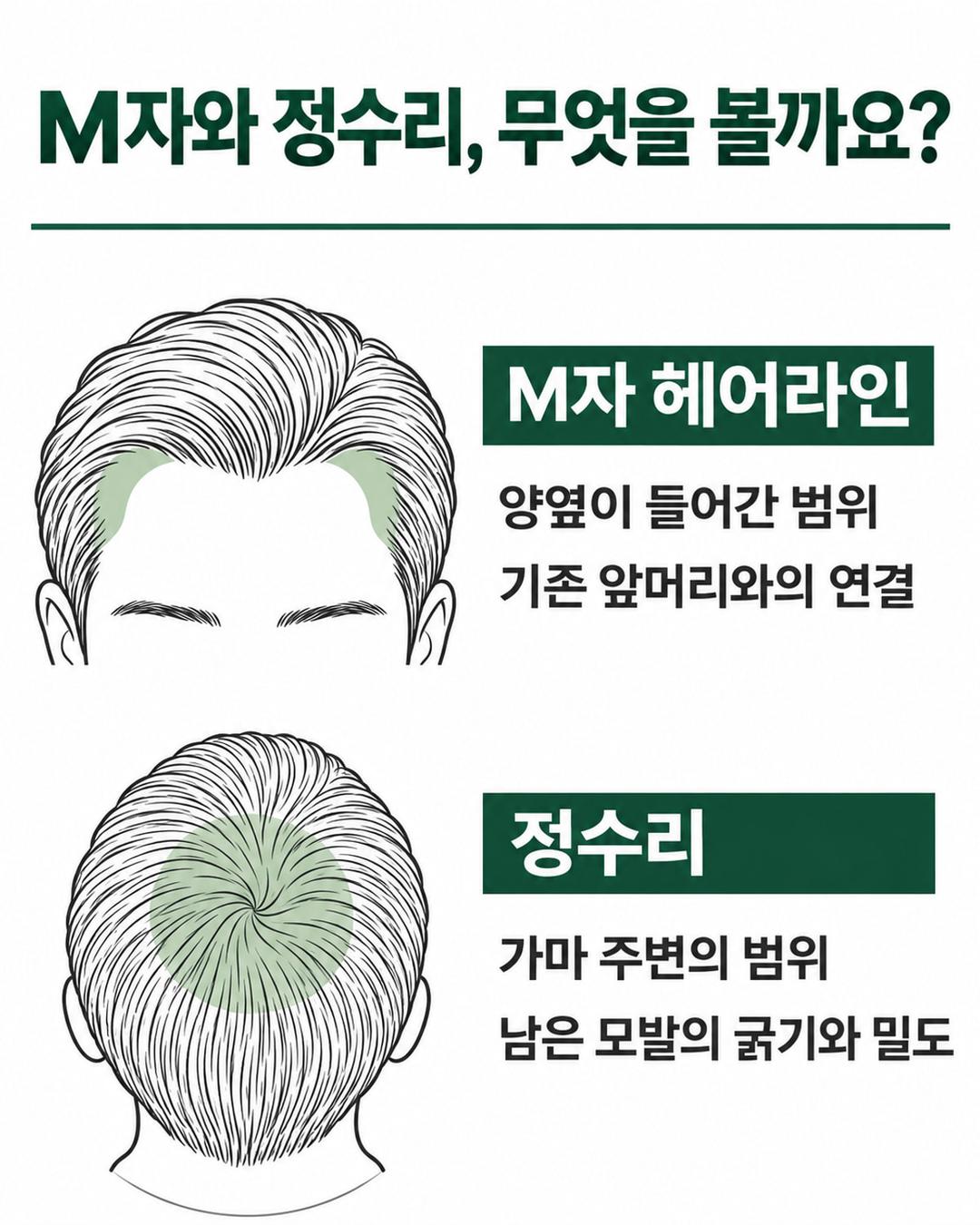
When the Transplant Is Planned Starting with the Front Hairline
If the empty areas at both temples concern you most when looking in the mirror or when wind lifts your front hair, you can consult about restoring the front first. The transplant area varies depending on whether the central hairline is maintained while connecting the sides, or whether the density of the central front hair is also restored. At Modi Hair Plant Clinic, we examine from the front and side how the existing front hair and the new hairline will connect. [Modi Men's Design Transplant]

In What Cases Is Treatment Progress at the Crown Observed First?
If thinning hair remains around the crown whorl and hair loss is ongoing, you may discuss medication with the medical team, observe the progress, and then reassess the transplant area. If the crown is your main concern, suitability for crown transplantation is also evaluated first. In this case, we look at the extent around the whorl, the condition of existing hair, and the follicles available for harvesting together. [Modi Men's Design Transplant] [Reference 2]
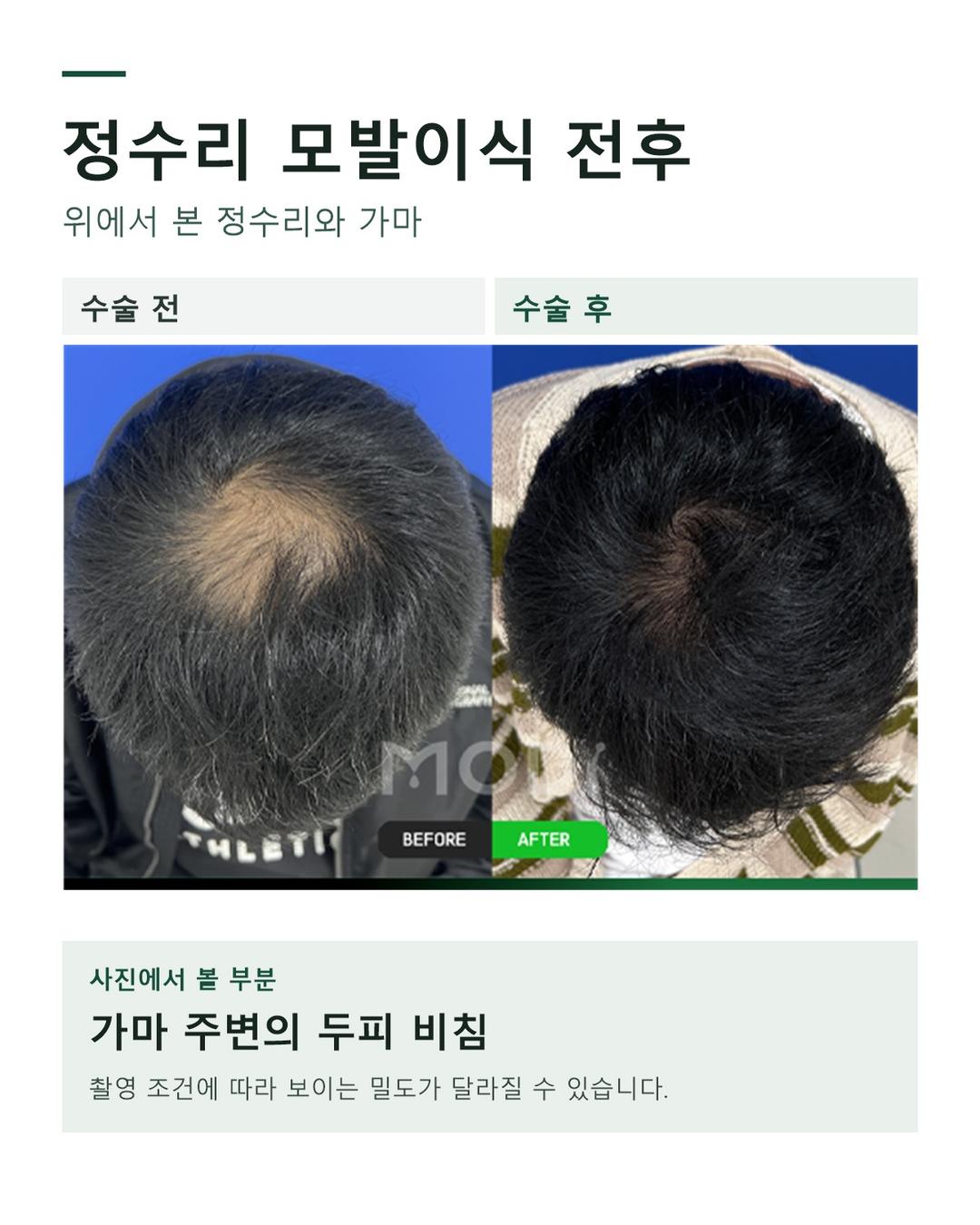
The two before-and-after photos are area-specific cases. The scalp may appear different depending on the camera angle, lighting, hair length, and styling, and the transplant amount and results vary from person to person.
Criteria for Deciding Between a Single Session or Multiple Sessions
Transplanting One Area First
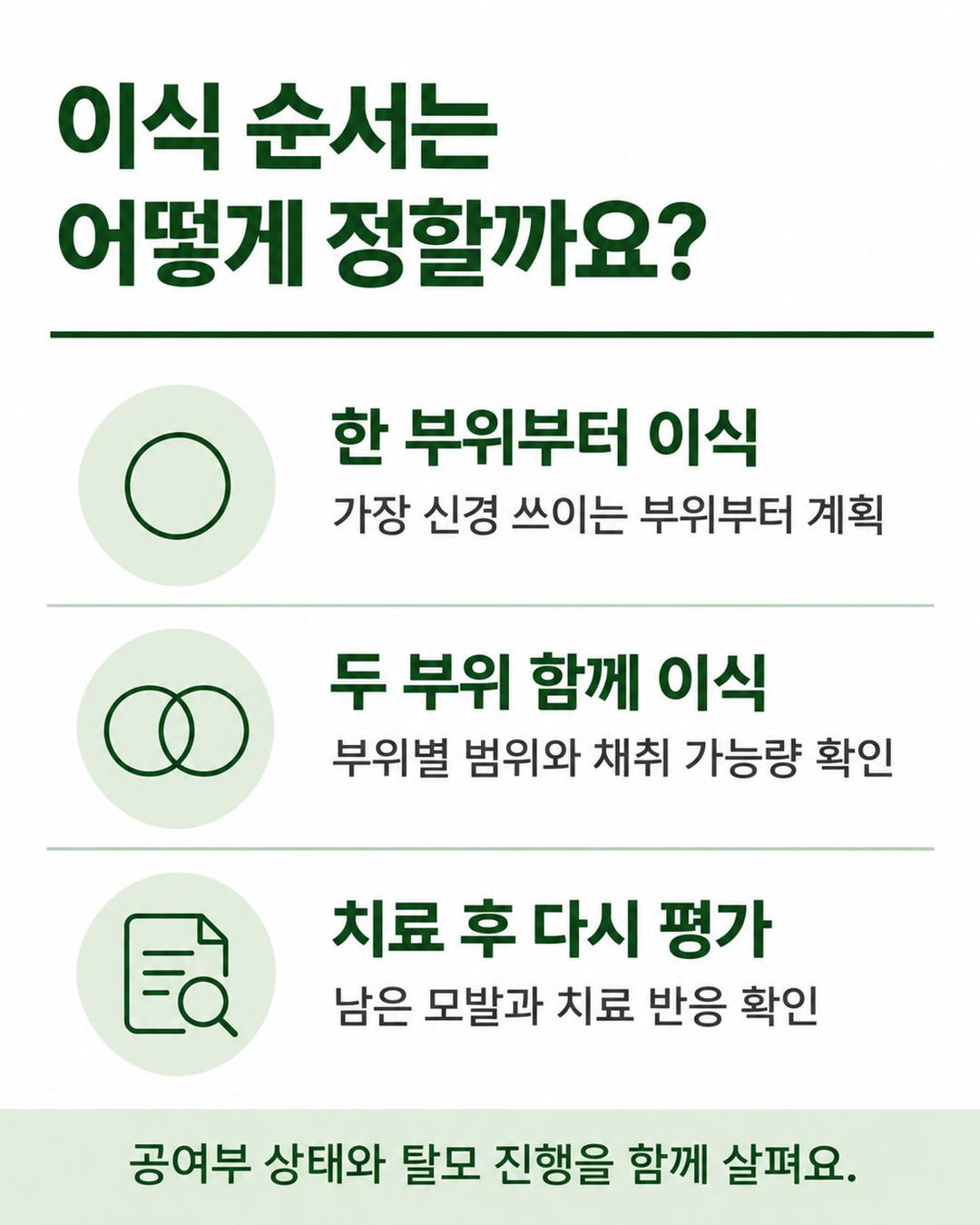
If one area, either the front or the crown, is clearly of greater concern, or if the donor area has limited capacity to restore both areas at once, the plan can be narrowed to the area to be restored first.
Transplanting Both Areas Together
If both areas are suitable for transplantation and the donor area condition allows, both can be restored in the same surgery. The transplant amount is allocated after reviewing the area to be filled and the target density for each region.
Reassessment After Hair Loss Treatment
If existing hair is thinning rapidly, the treatment progress can be checked first. Changes in hair thickness and visible scalp are then reviewed to determine the area that will need transplantation. [Reference 2]
Future Hair Loss Is Also Considered When Assessing the Donor Area
A hair transplant is a surgery that moves harvested hair follicles to where they are needed. Each follicle harvested reduces the donor capacity available for later use. Clinical guidelines explain that surgery should be planned after checking the density and thickness of donor hair and the distribution of miniaturized hair, and considering future hair loss progression. [Reference 1]
An international consensus statement involving 38 experts from 17 countries recommends evaluating surgical suitability and the need for hair loss treatment before surgery. As the guideline recommendations on crown transplantation are based on expert opinion, the two sources can be referred to as pre-operative assessment criteria. [Reference 1] [Reference 2]
Frequently Asked Questions
If crown hair loss is progressing, should the M-shaped hairline transplant also be postponed?
The decision is made by reviewing the progression pattern of both areas and the donor area condition together. If the crown area has recently been expanding rapidly, the progress of hair loss treatment may be checked first, and then the transplant area, including the front, can be reviewed again.
What if the same hair count is split in half between the two areas?
Even with the same hair count, density may appear different where the transplant area is larger or existing hair is thinner. The required transplant amount for each area is calculated based on the size of both areas, the thickness and direction of existing hair, and the change you want.
If only the M-shaped hairline is transplanted first, can the crown be transplanted later?
Additional transplantation may be considered later depending on the condition of the crown and the remaining donor area. During the consultation for the first surgery, asking how much will be used for the front and how the possibility of restoring the crown in the future is reflected can help you understand the plan.
How should I prepare photos of my front hairline and crown for a consultation?
Prepare a front-view photo with your forehead exposed for the front hairline, and a photo taken from above showing the whorl for the crown. If you have older photos, bring them along with recent ones, and let us know when you received hair loss treatment and any medications you are currently taking.
Consult About a Transplant Plan for Your M-Shaped Hairline and Crown
At Modi Hair Plant Clinic, we review the hair condition of the front and crown, the donor area at the back of the head, and the change you want together. Whether to proceed with surgery, the transplant area, and the hair loss treatment method are determined individually after examination.
References
- Mysore V, Kumaresan M, Garg A, et al. Hair Transplant Practice Guidelines. J Cutan Aesthet Surg. 2021;14(3):265–284. DOI 10.4103/JCAS.JCAS_104_20. PubMed PMID 34908769 · Full text (journal)
- Vañó-Galván S, Bisanga CN, Bouhanna P, et al. An international expert consensus statement focusing on pre and post hair transplantation care. J Dermatolog Treat. 2023;34(1):2232065. DOI 10.1080/09546634.2023.2232065. PubMed PMID 37477225